
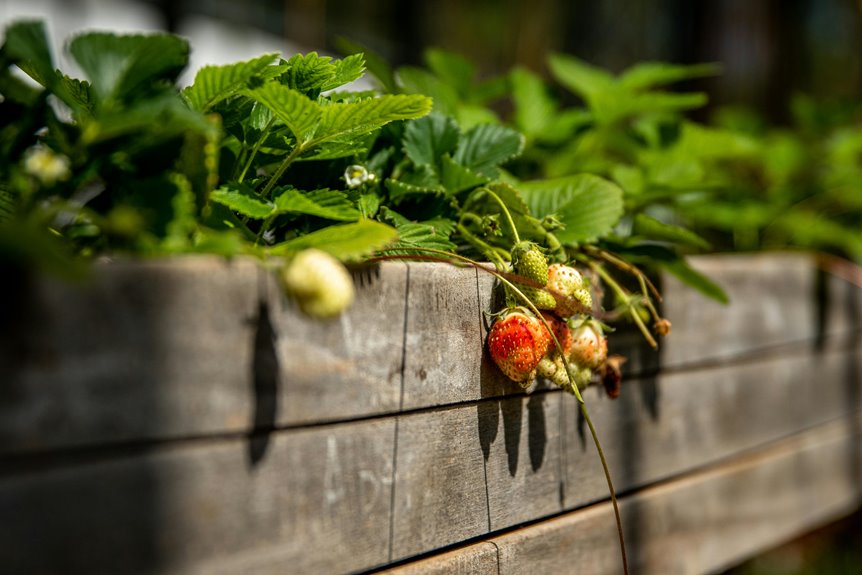
You’ll want to aim for about 4 plants per square foot—that’s your sweet spot. This spacing lets runners fill gaps naturally without creating disease-prone tangles that trap moisture and invite fungal problems.
Here’s how to get there: Start with just 1 plant per square foot in year one, then thin as needed to reach that 4–6 plant range by year two. Going beyond 6 plants per square foot tanks your yields and makes air circulation nearly impossible, which is when fungal issues really take hold.
The reason spacing matters this much comes down to basic plant health. When strawberry plants have room to breathe, air flows through the foliage and dries morning dew faster. That prevents the damp conditions fungi love. Wider spacing also means roots can spread out without competing fiercely for water and nutrients, which leads to bigger, sweeter berries instead of a bunch of tiny ones.
If you’re working with raised beds or containers, these same numbers apply—just count your actual square footage and plant accordingly. The setup doesn’t change the math, only the logistics of how you arrange your plants within that space.
The Ideal Density: 4 Plants Per Square Foot
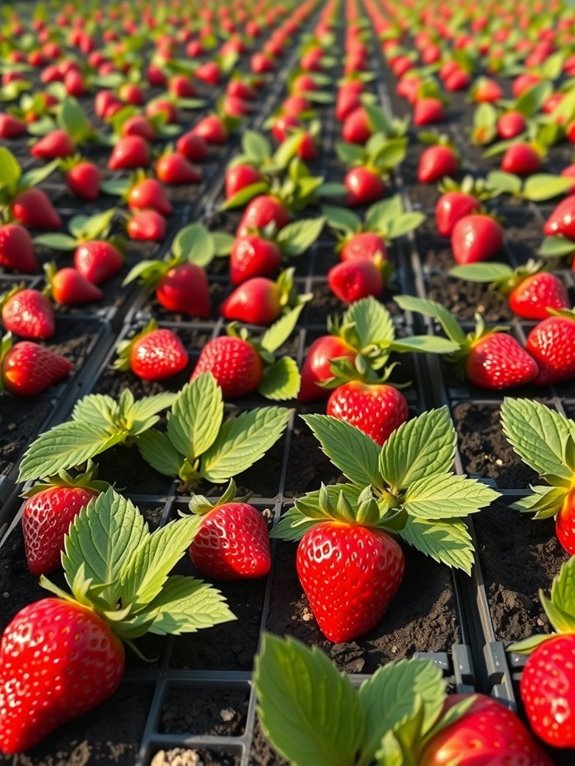
When you’re setting up your strawberry bed, aim for about 4 plants per square foot. This spacing gives each plant enough room to spread without competing heavily for water, nutrients, and sunlight. Your runners will fill gaps naturally over time, creating a dense, productive bed without you needing to do much extra work.
Starting with 4 plants per square foot strikes a good balance between getting harvests quickly and letting your bed expand as it should. As plants grow and runners establish themselves, you’ll want to thin out some growth to keep that density steady and prevent overcrowding. Thinning takes a little effort, but it pays off with healthier plants that produce bigger, sweeter berries.
Think of proper spacing as an investment in what comes next. You’re setting up the conditions each plant needs to produce well, which means better yields down the road. That’s worth a bit of hands-on work now.
Why 6 Plants Per Square Foot Is Your Maximum Limit
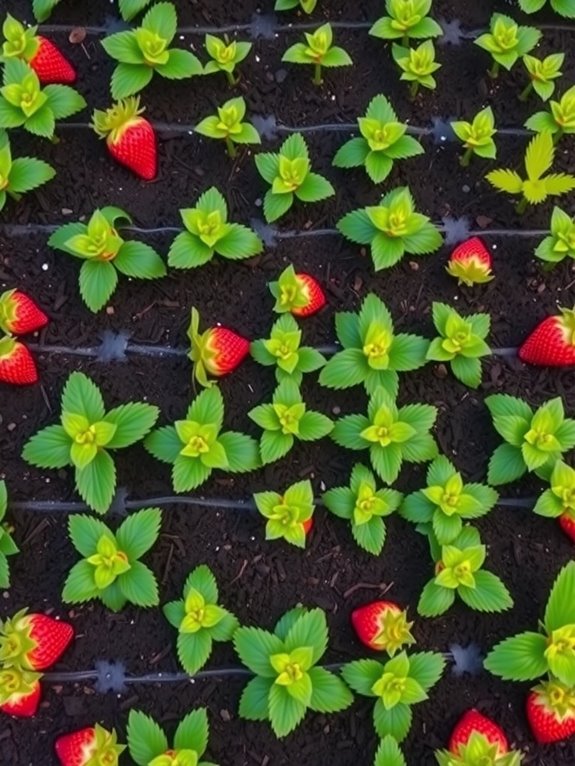
Pushing beyond 6 plants per square foot actually works against you in ways that matter. Your yields drop, disease spreads faster in tight spacing, and you’ll spend your time doing endless thinning and transplanting work instead of enjoying your harvest.
Dense matted rows create their own set of problems worth understanding. Poor air circulation traps moisture around the base of plants, fungal issues take hold, and individual plants can’t develop the robust root systems they need for quality fruit. When strawberry roots can’t expand properly, the berries themselves suffer.
Six plants per square foot hits that sweet spot where runners fill gaps naturally and your workload stays manageable. At this density, air moves freely between plants, moisture dries quickly after rain or watering, and each plant gets the space it needs to develop strong roots that pull nutrients from deeper soil. You’ll harvest premium berries instead of wrestling with overcrowding headaches.
Overcrowding Reduces Yield Quality
Why does cramming more strawberry plants into your bed backfire? When you exceed 6 plants per square foot, you’re setting yourself up for disappointment. Here’s what happens:
Competition for Resources
With too many plants packed together, they’re all fighting for the same nutrients, water, and sunlight. Each plant gets less of what it needs to produce quality fruit. The soil can only deliver so much nutrition, and the canopy can only filter down so much light before everyone loses out.
Smaller Berries and Lower Quality
When plants compete heavily, they redirect energy toward survival instead of berry production. You’ll notice your strawberries shrink noticeably—sometimes by half their potential size. What you gain in plant count, you lose in the size and sweetness of individual berries, which defeats the whole purpose of growing them.
Runner Tangles and Extra Work
Overcrowding accelerates runner proliferation, creating thick mats that become genuinely difficult to manage. Strawberry runners spread aggressively when plants are stressed, and in tight quarters they tangle around each other into messy knots. You’ll spend your weekend afternoons untangling instead of picking ripe berries, and the dense growth also traps moisture that encourages fungal problems like gray mold.
The Better Approach
Stick with 6 plants maximum per square foot—this spacing lets each plant access adequate light and absorb nutrients from undepleted soil. At this density, runners stay manageable and your beds stay productive without becoming a second job. The berries you do harvest will be noticeably larger and sweeter than what overcrowded plants produce.
Managing Dense Matted Rows
How do matted rows actually work? You’re allowing runners to root repeatedly, filling space naturally. This creates dense mats, but you’ll need continuous maintenance to prevent overcrowding.
| Strawberry Density | Runner Management | Result |
|---|---|---|
| 4 plants/sq ft | Minimal thinning | Optimal yield |
| 5 plants/sq ft | Moderate pruning | Strong growth |
| 6 plants/sq ft | Active severing | Maximum safe limit |
Crowding prevention starts with runner management early on. When runners establish themselves, sever the excess ones before they root deeply. This keeps your strawberry density in that sweet 4–6 plant range and saves you from a thinning nightmare later. Removing established runners takes just a few minutes now versus hours harvesting from overcrowded patches.
Start conservative in year one. Natural expansion happens in year two, so you don’t need to encourage every runner. Think of it like giving your plants breathing room—each one needs space for leaves to catch sunlight and fruit to develop without touching the soil too much. That 4-plant-per-square-foot baseline gives you solid yields with minimal fuss. As your row fills in naturally, you’ll know exactly where to trim back the extras rather than guessing about density later.
The payoff is worth the small upfront effort. You’ll have easier harvesting, better air circulation around the berries, and less disease pressure from leaves staying too moist. Your future self will definitely appreciate not wrestling with an overgrown tangle of runners in mid-July.
Optimal Density Thresholds Explained
Once you push past 6 plants per square foot, problems pile up quickly. You’re entering crowding territory where your strawberries really start to suffer. Here’s what happens when you exceed that threshold:
- Fruit shrinks noticeably smaller than ideal berries
- Air circulation drops, inviting disease and mold
- Runner management becomes exhausting labor
- Overall plant vigor declines significantly
That 6-plant maximum exists for solid reasons. Most experienced growers recommend 4 plants per square foot as the sweet spot. This spacing gives runners room to spread naturally without constant thinning, lets your plants establish stronger root systems, produces larger fruit, and demands less maintenance overall.
Going denser initially seems smart for quick bed fill-up, but you’ll regret the thinning headaches later. The extra work of managing crowded plants eats up your time and doesn’t pay off in better harvests. Stick with 4 plants per square foot and you’ll join the growers who’ve found what actually works.
Choose Your System: Matted Rows, Hill Systems, or Raised Beds
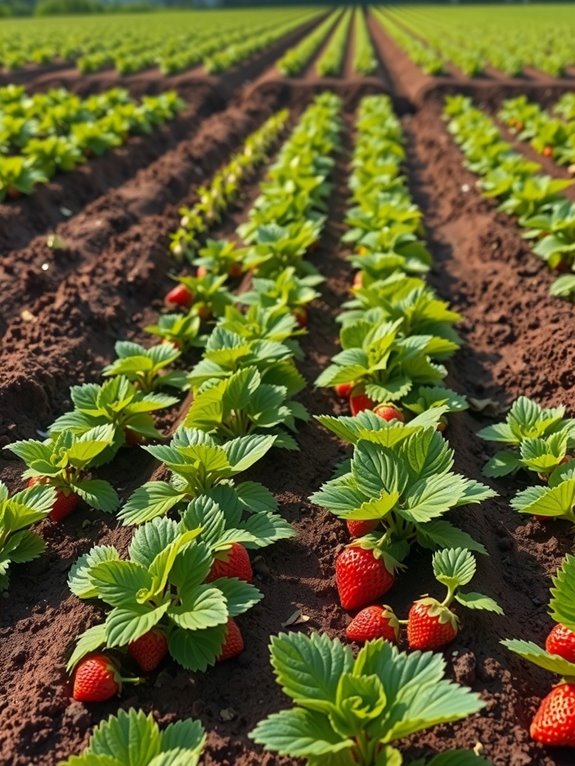
Your growing system fundamentally changes how you’ll space plants and manage those eager runners. In matted rows, you’ll start with about 4 plants per square foot and let runners naturally fill gaps. They’ll spread on their own, which means less work pruning and positioning.
Raised beds work differently. Plant 1 per square foot initially, then watch as runners root into the soil and expand your patch to 4–6 plants per square foot by season two. This slower buildup gives you more control early on while still letting the plants do the spreading work later.
Both systems rely on runners to fill space over time. The main difference is your patience level and how much hands-on management you want during year one.
Matted Row Management
Matted row systems work well once you set them up correctly, and plenty of growers have refined this low-maintenance approach over many years. The method rewards your initial effort with years of reliable harvests.
Start with one plant per square foot to give runners room to spread out naturally. During year two, let those runners root throughout your bed, gradually building up your strawberry density as they establish. This patient approach works better than cramming plants in right away.
In your first year, remove excess runners and flowers before they drain energy from plant development. This seems counterintuitive when you’re eager for berries, but removing these growth tips redirects the plant’s focus toward building stronger root systems and more productive crowns. You’ll notice the difference in year two and beyond.
Dense mats form quickly, even with generous spacing, so plan to thin runners several times during the growing season. Use hand pruners or sharp scissors to cut runners at soil level rather than pulling them up, which can disturb neighboring plants. Thinning prevents crowding that reduces airflow, invites disease, and cuts into your actual berry production. Think of it like editing a photograph—removing distractions helps the important elements shine.
The attention you give during establishment—spacing, selective removal, and honest thinning—directly determines whether you’ll pick handfuls or buckets of berries in the years ahead.
Raised Bed Spacing Strategies
How you space strawberries in a raised bed makes the difference between fighting disease and picking berries consistently. Start with one plant per square foot in year one, giving runners plenty of room to spread without tangling together. By year two, those runners will root naturally and fill your bed, reaching four to six plants per square foot.
This gradual approach works because dense mats choke yields and create pockets where fungal problems love to settle in. Your raised bed gives you something ground beds don’t: control. You’re managing density intentionally rather than watching plants sprawl everywhere without direction. The spacing also keeps air moving through the foliage, which dries moisture faster and keeps disease at bay.
Think of it as building a healthy foundation first. A little patience now with sparse planting pays off later when you’re harvesting abundant berries from plants that aren’t fighting each other for space and sunlight.
Density Differences Between System Types
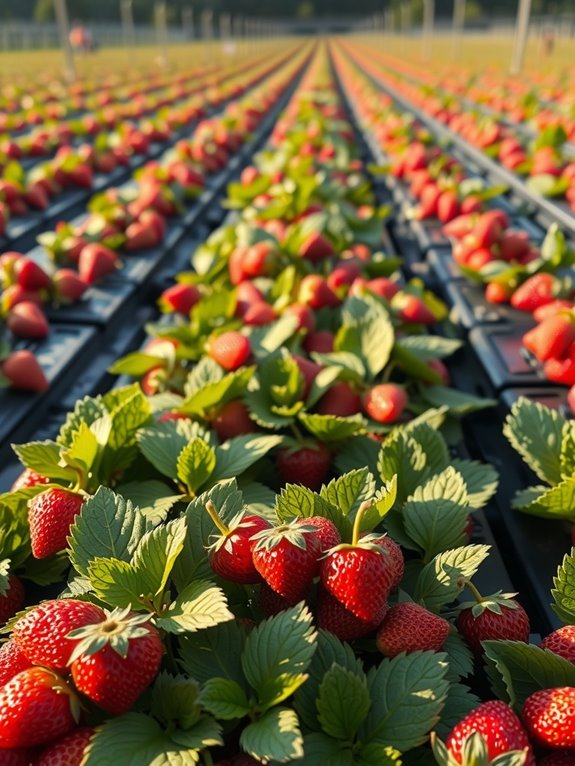
When you’re deciding how densely to plant strawberries, the system you’ve chosen actually makes a meaningful impact in what works best. Your matting system has specific planting density guidelines that differ from other setups.
Start with one plant per square foot in year one, letting runners establish your bed naturally. If you want faster bed filling and don’t mind the extra maintenance work, consider bumping up to 2–3 plants per square foot instead. Four plants per square foot is your optimal target—this density balances solid yields with manageable runner control that won’t exhaust you.
Avoid exceeding six plants per square foot. Overcrowding reduces your harvests significantly and doubles your thinning labor without giving you any real benefit in return. The math works against you when plants compete too heavily for space, light, and nutrients. Patience during establishment actually pays real dividends later because your plants get stronger and produce more consistently when they have room to spread out.
Year-One Spacing: Start With 1 Plant Per Square Foot
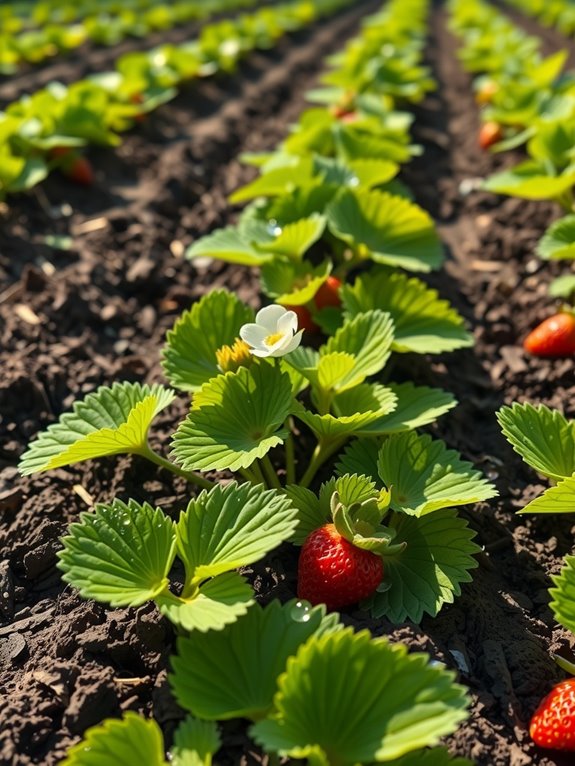
Your first year’s success depends on resisting the urge to overcrowd your bed, and starting with one strawberry plant per square foot keeps things simple and manageable. This spacing strategy centers a single plant in each square foot, giving runners plenty of room to spread across your bed as the season progresses. Think of it as creating a blank canvas where your plants can develop naturally without competing for light and nutrients.
During year one, pinch off any flowers that appear to redirect the plant’s energy toward building strong roots and producing runners rather than making fruit. The runners will gradually spread across your bed, filling in gaps on their own. If plants start crowding each other too much later in the season, thin them out by removing the weakest or oddly-positioned runners. This simple spacing approach prevents disease problems, improves air circulation around the leaves and fruit, and sets you up perfectly for denser planting in year two when your bed is already established and can handle more competition among plants.
Year-Two Expansion: Letting Runners Fill the Bed
By year two, your strawberry bed shifts into a different gear as runners naturally root into available soil. What started as a modest setup now densifies dramatically—you’re looking at 4 to 6 plants per square foot instead of 1, all without buying additional plants or doing extra transplanting work.
Here’s the actual sequence. Your original plants send out runners that spread across the bed surface, making contact with soil as they go. Wherever a runner node touches moist earth, it develops its own root system and becomes an independent, fruit-producing plant. Both the mother plants and these runner-established daughters produce berries simultaneously, which means your harvest roughly doubles in the same footprint.
Your main task involves two parts. First, guide runners into open soil spaces as they emerge so they root where you want them rather than tangling into each other. Second, thin out excess runners if they start crowding—this prevents disease problems and keeps plants from strangling each other. Think of it as light maintenance rather than real work, and you’ll actually enjoy watching the density build week by week.
The payoff here is straightforward: more plants producing at once means significantly higher yields without the expense of purchasing runners or bare-root plants from suppliers. You’re essentially letting nature do the labor while you simply manage the spacing.
Spacing Between Individual Plants for Healthy Roots
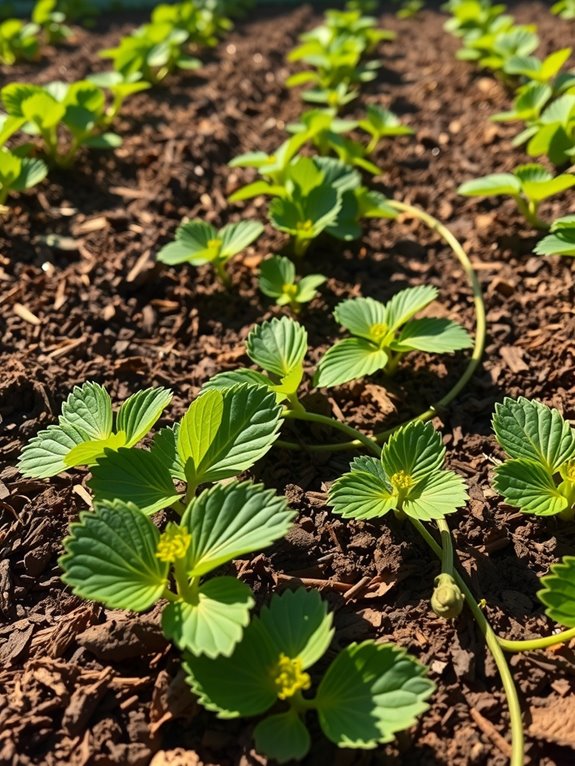
Proper spacing between crowns is your foundation for healthy roots—you’ll want 12 to 18 inches apart, which gives each plant room to establish without competing for water and nutrients. Dense growth happens naturally as runners spread, so resist the urge to pack plants too tightly upfront. Wider spacing now prevents root crowding and the diseases that follow.
Your patience in year one pays off when year two arrives and those runners have filled your bed on their own terms, without the stress of struggling roots.
Spacing Standards for Crowns
What’s the sweet spot for spacing your strawberry plants? You’ll want to nail down your crown spacing to set yourself up for success right from the start.
Maintain 6–8 inches between crowns for healthy root establishment without competition. This spacing lets each plant access nutrients and water without constantly jostling for resources with its neighbors. Think of it like giving each crown a personal square of real estate where it can stretch out.
Aim for 1 plant per square foot initially to prevent overcrowding while runners fill gaps. If you’re willing to wait longer for full bed coverage, use 12–18 inches between plants instead. The larger spacing means less work thinning crowded growth later, though it does take a few more weeks for your strawberry bed to fill in completely.
The reason spacing matters this much comes down to basic plant biology. When crowns sit too close together, they shade each other and compete fiercely for nutrients and water. Roots need room to spread out and establish themselves in the soil. Crowns clustered too tightly also trap moisture around the base, which invites rot and fungal problems that can wipe out your patch.
Spacing generously now prevents crowding problems down the road. Plan your layout carefully at planting time, and you’ll spend less energy managing the bed as the season progresses.
Root Development and Establishment
Since your strawberry crowns need solid footing before they can produce fruit, spacing matters more than you might realize. Give each plant about 4 to 6 inches of breathing room between crowns—this distance allows healthy root establishment without crowding.
Think of cramped roots like roommates sharing one tiny apartment. They’ll compete fiercely for nutrients and moisture, which weakens your plants right when they’re trying to settle in. Starting with roughly 4 plants per square foot lets roots develop properly while keeping space open for runner management down the road.
Here’s what makes this approach smart: you’re not locking yourself into one permanent planting density. Once your plants establish strong roots over a few weeks, you’ll deliberately pin down runners to fill any gaps naturally. This two-phase method gives you robust root systems first, then a full productive bed as those runners take hold.
Managing Dense Plant Growth
Once your strawberry bed starts filling in, you’re juggling two competing needs: keeping plants spaced well enough to produce decent fruit while letting runners do their thing and naturally thicken up the patch. It’s a balancing act worth getting right.
Your runner management strategy looks like this:
Monitor spacing regularly and aim for 4 to 6 plants per square foot maximum. This density keeps root competition manageable without leaving bare patches that’ll just get filled in later anyway. Remove excess runners before they establish competing root systems that’ll choke out your existing plants. The best time to thin strategically is during peak growing seasons when crowding actually threatens your harvest. Dense clusters also need attention when it comes to soil moisture since crowded roots compete fiercely for water and nutrients.
Here’s the thing about spacing: starting with wider gaps might seem smart, but it complicates your life down the road. Those runners will eventually fill those gaps anyway, which means you’re just delaying the crowding problem. A better approach is to start moderately dense and then actively manage growth as the season progresses. This keeps healthier roots, reduces nutrient competition, and maintains bed productivity season after season without needing constant heavy maintenance.
Recognize Overcrowding Before It Becomes a Problem
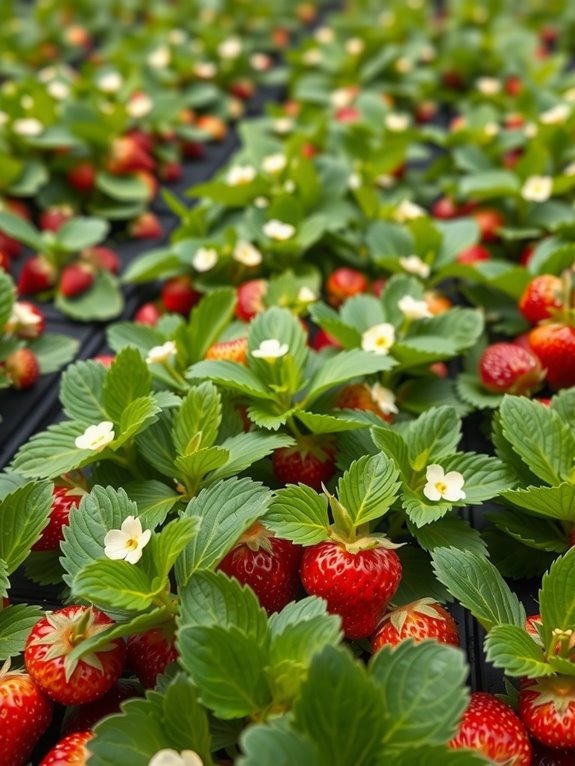
How quickly can strawberry plants take over your garden? Faster than you’d think. When runners start creeping everywhere, creating dense mats that block airflow and trap moisture, disease moves in fast. You’ll spot yellowing leaves even with regular watering, and flowers cluster so thickly that developing fruit gets squeezed out. This is your signal to step in.
Check your plant spacing every couple of weeks during the growing season. If you started with four plants per square foot, runner management becomes necessary within a few weeks. Thin flowers down to one-third or one-quarter of what’s there, redirecting the plant’s energy toward producing quality fruit rather than quantity.
Dense growth multiplies these problems quickly, so catching overcrowding early saves you from serious work down the road. Healthier plants with better airflow around the leaves mean fewer fungal issues. Better spacing also means individual berries size up properly instead of staying small and seedy. Staying ahead of the crowding curve keeps your workload manageable and your yields dependable.
How to Thin Overcrowded Strawberry Plants
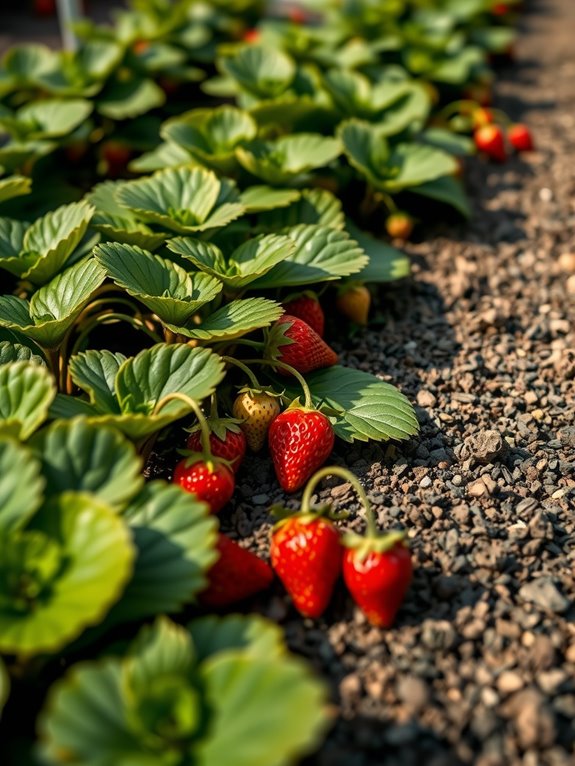
Grab your pruners and get ready to make some tough calls about which plants stay and which ones go.
When your strawberry density gets out of hand, thinning becomes necessary work. Here’s how to tackle overcrowded plants:
- Remove weakest specimens – Pull out smaller, damaged, or diseased plants first. These won’t produce quality fruit anyway, so they’re good candidates to go.
- Space crowns 4–6 inches apart – Healthy plants need room to spread their runners and establish strong root systems. Crowding forces plants to compete for water and nutrients.
- Thin gradually – Don’t remove everything at once. Work in stages over a few weeks so you can see how remaining plants respond before making final decisions.
- Transplant extras elsewhere – Those removed plants aren’t waste. Share them with neighbors or move them to a new bed if you have space.
Thinning improves air circulation around your strawberry bed, which reduces disease problems like mildew and boosts fruit size. Better spacing means leaves dry faster after rain and water reaches roots more effectively. You’re making a practical choice when you thin—less crowding means healthier, more productive plants in the seasons ahead.
Cutting and Redirecting Runners to Control Density
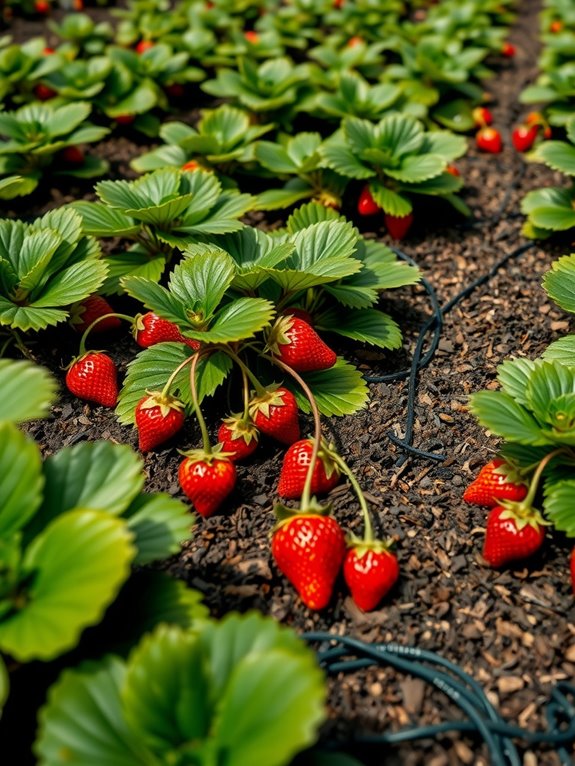
Your strawberry plants will send out runners—those long, trailing stems reaching for new ground to colonize. Once a runner’s stolon browns and shrivels, you’ll know it’s established roots in the soil. That’s when you should sever it.
Once a runner’s stolon browns and shrivels, you’ll know it’s established roots—that’s when you should sever it.
You’re managing density control to hit your spacing goals, typically around four plants per square foot. When you cut or redirect runners early, you prevent overcrowding and keep maintenance from becoming a headache. Moving rooted runners to fill bare patches gives you strategic placement without the chaos that comes from letting them spread randomly.
Check your bed weekly during the growing season since runners naturally fill space over time. Regular monitoring keeps your plants healthy and your crowns vigorous. The stolon—that’s the runner itself—will tell you when it’s ready to cut by turning brown and papery rather than green and firm. Once you sever the connection between the mother plant and the new plantlet, that young plant becomes independent and focuses on establishing itself rather than draining energy back to the original.
You’re not fighting nature with this approach; you’re working with how strawberries naturally want to grow. The plants produce runners as a survival strategy, and by redirecting that energy, you’re simply guiding it toward your actual spacing and production goals rather than letting it create a tangled, overcrowded mess.
Spacing Adjustments for Different Varieties and Climates
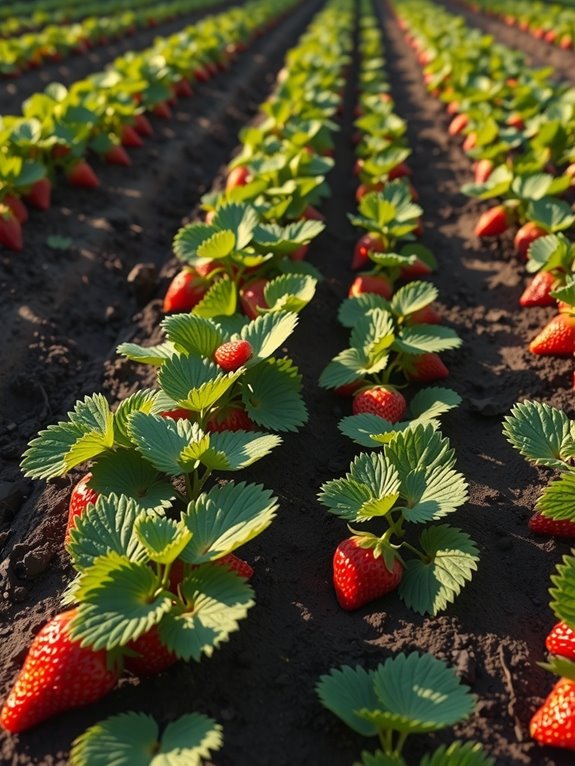
When you’re deciding how densely to plant, one size doesn’t fit all—your variety and local climate matter more than you might think. June-bearing and everbearing strawberries behave differently, requiring distinct spacing strategies.
June-bearing varieties do well with lighter initial planting—around 2 plants per square foot lets runners colonize naturally and fill in gaps over the season. You’re giving them room to spread without crowding early on.
Everbearing types need denser spacing at about 4 plants per square foot since they produce fewer runners. They rely more on the plants you set out rather than filling space through growth.
Climate shapes your spacing decisions too. In cold regions, tighter density helps you squeeze out more yields before frost arrives. Warmer areas support aggressive runner development, so lighter spacing prevents the bed from becoming a tangled mess by mid-summer.
Your planting density directly affects how fast plants establish and how much work you’ll do maintaining them later. Match your strategy to what grows best where you live, and you’ll avoid the frustration of fighting overcrowding next season. The extra thought you put in now means less weeding and thinning down the road.
Transplanting Thinned Plants to New Locations
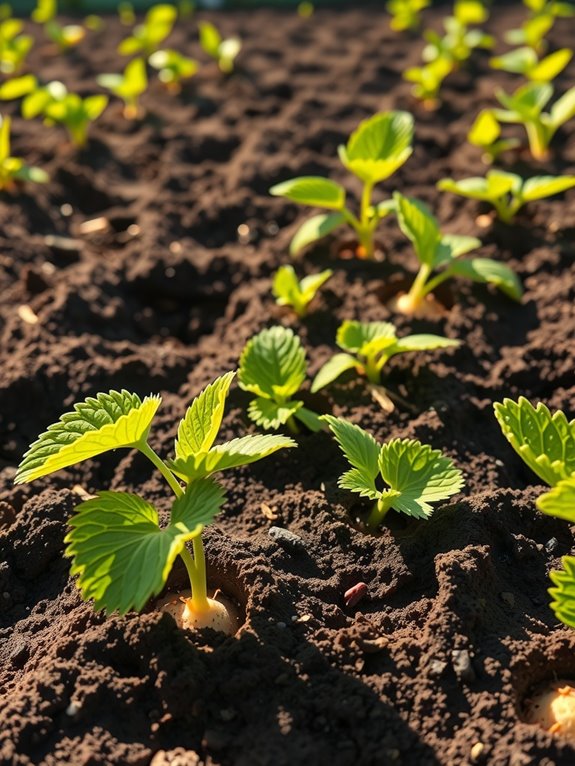
Why toss those extra strawberry plants when they could fill a new bed or brighten a neighbor’s garden? Strawberry thinning gives you surplus plants that are ready to grow somewhere else. You’ll want to move those extras as soon as their runners develop solid root systems, since this reduces transplant shock and gets your new bed producing faster.
Aim for about four plants per square foot in your original bed, then relocate the surplus plants to fill nearby beds or spare pots. You’re maximizing your garden space while also spreading the joy of homegrown strawberries to friends or neighbors who’d appreciate them.
Timing matters here. Move thinned plants quickly to prevent losing viable root crowns to drying out or disease. Your transplanting efforts pay off fast, turning a single-bed project into multiple strawberry patches that’ll produce abundantly come harvest season.