Pick heat-tolerant varieties like October Magic® Dawn or Monrovia Ice Angels, which actually handle California’s intense summer heat without dropping leaves. Your camellia will appreciate bright indirect light from north- or east-facing windows, where it gets illumination without direct sun exposure that could scorch the foliage.
Indoor air tends to be drier than what camellias prefer, so set up a pebble tray filled with water beneath the pot. The water evaporates around the plant, creating a more humid microclimate without waterlogging the roots. Moving your camellia indoors requires a gradual adjustment period of 7 to 10 days, which lets the plant adapt to lower light and different air circulation patterns without stress.
Water weekly once the top inch of soil feels dry to your finger. Keep temperatures between 50 and 70 degrees Fahrenheit, which mimics the mild conditions camellias enjoy during their dormant season. When fall arrives and outdoor temperatures drop back to suitable levels, move your plant outside again where it can experience the seasonal changes it needs for proper growth cycles.
Choose Heat-Tolerant Camellia Varieties for Indoor Heat
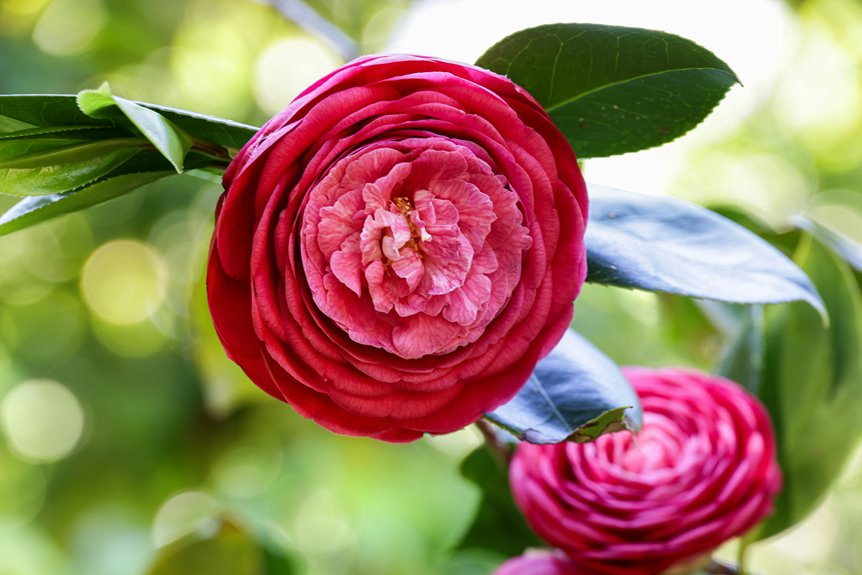
Keeping camellias happy indoors during California’s hot summers comes down to choosing the right varieties for your specific conditions. Heat-tolerant cultivars like October Magic® Dawn, October Magic® Rose, and October Magic® Ivory are compact plants bred specifically for warmer climates and won’t sprawl across your indoor space. Monrovia Ice Angels work well if you’re in zone 6 and need something reliable.
These varieties handle partial shade without complaint, and they tolerate direct sun better than standard camellias without stress from excessive heat. The difference between struggling plants and healthy ones often comes down to what’s in the pot beneath them. Use well-drained soil with a pH between 5.5 and 6.5, which matches what camellias prefer in nature. This soil balance lets water move through without sitting at the roots, where it causes rot.
Early bloomers like October Magic® Ivory keep your indoor space visually interesting throughout the year rather than offering just one brief flowering period. When you select varieties bred for the California climate, you’re working with plants already adapted to handle your specific heat patterns rather than fighting against their nature.
Keep Your Camellia Cool, Bright, and Humid
Once you’ve picked the right camellia variety, the real work begins with setting up proper indoor conditions. Your camellias want bright indirect light, so position them near north- or east-facing windows where they’ll receive steady illumination without harsh direct sun beating down on the leaves. They’re genuinely picky about humidity because indoor air dries them out quickly. Running a humidifier nearby or setting plants on shallow water trays filled with pebbles helps maintain that moisture they crave.
Temperature matters more than you might think. Keep your indoor space between 50°F and 55°F at night—camellias actually prefer cooler conditions compared to most houseplants. Avoid placing them near heating vents or in spots where cold drafts can sneak through, since temperature swings stress them out and can cause bud drop.
For watering and soil care, check the top inch of soil regularly and water when it feels dry to the touch. Low-mineral water works best since tap water minerals can build up over time and cause problems. Check your soil pH weekly using a simple pH test kit from any garden center. Camellias prefer slightly acidic soil, ideally between 5.5 and 6.5 on the pH scale. These specific details are what separate plants that genuinely flourish from ones that struggle along in your home.
Acclimate Your Plant Over 7–10 Days to Avoid Shock
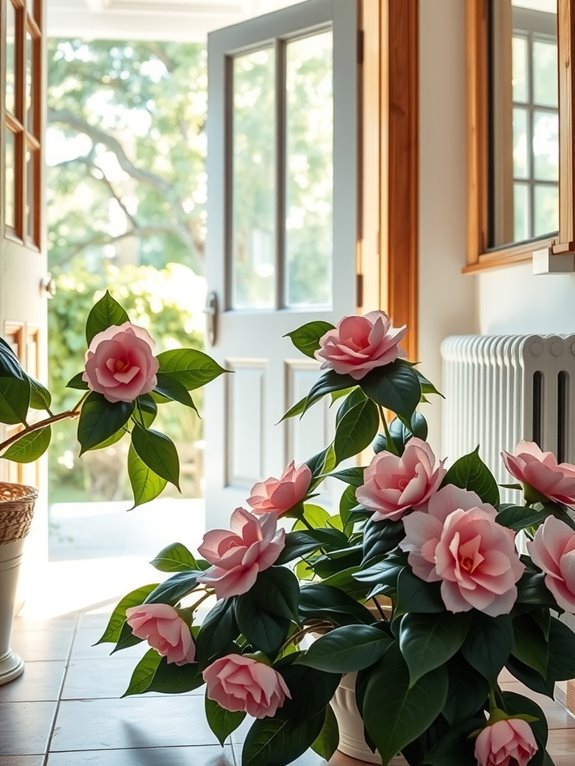
Rushing your camellia indoors is like throwing someone into a cold pool—it’s jarring and nobody enjoys it. Instead, gradually acclimate your plant over 7–10 days, allowing it to adjust to indoor life without stress. This measured approach gives your camellia time to handle the shift from outdoor conditions to your home’s different light, humidity, and airflow.
Start by placing your camellia in a bright, indirect light area, such as an east or north-facing window where it won’t get direct sun exposure. Each day, incrementally reduce how much time your plant spends outdoors while it adapts to indoor humidity levels and air circulation patterns. Keeping your indoor temperature steady between 50–70°F helps prevent shock, so position your plant away from drafts and heating vents that dry out leaves quickly.
Watch closely during this transition period for warning signs like wilting, leaf scorch, or dropped buds. If stress appears, pause the acclimation process and adjust your light placement or temperature settings accordingly. This thoughtful, gradual approach gives your plant the best chance to settle into indoor life without setback.
Water Your Indoor Camellia Less Often
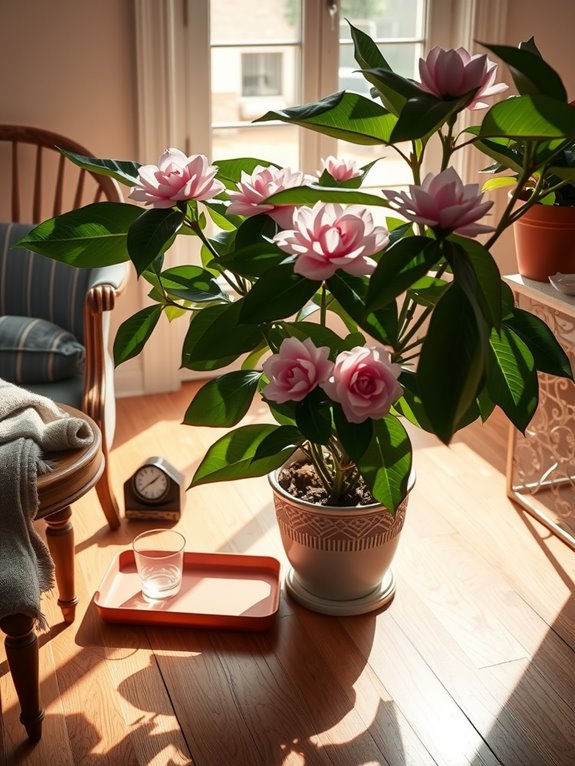
How often should you water your indoor camellia? Way less than you’d think, honestly. Since your camellia lives indoors away from wind and direct sun exposure, it loses moisture slowly and needs less water than its outdoor cousins.
Indoor camellias need way less water than you’d think—they lose moisture slowly away from wind and direct sun.
The best approach is simple. Stick your finger about one inch into the soil once a week and water only when it feels dry at that depth. This single habit prevents root rot while keeping your plant healthy.
Use rainwater or spring water when you can, since hard tap water raises soil pH and puts unnecessary stress on your camellia. If tap water is your only option, let it sit out overnight so some minerals settle.
Beyond watering frequency, humidity matters. Keep the air around your camellia consistently moist by misting nearby or setting the pot on a pebble tray with shallow water. Keep your plant away from heating vents and air conditioning units that dry out the surrounding air between waterings. The combination of careful watering and steady humidity creates the right conditions for your indoor camellia to stay healthy.
Move It Back Outside When Temperatures Drop
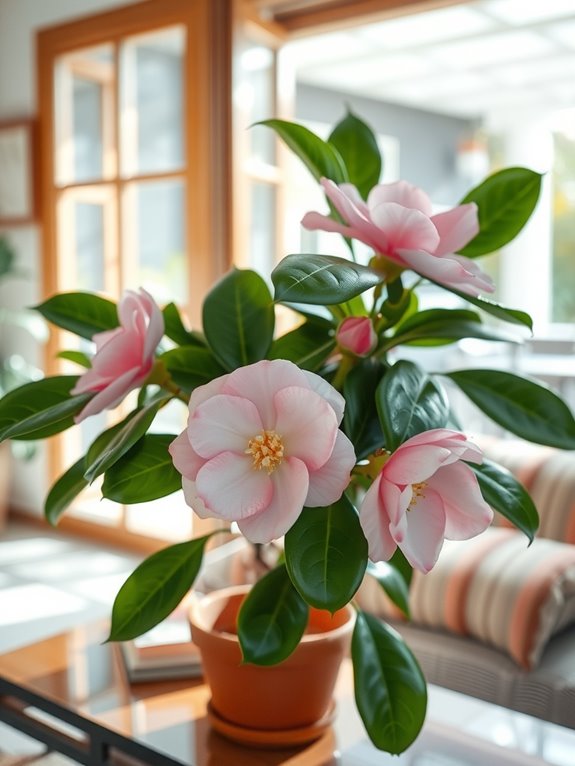
When nighttime temperatures consistently stay above 50°F, your camellia is ready to transition back outside. The key is moving slowly to prevent shock, which can seriously weaken the plant after its indoor stay.
Start by placing your camellia in bright shade or morning sun with afternoon protection for the first week. This gradual shift prevents heat stress that comes from sudden exposure. Over the next 1–2 weeks, gradually increase the time spent outdoors while keeping a close eye on soil moisture. Indoor plants lose moisture differently than outdoor ones, so check the soil regularly as conditions change.
Before permanent placement, make sure outdoor containers have drainage holes or use pots with built-in drainage systems. Fill them with an acidic, well-draining potting mix designed for acid-loving plants like camellias. As your plant adjusts from indoor humidity to outdoor air, you’ll need to water more frequently. Watch for spider mites and other pests that become active outdoors, and rinse the leaves occasionally if you spot any problems.