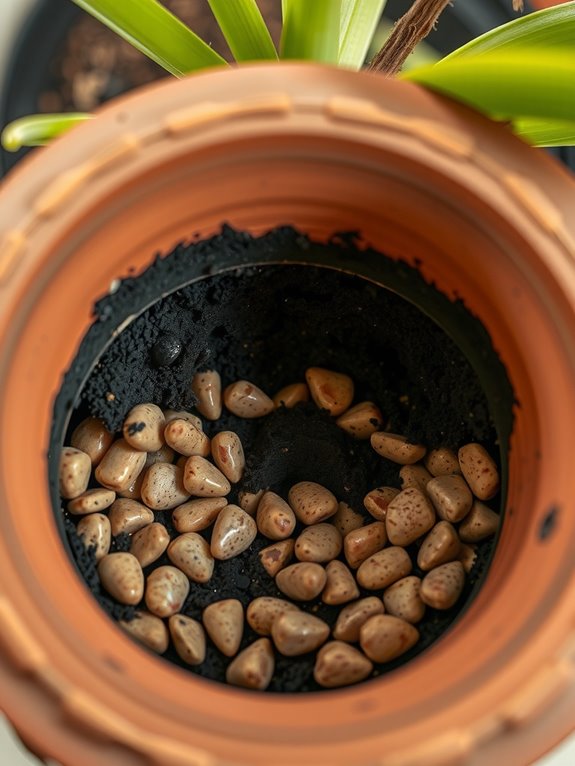
Start with 2–3 inches of landscaping rocks or pea gravel at the bottom. These materials let air flow through and prevent soil from sitting directly on the planter’s base. Next, lay down landscape fabric to act as a barrier that stops potting mix from filtering down into the rocks and creating a muddy mess.
Add about 1 inch of activated charcoal on top of that fabric layer. This stuff absorbs excess moisture and helps neutralize odors that build up when water can’t drain away. The charcoal works quietly in the background, doing the real work of keeping your planter’s environment healthier.
Fill the rest with quality potting mix suitable for your plants. This whole setup—rocks, fabric, charcoal, and soil—creates a system where water moves gradually through each layer instead of pooling around your plant’s roots. That movement makes the difference between roots sitting in soggy conditions and roots getting the moisture they need without the rot.
Different plants handle limited drainage differently, so you’ll want to match your setup to what you’re growing. Succulents and cacti, for example, need less charcoal and more rocks because they prefer drier conditions. Ferns and moisture-loving plants can handle more charcoal since they tolerate slightly wetter soil. Consider what your plant actually wants before settling on your final layer proportions.
What Happens Without a Drainage Layer (and Why It Matters)
Ever wonder why your plant’s roots rot even though you’re watering it correctly? Without a drainage layer, excess water pools at the soil surface and saturates your roots, which invites root rot to settle in.
A drainage layer acts like a barrier between your soil and standing water. It keeps air pockets open around those delicate roots, which they need to breathe and function properly. Think of it as giving your plant’s roots room to survive.
Without this separation, your soil becomes waterlogged between waterings. The roots suffocate. Fungi thrive in wet conditions. Your once-healthy plant starts declining fast. That’s why adding materials like 1-2 inches of gravel, perlite, or broken terracotta pieces matters—they’re your first line of defense against soggy conditions and root disaster.
The mechanics are straightforward: water drains down through the layer instead of pooling around your roots. This keeps the root zone damp but not waterlogged, which is the balance most plants need. Without it, you’re basically forcing your roots to sit in a swamp between waterings, and most plants can’t handle that for long.
Landscaping Rocks and Pea Gravel: Your Drainage Layer Foundation
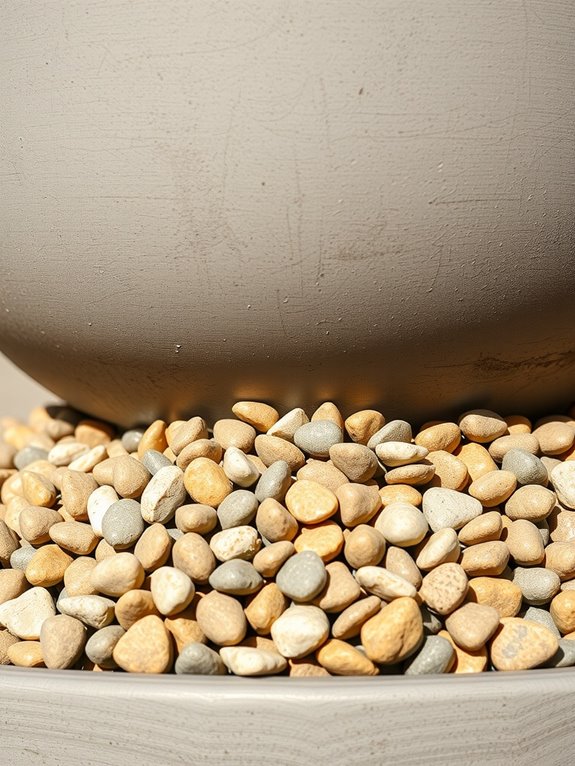
Now that you understand why drainage matters, let’s talk about the easiest way to create it: rocks and gravel. Lay landscaping rocks 2–3 inches deep at the bottom of your planter, using pea gravel or 3/8-inch river rocks. Both options let water flow right through while holding up your soil above them.
If your planter’s tall and needs more than 2–3 inches of rocks, add landscape fabric between the rocks and soil. This simple step prevents soil from filtering down and clogging your drainage layer. The fabric acts like a barrier, keeping everything in its proper place while water still moves freely.
Clear containers give you a bonus: you can use decorative stones as your visible drainage layer and actually see them doing their job. It’s functional and looks nice at the same time. You’re basically building a water-escape route that keeps roots happy and plants from sitting in soggy soil.
Horticultural Charcoal in Your Drainage Layer: Why It Helps
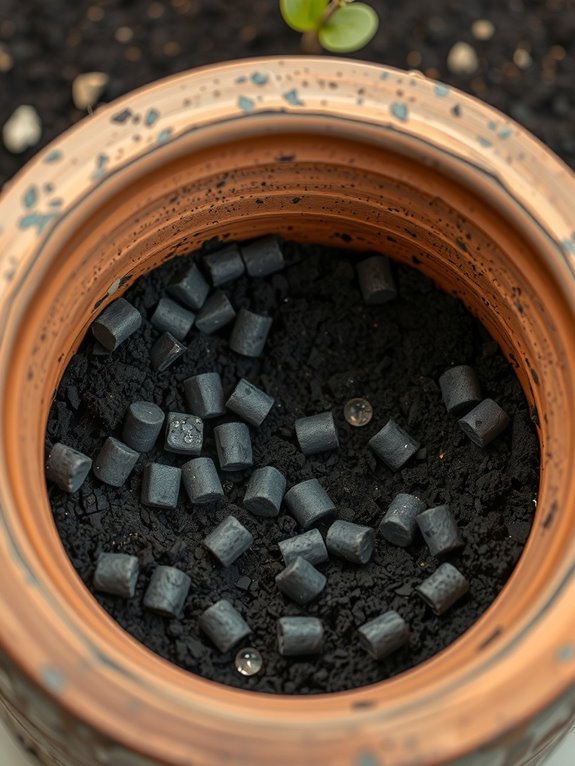
Once you’ve laid down your rocks and gravel foundation, horticultural charcoal becomes your next logical layer. This lightweight material absorbs excess moisture while suppressing odors and the microbial growth that thrives in wet conditions. The positioning matters more than you might think: place a thin layer of charcoal directly on top of your rocks, not underneath them. This keeps roots from getting tangled while still letting the charcoal do its job on moisture control.
Think of it as your drainage layer’s supporting actor. The charcoal promotes better airflow and helps moisture distribute evenly through your potting mix rather than pooling in one spot. You’re building better drainage, sure, but you’re also creating an environment where plants have what they need to develop strong roots and steady growth.
Landscape Fabric in Drainage Layers: When You Need It
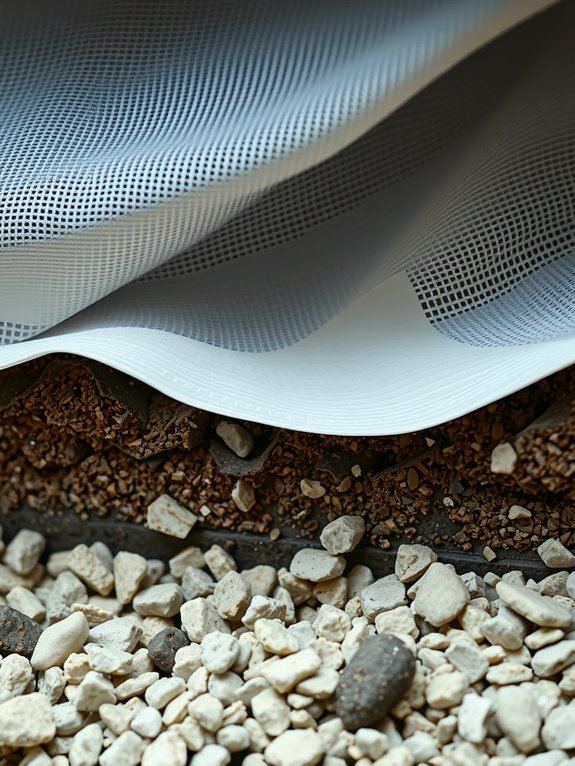
When your planter’s bottom sits taller than 2–3 inches, landscape fabric becomes a practical tool against soil loss. You’re creating a protective barrier that lets water pass through while keeping soil in your pot instead of pooling at the bottom.
Landscape fabric works beautifully alongside rocks or charcoal fillers, maintaining the drainage pathways your plants need. You can layer multiple sheets if your container is opaque, ensuring solid separation between soil and filler materials. This prevents that frustrating muddy mess while supporting healthy root zones.
The fabric handles the unglamorous work—managing moisture and preventing compaction—so you can focus on growing plants. It’s the kind of helper every gardener appreciates.
Pottery Shards as Drainage Layer Material: Pros and Cons
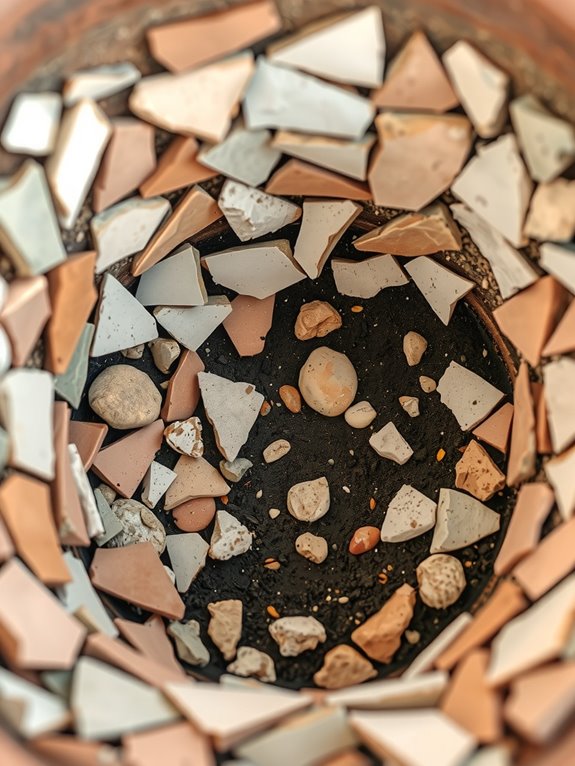
You’ve probably got broken ceramic plates or mugs sitting around, and here’s the practical truth: they work well for drainage layers. Pottery shards are inexpensive, easy to find, and their porous structure allows water to move through freely while letting air circulate. This keeps your soil from becoming that heavy, compacted mess that stays soggy after watering.
The real limitation is that shards can shift and settle over time, especially when you’re digging around or adding plants above them. They won’t act as a solid barrier the way a proper landscape fabric does. The smart approach is layering pottery shards under landscape fabric or activated charcoal—you get the drainage benefits of the shards plus the stability and filtration you actually need. This combination of about 1 to 2 inches of shards topped with fabric creates a system that lets water pass through while keeping soil particles from filtering down and clogging your drainage layer.
Pottery Shards Benefits
Why not raid your broken ceramic pots for a solution that’s already sitting in your recycling bin? Pottery shards work brilliantly as a drainage layer, elevating your root zone above settled soil so excess water drains away efficiently. It’s practical recycling that actually serves a purpose.
Here’s what makes them shine:
| Benefit | Details | Why It Matters |
|---|---|---|
| Cost-Effective | Free from broken pots | Stretches your plant budget |
| Accessible | Widely available everywhere | No special shopping trips needed |
| Safe | Inert, no chemical leaching | Protects your plants naturally |
You’ll arrange shards in a 2–3 inch layer at your pot’s bottom, creating immediate drainage improvement. The broken pieces create air pockets that let water pass through rather than pooling around roots. They’re completely safe for indoor plants and won’t leach anything harmful into your soil. This straightforward approach gives you reliable water management without needing any fancy equipment or systems.
Potential Drawbacks Explained
While pottery shards seem like a practical recycling solution, they come with real limitations worth understanding before you commit to using them. Fine soil particles gradually filter down through your drainage layer over time, clogging it and reducing its ability to move water where you need it to go.
Compaction naturally occurs as moisture settles into the layer, which further slows water movement through the shards. You’ll also notice that organic debris and micro-moss slowly accumulate in the space between pieces, compromising drainage even more. This means you’ll need to inspect your drainage layer periodically to catch problems before they hurt your plants.
Here’s what pottery shards won’t do: they can’t actively remove excess water from your planter. You’re still responsible for managing moisture levels yourself to prevent root rot from developing. Think of shards as a helpful tool, not a solution that works on its own.
Shards perform best when paired with landscape fabric in containers that are at least 12 inches tall, creating a 2 to 3 inch drainage layer that requires genuine attention to function properly. The fabric prevents soil from washing down into the shards while still allowing water to pass through. Without this setup and regular monitoring, you’ll find that pottery shards alone don’t solve drainage problems the way many people hope they will.
Activated Charcoal or Regular Charcoal: Here’s the Difference
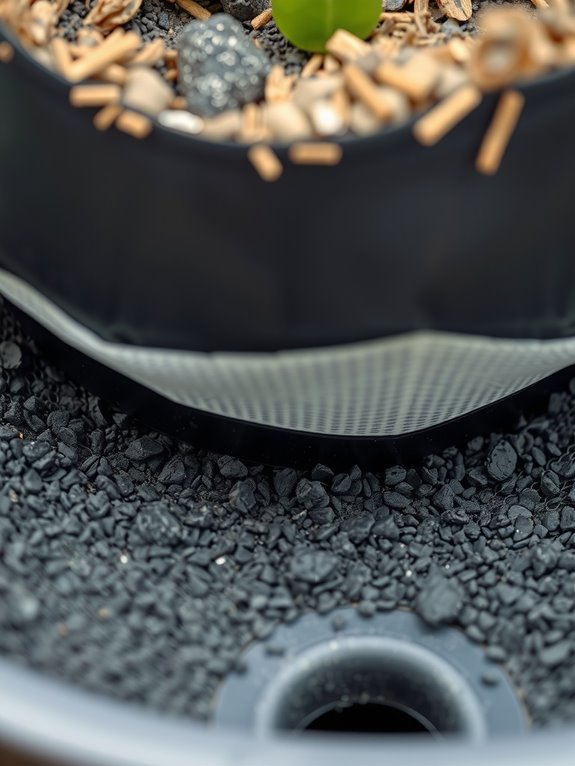
When you’re picking charcoal for a drainage-free planter, activated charcoal does the better job because its porous structure soaks up way more toxins and odors than regular charcoal can handle. Think of it like the difference between a sponge with tiny holes everywhere versus one that’s mostly solid—activated charcoal just has more surface area to work with. Regular charcoal will help with some smell, but it won’t absorb moisture or fight that musty funk nearly as well.
The right amount matters here. Use just a thin layer—about one inch—of activated charcoal at the bottom of your planter. Adding more won’t improve how water drains or help your plants in any way; it only eats up valuable soil space that your plants actually need to spread their roots.
Activated Charcoal’s Filtering Power
Not all charcoal is created equal, and that distinction really matters when you’re setting up a drainage-free planter. Think of activated charcoal as a microscopic sponge that traps impurities and odors that would otherwise stagnate at your pot’s bottom. You’re basically building a filtering shield for your plant’s roots.
Here’s the key difference: regular charcoal burns in fireplaces, but activated charcoal absorbs chemicals and microbes through a special activation process that makes it far more porous. When you layer it thin at your planter’s base—about half an inch to an inch—you’re conditioning the soil without causing waterlogging problems. Pair it with a drainage layer of pebbles or larger material for maximum effectiveness.
| Feature | Regular Charcoal | Activated Charcoal |
|---|---|---|
| Purpose | Fuel/combustion | Adsorption |
| Filtering | Minimal | Excellent |
| Root protection | Basic | Superior |
| Best use | Fireplaces | Planters |
The beauty of activated charcoal is that it works quietly in the background, keeping your soil fresh and your roots protected from the buildup that happens when water sits too long.
Regular Charcoal Limitations
Regular charcoal sounds like a logical choice—it’s cheaper and easier to find than activated charcoal. But hold on before you toss it into your non-draining planter, because regular charcoal has some real drawbacks for moisture management.
Breaks down over time. Regular charcoal deteriorates slowly, creating fine dust and particles that accumulate in your soil. These tiny bits clog spaces between soil particles, which is the opposite of what you want. You’re essentially replacing good drainage with a muddy mess.
Doesn’t absorb moisture effectively. Without activation, regular charcoal can’t pull water out of the soil the way activated charcoal does. Your plant roots end up sitting in inconsistent dampness—sometimes wet, sometimes dry—and that instability stresses them out. Activated charcoal, by contrast, has a porous structure with lots of tiny pockets that actively trap and hold excess moisture.
Lacks filtering power. Regular charcoal can’t condition soil or reduce harmful microbial buildup the way activated charcoal does. Those activation-created pores are what give activated charcoal its filtering abilities. A quarter-inch to half-inch layer of activated charcoal above your drainage holes does actual work in your pot.
You’re better off spending a bit more on activated charcoal. It stays stable long-term and keeps your soil environment balanced instead of becoming part of the problem.
Choosing The Right Type
So which charcoal should you actually buy for your drainage-free planter? Activated charcoal is the better choice here. It has higher porosity than regular charcoal, which means it absorbs way more moisture and odors in your root zone. Picture it like a sponge covered in tiny holes everywhere, catching impurities that regular charcoal would simply miss.
Layer activated charcoal above your drainage layer in a thin band—about half an inch is the sweet spot. This setup keeps your soil healthier by stopping nasty microbes from multiplying in wet conditions. The antimicrobial properties in activated charcoal make it worth the slightly higher cost, especially when your planter has no drainage holes. Regular charcoal handles basic drainage and odor control, but activated charcoal does the real work where it counts most.
Layering Order: The Right Sequence for Long-Term Plant Health
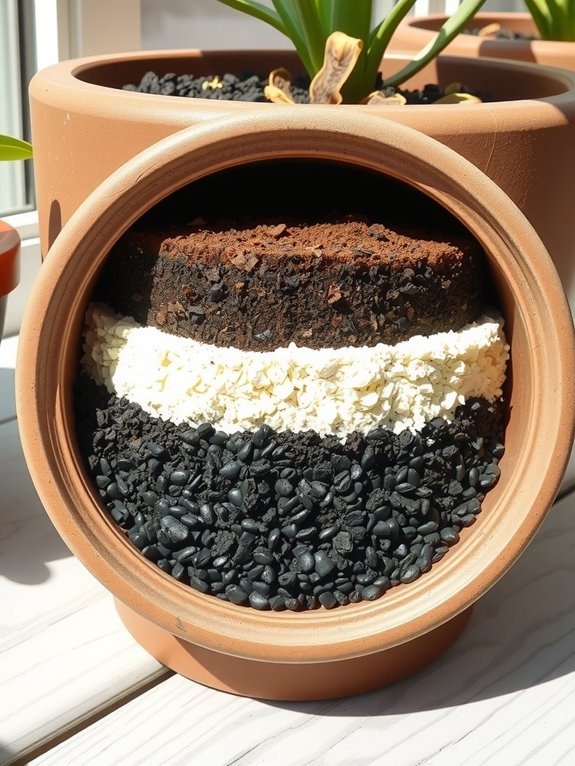
Why does layering matter so much when you’re working with a drainage-less planter? You’re building a filtration system that manages moisture and prevents root rot. Think of it like creating a safety net for your plant’s health.
Landscaping rocks (2–3 inches) – Start at the bottom with these. They create a drainage buffer that keeps soil from compacting and sealing off, which would trap water right where your roots sit. This layer does the heavy lifting of preventing pooling.
Horticultural charcoal layer – Spread a thin layer of charcoal next. It absorbs excess moisture and conditions your soil while getting rid of odors that signal problems brewing beneath the surface.
Merrifield Potting Mix (halfway fill) – Pour in your potting mix until the container is about halfway full. This well-draining foundation gives your plant a stable home before you position it in the container.
This strategic stacking ensures water moves through the layers instead of gathering where roots sit. You’re not just filling a pot; you’re building a system that works for the long haul by keeping moisture levels balanced and air flowing where it needs to go.
How Thick Should Your Drainage Layer Be?
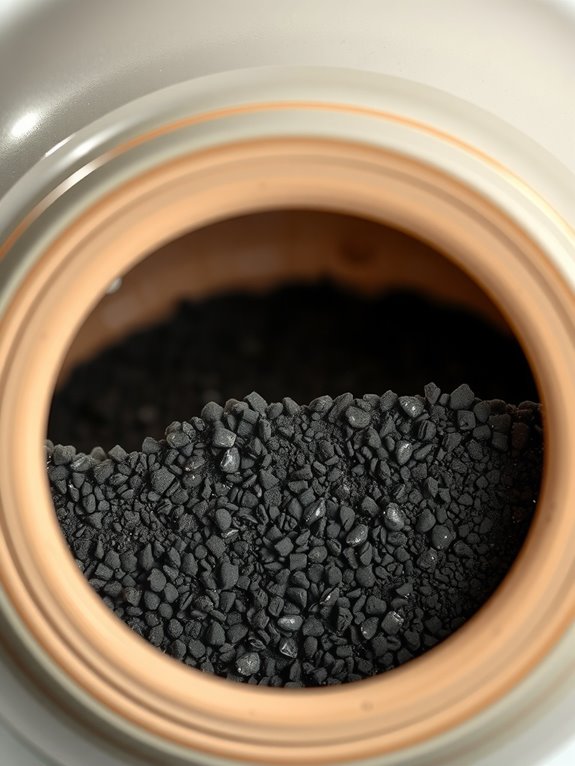
Aim for a drainage layer around 2–3 inches thick, which gives excess water plenty of room to collect and flow away from your soil. Different materials pack down differently, so pea gravel and 3/8″ river jacks might need slight adjustments depending on which one you pick. Getting this depth right really matters. Too shallow and water pools right against your roots, suffocating them. Too deep and you’re stealing planting space you could actually use for plants.
Optimal Layer Depth Guidelines
Getting your drainage layer thickness just right is where real plant success begins—and it’s simpler than you’d think. You’re creating a safe zone for water at the bottom of your pot, protecting roots from sitting in moisture.
Standard depth: 2–3 inches using pea gravel or 3/8″ river rocks works well for most containers. The space lets excess water escape instead of pooling around your roots, which reduces waterlogging risks.
For tall planters, lay landscape fabric on top of the rocks. This prevents soil from sinking into your drainage layer and mixing with the rocks below, which would eventually clog the system.
A thin dusting of activated charcoal on top of the rocks absorbs odors and toxins before you add soil. You don’t need much—just enough to cover the surface lightly.
This straightforward setup gives your plants the breathing room they need to develop healthy roots and handle watering day without stress.
Material Volume Considerations
About 2-3 inches of drainage material at the bottom is what you’re looking for. This depth gives excess water enough room to collect away from your roots while leaving plenty of space for actual soil. For taller containers that need more material, slip landscape fabric between the rocks and soil so everything stays in place and doesn’t sink into one muddy layer.
Pea gravel or 3/8″ river gravel work wonderfully as your base materials. They’re budget-friendly, hold up well over time, and won’t compress down into a dense, waterlogged mess. The key is remembering you’re building a functional buffer zone, not filling the entire pot with rocks.
Once your gravel layer is set, add a thin charcoal layer on top to help filter water and prevent odors. Then comes your potting soil. This simple stacking method keeps air flowing through your pot and spreads moisture evenly so your plants get what they need without sitting in soggy conditions.
Clay Pebbles and Expanded Shale: Modern Drainage Layer Options
Ever notice how regular soil can trap water like a sponge when your pot lacks drainage holes? That’s where clay pebbles and expanded shale become useful alternatives for improving water management.
These materials work well together for a reason. Clay pebbles stay lightweight and inert, creating air pockets that let excess moisture escape from your roots. Expanded shale boosts porosity while resisting compression under soil weight, keeping those gaps open where they count. Both materials reduce capillary wicking, which prevents water from creeping back up into your root zone where it shouldn’t be.
For the best results, add a thin visible layer at the pot bottom—roughly one to two inches does the job nicely. This measurement gives you reliable drainage without drowning your plant’s roots in the process. The layer sits between the soil above and the pot bottom below, catching water that drains down and holding it in those air pockets until it evaporates.
What makes these materials stand out is their stability and reusability. You can rinse them off and use them again in different pots, which saves money over time. They’re about as close as you’ll get to hydroponic-style drainage while still using a traditional planter setup. Your plants respond well to the improved air flow and water management at the root level.
How Drainage Layers Create Airflow and Prevent Root Rot
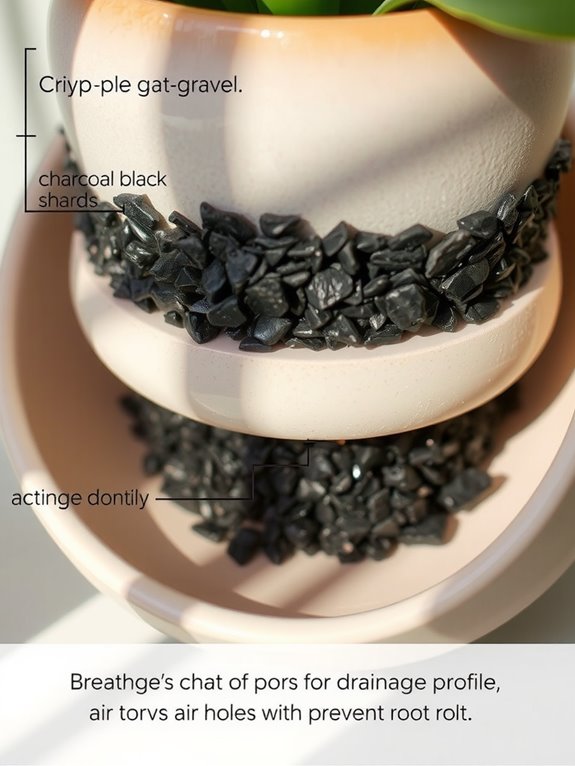
Think of a drainage layer as your planter’s breathing system. When you stack rocks or gravel at the bottom, you create invisible highways for water to escape downward instead of pooling around your roots. Roots need oxygen between waterings, and stagnant air breeds rot faster than you’d expect.
That 2-3 inch drainage layer lets air circulate beneath your soil, keeping roots happy and healthy. Here’s how the layers work together: place landscape fabric on top of your rocks to prevent soil from filtering down and clogging your system. Add charcoal above the fabric—it absorbs excess moisture and odors that invite problems.
You’re not dropping rocks in randomly. You’re engineering a moisture-management system that turns even non-draining planters into root-friendly homes.
Soil Amendments for Drainage Layer Success
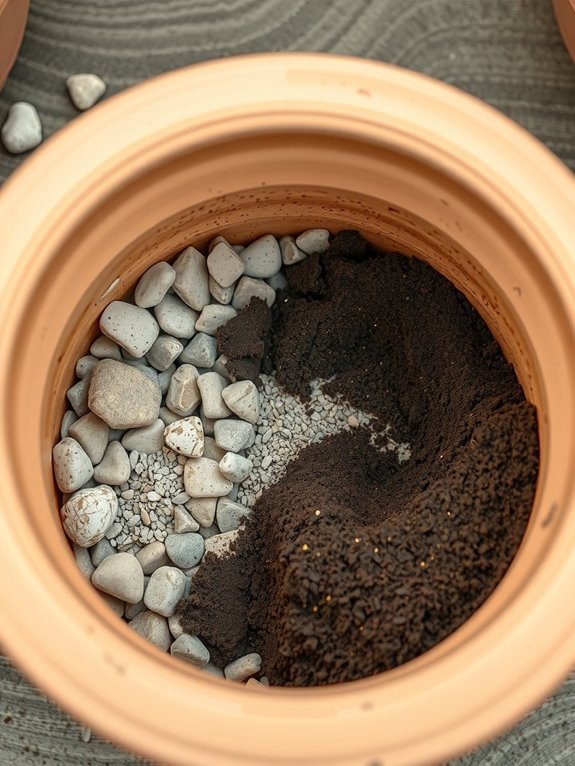
Start with 2–3 inches of pea gravel or 3/8″ river jacks at the bottom layer, which creates those pathways water needs to drain downward. The rocks prevent soil from compacting and blocking your drainage system before it even gets going.
Next, add a thin charcoal section above the rock. Charcoal absorbs excess moisture that hangs around longer than you’d like and pulls out odors that tend to build up in moist environments. It also conditions your soil by introducing beneficial minerals as it breaks down over time.
Your soil mix sits on top and should contain coarse fillers—think perlite, pumice, or chunky bark pieces—that work together to keep water moving through rather than pooling around roots where it can cause rot. The combination of these three layers creates a system where water flows down through each stage instead of getting trapped and suffocating your plant’s root system.
Creating Effective Drainage Layers
The foundation of healthy plants in containers without drainage holes starts with a solid strategy: building layers that work together to move water safely away from roots. When you understand how water flows through a planter, you can design a system that actually works.
Start with these essential components:
- Base layer: Use 2–3 inches of rocks, pea gravel, or 3/8″ river jacks to create space for excess water to pool without touching soil. Think of it like creating a little reservoir at the bottom where water can sit harmlessly while air pockets keep things from getting soggy.
- Protective barrier: Line tall containers with landscape fabric to prevent soil from settling into those gaps while still letting water flow freely downward. This keeps your soil in the upper zones where roots can access it, rather than having it wash down and compact in your drainage layer.
- Odor control: Add activated charcoal above the drainage layer to absorb smells and stop microbial buildup from developing. It works quietly in the background, keeping things fresh without you having to fuss with it.
This layered approach prevents waterlogging while letting water move capillary action through the soil above. Those gaps between rocks matter tremendously—they’re what keep roots happy and healthy, even when you can’t poke holes in the bottom of your container. The spacing lets air circulate and gives water somewhere safe to go instead of sitting around your plant’s roots.
Soil Amendment Material Options
Once you’ve built your drainage foundation with rocks and charcoal, the layer above it deserves just as much attention. Think of amendments like perlite, pumice, and orchid bark as your potting mix’s best friends—they work together to keep soil from getting dense and compacted. Those lightweight white perlite bits act like tiny sponges, spreading moisture evenly across your pot instead of letting it settle in one spot. Pumice and orchid bark add similar benefits while giving roots actual space to breathe.
The real trick is mixing these amendments strategically rather than dumping them in randomly. When you layer perlite, pumice, and orchid bark together, you’re essentially creating little highways for water to travel downward through the soil. This prevents the frustrating situation where water just pools at the bottom and roots sit in soggy conditions. A solid mix might look like combining two parts potting soil with one part perlite, one part pumice, and one part orchid bark—though you can adjust these ratios based on what you’re growing.
Adding activated charcoal to your amendment blend does double duty: it soaks up excess moisture that would otherwise suffocate roots, and it helps keep harmful bacteria and fungi from taking hold. This combination approach gives your roots the drainage they need while still holding enough moisture to actually hydrate them, hitting that sweet spot between wet and dry that most plants appreciate.
Layering Strategy and Placement
How’s your drainage foundation looking? You’re building something smart here. Let’s talk soil layering—it’s the careful arrangement that keeps containerized plants healthy and happy.
Start with this strategic approach:
- Lay 2–3 inches of landscaping rocks at the bottom to create breathing room for excess water
- Add landscape fabric if your pot’s taller than 12 inches, preventing soil from filtering down into your drainage layer
- Top it with horticultural charcoal to absorb excess moisture and prevent odors from building up
The rocks give water a clear escape route while creating air pockets underneath. The fabric acts like a barrier, keeping soil particles where they belong instead of settling into your drainage zone. The charcoal sits in the middle, soaking up moisture that might otherwise pool and cause rot.
Then you’ll fill halfway with quality potting mix. This layered approach turns any container into a functional home for plants by managing water flow and air circulation where roots actually live. The rocks stay loose, the fabric stays intact, and the charcoal keeps doing its job quietly in the background—all working together to give your plants what they need.
Common Mistakes When Building Drainage Layers
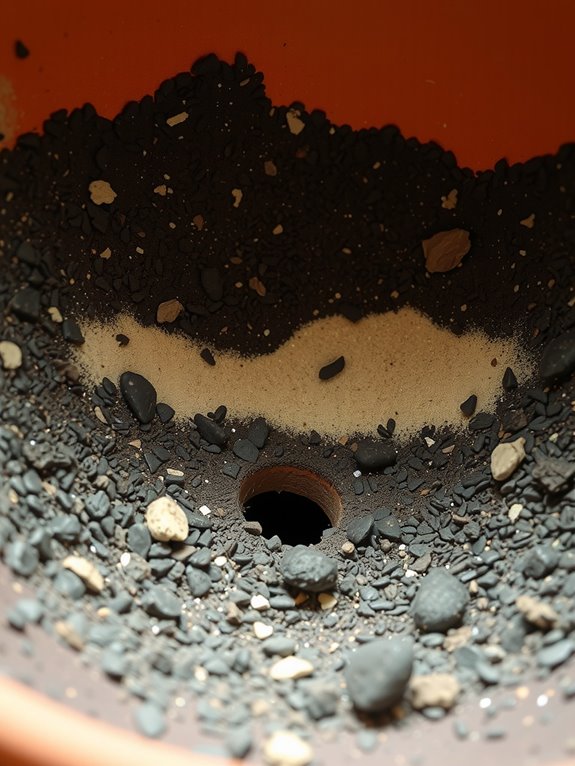
Many gardeners think that simply dumping rocks into the bottom of a planter solves their drainage problem—but here’s where things get tricky.
You’ll want to avoid these common pitfalls:
| Mistake | Why It Fails | Better Approach |
|---|---|---|
| Relying only on gravel | Soil saturates; water gets trapped | Add landscape fabric underneath |
| Making the rock layer too thick | Compacts soil and restricts drainage | Keep rocks to 2–3 inches deep |
| Using organic fillers like pine cones | Introduces microbes and alters pH | Stick with inorganic materials only |
The real trick is understanding that your drainage layer must actively move water away from roots, not collect it. Landscape fabric works by preventing soil from sinking into the rocks and clogging your drainage pathways. Think of it as a fence that keeps the fine particles out while letting water flow freely underneath.
Keep your rock layer between 2 and 3 inches deep. Anything thicker compacts under the weight of the soil above and defeats the whole purpose. You can add a thin layer of activated charcoal to control odors if you want, but minimal means minimal—thicker layers just block water movement instead of helping it along.
Skip organic materials like pine cones, bark chips, or coconut husk entirely. They break down over time, introducing microbes and changing your soil’s pH balance. These materials also hold moisture rather than releasing it, which works against everything you’re trying to accomplish. Stick with inorganic options like perlite, pumice, or gravel, and your moisture management will stay balanced and predictable.
Drought-Tolerant vs. Moisture-Loving Plants: Different Drainage Setups
Your plant choice fundamentally changes how you’ll set up that drainage layer, and it’s worth thinking through before you plant.
Drought-tolerant plants are forgiving with steady, drier conditions and actually prefer less frequent watering. They’ll do fine without elaborate drainage systems. Create a thicker buffer layer of rocks or pebbles—aim for 2 to 3 inches—to keep roots safely away from any moisture pooling below. This cushion prevents root rot even if water does collect at the bottom of your planter.
Drought-tolerant plants thrive with minimal watering and thick rock buffers—2 to 3 inches prevents root rot from moisture pooling below.
Moisture-loving plants need a different approach. They want a soil mix that drains quickly enough to prevent waterlogging while staying consistently moist. An inner pot system works well here, letting excess water settle below the root zone so it won’t cause damage. Check your soil regularly—stick your finger in about an inch deep to feel whether it’s drying out or staying soggy.
When combining both types in one planter, position drought-tolerant species toward the edges where they’ll dry out faster. Place moisture-lovers closer to the inner pot setup where they can access that reservoir of water. Observation and thoughtful positioning matter more than following rigid rules, since every planter’s microclimates behave a bit differently based on light, humidity, and air circulation in your space.
Signs Your Drainage Layer Isn’t Working (and How to Fix It)
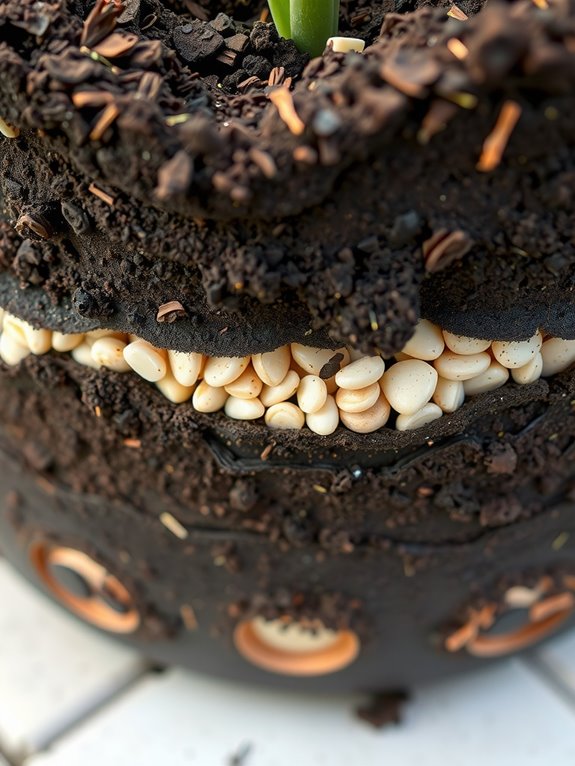
What’s happening down there? If you’re noticing persistent soggy soil or a foul odor, your drainage layer might be failing you. Dark, mushy roots indicate serious trouble, and standing water means your system isn’t moving moisture away effectively. Lift your planter and feel the weight—if it stays heavy and wet for days, that’s your signal to act.
Fixing it is straightforward. Replace or improve your drainage layer with coarser materials like perlite, pumice, or gravel that actually move water through the soil rather than trapping it. A 1 to 2-inch layer of these materials at the pot bottom creates space for excess water to collect and eventually evaporate or drain away.
Add 1 to 2 tablespoons of activated charcoal mixed into your drainage layer to absorb moisture and odors that come from trapped water breaking down organic matter. The charcoal works because its porous structure captures water molecules and funky smells before they reach your plant roots.
If your current pot lacks drainage holes, switch to one with at least two quarter-inch holes, or use the staging method by placing a smaller inner pot inside a larger decorative one. This inner pot holds your soil and plant while the outer pot sits slightly above a water layer, giving roots room to breathe while excess moisture collects below.
Do You Need a Saucer, Riser, or Inner Pot?
- Saucer – This catches water that drains from your pot, but you’ll need to empty it every few days to prevent root rot from sitting water. Think of it as a temporary catch basin rather than a permanent solution.
- Riser or lift – These platforms, usually 2-4 inches tall, elevate your planter off the surface so air flows underneath the pot. Better airflow means moisture doesn’t get trapped against the bottom, which stops that damp, moldy smell before it starts.
- Inner pot with drainage – This approach nests a smaller pot with drainage holes inside your decorative container. Water drains through the inner pot while your outer container stays dry and keeps that finished look you wanted.
The inner pot method is honestly your best option here. You get proper drainage working in the background while your decorative container stays clean and dry on top. It’s the practical middle ground between function and style, letting water escape through the drainage holes without you having to babysit a saucer or worry about moisture damage to your furniture.