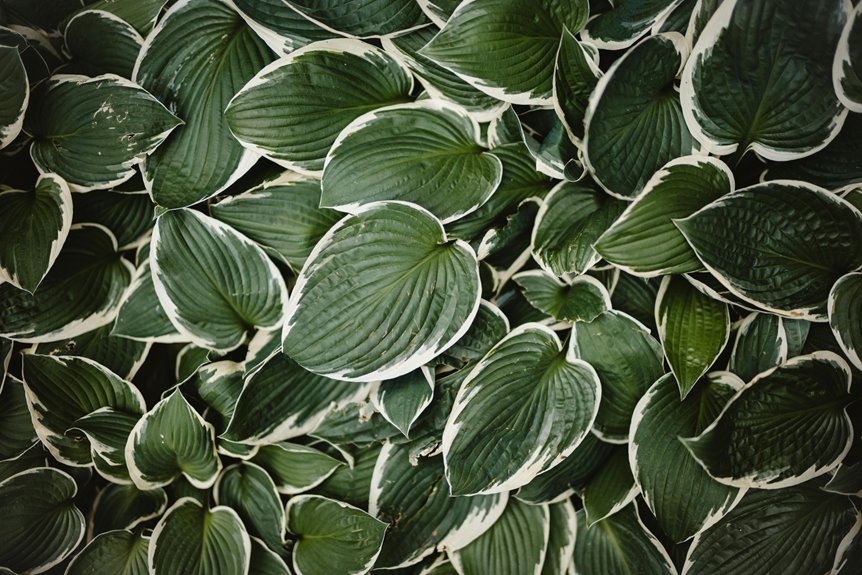
You can layer your hosta garden nicely by pairing them with five complementary shade plants that each bring something different to the table. Astilbe adds feathery plumes in white, pink, red, or purple, with heights ranging from 8 to 48 inches depending on the variety you choose.
Bleeding heart delivers early spring color with its arching stems before your hostas even emerge, giving you color when you need it most.
Coral bells provide year-round foliage interest in burgundy, copper, and lime green, so your garden doesn’t go flat once the flowers fade.
Ferns create lush texture contrast in moist shade, while foamflower blankets dense areas with delicate spring blooms and fills in spaces that might otherwise look bare.
Each plant earns its place by offering something your hostas alone can’t deliver—whether that’s early-season color, textural variety, or extended seasonal interest.
Astilbe: Feathery Texture and Shade Tolerance
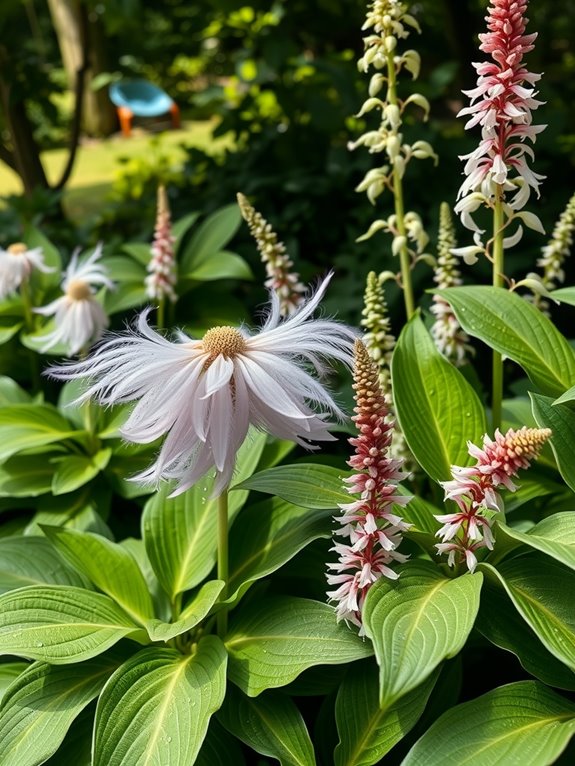
If you’re looking to add vertical interest and delicate movement to your hosta bed, astilbe is worth considering. These shade-loving perennials thrive in partial shade alongside hostas, creating a garden pairing that actually works. You’ll appreciate their feathery plumes in white, pink, red, and purple that rise above hosta mounds, offering textural contrast that your eye naturally follows.
Astilbe’s dark green, upright foliage highlights hostas’ bold leaves while filling in gaps at mid-season to reduce exposed soil. The plants work well together because they share similar growing preferences, particularly a love for consistently damp borders and areas near streams. Hardy through zones 3–9, astilbe grows anywhere from 8 to 48 inches tall depending on the cultivar you choose, so you can pick heights that suit your design plan.
Beyond their good looks, these moisture-loving plants are deer resistant and require minimal fussing once established. That combination of visual appeal and low maintenance makes them practical companions for any hosta planting.
Bleeding Heart: Early Spring Color Before Hostas Emerge
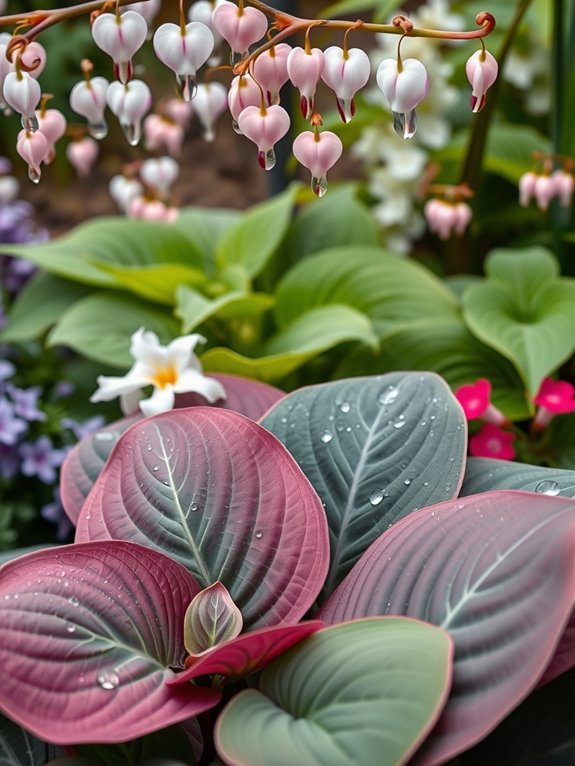
Want to stretch your hosta garden’s visual appeal across more seasons? Bleeding Heart, scientifically known as Lamprocapnos, delivers exactly that. This shade perennial emerges in early spring with arching stems showcasing delicate pink flowers that’ll catch your eye before hostas even unfurl their leaves.
You’ll appreciate how Bleeding Heart grows 2 to 3 feet tall, creating vertical interest that fills those awkward gaps in your shade garden. The lacy foliage provides soft contrast against hosta textures, then gracefully disappears after blooming, leaving space for your hostas to shine without competition for attention.
Here’s the practical side: this hosta companion thrives in the same cool, moist conditions your hostas love, so you’re not juggling different care routines. It’s also deer resistant, meaning you won’t battle browsing damage like you might with other spring bloomers. Plant Bleeding Heart alongside hostas for continuous seasonal color without the extra work of managing separate plant needs.
Coral Bells: Foliage Interest Year-Round
Ever notice how hostas deliver excellent leaf texture but stick mostly to various shades of green? That’s where coral bells—or Heuchera—step in as a real asset for your shade garden. These perennials offer foliage colors ranging from burgundy and copper to lime green and blue-green, creating rich contrast alongside those reliable hostas.
At just 8–12 inches tall, coral bells fit neatly into the understory layer of mixed borders, filling that gap between ground level and taller plants. The real payoff comes year-round, particularly when small flowers show up mid-summer and draw hummingbirds into your beds. They handle zones 3–9 without fussing and actually prefer partial sun to shade, making them natural fits for woodland settings where light filters through tree canopies.
Most varieties resist deer, though picking established cultivars means fewer problems down the road. The foliage shifts color subtly with temperature changes—deeper reds appearing as nights cool in fall, then brightening again in spring. You can use coral bells in containers on a porch, tuck them into border edges, or plant them under taller perennials and shrubs to add personality to spaces that most plants find too shady.
Ferns: Lush Contrast in Moist Shade
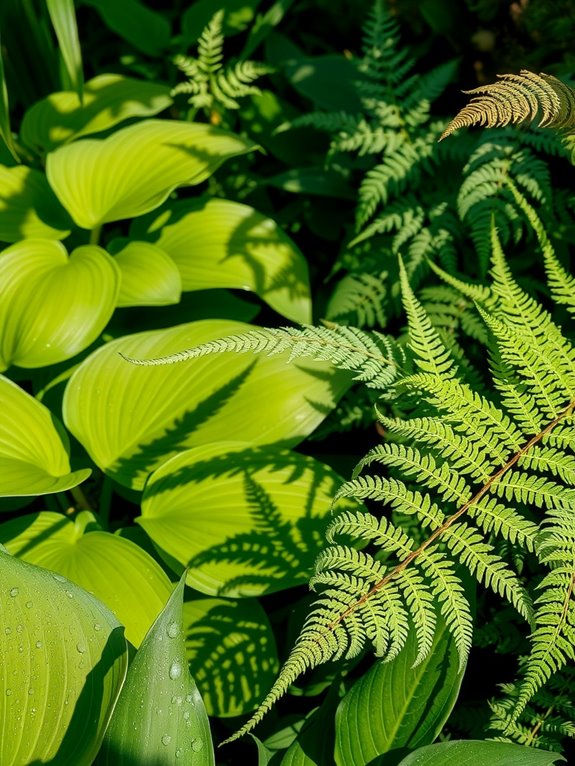
What’s the secret to making those bold hosta leaves look even more dramatic? Add ferns as your companion plants. These deer-resistant perennials create wonderful texture contrast with their delicate, feathery fronds against hostas’ broad foliage.
Ferns thrive in moist shade, making them perfect for woodland garden settings alongside your hostas. They’re shade-loving plants that flourish in conditions where many other species struggle to survive. You’ll find fern species ranging from tiny 2-inch groundcovers to impressive clumps reaching 3 to 4 feet tall, letting you layer plantings at different heights for visual depth.
These long-lived perennials are genuinely easy to grow once you match them to the right spot. Choose evergreen or semi-evergreen varieties if you want visual interest through winter months. Position them near water features or in partial to full shade where they’ll stay consistently moist, and your shaded borders will feel authentically woodland-inspired rather than bare and boring.
Foamflower: Delicate Ground Cover for Dense Shade
If you’re looking to fill in those bare patches beneath your hostas, foamflower (Tiarella) is worth considering. This shade-loving plant grows well in Zones 4-9, spreading as a ground cover where many other plants struggle in dense shade.
The plant produces delicate, frothy blooms in spring—typically pink or white—that rise above the foliage and create a nice visual contrast against your hostas’ broad leaves. The cultivar ‘Cutting Edge’ offers distinctive leaf markings that stand out particularly well in woodland settings.
Plant foamflower in partial sun to full shade in moist, well-drained soil. As a hosta companion, it also helps suppress weeds while establishing itself as a reliable ground cover. The combination gives you that layered woodland look without requiring much fussing once it’s settled in.