The outdoor space between your house and the street has three main names, and which one locals use tells you a lot about what that area actually looks like. In North America, “front yard” is the catch-all term for the whole space, whether it’s grass, gravel, or a mix of both. The UK and Canada tend to say “front garden,” which hints that planted beds and flowers probably dominate the scene. If someone specifically mentions “front lawn,” they’re talking about a grass-focused space, usually maintained to about 2-3 inches tall during growing season.
These names matter more than they might seem because they shape what people expect from the space and what kind of work it demands. When you tell a contractor you have a “front garden,” they’ll mentally prepare for beds that need mulch, plants that need spacing, and possibly irrigation lines. A “front yard” suggests more flexible use—maybe a small seating area, a pathway, or mixed plantings without the formal garden structure.
Knowing what your region calls this space helps you communicate your actual vision when hiring help or buying materials. If you live in an area where “front garden” is standard but you really want a low-maintenance lawn, saying so upfront prevents misunderstandings. The same goes the other way—if your neighborhood tends toward open yards and you want dense planting beds, being specific about that preference gets you better results from the start.
Front Yard, Front Garden, Front Lawn: What’s the Difference?
Ever notice how people use “front yard,” “front garden,” and “front lawn” almost interchangeably, yet they’re not quite the same thing? The confusion makes sense because these terms overlap in everyday conversation.
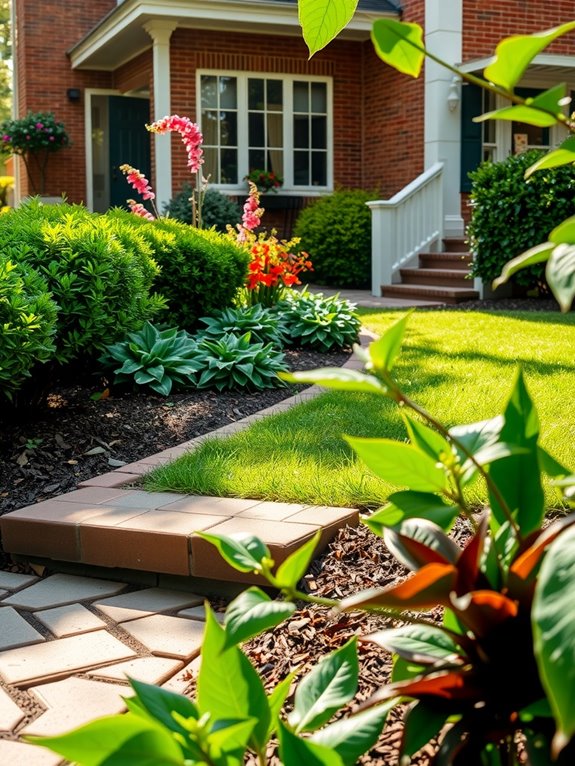
Your front yard is the entire outdoor space between your house and the street—think of it as your umbrella term that covers everything from the driveway to the mailbox area. Within that front yard sits your lawn, which is specifically the grass-covered section, typically measuring anywhere from a few hundred to several thousand square feet depending on your lot size. Then there’s your front garden: the cultivated planting beds where you’ve intentionally grown flowers or shrubs in organized rows or clusters.
The practical difference matters when you’re planning maintenance or talking with contractors. If you tell a landscaper you need work done on your “front yard,” they might assume you want the whole area handled—grass cutting, edging, maybe gravel raking on pathways. Say “front lawn” and they know you’re focused on that grass portion. Mention “front garden” and they understand you’re talking about the flower beds and shrubs specifically, not the turf.
In US English, “yard” gives you flexibility to describe driveways, paths, and landscaping all together in one conversation. This matters because your front space likely includes multiple features—a concrete walkway, a 3-foot-wide flower bed with mulch, maybe a section of lawn, and perhaps some decorative edging. Using the right term helps you communicate exactly which part needs attention or which area you’re redesigning.
Why Terminology Matters for Your Home’s Curb Appeal
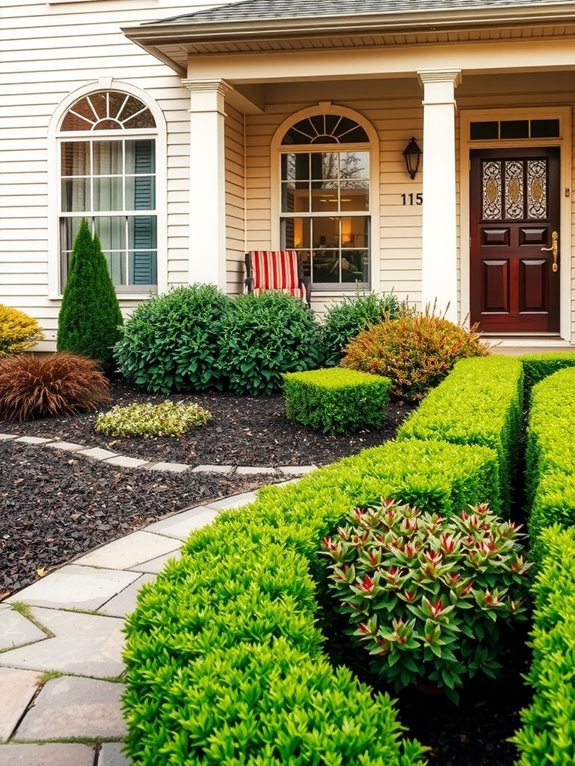
How you talk about your front space actually shapes how you’ll design and maintain it. When you call it a “front garden,” you’re mentally investing in cultivated plantings and thoughtful arrangements rather than just mowing grass. This subtle shift in language influences your curb appeal decisions significantly.
Thinking “front garden” usually means you’re planning flower beds, hedges, and borders that show real intention. You’ll probably invest time in seasonal plantings and color coordination, choosing complementary hues that work together from spring through fall. The “front yard” label, though, often defaults to lawn-focused maintenance and basic landscaping—think weekly mowing and occasional edging rather than deliberate plant selection.
Your word choice also signals to neighbors and visitors what matters to you about your home’s entrance. It communicates whether you’re prioritizing a manicured 50-by-20-foot lawn or designing with specific plants like dwarf boxwoods or Russian sage. Pick language that matches your actual vision, and your design naturally follows that path.
Regional Front Yard Naming Conventions Across North America
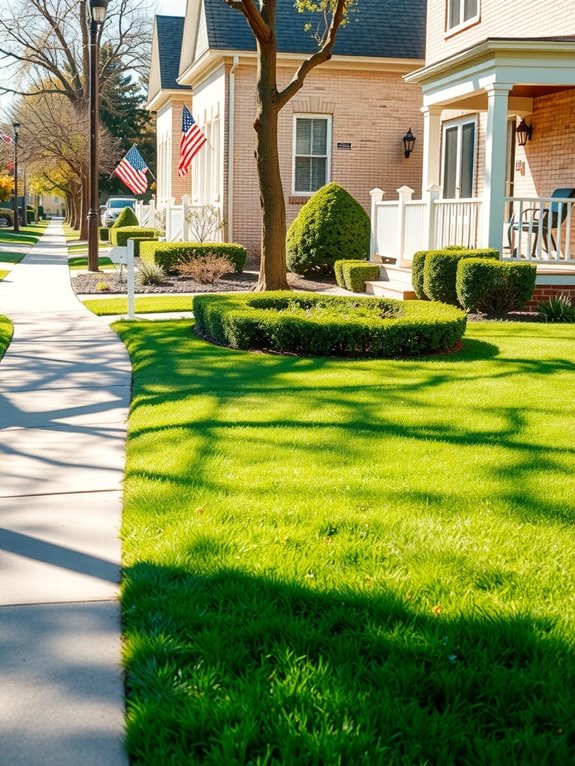
While your word choice shapes how you design your own front space, geography actually determines what your neighbors call it. Across North America, terminology shifts depending on where you live. In the United States, you’ll typically hear “front yard”—that broader area encompassing your lawn, driveway, and walkway. Meanwhile, if you’re in Canada or the UK, “front garden” might be the standard term your community uses.
These regional conventions reflect how people actually use the space. Your front yard serves as both a display zone and a transition buffer between your home and the street, usually spanning 10 to 30 feet from your foundation to the property line. Understanding local naming conventions helps you connect with your community and speak their language about your home’s exterior.
What “Front Garden” Means in the UK and Europe
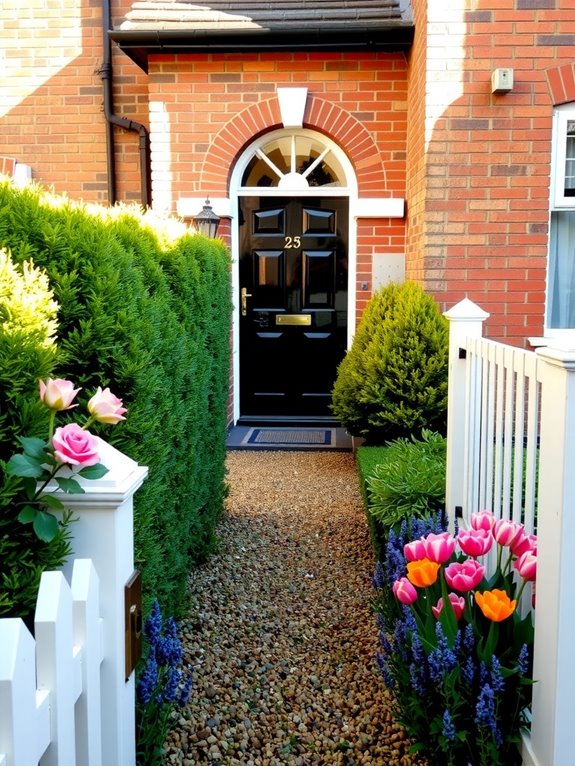
Cross the Atlantic, and you’ll notice both the terminology and attitudes toward front spaces shift noticeably. In the UK and Europe, people say “front garden” rather than “front yard,” and that distinction actually matters quite a bit. Your front garden isn’t simply a patch of grass—it’s a deliberately planted showcase that draws from cottage garden traditions with hedges, ornamental borders, and flowering plants arranged with intention rather than chance.
These spaces build real curb appeal through thoughtful design choices. Local communities sometimes host front garden contests that celebrate creative designs, and developers occasionally offer front garden incentives to buyers as a selling point. The approach reflects a genuine neighborhood tradition worth keeping alive.
You’ll also find that some British homes feature forecourts instead—smaller paved front areas measuring roughly 6 to 12 feet deep that serve as practical alternatives to planted gardens. Whether you’re planting heritage roses, laying gravel paths, or trimming hedges into neat shapes, your front garden represents a cherished part of how your street looks and feels to visitors and neighbors passing by.
Australian Front Yards: History and Modern Practice
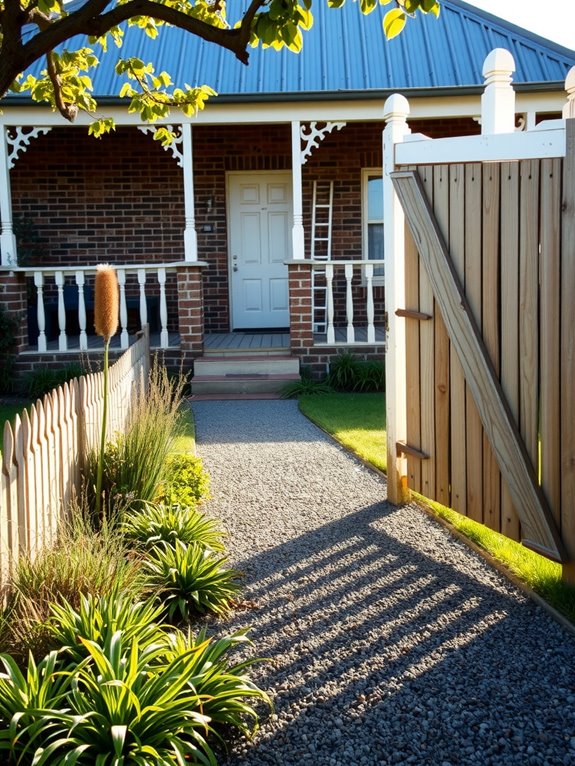
Australia’s front yard tells a different story than the ornamental gardens you’d find in Britain. Back in 1829, Australian regulations required a 14-foot buffer between your home and the street—a practical decision that created usable garden space rather than just decoration. By the early 1900s, this space evolved into a neighborly transition zone, with some areas ditching fences to encourage community connection.
Canberra’s mid-century development really cemented this vision. The government offered subsidies to support maintained front yards and create clear separation between front and back spaces. This policy shaped how Australian neighborhoods actually looked and felt for generations. Today, your front yard reflects these historical influences while balancing your own needs. You’ll likely see lawns, driveways, and mixed plantings—whether ornamental or edible—that blend privacy preferences with what you want to display. The result feels distinctly Australian, mixing practical function with personal style in ways that suit your region.
How Lawn, Garden, and Yard Work Together in Home Design
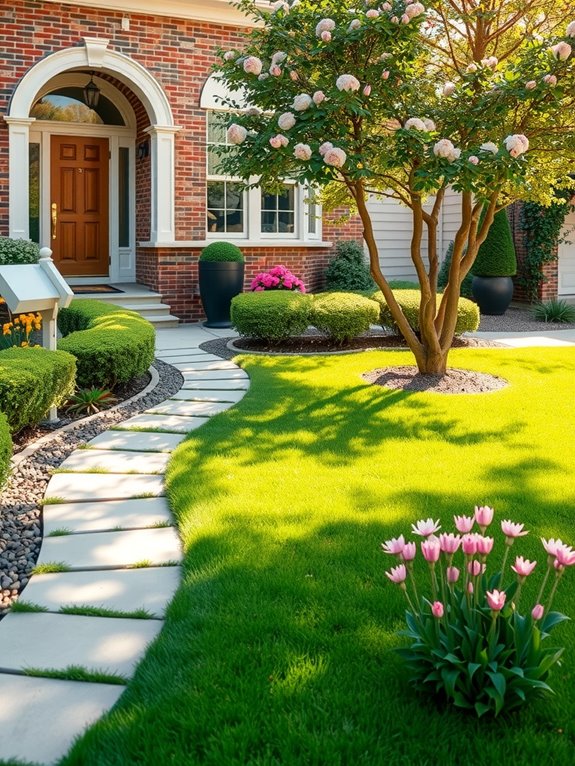
Ever notice how “yard,” “lawn,” and “garden” get tossed around like they’re interchangeable? They’re actually distinct pieces of your front yard puzzle, and understanding the difference makes a real difference in how you plan your space.
Your yard is the entire plot of land surrounding your house—the big picture. Within that space, your lawn is specifically the grass-covered area you mow regularly, typically requiring about 2-3 inches of height for healthy growth. Your garden, meanwhile, is where you cultivate flowers, vegetables, or herbs intentionally, often in defined beds that might measure 4 feet by 8 feet or even smaller containers.
Here’s how they work together in smart home design:
A clean, manicured grass base anchors your front yard visually and gives your eyes a place to rest. A well-maintained lawn also handles practical duties like foot traffic and water drainage. Flower beds and plantings create personality within the yard’s framework without overwhelming the space. The overall yard size determines what fits practically and aesthetically—a small 25-by-40-foot lot needs different planning than a quarter-acre space.
When you mix lawn and garden elements thoughtfully, you get both function and curb appeal. A lawn might take up 60-70 percent of a small front yard, with garden beds tucking into corners or along the foundation using mulch or landscape fabric as a base. This balance prevents your yard from feeling either bare or overstuffed.
Understanding these distinctions helps you design a front yard that actually works for your lifestyle and vision.
Front Yards as Display and Functional Spaces
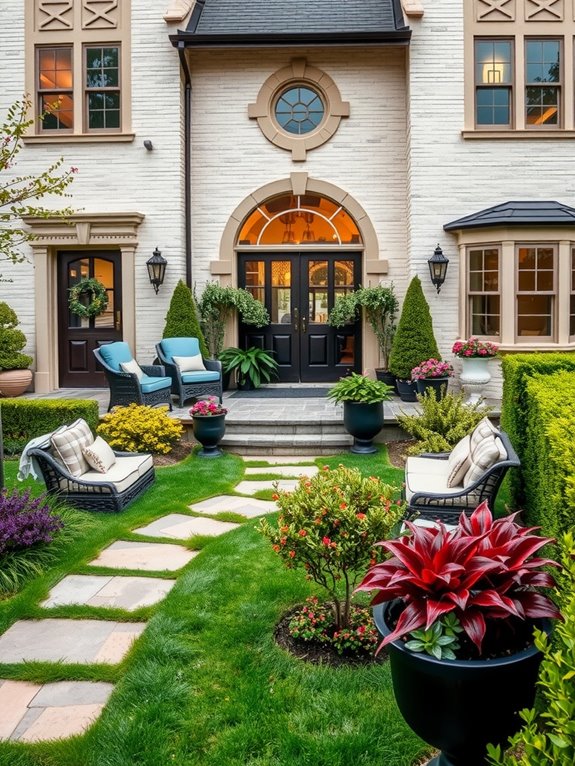
Your front yard pulls double duty—it’s got to look inviting while actually working hard for your household. You’re balancing that curb appeal with practical needs like safe walkways, driveway access, and seasonal upkeep that keeps everything functional.
The design challenge comes down to this: create a space that welcomes visitors with style while handling the foot traffic and maintenance demands of daily living. Think flowering borders and neat hedges alongside materials that perform. A 4-foot-wide mulched bed with perennials gives you color and texture without demanding constant fussing. Meanwhile, a 3-foot pathway of pavers or gravel gets people safely from the driveway to your door without trampling plantings.
Practicality and aesthetics work better together than against each other. A steel or vinyl edging keeps mulch in place and lawn edges clean with minimal effort. Hardscape materials like stamped concrete or composite decking age well and shed water properly. These choices aren’t just about looks—they’re about surfaces that actually stand up to winter salt, summer heat, and regular foot traffic.
The real satisfaction comes from knowing your front yard functions smoothly while still making a good impression. Neat hedges and flowering borders catch the eye, but a well-designed walkway and durable materials are what keep people saying “This place is really well-maintained.”
Display Versus Practicality
How’d you like your front yard to work—as a showstopper or a functional gateway to your home?
You’ve got real choices here. North American front yards typically emphasize curb appeal with ornamental touches like garden gnomes and decorative statuary. European approaches lean toward practical flower gardens with dense planting and less street-facing visibility. Your driveway and parking space shape this decision considerably.
Think about what matters most to you. Display-focused yards feature clipped hedges, statuary, and manicured landscaping that announce your presence to the neighborhood. Practical yards prioritize clear pathways and driveways that smoothly connect the street to your entrance, maybe with functional flower beds tucked along the sides. You might want boundary definition through walls or hedges running 3 to 4 feet tall, or you might prefer the openness of an unfenced lawn. Planting density varies too—sparse ornamental beds give clean lines and less maintenance, while dense plantings of perennials and shrubs absorb foot traffic better and screen views.
Neither approach wins universally. Your front yard reflects your neighborhood culture and personal priorities. What draws you in when you pull up matters most. If you walk to your door frequently, clear pathways become practical necessities. If your home sits back from the street, ornamental displays work better. If you deal with heavy foot traffic or kids playing, dense plantings and sturdy materials handle wear better than delicate flowers or loose gravel. Consider what you’ll actually maintain over time—ornamental yards need regular deadheading and pruning, while functional gardens need weeding and watering but tolerate neglect better.
Social and Recreational Uses
What makes a front yard worth visiting? Functionality mixed with thoughtful design. Your front yard works best when guests feel both welcomed and comfortable enough to actually stay awhile. You’re creating an arrival experience that says something true about who you are while inviting people in.
| Space Type | What You’ll Feel |
|---|---|
| Winding cottage paths | Curious and at ease |
| Hedged borders | A sense of belonging |
| Open lawn areas | Welcome and accessible |
Add informal pathways—think 2 to 3 feet wide in crushed granite or mulch—that give visitors a natural route through your yard. Place a small seating nook (even just a single bench tucked beside plantings) where people might linger for five minutes. Cottage garden styles work particularly well here because their thick, layered plantings with soft edges feel inviting rather than formal. You get that cozy feeling from mixing ornamental plants like salvia and coreopsis with practical spaces for standing or sitting.
Balance what the street can see with what stays private. A 3 to 4-foot hedge border or low stone wall (around 2 feet tall) lets you control sightlines while still appearing open. When you design with both beauty and actual use in mind, your front yard becomes a place that feels genuinely like home while making neighbors and guests feel welcome.
Front Yard Zoning Laws and Regulations
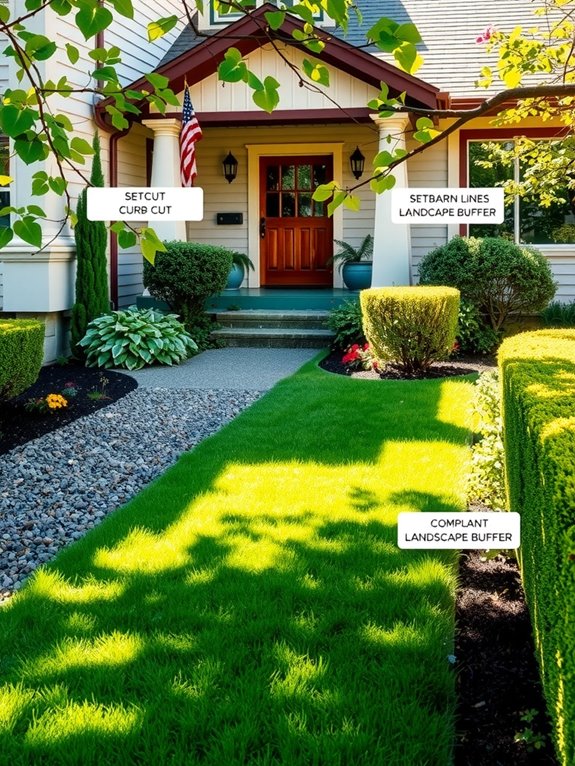
Before you plant a single shrub or pour a driveway in front, you’ll want to understand the zoning laws governing your front yard. These regulations exist to maintain neighborhood consistency and protect public sight lines.
Understanding your local front yard zoning laws is essential before starting any landscaping or construction project.
Front yard zoning laws vary markedly by location, so checking your local ordinances is essential. Your city or county might allow a 15-foot setback from the street in one neighborhood but require 25 feet in another. These regulations typically address several key areas.
Setback requirements dictate the minimum distances from the street where you can build or landscape. Most residential areas require setbacks between 15 and 30 feet, though historic districts often have stricter rules. This space protects utility lines and maintains clear sightlines for traffic safety.
Lawn coverage caps restrict how much of your front yard you can pave or develop. Many municipalities limit hardscaping—concrete, asphalt, gravel—to 25 to 50 percent of your front yard area. The remaining space must stay permeable to manage stormwater runoff and prevent flooding.
Visible structure rules require permits for fences, driveways, and major landscaping changes. A fence over 4 feet tall typically needs approval before installation. Driveway widths often max out at 18 to 20 feet to prevent excessive hardscaping.
Parking and storage restrictions limit what you can display from the street. Most ordinances prohibit leaving vehicles on blocks or storing materials like wood piles and equipment where neighbors can see them.
Contact your local planning department before starting any project. They’ll clarify exactly what’s permitted on your property and explain whether your neighborhood has additional height limits, landscaping buffers, or sight-line requirements that differ from your side and rear yards.
Cottage Garden Style: A Popular Front Yard Approach
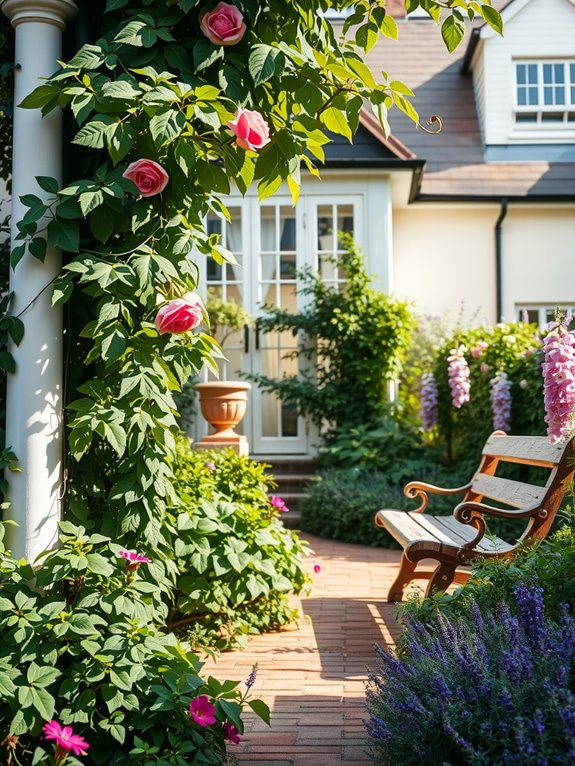
Once you’ve checked those zoning requirements and know what you’re allowed to plant, you can start imagining what’ll actually grow there. Cottage garden style offers a different approach from manicured lawns.
This approach celebrates lush, overlapping plantings that feel intentionally casual rather than formally arranged. You’ll layer perennials, annuals, and self-seeders together, which gives you continuous blooms throughout the seasons without replanting constantly. Soft, muted colors—think dusty rose, sage green, and pale yellow—repeat across beds to create visual harmony. Flowering shrubs like hydrangeas or boxwoods anchor the design with structure, while evergreens keep things looking good year-round even after frost hits.
Your pathways should meander naturally through the space using gravel or shredded mulch about 2-3 inches deep, inviting visitors to explore rather than follow a straight line. Add trellises near your entry (a 6-foot trellis works well for most front porches) and consider hedges along the edges for added dimension. Every plant here needs to earn its spot through visible beauty or practical function—attracting pollinators, providing fragrance, or filling gaps so weeds have less room to establish themselves.
Essential Elements That Define a Front Yard
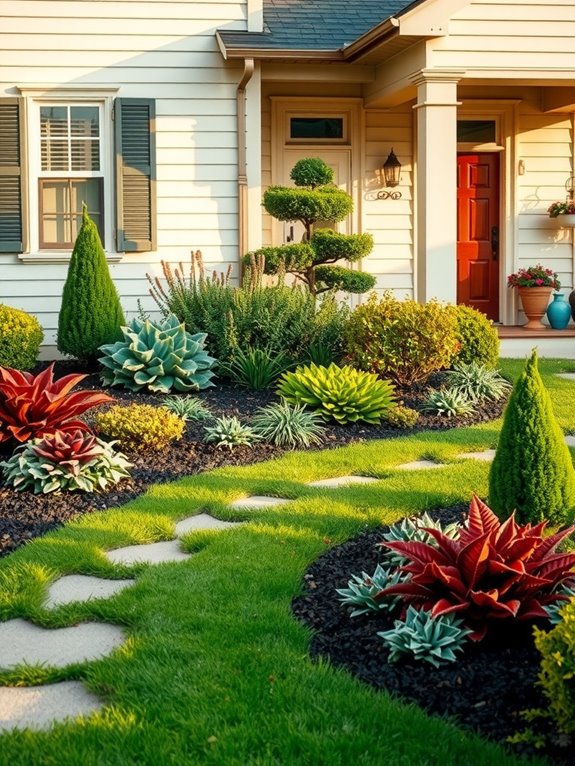
Your front yard does serious work for your home. It’s the first thing people notice, it protects your privacy, and it needs to function well for daily life. The best front yards balance these practical needs with good looks.
Here’s what typically makes up a functional front yard:
- Lawn or grass coverage – usually 40-60% of your space, giving visual softness and room for movement without feeling cramped
- Hardscaping features – driveways and pathways made from concrete, gravel, or pavers that guide people safely where they need to go
- Plantings and borders – hedges, shrubs, or flower beds that frame your entry and define property lines naturally
- Focal entry points – your walkway and front door area that draw eyes toward your home’s character and personality
These pieces work together like a team. Your lawn provides that soft, open feeling, while your driveway and pathways keep foot traffic organized. Plantings add personality and create visual stops that feel intentional rather than accidental. Your entry area gets the starring role, naturally pulling attention to where visitors should go.
When you think about your front yard this way, you’re not just decorating. You’re making a practical space that reflects how you actually live there. Visitors feel welcomed because the layout makes sense, and your home looks cared for because every element serves a purpose.
Front Yard Essentials: Driveways, Paths, and Plants
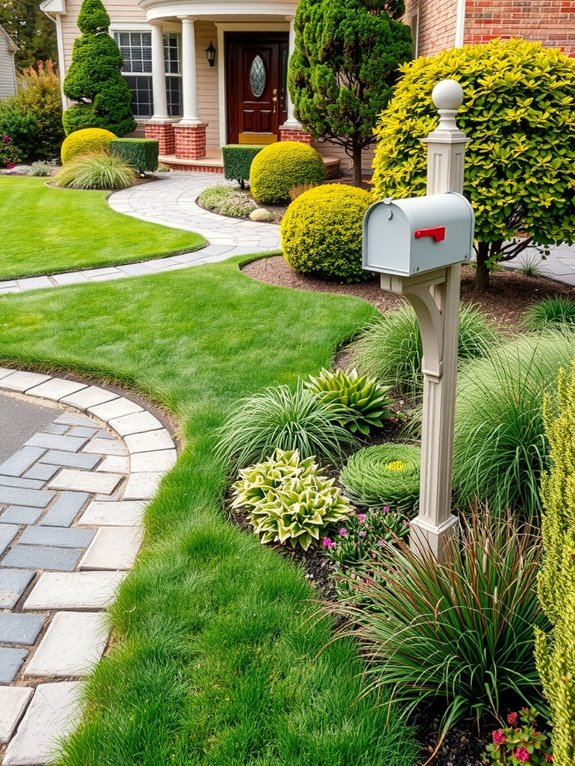
What makes a front yard feel like it belongs to someone who actually lives there? The practical stuff. A functional driveway or walkway guides visitors naturally toward your door, and curved pathways with stepping stones do double duty—they look nice while protecting your lawn from foot traffic wear. You’re solving a problem while adding visual interest at the same time.
Plants are where your front yard really comes together. Anchor plants, like a 4-to-6-foot evergreen shrub positioned near your foundation, establish structure and weight. Border plants frame your home with seasonal color, maybe flowering shrubs that bloom at different times or ornamental grasses for texture. Soft edging with materials like 2-to-3 inches of mulch or pea gravel feels welcoming compared to sharp lines. Hedges, low stone walls, or flowering shrubs provide definition without making your home feel cut off from the street.
These layered elements—the pathways, plants arranged with purpose, and thoughtful edging—turn your front yard into something genuine. People notice when a space is cared for, and that’s where the real appeal begins.
Front Yard Privacy: Designing Sightlines for Curb Appeal

You’ve got your walkways laid out and your plants anchoring the foundation—now comes the trickier part: creating privacy without making your home feel like a fortress.
Front yard privacy is all about strategic sightlines. You’re directing what neighbors and passersby can see while keeping your home’s best features visible from the street.
Layering for balance
Start with planting beds at varying heights to screen private zones while framing your entryway. This works because taller plants naturally draw the eye upward and create visual barriers for side yards and rear views, while shorter plantings near your entrance welcome visitors in.
Hardscape solutions
A low stone border wall around 2–3 feet tall, topped with iron fencing, gives you access control and defined boundaries without total concealment. The stone provides weight and structure, while the iron keeps sightlines relatively open so your home doesn’t feel cut off from the street.
Guiding the view
Walkways do more than move people around—they direct attention. By positioning your path to naturally guide eyes toward your entrance, you control which parts of your property feel public and which stay private. This deliberate routing makes visitors focus on what you want them to see.
The result feels both welcoming and protected, with your personal spaces genuinely shielded while your home’s appeal remains visible from the curb.
Common Front Yard Features and Decorative Choices
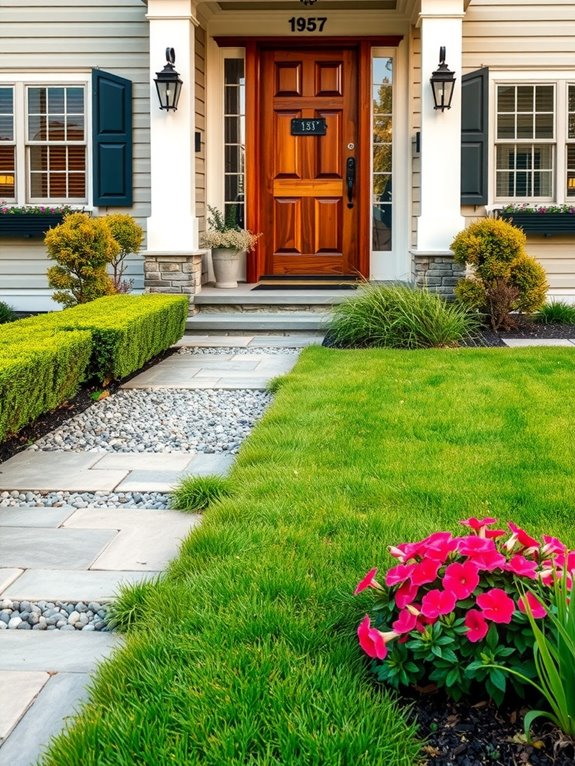
You can reinvent your front yard by layering ornamental shrubs like boxwoods with flowering perennials that bloom at different times, keeping your space visually interesting year-round. Boxwoods work well because they stay green through winter and create structure when other plants fade, while perennials like coneflowers or black-eyed Susans fill in gaps with seasonal color.
Adding pathways with stepping stones or curved walkways serves a practical purpose beyond looks. A 2-3 foot wide walkway gives visitors clear passage toward your entrance, and stepping stones spaced 12-18 inches apart match most people’s natural stride. These pathways break up large lawn areas, which reduces mowing time and creates visual interest by guiding the eye through your space.
Decorative touches like garden ornaments or seasonal displays tie everything together without overwhelming the space. A single tasteful piece—perhaps a small stone urn or a weathered bench—anchors a planting bed far better than clustering multiple items together. Rotating seasonal displays every few months keeps things fresh without requiring major changes.
The real trick is choosing elements intentionally rather than cramming in every idea at once. Match your selections to your home’s style and your neighborhood’s character, which means a cottage garden suits a historic home better than sleek modern pieces would. This approach takes more thought upfront but creates a cohesive look that actually feels like it belongs there.
Ornamental Plants And Shrubs
How do you transform a bare front yard into something that stops neighbors in their tracks?
You’ll want to layer ornamental plants strategically, creating depth and visual interest that makes your front yard feel intentional and inviting. Think cottage-style abundance rather than stark minimalism.
Anchor plants like boxwoods provide year-round structure and winter appeal, giving your beds a backbone even when other plants fade. These typically grow 3 to 6 feet tall depending on variety and need pruning once or twice yearly to maintain shape.
Flowering shrubs positioned within 3 to 5 feet of your entry add fragrance and draw attention to your front door. Lilacs, butterfly bushes, and mock oranges bloom at different times, so you can have color across multiple seasons rather than a single burst.
Border perennials planted in drifts of varying heights work better than single specimens scattered about. Arrange plants in groups of three to five, mixing pinks, purples, yellows, and whites at staggered distances of 18 to 24 inches apart. This spacing allows them to fill in as they mature while giving roots room to establish.
Self-seeders like coreopsis, black-eyed Susans, and cosmos naturally fill gaps year after year, creating that effortlessly full cottage look without replanting. They drop seeds in late summer that germinate the following spring, though you’ll want to deadhead spent flowers to direct energy into blooming rather than seed production.
Dense, overlapping plantings reward regular deadheading and pruning with more flowers. Add annuals or spring bulbs seasonally to refresh tired spots. This approach keeps your front yard soft and informal while showing genuine investment in your home’s personality.
Decorative Accessories And Displays
Your front yard tells a story about who you are, and the right accessories help you tell it well. Front yard ornaments like gnomes, plastic flamingos, and yard shrines work as visual anchors that catch your guests’ eyes right away while showing off your personality.
Trellises and arbors placed near your entryway do double duty—they frame your pathways with real structure while giving climbing plants something to grip onto. As those plants grow, they naturally soften the hard edges of walls and fences, making your entrance feel more welcoming.
For border plantings, think about layering shrubs at different heights. Repeating the same colors—say, pink, purple, and white—creates a flow that pulls the eye through your garden naturally rather than letting it bounce around randomly. Evergreen shrubs like boxwoods give you consistent structure twelve months a year, while seasonal flowering shrubs keep things from feeling stale. The real trick is choosing plants that work together rather than competing for attention. A 3-foot-tall boxwood provides a solid backbone, then you layer in 2-foot flowering shrubs in front and trailing ground covers at 6 to 12 inches tall. This staggered approach gives your garden actual depth instead of looking flat.
When you mix these decorative choices together—the ornaments, structures, and layered plantings—your front yard becomes something that actually reflects your taste and care.
Pathways And Entrance Elements
What draws your eye when you arrive at someone’s home? Usually it’s the thoughtfully designed pathways guiding you toward the front door. You’ll want to create an inviting route through your front yard that balances beauty with function.
A few welcoming elements work really well for this purpose. Sidewalks and stepping stone walkways establish clear direction toward your entrance, while curved or straight paths enhance curb appeal and guide visitors naturally. Trellises or arbors positioned along walkways support climbing plants like clematis or jasmine, adding vertical interest without taking up much ground space. Two-person benches placed strategically create focal points and invite outdoor enjoyment.
Your pathway design should emphasize visual flow while handling water properly and staying accessible for everyone. A 3-foot-wide walkway works well for most homes, giving visitors comfortable passage without feeling cramped. When laying stepping stones, space them about 18 inches apart (measuring from center to center) so people can walk naturally without awkward stretches. Permeable materials like gravel or porous pavers let water drain through rather than pooling on the surface.
Seasonal plantings along the walkway add color and charm throughout the year. A cottage garden approach with sidewalk borders integrates stepping stones beautifully and invites exploration. Plant daylilies or hostas about 18 inches from the edge—close enough to frame the pathway but far enough that they won’t sprawl across it as they mature. This creates that welcoming arrival experience visitors actually remember when they think of your home.
Which Front Yard Term Fits Your Project?
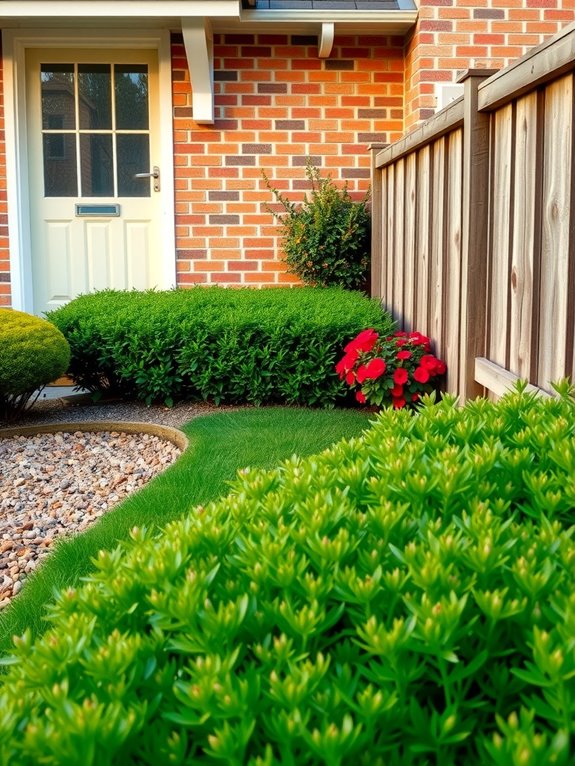
Picking the right word for your front space matters more than you might think, since it shapes how you’ll actually plan and care for the area. If grass is your main focus, “front lawn” makes sense—you’re centering your design around that mowed surface. The term “yard” works better when you’re thinking about the whole property from curb to house, especially if you’re including a driveway, walkways, or a mix of features together. Go with “garden” when plants take the lead role, like when you’re planning flower beds or ornamental shrubs that are 2 to 3 feet tall.
Your location plays a real part in which term fits best. North American designers tend to lean toward lawn-heavy front yards, while European designs often highlight flower gardens and defined borders like hedges or fencing. Before you settle on your choice, think about three practical things: what your climate actually supports, how much time you want to spend on upkeep each month, and what genuinely appeals to you when you imagine stepping outside.