Small trees with compact growth habits let you add height and seasonal interest to a front garden without overwhelming the space. Amelanchier Autumn Brilliance produces delicate white flowers in spring, then shifts to fiery red and orange foliage come fall. If you prefer darker tones, Cercis canadensis Ruby Falls delivers deep purple leaves paired with soft pink blooms.
For purely vertical growth, columnar trees like Prunus Amanogawa work well—they reach 8 meters tall but stay just 3 meters across, giving you height without width. This narrow profile fits neatly into tight front yards or alongside driveways.
Spacing matters more than most people realize. Position trees 10 to 12 feet apart to prevent crowding as they mature and allow air circulation that reduces disease. Each tree needs at least six hours of direct sunlight daily to develop proper color and structure. Morning or afternoon sun works fine, though a mix of both keeps things balanced.
Ground-level planting enhances the layered effect without adding clutter. Coral bells, with their jewel-toned foliage in burgundy or bronze, pair beautifully beneath most small trees and fill gaps while suppressing weeds. The contrasting heights and textures create visual depth that makes a small front garden feel intentional rather than sparse.
Pruning in late winter, before new growth emerges, keeps your trees neat and encourages fuller branch development. Regular seasonal maintenance keeps everything looking tidy and prevents branches from growing awkwardly into walkways or windows.
Small Trees for Front Gardens: Size, Impact, and Curb Appeal
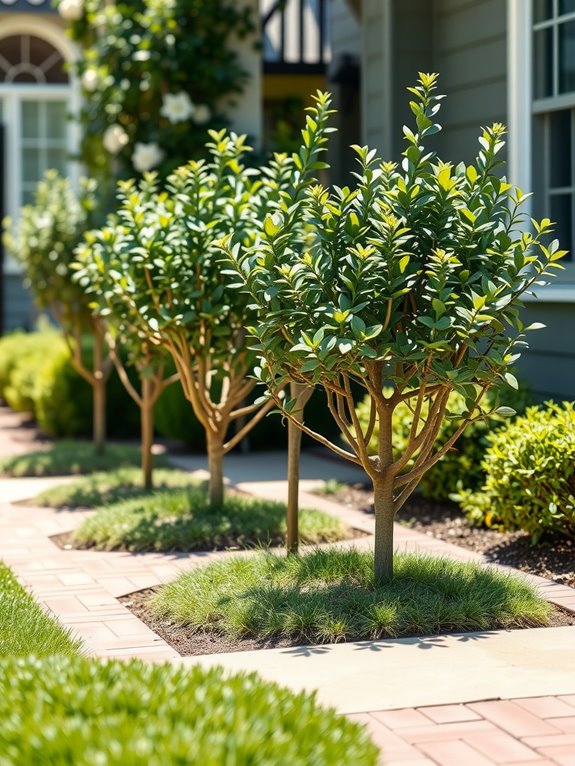
How do you make a small front garden feel purposeful and refined? You start by selecting trees with genuine compact size and year-round presence. Trees like Amelanchier Autumn Brilliance and Cercis canadensis Ruby Falls deliver real curb appeal without overwhelming your walkway or foundation. These varieties max out around 2 to 2.5 meters, giving you breathing room while establishing visual impact from the street.
Compact trees like Amelanchier Autumn Brilliance deliver real curb appeal without overwhelming your small front garden space.
The trick isn’t cramming in oversized specimens. Instead, you’re choosing deliberate players—trees that earn their spot through multiple seasons of interest. Malus Adirondack reaches just 3 meters with seasonal blooms, while narrow forms like Prunus Amanogawa add height without stealing precious ground space at 8 meters tall and only 3 meters wide. When you pair these with underplanting like coral bells or sedges, you’re building layered interest that makes your front garden feel intentional and inviting.
Think of your small front garden as a stage where every plant has a role. A tree that offers spring flowers, summer foliage, and fall color does more work than one that looks good for just a few weeks. Cercis canadensis Ruby Falls gives you purple foliage all season plus pink spring blooms. Amelanchier Autumn Brilliance offers white flowers in spring, then shifts to brilliant orange and red leaves in autumn. This kind of performance matters when you have limited space to work with.
Narrow columnar trees work particularly well when your garden is tight on width. They give you height without spreading sideways into pathways or blocking sightlines. The key is choosing varieties bred specifically for their restrained spread, not just hoping a larger tree will somehow stay small. Pairing your tree with lower-growing plants at its base—groundcovers, perennials, or dwarf shrubs—creates depth and visual interest without requiring more square footage than you actually have.
Full Sun vs. Part Shade: Picking the Right Spot
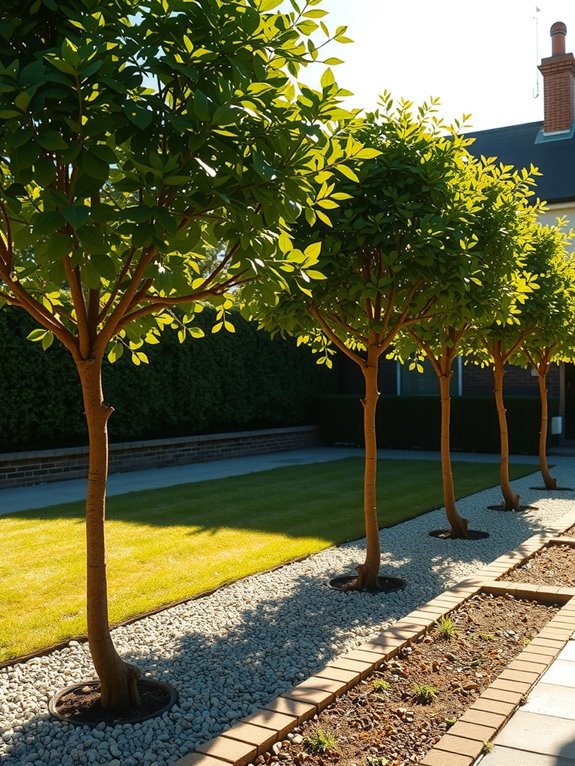
Where’s the sunniest spot in your front garden—and does it stay that way all day? This question matters because your small trees’ success depends on matching them to light conditions. Full sun spots need different trees than part shade areas do.
Front sun lovers need six-plus hours of direct light daily to perform their best. Cercis Rising Sun, for example, rewards consistent sunlight with vibrant peachy orange new leaves and steady growth. If your garden has lighter conditions instead, trees like Amelanchier Autumn Brilliance actually prefer dappled sunlight filtering through existing structures rather than intense direct rays.
| Light Condition | Best Small Trees | Key Feature | Price |
|---|---|---|---|
| Full Sun | Cercis Rising Sun | Peachy orange new leaves | $179.99 |
| Full Sun | Prunus Weeping Extraordinaire | Pink blooms, arching stems | $139.99 |
| Part Shade | Amelanchier Autumn Brilliance | Multi-season interest | $99.99 |
| Part Shade | Hydrangea Limelight Panicle | Abundant blooms | $169.99 |
Knowing your garden’s light patterns means you’re picking trees that actually want to grow where you plant them. Spend a few days watching how sunlight moves across your yard at different times. Once you notice those patterns, matching the right tree to the right spot becomes straightforward and logical rather than a guessing game.
Mature Size and Spacing: Planning for Healthy Growth
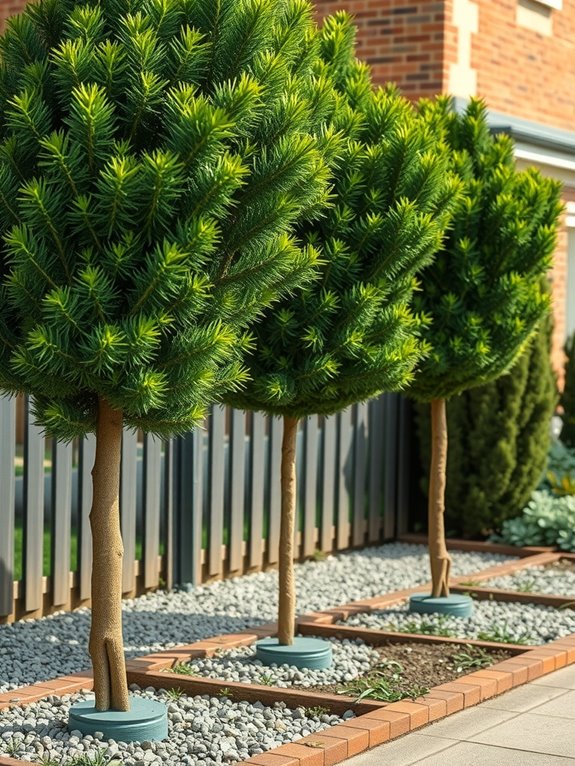
Once you’ve picked your trees, it’s time to think about their grown-up dimensions. A tree that’ll eventually spread 8 feet wide needs different spacing than a columnar variety that stays pencil-thin.
Small ornamental trees reach mature widths of 3–8 feet, so your spacing plan depends entirely on what you’re planting. Space trees 3–8 feet apart based on each variety’s mature width to keep walkways accessible and give each specimen room to develop properly.
Space small ornamental trees 3–8 feet apart based on mature width to keep walkways accessible and allow proper development.
Consider dwarf or columnar forms like Obelisk Amelanchier, which typically top out at 5–8 feet tall while staying narrow. These selections work well when you want vertical interest without spreading a wide crown. Weeping or fastigiate varieties offer similar advantages for maintaining front-yard visibility and sight lines.
Think of spacing as giving your trees breathing room. Crowded plantings compete fiercely for nutrients and sunlight, which stunts growth and invites disease pressure that spreads quickly between touching branches. Adequate distance between specimens lets air circulate freely, keeping foliage dry and healthy. You can also layer in multi-season interest through flowers, colorful foliage, and interesting bark patterns, which maximizes the perceived size and visual impact while maintaining that smaller footprint you’re after.
Pawpaw Trees: Ornamental Beauty Plus Edible Fruit
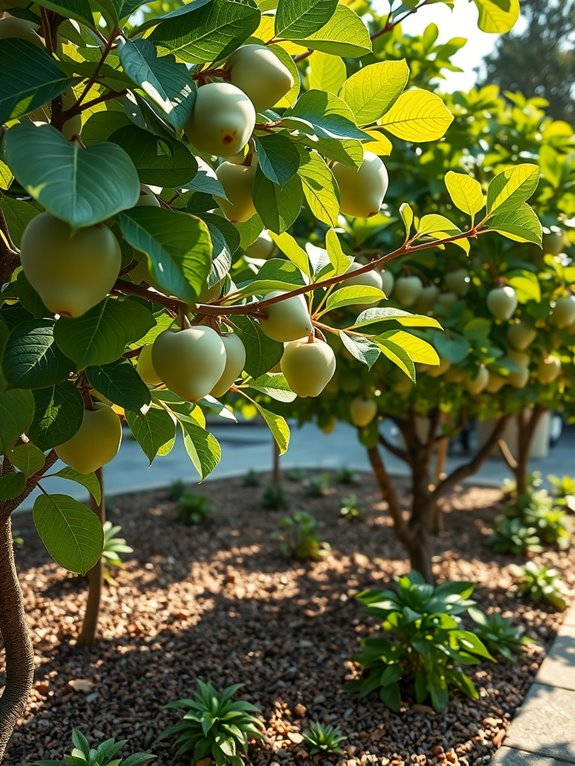
Why pick a tree that only looks nice when you could grow one that feeds you too? Pawpaw trees give you ornamental beauty and delicious edible fruit in one compact package, which makes them genuinely useful for front gardens. Missouri named it the 2022 Tree of the Year, and that recognition means something—these trees actually perform well across different growing conditions.
Cultivars like Tropical Treat and Honeydew produce fruit with distinct tropical melon-like flavors that taste nothing like what most people expect from a homegrown harvest. The fruit itself is soft and creamy inside, about 3 to 5 inches long, and you’ll pick them when they yield slightly to finger pressure.
These trees fit nicely into smaller spaces because they stay manageable in size, typically reaching 15 to 30 feet tall depending on the variety. Plant them alongside redbuds and serviceberries, and you’ll get layered interest through different seasons. The large, paddle-shaped leaves provide visual appeal year-round, while the spring flowers appear before the leaves unfold.
Starting with varieties marked “in stock” lets you plant this season and begin harvesting fruit within 3 to 5 years, depending on tree age at purchase. Pawpaws are nutrient-dense, containing vitamin C, magnesium, and potassium—all from fruit you grew yourself using basic watering and occasional pruning. That hands-on connection to your food makes the modest effort feel worthwhile.
Redbud Trees: Dramatic Foliage and Reliable Spring Blooms
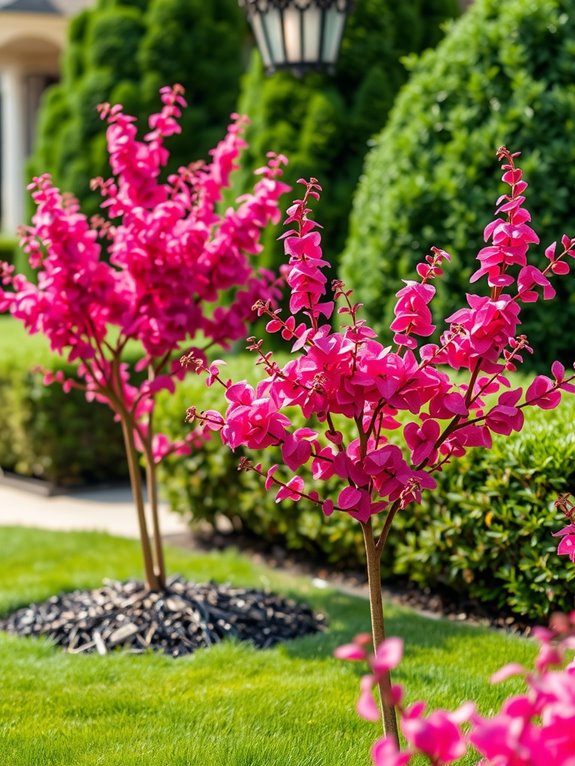
If you want a tree that delivers reliable spring flowers year after year, redbuds are genuinely worth considering for your front garden. These trees combine consistent blooming with foliage that changes throughout the seasons, giving you visual interest from spring through fall.
Cercis The Rising Sun develops leaves in deep peachy orange tones that gradually shift to apricot, orange, gold, and yellow as the season progresses. This color shift happens naturally without any special care on your part, making it a low-maintenance way to add seasonal variety.
Cercis Carolina Sweetheart pairs striking foliage with spring blooms that catch attention from the street. The flowers emerge before or alongside the new leaves, creating a brief but memorable display each April or May depending on your climate zone.
Cercis Alley Cat keeps green and white speckled leaves throughout the growing season without losing the variegation. Unlike some variegated plants that fade or revert to solid color by midsummer, this variety maintains its pattern consistently.
Redbuds typically grow 20 to 30 feet tall and 15 to 25 feet wide, depending on the specific cultivar, so check mature dimensions before planting. They handle spring frosts well and prefer full sun to partial shade for best flowering performance. Contact your local nursery to confirm which varieties they stock and when they’ll have them available for planting.
Serviceberry: Four-Season Interest in a Compact Form
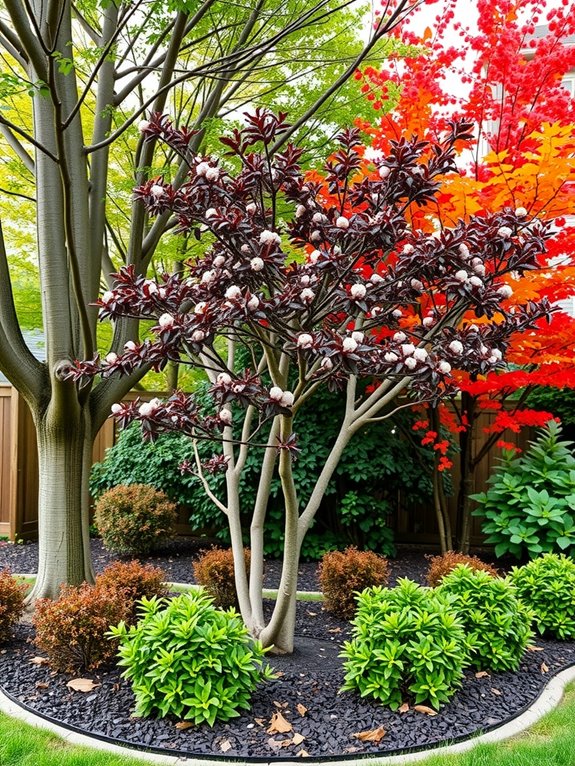
Looking for a tree that actually earns its space year-round? Serviceberry delivers on that promise. You’ll get delicate white flowers in spring, followed by colorful berries that attract birds through summer. Come fall, the foliage shifts into brilliant reds and oranges, while winter reveals striking bark texture that keeps visual interest alive.
Serviceberries are understory-friendly trees that fit perfectly into compact spaces without overwhelming your landscape. These small trees typically reach 15 to 25 feet tall, making them ideal for front yards where you need restraint and elegance combined.
The Amelanchier Spring Glory offers a neat, compact option at $49.99 and stays relatively petite. The Autumn Brilliance costs $99.99 and really shows off the multi-season color shifts. Both provide that four-season interest you’re looking for, with proven track records of reliable performance year after year.
Ornamental Cherry and Peach Trees: Delicate Blooms
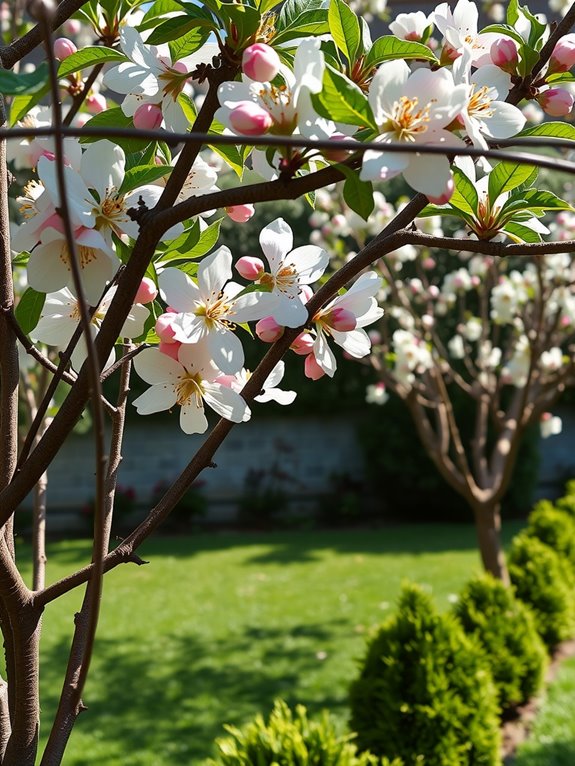
You’ll want to time your planting for late winter through early spring, which catches those delicate blooms right when they’re at their peak. These compact varieties typically reach 8 to 15 feet tall, fitting nicely into smaller front garden spaces without overwhelming the landscape. Plant them where they’ll receive at least six hours of direct sunlight daily—more light means more abundant blooms and sturdier growth overall.
The key is finding that sweet spot in your yard where morning sun hits first, since it helps dry dew and reduces disease problems. These trees aren’t finicky about soil, but they do prefer well-draining conditions that won’t leave their roots sitting in water after rain. If your soil tends to hold moisture, mixing in some compost or sand before planting gives you better drainage without extra fuss.
Space multiple trees about 10 to 12 feet apart if you’re planting more than one, giving them room to spread their branches without crowding each other. Water regularly during that first growing season—about 1 to 2 inches per week depending on rainfall—to help them establish deep roots. After that initial year, they become fairly low-maintenance, though a light pruning right after flowering keeps their shape neat and encourages better blooming next year.
Spring Bloom Timing
What’s more exciting than those first warm days when your front garden erupts with color? Prunus varieties deliver exactly that early-season bloom timing you’re craving for spring.
You’ve got fantastic options that work beautifully in smaller spaces. Weeping Cherry features arching stems that burst into pink puffball blooms, creating visual drama without dominating your yard. If you’re working with tight square footage, columnar Prunus forms like Amanogawa and Spire offer spring color in a narrow footprint, typically reaching 20-25 feet tall but only 3-5 feet wide at maturity. Ruby Ruffles Patio Peach stays even more compact at around 6-8 feet, producing pink flowers before fruiting, which makes it ideal for front gardens with limited space.
These selections bloom early in the season, giving you that first visual reward after winter passes. Dwarf and columnar varieties pack maximum springtime color while respecting your garden’s actual boundaries. The real practical win is fitting genuine spring interest into a modest space without the tree outgrowing your landscape in five years.
Compact Tree Varieties
Want spring flowers and actual fruit without a tree that’ll tower over your roof in a decade? Prunus varieties deliver exactly that combination. The Ruby Ruffles Patio Peach Tree stands just a few feet tall, showcasing ruffled red foliage and bright pink flowers that work perfectly for tight spaces. If you’re after fruit, the Red Haven Peach Tree produces large, tasty peaches while staying compact enough for your front garden.
For pure ornamental appeal, the Weeping Extraordinaire Weeping Cherry features arching stems with delicate pink puffball blooms that add vertical interest without sprawling outward. These compact Prunus options let you enjoy spring color, architectural appeal, and sometimes even homegrown fruit without sacrificing your yard’s usable space.
Placement and Light Needs
Where you plant your ornamental cherry or peach tree determines whether you’ll enjoy weeks of delicate flowers or watch petals drop before the show really starts. A few smart placement choices make all the difference.
Position your tree where it gets at least six hours of direct sunlight each day for the fullest bloom display. This doesn’t mean it needs full sun from sunrise to sunset, just solid daylight hours to fuel flower production. In hot climates above 85°F, afternoon shade from an eastern-facing spot actually helps preserve those delicate petals from scorching.
Air circulation matters more than most people realize. Planting in corners against walls traps stagnant air, which invites fungal diseases and hides those pretty blooms behind surrounding plants anyway. Your tree needs open space around it where air can move freely.
Check your soil drainage by digging a hole about 12 inches deep and filling it with water. If it sits there longer than a few hours, that spot will suffocate roots and weaken your tree’s overall health. Sandy or loamy soil drains well; clay soil tends to hold water like a bowl.
The front garden works beautifully for these trees since their compact size fits well near house foundations, and you’re close enough to catch every flower phase from your porch. You’ll notice the buds tightening, then opening, then those petals gradually falling without missing a single stage of the show.
Compact Magnolias and Hydrangeas: Contained Summer Blooms
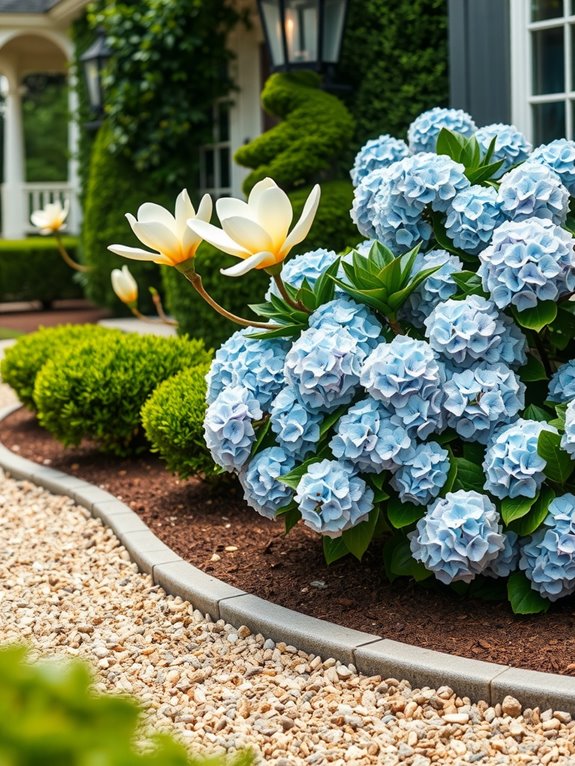
If you’re working with limited front-yard space, compact magnolias and hydrangeas are practical choices for seasonal color without excessive sprawl. The Magnolia Black Tulip and Magnolia Genie deliver tulip-like blooms while re-blooming into summer, making them well-suited for small front gardens where every inch matters. These varieties maintain a neat silhouette that won’t crowd your walkways or overwhelm tight spaces.
Hydrangeas like the Limelight Panicle produce large, fluffy flower clusters and flower reliably each year. You’ll appreciate how both the shrub and tree forms deliver contained summer color with minimal fuss. Both plant groups give you controlled growth, seasonal interest stretching into early fall, and the low-maintenance front-yard look you want without demanding constant attention throughout the growing season.
Evergreens for Year-Round Privacy and Structure
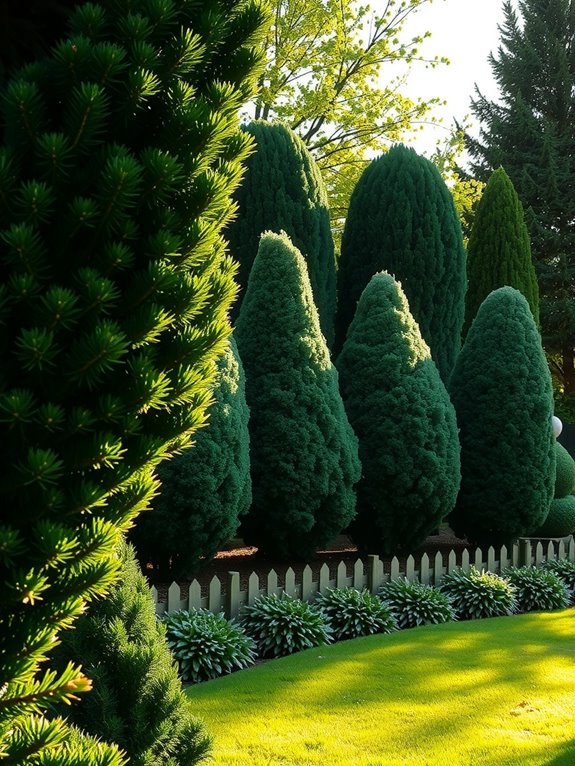
If you’re looking for greenery that pulls its weight all year, evergreens are your answer. They give you privacy and structure without vanishing when the seasons shift. Two solid choices are Ilex × altaclerensis Golden King, which grows to about 6 meters tall and 4–5 meters wide, and Juniperus communis, both reliable sentries that keep your front garden feeling enclosed and purposeful through winter.
The real appeal here is the minimal maintenance once these plants settle in. You get the screening you want without spending weekends pruning or raking up debris when everything else goes dormant. That’s the kind of hardworking plant that lets you enjoy your garden instead of constantly fussing with it.
Year-Round Visual Interest
How do you keep your front garden looking composed and structured when winter strips away the leaves? Evergreens are your answer, delivering year-round interest without the seasonal slump that catches so many gardeners off guard.
Weeping White Spruce works beautifully as your backbone plant. Its distinctive drooping branches and blue-green needles create elegant movement while maintaining privacy and structure from November through March. Plant it where afternoon light can catch those needles—the color deepens in cooler months, giving your garden visual warmth even in gray weather.
Columnar forms like Amelanchier alnifolia Obelisk offer vertical interest without crowding your sightlines. These tall, narrow trees typically grow 20-25 feet high but stay just 3-4 feet wide, making them perfect for tight spaces where you need screening without blocking views. They work especially well along property lines or flanking your front door.
Dwarf conifers contribute mass in compact areas, supporting privacy while keeping your garden feeling open. Species like dwarf Alberta spruce (reaching 8-13 feet) or creeping juniper (spreading 6-12 inches high across several feet) fill gaps between larger plants without overwhelming the space.
Combine these three approaches—weeping varieties for movement, columnar forms for height, and dwarf conifers for layered depth—and your front garden maintains polish and structure through every season. The key is mixing textures and growth habits so winter brings quieter interest rather than bare emptiness.
Privacy Screen Solutions
When deciduous trees drop their leaves each autumn, evergreens keep working year-round to give your front garden the privacy barrier it actually needs. Compact varieties like Ilex × altaclerensis Golden King or Ceanothus arboreus Trewithen Blue AGM deliver reliable screening without demanding constant fussing or pruning schedules. These plants hold their foliage through winter months, blocking sight lines effectively while also reducing street noise at the same time.
If your front yard feels cramped, columnar forms like Juniperus communis grow tall and narrow—sometimes reaching 12 to 15 feet high while staying just 2 to 3 feet wide. This vertical growth pattern respects tight spaces where you can’t afford sprawling width. Photinia × fraseri Red Robin AGM handles shadier spots reasonably well, so shade doesn’t have to mean sacrificing your privacy screen.
The real trick is layering these evergreens strategically across your property line. Plant taller specimens toward the back, stepping down to shorter plants in front, and you’ll create a boundary that looks intentional rather than slapped together. Space plants 3 to 5 feet apart depending on the variety so they fill in naturally within a couple of growing seasons. This approach gives you a welcoming edge that protects your space while looking like you planned it carefully.
Simple Pruning and Watering: Keeping Your Tree Thriving
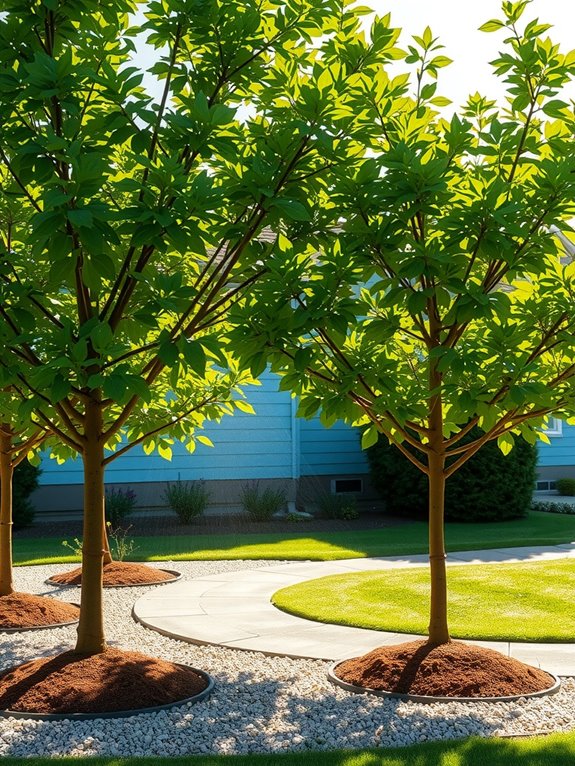
Small trees do best when you focus on two things: watering with intention and pruning at the right time. Getting these basics down means your front garden will actually look like you know what you’re doing.
Water newly planted trees daily for the first couple of weeks, then back off to every 2–3 days as their root systems push deeper into the soil. Once roots are established and can grab moisture on their own, shift to weekly watering. Spread 2–3 inches of mulch around the base to lock in moisture and keep shallow roots from cooking during hot spells.
Prune in late winter or early spring when the tree’s still dormant. Start by removing anything dead, damaged, or crossing over—those branches create weak spots and invite problems. Then shape the tree lightly to keep its natural form instead of forcing it into something unnatural. Japanese maples are the exception here; give them extra time and wait until the coldest stretch has passed before you touch them. Their delicate branching structure rewards a gentle hand.