

First, figure out whether your front garden sits entirely on private property or if it touches council land—this distinction really matters for your next steps. Private placements need no permit, just enough clear space for delivery trucks and a ten-foot driveway clearance so they can back in safely.
If your skip touches public roads or pavements, you’ll need a permit from your local council. Expect to pay between £15 and £80, with processing taking three to five days typically. Contact your council before ordering anything, since requirements vary by location and some areas have stricter rules than others.
Before the skip arrives, notify your neighbors as a courtesy. They’ll appreciate knowing a large container is coming, and you might head off complaints before they start. Check that your ground is flat and stable where the skip will sit. If the earth is soft or uneven, lay down reinforcement mats—rubber or plastic sheets about half an inch thick work well for distributing weight and protecting your garden surface from damage.
Is Your Front Garden Private Property?
Does the space belong entirely to you, or does it touch council land. That distinction matters enormously. Your front garden might sit on your property alone, or it could share boundaries with public ground that the local council maintains.
Before you schedule a delivery, contact your council to confirm your front garden’s actual status. They’ll tell you whether you own it outright or if portions fall under their jurisdiction. If council land is involved, you’ll likely need formal permit documentation before anything arrives at your curb. Getting this sorted upfront saves you from delivery trucks showing up only to find they can’t proceed, which wastes everyone’s time and creates frustration all around.
When You Don’t Need a Permit for Your Front Garden
Once you’ve confirmed your front garden sits entirely on your own property, you won’t need a permit for your skip placement. Council approval simply doesn’t apply when you’re working on private land, which cuts through a lot of red tape. That said, your skip hire company will have its own set of requirements worth reviewing carefully.
The practical side matters here: skips typically measure around 6-8 feet wide by 3-4 feet tall, and they’re genuinely heavy. You’ll want to confirm your front garden has enough clear space for safe delivery and collection without obstacles like parked cars or overhanging branches getting in the way. If your ground is grassy or uneven, check whether it’s compacted and stable enough to support the weight without sinking or shifting during placement and removal.
Before you finalize anything, touch base with your skip hire company about local rules in your area. This is especially important if your front garden borders shared spaces like sidewalks or communal driveways. Since you’re working on your own property, the bureaucratic side becomes straightforward, letting you focus on the practical logistics instead.
When Your Front Garden Requires a Skip Permit
If your driveway or front garden lacks the space for a skip, you’ll need to place it on the public highway or pavement—and that’s where skip permits enter the picture. Your skip hire company usually handles the paperwork, though councils require these permits specifically to protect pedestrians and keep traffic moving smoothly. Approval typically takes several days, so plan ahead.
Fees vary based on where you live, generally ranging from £15 to £80. Some London boroughs charge considerably more, occasionally pushing into the hundreds. This cost is separate from your skip rental itself, so factor both expenses into your budget when planning a clearance project. The permit essentially reserves your spot on the public road and gives the council a record of the skip’s location and duration.
Private Property Placement Rules
When you’re planning to place a skip on your own property, you’re actually in a pretty good position—most of the time, you won’t need a permit at all. Private property placement is genuinely straightforward if you’ve got the space for it.
The main advantage of keeping your skip on your own land is simplicity. You don’t need permits for driveway or front garden placement, skip hire agreements typically allow 7–14 days on your property, and you control access without dealing with council red tape.
That said, don’t just position a skip anywhere on your lot. You’ll want clear access for delivery trucks and enough room for the skip’s actual footprint. Check your driveway width—most skips need at least 10 feet of clearance to fit safely without scraping against walls or fences. Think about how the truck will angle in and back out, and whether your surface can handle the weight without cracking.
If your property doesn’t have adequate space and you’re thinking about placing the skip along the roadside instead, that’s when permits become necessary. Keeping your skip on your own turf sidesteps all that paperwork.
Public Highway Permit Requirements
Not everyone has a spacious driveway or garden where a skip can sit safely without causing issues. When you need to place your skip on public property—like your front kerb or street—your local council requires a permit first. The council reviews your skip’s location to check if it might endanger drivers, narrow the road, or block access to nearby homes and businesses.
Here’s the helpful part: most skip hire companies handle the permit application process for you, so you don’t have to navigate council paperwork yourself. They’ll make sure everything meets local regulations before your skip arrives. The permit typically processes within 3 to 5 days, though standard wait times average around 14 days depending on your council’s current workload.
Costs vary by area but generally fall between £15 and £80, based on your specific council’s fee structure. If you discover you need more time with your skip, you can request a permit extension before it expires. The whole system works smoothly when you’ve got a hire company managing the details on your end.
Pavement Placement Restrictions
Can you plonk a skip on the pavement outside your house? Not without some real headaches, honestly. Councils guard pavement space like hawks because they’re genuinely concerned about keeping pedestrians safe and mobile.
Why Pavement Placement Gets Complicated
Skips sitting on pavements block foot traffic and create serious problems for anyone using a wheelchair, pushing a stroller, or just trying to walk normally. You’re looking at fines ranging from £50 to £130 per day if you place one without permission, plus you could end up paying for forced removal costs that run into the hundreds. The council will demand strict specifications about location, duration, lighting requirements, and safety barriers—usually 1-meter barriers on each side of the skip.
Your Realistic Options
Start by checking if your driveway can handle a skip. Most standard driveways about 3 meters wide work fine, and placement there requires zero council involvement. If your driveway won’t work, a front garden spot usually demands less paperwork than pavement requests. Some councils will even let you place a skip partially on the kerb if you meet their exact conditions, though this still needs written permission.
Getting Council Approval When You Need It
When pavement space becomes your only option, you’ll need a council permit before anything gets delivered. They’ll examine sight lines, check whether the skip blocks emergency vehicle access, and verify proper lighting for evening safety. Contact your local council’s highways department at least two weeks ahead—they typically respond within 5 to 10 business days. Have your address, skip dimensions, and intended placement dates ready when you call.
How to Check Local Council Rules Before You Order
Before you call a skip hire company, know this: your local council has specific rules about where skips can sit, and checking first saves you real frustration later.
Contact your local council’s planning or environmental department directly. They’ll tell you whether your front garden needs a permit or if it’s clear to go. A skip on private property often doesn’t require permission, though rules shift depending on where you live.
Ask about permit costs—typically £15 to £80—and how long processing takes, which usually runs three to five days. Road placement always needs a permit, so request this information before ordering to dodge delays.
Most skip hire companies handle the paperwork themselves, but confirming requirements on your own keeps you legally protected and ready to move forward with confidence.
What Information the Council Needs From You
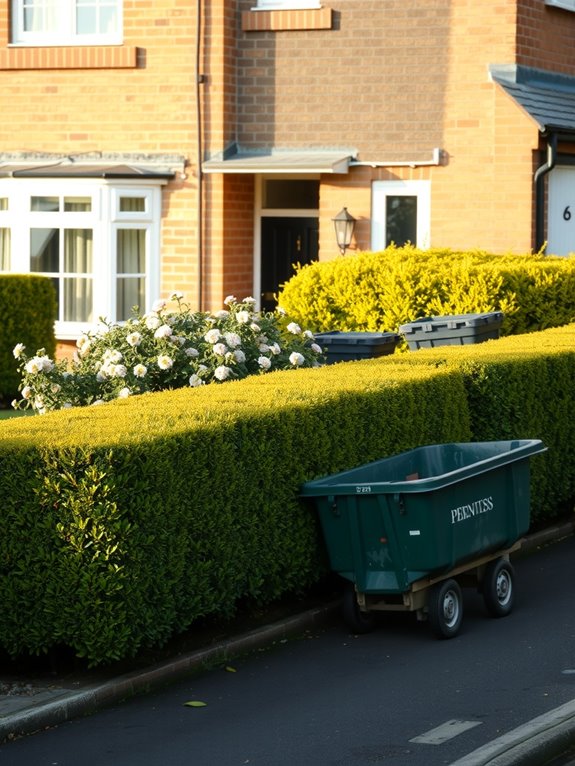
When you ring your council to request a skip permit, have these details ready so they can process your application without delays.
Exact placement location – Tell them whether the skip will sit in your front garden or driveway. If possible, measure the space in feet or meters and mention nearby landmarks like a lamppost or fence. The council cares about this because they need to know you won’t block the pavement, obstruct traffic flow, or prevent neighbors from accessing their properties.
Intended duration – Give your start and end dates clearly. Most permits cover a specific window, typically between 2 to 4 weeks, though you can request extensions if your project runs longer than expected.
Skip size – Know the dimensions you’re hiring, usually measured in cubic yards or cubic meters. Common sizes range from 4 cubic yards (about 8 feet by 5 feet) for household clutter to 8 cubic yards for larger renovations. Smaller skips work for garden waste and general junk, while bigger ones handle construction debris like bricks or plasterboard.
Your skip hire company usually handles the permit application on your behalf, so contact them first rather than the council directly. They know the local costs—typically between £15 and £80 depending on where you live—and they’ll handle the paperwork. Processing takes a minimum of 3 to 4 days, though expect longer waits during spring and summer when demand peaks. Getting everything sorted upfront means fewer delays and smoother delivery.
Understanding Permit Costs and Processing Times
Once you’ve locked in those details with your skip hire company, it’s worth understanding what you’re paying for and how long the waiting period actually is.
Your local council sets permit costs, which typically fall between £15 and £80 depending on where you live. There’s no negotiating these fees—think of them as the straightforward price of following proper procedures. Road placement permits usually take a few days to a week to process, and you can request extensions before your permit expires.
Here’s where things get simpler: if you’re placing your skip on private property like your front garden or driveway, you might skip the permit requirement altogether. Private land means less red tape to navigate. That said, some councils still want approval for front garden placements, so checking your local regulations first saves you headaches down the road.
Can Your Skip Hire Company Apply on Your Behalf?

Yes, most skip hire companies will handle the entire permit application for you, which is genuinely one of their most useful services. They’ll submit your location, skip size, and placement duration to your local council, then guide the approval process from start to finish. The whole thing typically takes 3–5 days and costs between £15 and £80 depending on your area.
This hands-off approach matters because it keeps you compliant with local safety regulations without you having to wade through council paperwork yourself. Your skip company knows exactly what information councils need and how to present it properly, so applications move through faster. They handle follow-ups too, meaning you’re not the one chasing down emails or making phone calls to check status.
The practical benefit here is straightforward: someone else deals with the bureaucracy while you focus on getting your skip delivered and filled on schedule. You avoid the frustration of misunderstanding permit requirements or accidentally submitting incomplete forms that delay everything.
Provider Handling Applications
Want to sidestep the paperwork headache altogether? Your skip hire provider can handle the permit application on your behalf, coordinating directly with your local council. Think of them as your paperwork buffer between you and bureaucracy.
Here’s what actually happens behind the scenes. They’ll submit detailed application information including your exact location, skip size in cubic yards, and how long you need it for. The council reviews and typically approves within 3 to 4 days. Once they sign off, you’ll get confirmation before delivery day arrives.
Your provider knows the local safety codes and access requirements inside and out, so they’ll align every detail with what your area specifically demands. This kind of coordination protects you from costly mistakes or unexpected delays that come from misunderstanding regulations. That said, don’t just assume everything’s sorted without checking. Confirm the permit’s actually been issued before your skip shows up on your street.
Permit costs vary depending on where you live, usually ranging from £20 to £100. Having a professional handle this means you’re working within regulations while dodging the stress and time that paperwork demands on your own.
Permit Approval Process
Your skip hire provider can actually handle the permit application for you, which saves considerable time and effort. When you hand over your details, they’ll submit your exact location, skip size, and rental duration to your local council. Councils need this precise information to approve your permit for public land placement.
You’re typically looking at a 3–4 day approval window, which gives you solid time to plan around their schedule. The permit itself usually authorizes your skip for 7–14 days, though you can extend it for additional fees if your project needs more time. Costs generally range from £20 to £100 depending on your location and local council rates.
Having your provider handle this paperwork means fewer forms on your end and faster approval overall. They know exactly what councils want to see and how to present it, so things move along smoothly without you needing to track down council offices or decipher application requirements yourself.
Measuring Space: Ensuring Adequate Room for Delivery
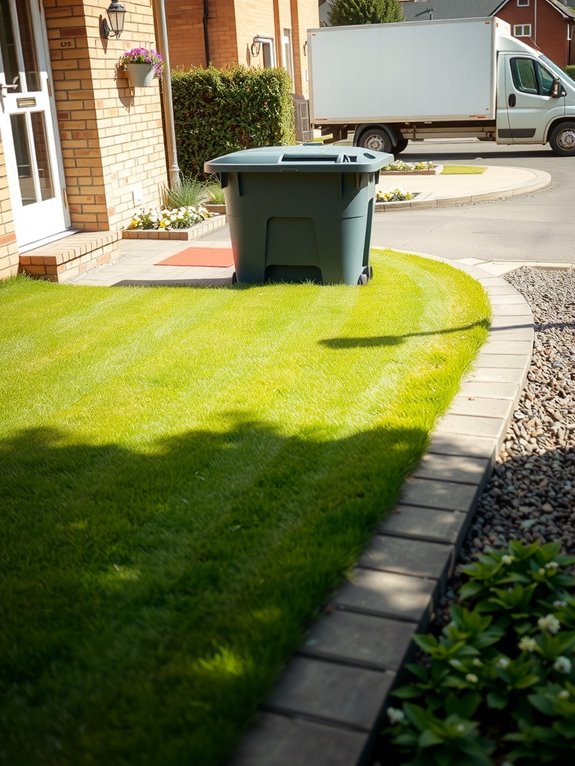
Before you call the skip company, grab a measuring tape and scout your front garden like you’re planning where a large piece of furniture will sit. You’re checking three things that actually matter for a smooth delivery.
Most standard skips measure roughly 6 feet wide, 8 feet long, and 4 feet high, though your specific model might differ. Check your provider’s exact specifications before you measure anything else, since these numbers become your baseline for everything else you’ll calculate.
Next, measure the width of your driveway entrance and any gates along the path. Delivery trucks are large vehicles, and they need enough clearance to position the skip safely without scraping walls, fences, or your car. A driver navigating tight spaces can damage property fast if there’s no room to work.
Map out at least two feet of buffer space around all sides of where the skip will sit. This gives the driver actual room to maneuver the skip into position without hitting obstacles like parked cars, garden sheds, or landscaping features. Think about where the truck will need to angle and pivot to get the skip placed correctly.
Document all these measurements before you book anything. Having this information in writing means you and the skip company are working from the same understanding, which prevents frustrating delivery problems and keeps your garden intact.
Surface Stability: Protecting Your Driveway and Garden
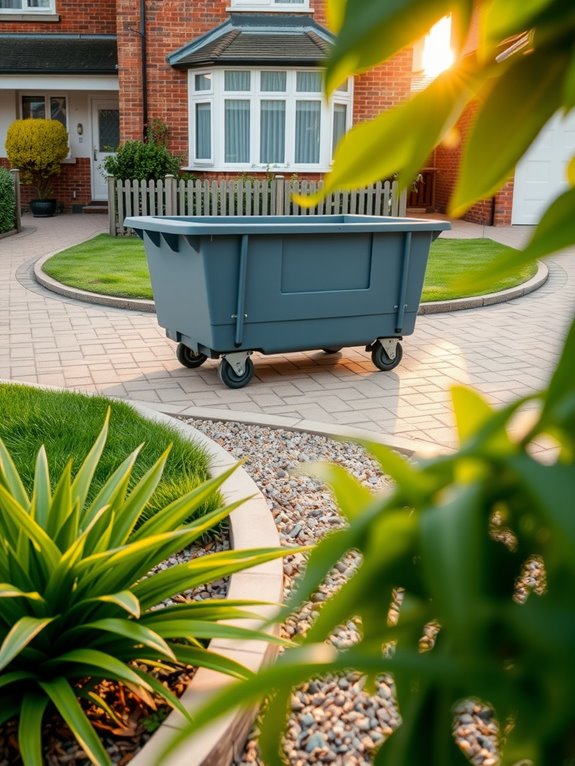
Where you place that skip matters just as much as fitting it through your gate. Your driveway or garden’s surface stability directly impacts both your property and the skip’s safety during delivery and collection.
Heavy skips can seriously damage grass and soft ground. That’s where reinforced mats come in—think of them as protective shields for your lawn. These mats, typically made from high-density polyethylene or rubber, distribute weight evenly across roughly 10-15 square feet per mat, preventing deep ruts that cost hundreds to repair later. On driveways, check that your concrete or asphalt is actually in good condition before placement. Cracks wider than a quarter-inch or soft spots suggest the surface won’t handle the load well.
Before delivery day, talk with your skip hire company about what your ground can handle. They’ll look at your property and let you know whether you need reinforcement mats, if you should place the skip on concrete instead, or if a different spot works better. Flat, stable ground isn’t just nice to have—it’s what keeps your property safe and your wallet from taking an unexpected hit.
Managing Shared Spaces and Neighbour Considerations
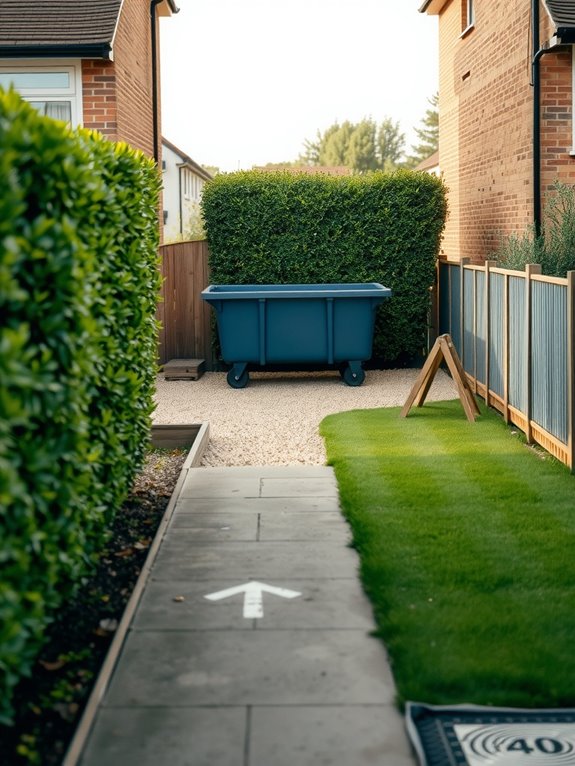
If you’re sharing a driveway or split responsibility for front space, give your neighbours a heads-up before the skip arrives. Nobody wants their access blocked or their view cluttered by a large metal container showing up unannounced.
The practical benefit here is real: splitting the skip rental cost typically saves each household 30–50% compared to booking separately. That’s genuine savings worth a short conversation.
Before the skip gets delivered, confirm a few specifics with your neighbours. Agree on exactly where it’ll sit, how long you’ll keep it (usually 1–2 weeks for standard rentals), and what waste actually goes inside. Different skips have different rules—some take mixed household waste, while others reject certain materials like asbestos or liquids. Getting these details straight now prevents awkward situations when the collection truck arrives and finds something it won’t take, or when the placement blocks someone’s driveway access.
Communicating With Neighbours
A skip sitting in your front garden can strain neighbourhood relationships faster than you’d expect. That’s why having a conversation with your neighbours before delivery day really matters.
Start by giving them advance notice about when your project runs and exactly where the skip will sit. Let them know if it’ll block their sightline from a window or make shared access trickier. Most people appreciate knowing what’s coming rather than waking up to a 2-meter metal box on the street.
The practical side matters here. Explain how keeping the skip within your property boundaries protects both your relationship and their peace of mind. If that’s not possible, getting their written permission beforehand prevents misunderstandings later. A simple courtesy notice—an email or a face-to-face chat—goes a long way with most people.
You might not legally need permits for a skip on your private property, but neighbour buy-in is something else entirely. It stops disputes before they start, protects the goodwill you’ve built over years of living next to each other, and keeps you clear of potential complaints that could derail your whole project. The small effort of involving them early builds community trust and keeps things running smoothly.
Shared Waste Cost Savings
Once you’ve chatted with your neighbors about your skip plans, you might realize you’re sitting on a money-saving opportunity. Splitting costs with two or three households typically saves each person 30-50% on the rental fee. A shared 8-cubic-yard skip might cost $400-600 total, which drops to just $130-200 per household instead of renting a smaller 4-cubic-yard skip alone for $250-350.
Here’s where it gets practical: write down each person’s cost share and what they’re putting in the skip before it arrives. One neighbor handles yard debris while another manages construction waste and a third takes general household items. This prevents those uncomfortable moments later when someone feels they paid too much or contributed too little.
You’ll still need the appropriate permit if any portion touches public road or footpath—even in a shared arrangement. Check your local regulations first, since some areas require permits for skips on streets while others only regulate driveways. A quick call to your city or county planning office takes ten minutes and saves potential fines.
A written agreement protects everyone. When neighbors understand their role and contribute fairly, you’re building genuine community goodwill alongside real cost savings.
Safety Requirements Once Your Skip Is Positioned
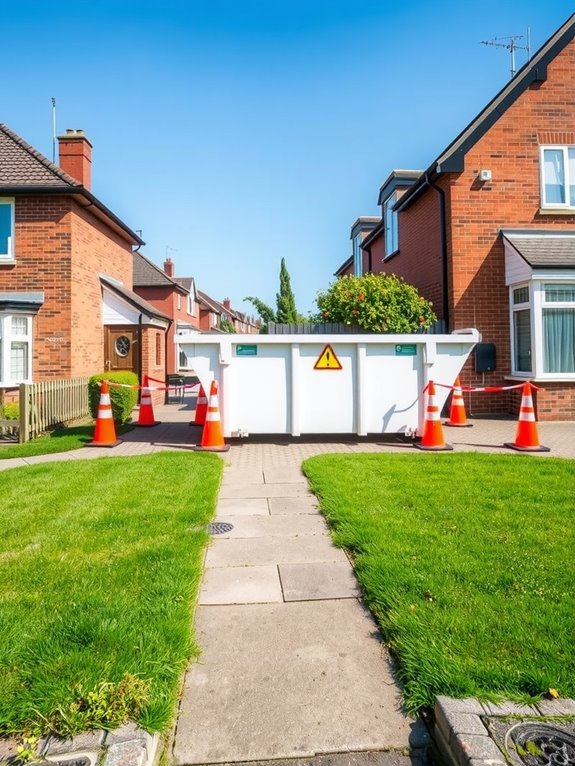
What happens the moment your skip lands in your front garden? You’ve got safety responsibilities that keep everyone—your neighbors, delivery drivers, and pedestrians—protected.
Install reflective markers or lights around your skip for permanent visibility, especially once the sun drops below the horizon. Your skip hire company usually handles placing these during delivery, but take a quick walk around to verify everything sits properly near the curb. Look for retroreflective tape (the kind that bounces light back at oncoming vehicles) positioned at roughly waist height on the skip’s corners.
Install reflective markers and retroreflective tape at waist height on skip corners for visibility after dark and driver safety.
Maintain clear access space on all sides of your skip—aim for at least 1.5 meters of clearance so collection vehicles can maneuver safely without scraping fences or bumping parked cars. Keep the area around your skip free of boxes, garden waste, or anything else that might narrow the working space. Never position your skip directly under power lines or overhanging tree branches that could snap and land on the container or passing pedestrians.
Watch out for blocking traffic flow or sightlines from driveways and street corners. A skip sitting too close to the road edge creates blind spots for drivers turning onto your street. If your waste needs extra time to clear, the extension process keeps your skip meeting local safety standards throughout the waiting period. Position it carefully from day one, and you won’t need to worry about moving it later.
How Long You Can Leave a Skip in Your Front Garden
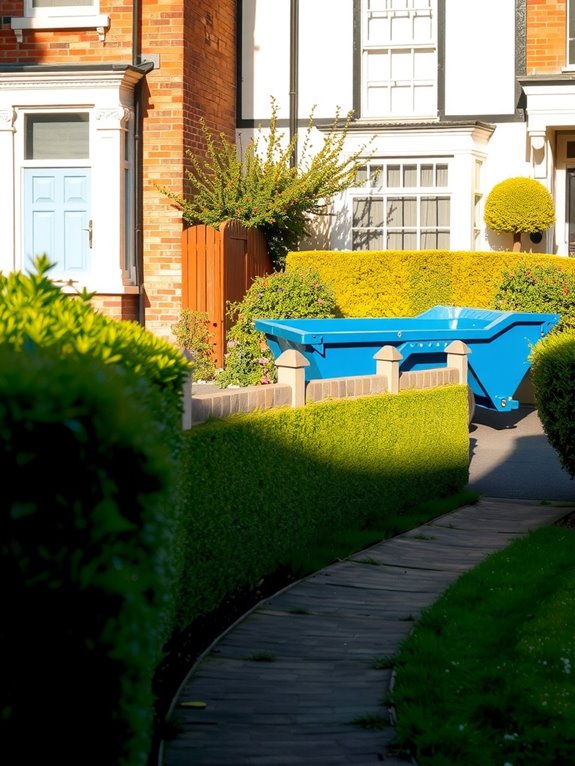
Your skip sits in your front garden with safety lights glowing through the evening hours and plenty of space on all sides—so how long does it actually stay put? Most skip hire companies offer a standard two-week rental period for residential placements, which handles most typical front garden cleanouts without fuss. You won’t need a skip permit during this timeframe when the skip sits on your own property.
Running out of space before those two weeks are up. No problem. You can request quicker collection whenever you’re ready, or you can arrange an extension through your provider if you need additional time. The real trick is nailing down your specific hire period when you book and keeping loose contact with your company so they know when to swing by for pickup.
What to Do If Your Permit Request Is Denied
Sometimes your local council denies that road permit you’ve applied for. It happens pretty regularly, and while it feels frustrating in the moment, you absolutely have workable options.
Start by understanding their specific reason for the rejection. They typically cite three common issues: insufficient clearance for traffic flow (usually needing at least 3-4 meters of unobstructed road width), conflicts with bus stops or loading zones within 10 meters of your location, or existing parking restrictions that prohibit temporary structures in your area.
Before going further, check whether you can place the skip on your own driveway or private property instead. A standard skip takes up roughly 2.5 by 1.2 meters of space, and keeping it on your property eliminates the permit requirement entirely. That’s worth exploring first.
If private placement isn’t possible, contact your local council directly and ask what specific changes would make your request approvable. Sometimes shifting the skip location by just 2 or 3 meters away from a bus stop or moving it to a spot with better traffic flow visibility is all that’s needed. Get their exact requirements in writing so you know precisely what to adjust.
If you believe their decision was genuinely unfair after making reasonable adjustments, you can file a formal appeal. Councils tend to respond well to applicants who persist with concrete solutions rather than just resubmitting the same request unchanged.