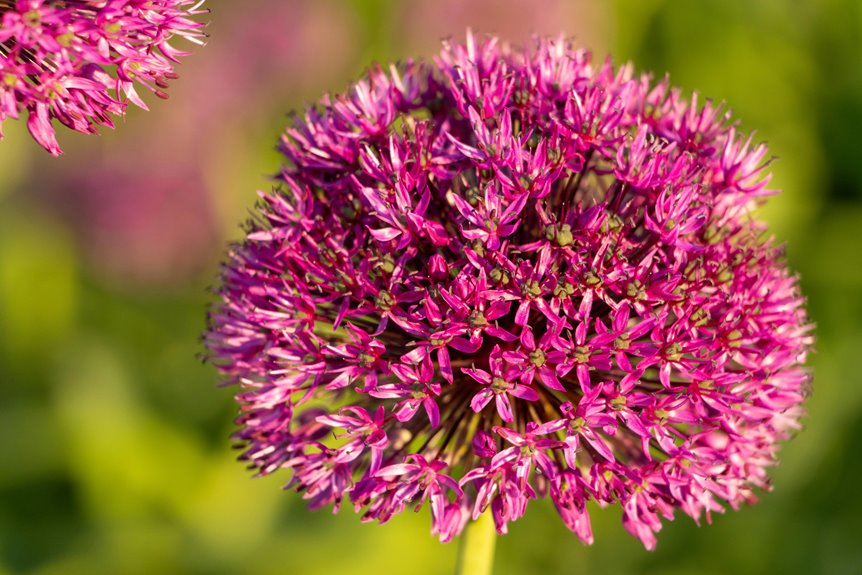
Plant your alliums in a sunny spot with well-draining soil after the first frost hits in September or October.
Dig down 12 inches and mix in 2–3 inches of compost to give your bulbs a nutrient-rich home.
Position each bulb pointed-end-up at a depth roughly twice its height—this gives roots room to develop while keeping the tip safe.
Spacing matters more than you might think. Smaller bulbs need 4–8 inches between them, while larger varieties should sit 12–16 inches apart.
Cramping them together invites disease and competition for water and nutrients.
Water thoroughly after planting to settle the soil around each bulb.
Then spread 1–2 inches of mulch over the area—something breathable like shredded bark works well.
This layer protects bulbs from temperature swings and keeps moisture steady through the cooler months.
Here’s the part many gardeners mess up: leave the foliage alone once your alliums bloom.
Those leaves look tired and droopy, sure, but they’re busy converting sunlight into energy that feeds next year’s bulbs.
Let them stay until they naturally yellow and die back completely.
Removing them early starves your plant before it’s done its job.
Choose a Sunny Location With Well-Draining Soil for Allium Bulbs
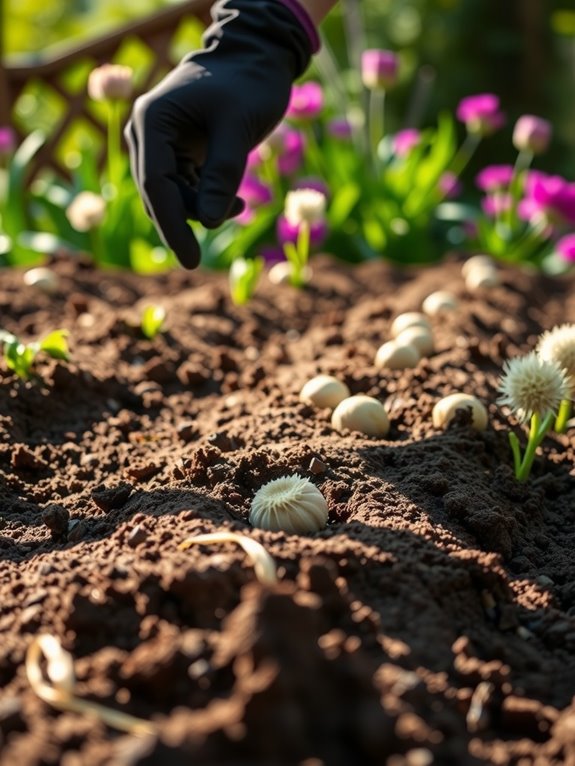
Before you dig a single hole, scout out the perfect spot for your alliums. These plants need at least six hours of direct sunlight daily to produce those full, showy flower heads you want. Sunlight fuels the energy they need to bloom well.
Now for the part that really matters: well-draining soil. Allium bulbs rot quickly in wet conditions, so if water pools around your planting area after rain, you’re asking for trouble. Squeeze a handful of your soil to test it—it should crumble apart easily rather than clump together in a tight ball.
Before planting, work 2–3 inches of compost or aged manure into the top 8–10 inches of soil. This improves drainage while also adding nutrients that help bulbs establish strong roots. The loose, crumbly texture you create gives water a clear path down and away from the bulbs themselves, which is exactly what they need to stay healthy and vigorous.
Plant in Fall After the First Frost (September–October in Zone 7)
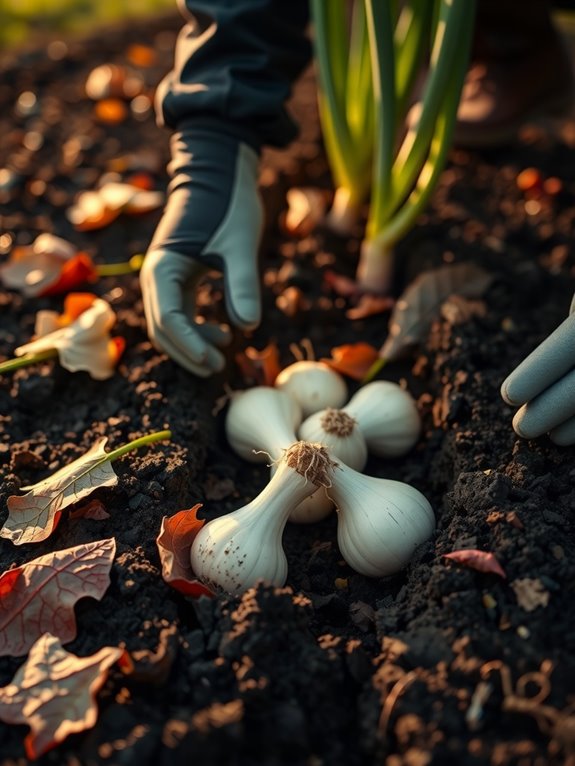
Now that your sunny spot is prepared and your soil is loose and workable, it’s time to plant those bulbs—and timing really does matter. Fall planting works best for allium bulbs because it gives them what they need to develop strong roots. In Zone 7, plant between September and October, right after the first frost but before the ground freezes solid. This window gives your bulbs 6–10 weeks of cold exposure underground, which triggers root development and prepares them for spring blooms. The cooler soil temperatures also prevent premature sprouting, keeping everything on schedule for when warm weather arrives.
Dig Deep: Prepare Soil to 12 Inches and Mix in Compost
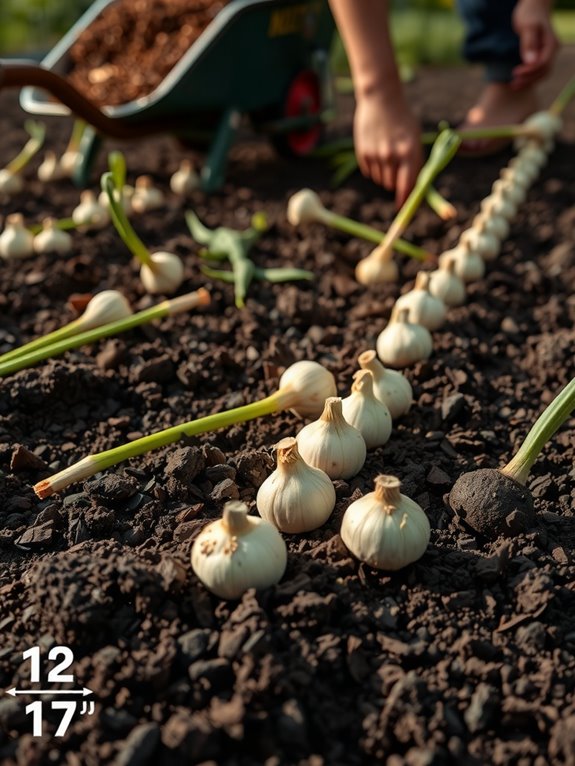
Once you’ve found your sunny spot, it’s time to get your hands dirty—literally. Dig your planting bed down 12 inches to give your bulbs the loose, welcoming soil they need for healthy root development. As you dig, pull out any rocks and hard clumps that’ll block roots from spreading into the soil below.
Dig your planting bed 12 inches deep and remove rocks to help bulbs develop healthy roots in loose, welcoming soil.
Break up everything until you’ve got a smooth, friable base that drains well. This texture matters because bulbs sitting in wet, compacted soil will rot instead of growing.
Mix in 2–3 inches of compost throughout that entire 12-inch zone. This organic matter does three things at once: it boosts how much nutrition your soil holds, improves how well water soaks in and drains out, and builds better soil structure that’ll keep your bulbs happy for years. You’re creating a loamy, well-drained home where bulbs can put down solid roots.
Rake your surface level and uniform when you’re done. You’ve now got the right foundation for planting.
Space Allium Bulbs 4 to 8 Inches Apart Based on Variety
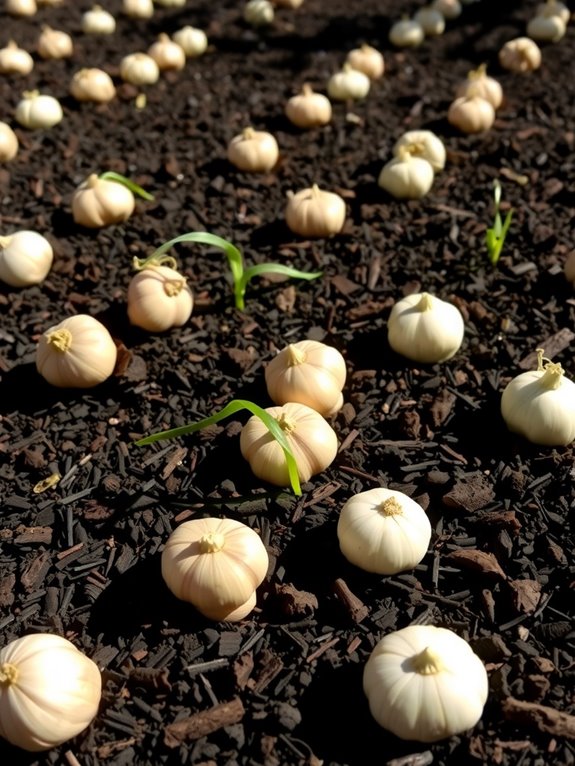
With your soil prepped and ready to go, spacing becomes your next consideration—and it’s worth getting right. You’ll want to space smaller Allium bulbs 4 to 8 inches apart, giving each one breathing room to develop without competing for nutrients. Larger varieties need the wider end of that range, around 6 to 8 inches, to prevent crowding and let blooms develop evenly.
The real space hogs are XL varieties like Allium Globemaster. Plant these roughly 30 to 40 centimeters apart, which translates to about 12 to 16 inches. It sounds like a lot of empty space at planting time, but it pays off once those massive flower heads start expanding. Each bulb needs room to push out a full canopy of blooms without bumping into its neighbors.
The reasoning here is straightforward: bulbs planted too close together fight over nutrients and water. They also create air pockets that stay damp longer, which invites fungal problems. When you space them properly, air flows around the plants, moisture dries out faster, and each flower head gets the light it needs to develop its color and size.
Adjust your spacing based on which category your bulbs fall into, and you’ll get better emergence rates and more balanced blooms across your border. A little extra space at planting time means a more even, polished display when everything flowers.
Dig Holes 2 to 3 Times the Bulb’s Height
Getting your hole depth right shifts planting from guesswork into something reliable and straightforward. You’ll want to dig holes roughly 2 to 3 times as deep as your bulbs are tall. A 1-inch bulb needs 2–3 inches deep, while a 3-inch bulb demands about 6 inches.
Larger varieties especially benefit from that deeper end of the range, giving them solid support against flopping as they grow tall. This extra depth acts like an anchor, keeping heavy stems stable when they reach their full height.
The real payoff comes from consistency. Dig all your holes to similar depths across your bed or pot so your bulbs emerge and bloom together, creating that satisfying synchronized display. When everything pops up at roughly the same time, you get a coordinated show instead of a scattered, uneven one.
Before you start digging, check your specific bulb’s height to nail the exact depth. Measure the bulb from bottom to tip, then multiply by 2 or 3 depending on the variety. This simple habit moves you from uncertain to confident about what you’re doing in the soil.
Place Bulbs Pointed End Up and Backfill Gently
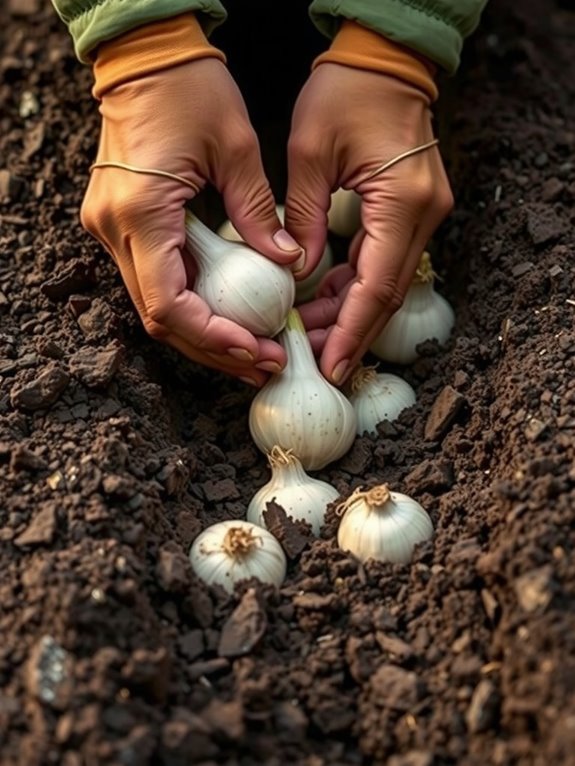
Position each bulb with its pointed end facing up—shoots naturally grow toward the sky, so this orientation works with how the plant wants to develop. Gently backfill the hole with soil, pressing lightly around the bulb to remove air pockets while keeping that tip exposed or just barely covered. Water thoroughly right after backfilling to settle the soil and start root development, which anchors your alliums for stable, strong growth.
Proper Bulb Orientation Matters
Why does bulb orientation matter so much? You’re setting up your allium bulbs for success right from the start. Plant them with the pointed end facing up—that’s where your shoots will emerge. The flat, rooted base goes down into the soil where it belongs.
When you backfill gently after placing each bulb, you’re protecting those delicate roots from damage while keeping soil contact consistent. This matters because loose soil creates air pockets that will interfere with how quickly roots establish themselves. Press the soil around your bulb firmly but carefully to close those gaps.
Proper orientation means shoots push upward efficiently, not sideways or downward. That pointed end is nature’s built-in guide, and following it gives you uniform emergence across your planting bed. Get this step right, and you’re already halfway toward a bed that’ll put on a good show.
Backfilling With Care Technique
Once you’ve settled your allium bulb into the planting hole with that pointed end facing skyward, backfilling properly sets you up for success. The technique is straightforward and worth doing right.
Gently return soil to the hole, working gradually around the bulb in all directions. This matters because air pockets dry out bulbs faster than solid soil contact does. Fill until the soil reaches about 1 inch below the container or ground rim, leaving that small buffer space.
Water lightly after backfilling to settle the soil particles and establish immediate contact between roots and moisture. Use enough water to moisten the soil without creating mud—think of it like a gentle drink rather than a soaking. Lightly tamp down the soil using gentle pressure, pressing just enough to firm things up without compressing the bed into a hard layer.
You’re essentially cradling your bulb in a stable soil bed with good contact all around. This careful approach gives your allium the solid foundation it needs to develop roots and push up shoots come spring.
Root Development After Planting
How does an allium bulb know which way’s up? That pointed end isn’t just decoration—it’s your bulb’s built-in guide for sending roots downward where they belong. Plant it pointed-end-up, and you’re working alongside nature instead of fighting against it.
Your planting depth really does matter. Aim for two to three times the bulb’s height, which gives roots ample room to spread and anchor themselves properly. This depth also prevents bulbs from shifting upward as soil settles over time.
After positioning your bulb, gently backfill with your original soil mix or amended potting soil. Work carefully to eliminate air pockets—they create gaps that keep roots from making good contact with moisture. Lightly firm the soil around your bulb for stable support, but avoid pressing hard enough to compact it.
Now water thoroughly. This settles everything into place and gets root growth moving in the moist, well-drained environment your allium needs to develop properly.
Water Thoroughly to Settle Soil Around Bulbs
After you’ve nestled your bulbs in place, water them thoroughly to settle the soil and eliminate air pockets that could strand roots without contact to moisture. You’re aiming for that sweet spot where soil stays consistently moist but not waterlogged—think of a wrung-out sponge rather than a swamp. This initial deep soaking jumpstarts root establishment and sets your alliums up for strong spring growth.
Water until moisture penetrates 8 to 10 inches deep, which usually means running water for several minutes depending on your soil type and garden setup. Clay soils need slower watering to prevent runoff, while sandy soils absorb water faster but may need more frequent applications. The goal is getting water down to where the bulb roots will develop, not just dampening the surface.
Check soil moisture a day or two after planting by poking your finger into the ground. If it feels like that wrung-out sponge at 4 to 6 inches down, you’ve hit the mark. If it’s bone-dry, give it another light watering. If it feels squishy and smells earthy in a swampy way, you’ve overdone it and should hold off until the top inch dries out.
Settling Soil Around Bulbs
You’ve positioned your allium bulbs at the perfect depth, but the real work starts when you water. This step packs loose soil around each bulb so it can settle in properly. Here’s what you need to know:
Water slowly until moisture reaches about 6-8 inches down, where the root zone sits. You want firm contact between the bulb and soil, but not puddles that stick around. Waterlogging invites rot, so let water drain away naturally instead of pooling on top.
After watering, take a quick look at your soil level. If any bulb tips poke through the surface, cover them right away with fresh soil. For container plantings, water until you see water running from the drainage holes at the bottom, which tells you the whole pot is saturated.
Here’s the practical reason this matters: loose air pockets around bulbs prevent roots from making good contact with soil, and roots need that contact to absorb water and nutrients. When you water deliberately, you’re collapsing those air gaps and creating a stable foundation. If you’ve added replacement soil after the initial watering, water again to settle it completely.
Think of this process as setting the stage for spring blooms. Strong root development depends on that early contact between bulb and earth, and watering does the physical work that makes it happen.
Watering For Proper Establishment
Once your bulbs are tucked into their planting holes at the right depth, thorough watering becomes your most important tool for success. Water immediately after planting to settle the soil around your bulbs and eliminate any air pockets that could cause problems down the road.
During the establishment phase, keep your soil consistently moist—imagine a wrung-out sponge rather than a swamp. If rainfall isn’t cooperating, water every three to five days to support root development and early growth. This regular moisture helps bulbs anchor themselves and begin sending out roots into surrounding soil.
Here’s what matters most: use well-draining soil to prevent waterlogging, which invites bulb rot and fungal issues. Dense, compacted soil holds water like a bucket, while properly amended soil with compost or perlite allows excess moisture to move through. Once spring sprouts appear above ground, resume normal watering patterns and avoid letting dry spells stress young plants. Building this foundation early means your bulbs will have the reserves they need to produce healthy blooms later in the season.
Apply Light Mulch (1–2 Inches) to Insulate Bulbs Through Winter
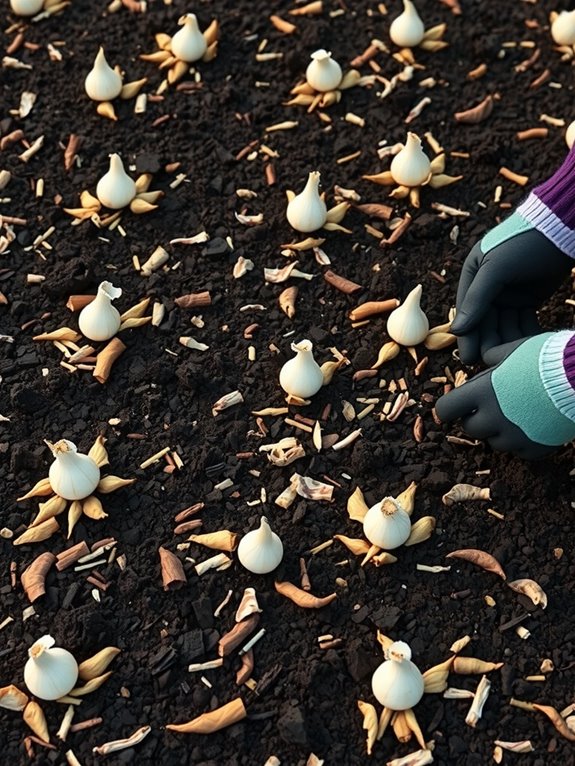
Why does mulch matter for your allium bulbs? Mulching creates a protective blanket that shields your bulbs from harsh winter temperatures and prevents damaging freeze-thaw cycles that can crack and kill them.
Apply 1 to 2 inches of breathable mulch like straw, shredded leaves, or pine needles across your planted area. This thin layer regulates soil temperature without creating a dense, moisture-trapping environment that suffocates bulbs. Think of it as a cozy blanket rather than a heavy quilt.
Keep mulch pulled back from plant stalks and foliage to allow air to circulate and prevent rot from settling in. You want the mulch protecting the soil around your bulbs, not hugging the stems where moisture can linger and cause problems.
Avoid heavy, compact materials like wet leaves or wood chips that pack down and hold too much water. Your bulbs need to stay dry underneath, so stick with lighter options that let water drain through while still providing insulation.
When spring arrives and shoots start breaking through the soil, remove or thin out the mulch so warm air and sunlight can reach your emerging plants. This simple timing adjustment lets new growth develop without struggling through a thick blanket of decomposing material.
Water During Spring Growth if Rainfall Falls Short
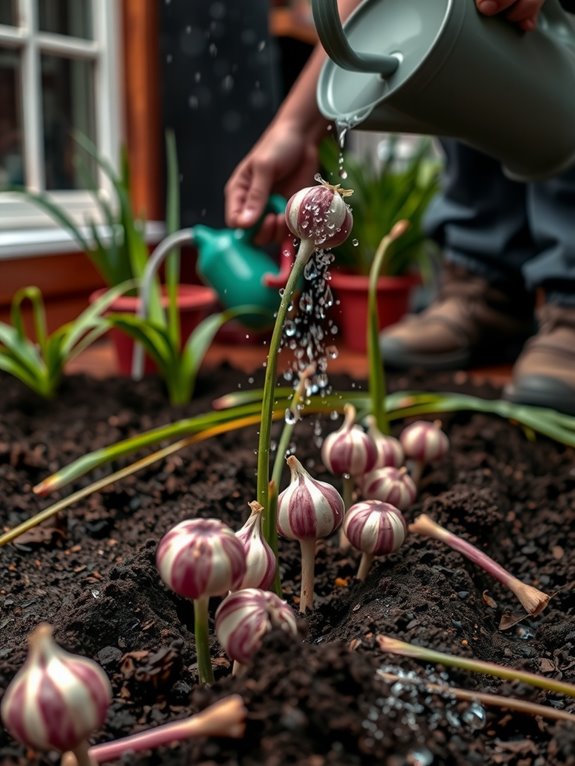
Once your alliums start sprouting in spring, keeping track of rainfall becomes your main job. If rain doesn’t show up, water every 3–5 days to give those waking roots and emerging shoots the steady moisture they want. The key is finding that sweet spot between hydration and safety—roots need consistent dampness, but sitting in waterlogged soil invites rot.
Rather than watering on a fixed schedule, check your soil regularly by pushing your finger about an inch down. If it feels dry at that depth, it’s time to water. If it still holds moisture, hold off another day or two. This hands-on approach lets you match watering to your actual conditions instead of guessing based on a calendar. You’ll catch any dry spells before they stress your plants and avoid the soggy conditions that cause bulb rot. That attention to what your soil actually needs sets up your alliums for strong, steady growth through the season.
Spring Moisture Management
How much water does your allium actually need once those green shoots push through the soil? You’re watering a plant that’s actively growing and hungry for moisture to fuel leaf and flower development.
- Water every 3–5 days during spring if rainfall doesn’t keep soil consistently moist. The goal is to mimic steady spring precipitation rather than occasional heavy soakings.
- Let the top inch of soil dry slightly between waterings to prevent bulb rot, which happens when water sits around the bulb for too long.
- Use soaker hoses for deep, slow watering that reaches the bulb zone without splashing leaves. This method delivers water directly to where it’s needed and cuts down on leaf diseases.
- Make sure your soil drains well so excess water moves through quickly instead of pooling around your bulbs.
- During hot, windy periods when soil dries faster, water more frequently. When the weather turns cool and cloudy, back off—your alliums need less water when conditions naturally slow evaporation.
Think of yourself as matching nature’s rhythm. You’re not drowning your alliums—you’re maintaining that sweet spot between dry and soggy where roots can absorb moisture without sitting in wet conditions. That balance is what leads to solid spring blooms.
Rainfall Monitoring Guidelines
Rather than guessing whether your alliums need water, track what nature’s actually delivering to your garden. Monitor your weekly rainfall totals and note when they fall short of 1 inch per week during active growth periods. When rainfall doesn’t meet that target, supplement with intentional watering.
Use a soaker hose or drip irrigation system to deliver moisture directly to the root zone, bypassing the foliage entirely. This approach supports healthy drainage while preventing fungal issues that wet leaves tend to invite. Check your soil’s top 1–2 inches regularly—they should feel slightly damp, never bone-dry or waterlogged.
During warm, windy spells, you’ll water more frequently than during cool, cloudy stretches. Simple observation keeps your alliums growing well. The reason this matters: direct watering at the roots means less sitting time on leaves, and less sitting time means fewer fungal problems down the line.
Preserve Foliage After Bloom: It Feeds Next Year’s Bulbs
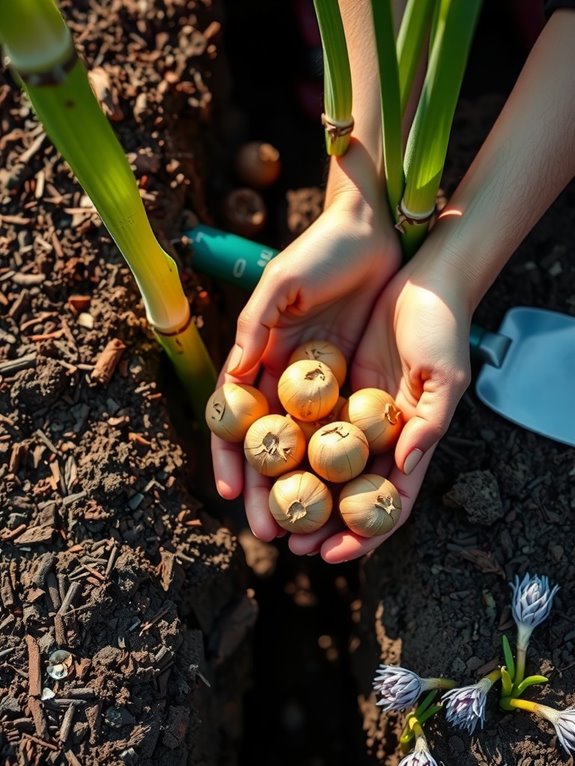
Why do you see gardeners leaving those yellowing, floppy allium leaves standing in the garden long after the flowers have faded? Those homely foliage remnants are actually powerhouses fueling next year’s blooms through nutrient storage in the bulbs below.
Skip the shears immediately after blooms fade. Those leaves are photosynthesizing energy and pushing it downward into the bulb. Cutting them off stops this nutrient transfer cold, leaving your bulbs undernourished for next spring.
Wait for natural die-back until foliage yellows completely. This color change signals that the bulb has finished absorbing nutrients from the leaves above. Once the leaves turn that papery yellow-brown, the work is done and you can trim them back.
Keep soil slightly moist during this storage phase without creating soggy conditions that might rot the feeding leaves. Think of it like the consistency of a wrung-out sponge rather than wet mud. If you’ve had heavy rains, you probably don’t need to water.
Avoid digging or disturbing the soil around bulbs while they’re actively storing reserves. Walking heavily over the bed or poking around can damage the bulbs when they’re at their most vulnerable.
Once the foliage turns completely brown and papery, you can harvest those dried tops for decorative use in dried arrangements if you’d like. Patience through this unglamorous phase rewards you with stronger, more abundant allium displays the following season.