Start seeds indoors about 6–8 weeks before your last frost date, which you can pinpoint using a zip code finder online. This timing gives seedlings enough time to develop before outdoor conditions allow planting.
Before moving seedlings outside, harden them off over 7–10 days by gradually shifting them from shade into increasing amounts of sunlight. This process toughens up the plants so they won’t get shocked by outdoor conditions.
When you transplant, bury the stem up to the first true leaves—sounds odd, but those buried leaf nodes will sprout into roots along the buried section, giving you a deeper, more stable root system. Water deeply after planting to settle the soil around the roots.
Apply 2–3 inches of mulch around each plant to regulate soil temperature, retain moisture, and keep weeds down. Pinch off any lower leaves that touch the ground since they’re prone to fungal diseases and soil-borne pathogens. This simple step prevents many common tomato problems before they start.
Calculate Your Planting Date From Your Last Frost Date
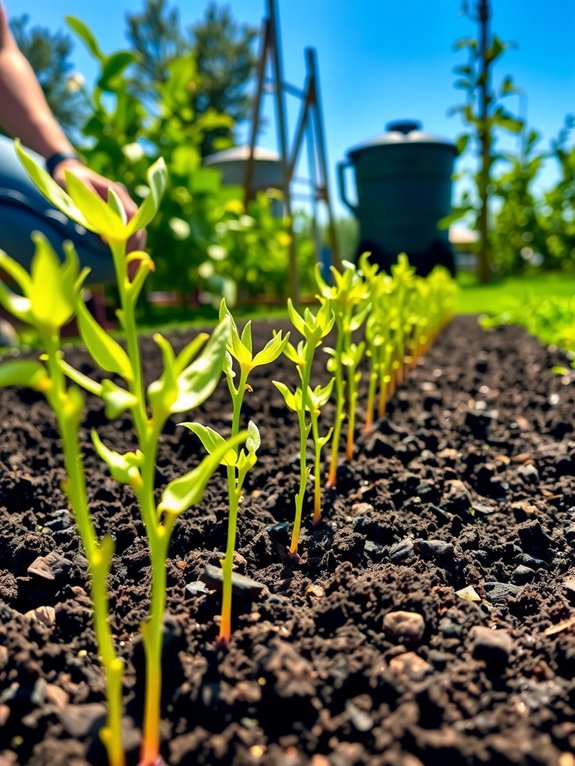
When’s the best time to get those tomato seedlings in the ground? Start by finding your last frost date using a zip code-based finder—this gives you 30 years of historical data to work with. Once you’ve got that date, count backward 6–8 weeks. That’s your transplant timing sweet spot for regions with typical spring frosts.
Your growing season length matters too. If you’re in a short-season area, you’ll want those tomatoes in earlier so they ripen before winter arrives. For longer seasons, you can plant up through mid-July.
Here’s the thing about soil temperature: tomatoes want warmth, not cold. Check soil with a simple thermometer—tomatoes really prefer 60°F minimum, but they’ll actually grow faster and stronger at 70°F or higher. Before you transplant, peek at a 14-day forecast and adjust your timing if frost threatens. Small tweaks now prevent big disappointments later.
Match Your Tomatoes to Your Growing Season
You’ve nailed down your planting date—great. Now comes the fun part: choosing varieties that’ll actually ripen before frost arrives. Your tomatoes’ days-to-maturity must align with your frost-free days, or you’ll harvest green fruit instead of ripe ones.
| Growing Season | Frost-Free Days | Best Varieties |
|---|---|---|
| Short | <120 days | Early types (55–70 days) |
| Average | 120–170 days | Mid-season types (70–80 days) |
| Long | 170+ days | Any type (80+ days) |
When transplanting, match variety timing to your planting time. A 90-day tomato needs 90 frost-free days after your last frost date to reach full ripeness. Count backwards from your first fall frost to determine which varieties suit your growing season. This simple math prevents disappointment and keeps you on track with gardeners who’ve mastered the timing.
Acclimate Seedlings to Outdoor Conditions Before Transplanting
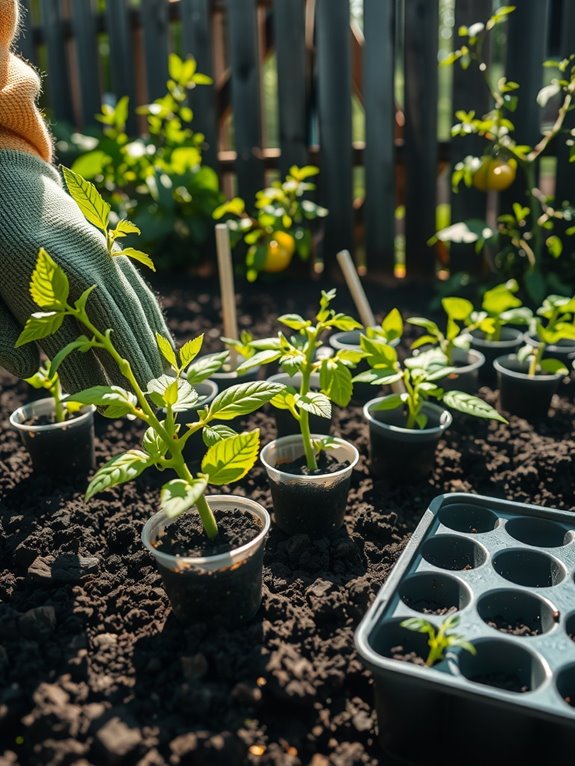
Start hardening off your seedlings about 7–10 days before you plan to move them outside permanently. This gradual process helps their tissues toughen up and prepares them for outdoor conditions.
Begin by placing seedlings in a shady, sheltered spot where they’re protected from wind and direct sun. After a day or two, move them to a spot that gets dappled light or morning sun only. Each day, gradually increase their exposure to direct sunlight over the course of a week until they’re sitting in full sun for several hours.
Why take this slow approach? Young seedlings have tender leaf tissue and delicate stems adapted to indoor life under grow lights. Moving them straight outside into bright sun causes sunburn—those brown, papery patches on leaves that stop the plant from photosynthesizing properly. Cold shock works similarly, stunting growth and sometimes killing the plant entirely.
Watch for signs your seedlings are ready for the outdoors: stems should feel firm and woody rather than thin and bendy, leaves should stay perky and upright without wilting, and you shouldn’t see any leaf burn or damage. These physical changes mean the plant’s waxy coating has thickened and its cells have strengthened.
During the hardening-off period, bring seedlings back inside on nights when temperatures drop below 50°F. Even hardy plants struggle in cold snaps at this vulnerable stage. Once nighttime temperatures consistently stay above 50°F in your area, they can stay outside permanently.
Hardening Off Process Basics
Your seedlings have spent their time in a controlled indoor environment, so they need gradual preparation before moving outside permanently. Hardening off is the process of slowly introducing them to outdoor conditions—sun, wind, and temperature changes—over 7 to 14 days. Think of it as their transition period from the cozy indoors to the real world.
Start with short, protected sessions and gradually increase both time outside and exposure to elements. Here’s how to pace it:
| Day Range | Time Outside | Location | Protection Level |
|---|---|---|---|
| Days 1–3 | 2–3 hours | Shaded area | Full protection |
| Days 4–7 | 4–6 hours | Dappled light | Partial shade cloth |
| Days 8–11 | 6–8 hours | Bright, open | Minimal protection |
| Days 12–14 | 8+ hours | Full sun | Hardened seedlings |
During the early days, keep seedlings away from direct midday sun, which can scorch tender leaves in just a few hours. Strong winds will also stress young plants, so position them in sheltered spots initially. If heavy rain is forecast, bring them inside. Watch for pests like slugs and aphids, which find vulnerable seedlings easy targets.
One final consideration before transplanting: wait until nighttime temperatures consistently stay above 50°F. Cold soil and chilly nights can stunt growth or kill seedlings that haven’t fully acclimated yet.
Gradual Exposure Timeline
Delicate indoor seedlings face a real shock when they first meet outdoor conditions—harsh winds, intense sun, and temperature swings that indoor growing never prepared them for. That’s where hardening off comes in: a 7–14 day acclimation process that gradually toughens them up for the outdoors.
Start by placing seedlings in a sheltered, shaded spot for just 2–3 hours on day one. Each day, extend their outdoor time by 1–2 hours while slowly reducing the shade protection they’re getting. This incremental approach lets them adjust to wind and temperature changes without the shock of sudden exposure.
Pay close attention to nighttime temperatures throughout this process. Whenever conditions dip below 50°F, bring your plants back inside where it’s warm. This matters because cool nights can damage tender seedlings that haven’t built up their tolerance yet.
After this patient, step-by-step process, your seedlings will have developed tougher leaves and stronger stems. They’ll handle the wind without snapping and won’t wilt under direct sun anymore. Once they’ve completed their hardening-off period, they’re ready for transplanting into your garden beds or containers.
Protecting Young Seedlings
Once your seedlings have toughed up through gradual outdoor exposure, they’re ready for the next phase. Don’t rush them straight into garden beds just yet, though. You’ll want to harden them off over seven to fourteen days, gradually increasing their outdoor time as nighttime temperatures reliably stay above 50°F.
Start with just a few hours in a sheltered spot, then slowly boost their sun exposure each day. Think of it like getting a tan—a little at a time prevents damage. Shield them from harsh midday rays during this acclimation period to prevent leaf burn, which shows up as bleached or papery patches on foliage.
Here’s a practical tip that actually works: slightly reduce watering while hardening off. This gentle stress might sound counterintuitive, but it strengthens root health by encouraging roots to dig deeper searching for moisture. Stronger roots mean less chance of root rot once you transplant them into the garden soil where moisture levels fluctuate more than they do indoors. Your seedlings will respond with solid, compact growth rather than the weak, leggy stems that come from coddling.
Select Healthy Seedlings and Prepare Your Planting Site
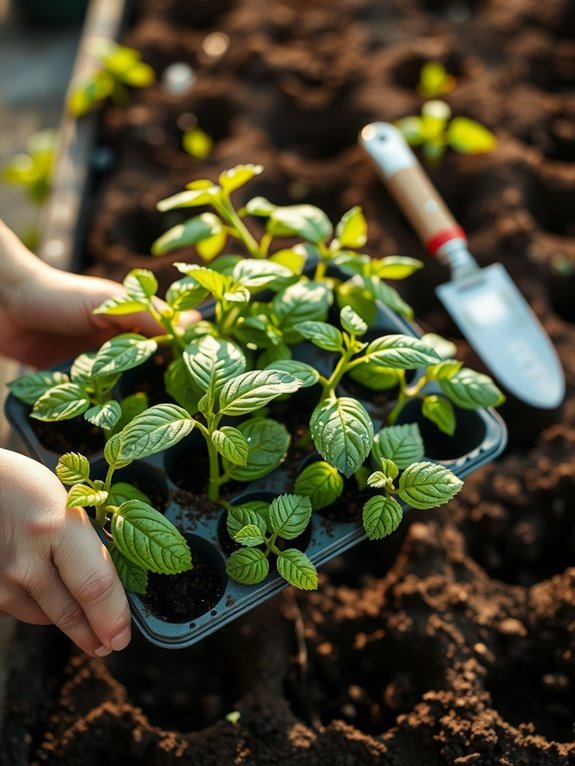
Finding the right seedlings matters because a weak plant stays weak, while a healthy one builds strength from the start. Look for short, stocky plants with dark green leaves—these show a seedling got plenty of light and didn’t stretch reaching for the sun. Leggy seedlings that’ve grown tall and spindly often struggle to recover, no matter how well you treat them later.
Check the roots by gently tipping the pot to peek at the bottom. Healthy roots should be white or light tan and fill the soil without circling the pot in tight spirals. When roots coil around themselves like that, they stay stuck in that pattern and have trouble spreading into garden soil.
Harden off your seedlings before planting by gradually moving them outside over seven to ten days. Start with just two or three hours in a sheltered spot, then add more time and exposure each day. This process toughens the plant tissues and prepares them for wind, direct sun, and temperature changes they’ll face in your garden.
Plant deeply when transplanting—bury the stem right up to the first set of true leaves. Tomato stems buried in soil develop additional roots along the buried sections, which means a stronger root system supporting the whole plant. Use your hands to firm soil gently around the stem as you go, removing air pockets that would dry out roots.
Plant Tomatoes Deeper for Stronger Root Systems
When you bury a tomato seedling deeper than it came in the nursery pot, you’re activating a hidden advantage. The stem buried underground has dormant root nodes that will sprout new roots, expanding your plant’s foundation considerably. This isn’t cosmetic gardening—it’s practical strategy that pays real dividends.
Plant the stem so it reaches up to those first true leaves, keeping the buried portion completely underground. Just above the soil line, remove any lower leaves that would otherwise sit in the dirt and invite disease. This clearing allows roots to develop rapidly along the buried stem without competing with decomposing foliage.
The payoff comes in your root system’s size and efficiency. More roots mean better water and nutrient absorption, building plants that handle dry spells more gracefully. After planting, press the soil firmly around the stem to eliminate air pockets and anchor those developing roots in place.
Water, Mulch, and Prevent Early Pest and Disease Problems
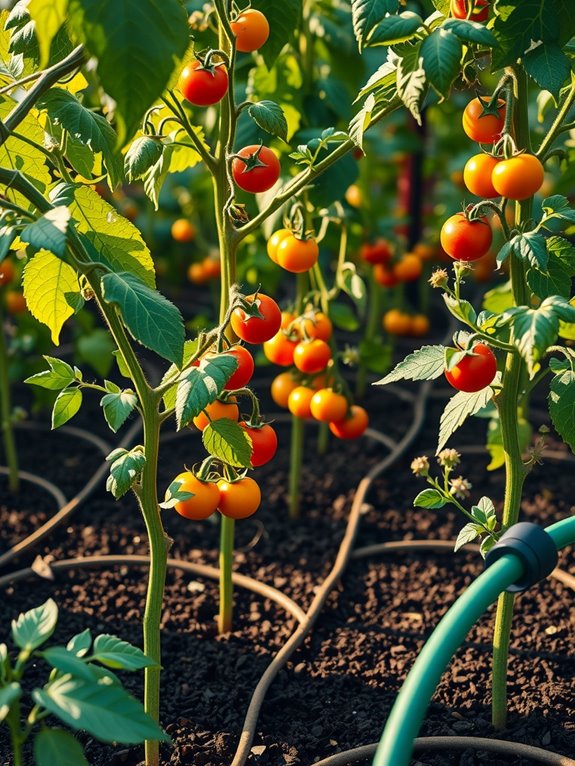
Water your tomatoes thoroughly right after planting, then keep watering consistently as the soil surface dries out. Stick with drip irrigation or soaker hoses at the plant base rather than overhead watering, since wet leaves create the perfect conditions for fungal diseases to take hold before your tomatoes even start producing fruit.
Layer 2–3 inches of shredded bark mulch around each plant to hold moisture in the soil, maintain steady soil temperature, and block out weeds that would compete for water and nutrients. This simple barrier does real work for you without requiring much effort once it’s down.
Getting these basics right early on stops a lot of headaches later. You’ll catch problems before they spiral because you’re watching your plants closely during these early weeks anyway.
Watering Tomatoes Properly
Your tomato plants need water that goes deep into the soil, not just a quick sprinkle on top. After you plant them, water thoroughly so the moisture reaches down to the roots where it matters. Then keep watering whenever the top inch or two of soil feels dry to your touch.
The goal is to maintain soil that stays evenly moist throughout the season—think of it like a wrung-out sponge rather than a puddle. Deep watering less often actually works better than frequent shallow sprinkling because it encourages roots to grow deeper and stronger. Inconsistent watering causes real problems like blossom end rot, where the bottom of your fruit develops dark, sunken spots that ruin the tomato.
Apply water right at soil level rather than from above, which keeps those leaves nice and dry. Wet foliage invites fungal diseases that can spread quickly, so this simple adjustment pays off. Spread 2 to 3 inches of shredded bark mulch around the base of each plant, leaving a few inches clear around the stem. This mulch acts like a blanket, holding moisture in the soil and keeping temperatures more stable when the sun beats down hard.
Stay attentive during hot spells and when your tomatoes are actively setting fruit—both times when plants drink more water. Pull out weeds regularly because they’re competing with your tomatoes for that water and for nutrients in the soil. Checking your soil a couple times a week gives you a real sense of what your plants need day to day.
Mulch and Disease Prevention
Since you’ve already watered your tomatoes properly, it’s time to add mulch and smart disease prevention to your routine. The best defense really is stopping problems before they start.
Spread 2–3 inches of shredded bark around each plant to conserve soil moisture, regulate temperature, and fight weeds. This protective layer keeps soil from splashing onto leaves, which reduces disease risk considerably. Soil-borne pathogens love moisture on foliage, so keeping that barrier intact matters more than you might think.
Remove lower leaves that touch the soil, since diseases lurk right at that contact point. Prune regularly to open up your plants and let air flow freely through the foliage—good airflow is one of the simplest ways to prevent fungal issues. Think of it as giving your tomatoes room to breathe.
Choose disease-resistant varieties marked with VFN labels when you’re selecting plants. These varieties are bred to handle common tomato problems without extra fuss. Rotate your tomato beds yearly so soil-borne pathogens don’t accumulate in the same spot year after year. These three moves—mulching, pruning, and rotating crops—work together to create conditions where diseases struggle to take hold.
Harvest When Tomatoes Yield to Gentle Pressure
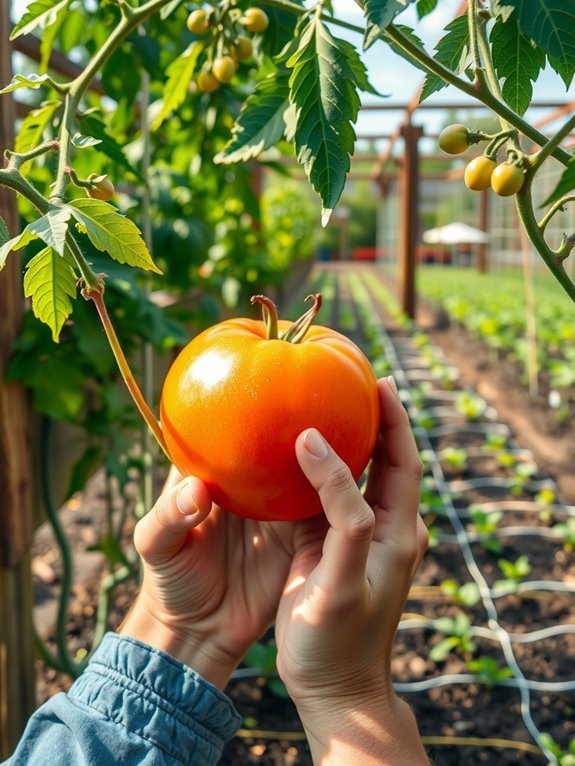
The moment you can gently squeeze a tomato and feel it yield slightly without going soft or mushy, you’ve hit the harvest window. That light pressure tells you the fruit has developed enough sugars and acids to taste good while holding together during picking and storage.
Different tomato varieties ripen on different schedules, and weather plays a role too. A ‘Brandywine’ might take 85 days from transplant, while a cherry tomato could be ready in 60. Check your seed packet for the days-to-maturity number specific to what you planted.
You don’t always need to wait for full ripeness on the vine. Tomatoes picked at the “breaker stage”—when the first blush of color appears but the fruit is still mostly green—will continue ripening on your counter for 5 to 10 days. This approach works especially well in late summer when frost threatens or when you want to manage ripening throughout the week rather than having everything mature at once.
The squeeze test works because ripe tomatoes have softer cell walls and higher water content than unripe ones. When you press gently with your thumb or two fingers, you should feel a slight give that springs back a bit, not a surface that feels rock-hard or one that leaves a dent. Store tomatoes at room temperature around 68 to 72 degrees Fahrenheit for best flavor—cold temperatures below 55 degrees damage their taste compounds and make them mealy.