

Wind chill doesn’t actually freeze plants—your thermometer does. What matters is real air temperature, not that human comfort index. The actual culprit is drying winds that strip moisture from leaves and soil, especially on evergreens.
You can fight back by watering deeply before the ground freezes, which gives plants stored moisture to draw from during cold snaps. Add 3 inches of mulch around plant bases to insulate soil and reduce water loss. For serious wind protection, install windbreaks using dense shrubs like American arborvitae, which block harsh gusts without casting too much shade.
Wrap vulnerable plants in burlap before winter arrives. This simple cloth barrier reduces water evaporation from leaves while still allowing some air circulation. Secure it loosely with twine so it doesn’t strangle branches as they move in the wind.
Different plants need different levels of protection depending on where you live and what species you’re growing. Newly planted trees and tender shrubs are more at risk than established ones, so prioritize those for extra care. Watch for brown or scorched leaf edges, which signal wind damage has already begun, though most plants recover once temperatures warm and you resume regular watering in spring.
Ignore Wind Chill: Focus on Air Temperature

Ever noticed how gardeners obsess over wind chill forecasts, only to watch their plants survive perfectly fine? That’s because plants don’t actually respond to wind chill the way you do. Your body generates heat through metabolism, so wind chill matters for you—it measures how quickly moving air strips warmth from your skin. Plants don’t work that way at all.
What plants genuinely respond to is the actual air temperature reading on your thermometer. That number, whether it’s 28°F or 15°F, tells you the real danger zone for your garden. Wind chill is basically a human comfort index, not a plant safety metric.
That said, wind itself definitely affects your garden in real ways. It strips away the thin protective layer of still air surrounding plant leaves and stems—what gardeners call the boundary layer. When that layer vanishes, plants lose moisture faster through their leaves and lose heat more rapidly into the cold air around them. Dry, freezing plants struggle more than moist ones, so wind creates real stress.
Here’s the catch though: wind can’t actually push plant temperatures lower than the surrounding air temperature itself. A 15°F day with 30-mph winds won’t freeze your plants at, say, 10°F. The air temperature stays at 15°F whether the wind blows or not. The wind just speeds up how fast plants lose heat and water to that 15°F air.
Recognize How Wind Actually Damages Plants
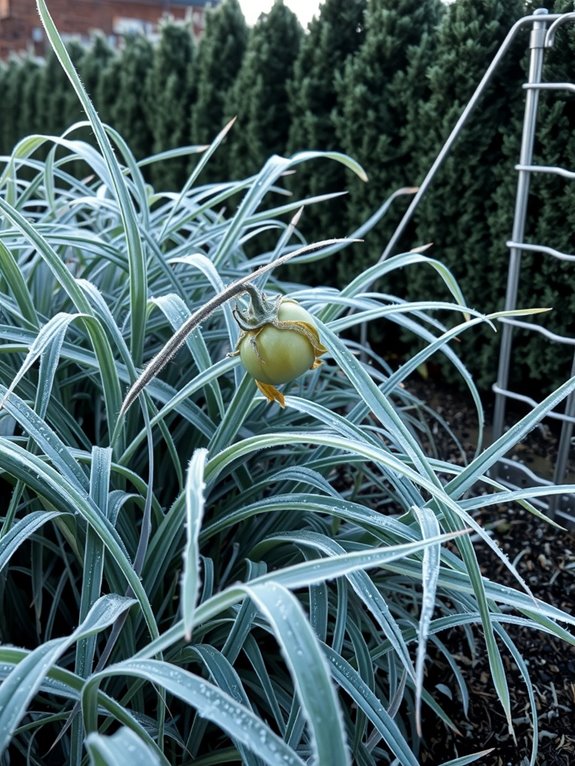
While air temperature is what freezes your plants, wind is what tears them apart—literally and figuratively. Wind damage works through three separate mechanisms that happen regardless of how cold it gets outside.
Strong gusts around 90 mph bend tree trunks, twist branches, and uproot plants entirely, especially when soil stays wet or root systems are already weakened. This physical stress snaps limbs and destabilizes the whole plant structure. Drying winds pull moisture straight from leaves and soil at a much faster rate than calm air does, which harms evergreens year-round whether temperatures drop below freezing or not.
Wind at 90 mph bends trunks, twists branches, and uproots plants—especially when soil is wet or roots are already weakened.
Here’s where it gets tricky: wind strips away the protective layer of humid air surrounding your plant’s canopy. This dehydrates tissues and makes plants far more vulnerable to cold damage than they’d be in still conditions. You’re fighting three separate battles at once—mechanical damage from physical force, water loss from drying, and weakened defenses against frost.
That’s exactly why even mild temperatures feel brutal when winds whip through your garden. A 40-degree day with 25-mph winds can damage plants more severely than a 20-degree day with calm conditions. Understanding how wind actually harms plants helps you pick protection strategies that address the real threats, rather than just focusing on temperature alone.
Spot Desiccation Before It Kills Your Plants

Your plants can dry out even when it’s freezing outside, and it’s all about desiccation—the loss of moisture that happens when conditions align just wrong. Wind strips away the protective layer of still air around your plant’s leaves, forcing them to release water faster than roots can pull it from frozen soil. When ground freezes solid, roots simply can’t access moisture to replenish what’s being lost.
Evergreens get hit hardest since they hold their needles and leaves year-round. Brown or scorched leaf edges, wilted stems, and discolored needles are your first warning signs of desiccation damage. Look at the windward side of your plants first—that’s where you’ll see the browning start.
Here’s how to stop it before it happens. Water your plants thoroughly in fall before the ground freezes, which gives roots a moisture reserve to draw from. Apply 3 to 4 inches of mulch around the base of plants to insulate soil and slow moisture evaporation from the top down. For extra protection on your most vulnerable plants, install a simple windbreak using burlap wrapped around stakes or position sturdy shrubs to block harsh winds. These layers of defense keep soil moisture locked in place and shield tender foliage from the worst drying effects winter winds deliver.
Identify High-Risk Plants in Your Garden

Now that you understand how desiccation works, it’s time to look honestly at which plants in your yard actually face trouble. Winter wind doesn’t threaten everything equally, so knowing your vulnerable plants matters.
Look for these danger zones:
Evergreens with limited drought tolerance. These plants can’t drop their leaves the way deciduous trees do to save water during freezing weather. Since they keep their foliage year-round, they lose moisture constantly through those leaves while frozen soil prevents roots from replacing it.
Plants with shallow root systems or those sitting in wet, unstable soil. Shallow roots mean less anchor strength when wind pushes hard on the plant. Wet soil around the roots also stays unstable and offers poor grip, making uprooting more likely when gusts hit.
Tropical or non-dormant species. Plants that don’t naturally enter dormancy in winter lack the built-in protection that hardy plants develop. They keep growing or stay active when temperatures drop, leaving them unprepared for harsh conditions.
Your biggest risk comes from plants that combine multiple weak spots. Picture an evergreen shrub planted near an open fence with no windbreak—it faces serious exposure while lacking dormancy to protect it. Walk around your garden and map where wind flows strongest and which plants sit in those paths. Species selection matters, but placement and exposure matter just as much when winter arrives.
Understand Why Trees Break and Uproot

When wind speeds hit around 90 mph, your trees face three distinct types of failure that happen in quick succession. First, the trunk experiences mechanical bending that gradually weakens the wood fibers. Second, torsion twists individual limbs back and forth until they snap clean off. Third, the sheer lateral force can yank shallow or compromised root systems right out of the ground.
The real story, though, lives underground. Root health determines whether your tree stays put or becomes a fallen giant. Wet soil acts like a lubricant—it loosens the anchor that holds everything in place. Trees with poor root development have almost nothing to grip the earth with, so they topple easily. Winter desiccation hits evergreens particularly hard, drying out the plant tissue and leaving the whole structure more brittle and less able to flex when the wind pushes.
Understanding these breaking points isn’t just interesting—it’s practical knowledge that helps you spot which trees need reinforcement before the next storm arrives. A tree with shallow roots, recent transplanting, or visible lean will struggle far more than one with deep, established roots spreading through solid soil. Walking through your garden and noting which trees look vulnerable gives you a real advantage when planning preventive work.
Three Damage Mechanisms
Because trees face wind from all directions and can’t simply move out of the way, they’re vulnerable to three distinct failure modes worth understanding.
Uprooting in wet soils – When the ground becomes saturated, it loses its grip on roots like mud sliding off wet hands. This happens especially when root rot or poor root development already weakens the system. Heavy rain combined with strong winds creates the worst-case scenario, as the soil can’t anchor the tree firmly anymore.
Trunk breakage from bending – Around 90 mph, wind forces bend tree trunks beyond their elastic limit. Even healthy wood snaps under this kind of stress, similar to how a green branch finally breaks if you bend it far enough.
Trunk torsion – Powerful winds literally twist trunks like wringing water from a wet towel. This spiral motion creates fractures that run through the wood grain, weakening the entire structure from the inside.
The real problem is that each failure mode creates weak points where the tree becomes vulnerable to further damage. During the next storm, those compromised areas fail more easily, sometimes cascading into complete failure. By recognizing which trees show signs of poor root systems, soil saturation, or previous damage, you can spot the ones most likely to fail before the next big wind arrives.
Root System Vulnerability
Why do some trees topple over while others stand firm through the same storm? The answer lives beneath the soil surface. Weak or decayed root systems simply can’t anchor trees against wind and stress. When soils get saturated—especially after heavy rain—uprooting risk jumps dramatically.
| Soil Condition | Uprooting Risk | Root Holding Power |
|---|---|---|
| Frozen ground | Low | Excellent |
| Wet soil | High | Poor |
| Dry soil | Moderate | Good |
Think of roots like cables holding down a tent. Healthy roots grip the soil and resist the pulling force of wind, but soggy ground weakens that connection between tree and earth. Water fills the soil pores, reducing friction and letting roots slip more easily through the saturated layers.
Poor drainage is often the culprit here. When water can’t move through your soil properly, it stays put around the roots, softening the grip they need to stay put. You can improve drainage by amending heavy clay soils with coarse sand or compost worked into the top 12 inches, or by creating slight slopes away from tree bases so water flows elsewhere.
Shallow planting creates another problem. Trees planted too high, with roots sitting near the surface, lack the deep anchor they need when wind picks up. Aim to plant so the root collar—where roots meet the trunk—sits level with the ground surface, not buried and not exposed. This single detail makes the difference between a tree that holds steady and one that rocks dangerously in strong gusts.
Wind Speed Thresholds
You’ve got the foundation piece down—how a tree’s grip on the soil makes all the difference. Now let’s talk about the wind speed thresholds that actually cause damage.
Trees start experiencing serious trouble around 90 mph winds. That’s when both trunks snap and roots give way. But here’s what makes this tricky: strong wind speed alone won’t always topple a healthy tree with a solid root system. A tree with compromised roots might fail at 60 or 70 mph, while one with excellent anchoring could withstand gusts well beyond 90 mph. Previous storm damage creates weak spots that fail faster in subsequent winds, which is why a tree that survived one storm might not survive the next.
Why does this matter for your yard. Understanding these thresholds helps you spot vulnerable trees before trouble strikes. You can identify which trees in your landscape might be at risk by looking at their root exposure, trunk damage, or previous storm scarring. Windbreaks—like fences, hedgerows, or strategic tree placement—reduce wind velocity around your plants, effectively buying them safety margins during storms. Even positioning a dense shrub buffer on the windward side of a younger tree can drop wind speed by 30 to 50 percent, giving weak root systems the breathing room they need to develop stronger anchoring over time.
Water Plants Correctly Through Fall and Winter
As temperatures drop, your watering strategy needs to shift because evergreens and perennials keep losing moisture even when it’s cold outside. Before the ground freezes in autumn, water deeply to give your plants about 1 to 2 inches per week, which builds up a solid moisture reserve they can tap into when winter winds arrive.
Those drying winds pull moisture from leaves and roots much faster than you’d expect, even on freezing days. Through mild winter spells and into early spring, check your soil regularly by touching it, and water whenever it feels dry. The cold doesn’t stop plants from needing water—it just changes how often they need it and how you should deliver it.
Autumn Watering Schedules
Your plants still need water during fall and winter, even when temperatures drop and growth slows way down. Wind is actually your biggest problem here—it dries out leaves and soil faster than you’d think, even when it’s freezing outside.
Time your watering by hitting these specific windows. Water on mild-temperature days when the ground isn’t frozen solid, which gives moisture time to soak in before nighttime temperatures drop. Choose calm mornings or evenings to minimize wind-driven moisture loss, since even a steady breeze can pull water right out of soil and foliage. Before you water, always check soil moisture by poking your finger about 2 inches down into the ground; if it feels damp, skip watering because soggy roots invite root rot fast.
You’re not overwatering during dormancy—you’re actually preventing desiccation, which happens when plants lose more water through their leaves than their roots can replace. Think of consistent fall and winter watering like giving your evergreens an insurance policy against winter’s harshest conditions. That steady moisture keeps plants more resilient and better equipped to handle the punishing cold winds heading their way.
Winter Moisture Management
Winter’s biggest threat to your plants isn’t really the cold itself—it’s moisture loss. Wind chill accelerates evaporation from leaves and stems, especially when humidity dips low and soil gets dry. Subfreezing temperatures won’t stop this dehydration when strong winds keep pulling moisture away.
Start by watering evergreens thoroughly through fall and during any mild winter spells you get. This tops off their moisture reserves before the hardest dormancy period kicks in. Tropical plants and tender species need particular attention since drying winds hit them harder than cold-hardy natives.
Build your defense in layers, and you’ll move from hoping for the best to actually managing the problem. Spread 2 to 3 inches of mulch around plant bases to seal soil moisture in place and keep roots from drying out. Install windbreaks using fencing, burlap screens, or dense shrubs to block those relentless gusts from reaching vulnerable plants. Together, these practical steps make winter survival something you can handle rather than something that happens to you.
Build a Windbreak That Actually Works
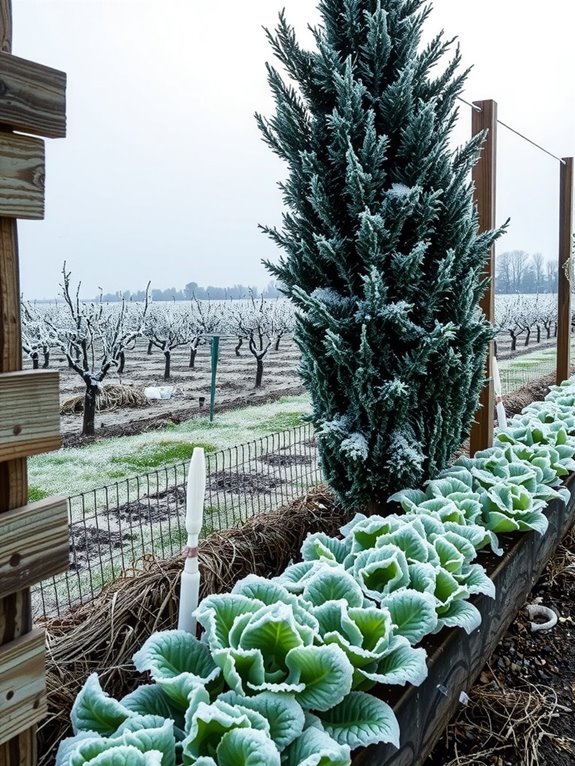
How much wind can plants actually handle before they start suffering? A well-designed windbreak reduces wind velocity by 75% or more, which means your garden stays protected over distances reaching ten times the windbreak’s height. That’s a substantial buffer zone.
Plant dense, ground-to-ground species like American arborvitae with rough bark that effectively blocks wind movement. These plants work because they create multiple layers of resistance rather than one solid wall that just pushes air around.
Curve your windbreak on the north side to intercept winter blasts while opening south and west. This shape matters because it catches the harshest seasonal winds without trapping cold air in your garden beds where frost can settle and linger.
Make it tall enough to catch low winds but allow air through higher up, which prevents snow from piling up and stressing branches under weight. You’re essentially creating your garden’s personal bodyguard against harsh conditions. Combine this structure with mulching or burlap wraps for extra protection during the coldest months.
Position your windbreak to channel breezes without creating dead air pockets. Those still zones invite frost to settle and damage tender plants, so your goal is steady air movement rather than complete stillness.
Wrap Vulnerable Plants With Burlap and Mesh

While a solid windbreak does the heavy lifting for your whole garden, individual plants still need their own protection during harsh winters. You’ve got two solid options: burlap wrapping and mesh tubes.
Burlap works well when you support it with stakes to create portable shields that move with your plants’ needs. The material is flexible and reusable, making it a practical investment over several seasons. Wrap it snugly around vulnerable evergreens and young trees, leaving a few inches of space between the burlap and the branches so foliage can breathe.
For a gentler approach, try mesh tubes filled with straw or oak leaves. These encircle plants while allowing air to flow through—something that matters a lot because trapped moisture causes rot on stems and foliage. The mesh keeps your stuffing in place while your plant stays protected without feeling suffocated.
Here’s a timing detail that actually matters: if you’re applying antidessicants (those wax emulsion sprays that reduce moisture loss), wait until air temperatures reach 40°F or higher. Cold temperatures prevent the spray from spreading properly over leaf surfaces, and you’ll end up with spotty coverage that won’t protect much of anything.
The real trick is matching your protection method to how vulnerable your specific plant actually is. A hardy shrub might only need burlap for a few weeks, while a tender specimen could use the straw-filled mesh setup from November through March.
Apply Antidesiccant Spray at the Right Time
When you’re ready to shield your plants from winter’s drying winds, timing really does matter. You’ll want to apply antidesiccants when conditions align just right for that protective coating to stick.
Temperature matters: Wait until it hits 40°F or above so the waxy film adheres properly to your leaves. Cold temperatures won’t let the coating bond, so patience pays off here.
Leaf conditions: Apply after rain or watering has completely dried. Wet leaves will dilute your protective spray and waste your effort. You need a clean, dry surface for the coating to work as intended.
Avoid risky windows: Skip spraying during freezing temperatures, bright direct sun, or within 24 hours of expected frost. These conditions either prevent the coating from setting or damage it right after application.
Antidesiccants work by forming that protective waxy layer, which reduces water loss when harsh winds strike hardest. Follow your label directions closely—one coat per application keeps buildup at bay and prevents leaf damage. You’re giving your vulnerable plants an invisible shield against winter’s relentless drying effects. The process is straightforward once you hit that timing sweet spot.
Choose Cold-Hardy Varieties for Windy Sites
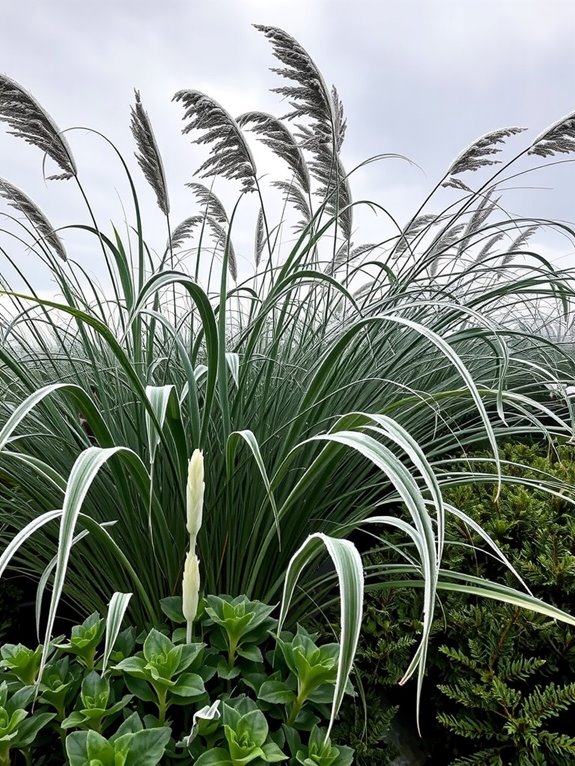
When you’re planting in a windy spot, matching your plant choices to your site’s actual conditions means picking varieties bred for both cold hardiness and wind tolerance. Densely branched shrubs and multi-stemmed trees with sturdy wood and strong root systems handle both winter cold and relentless wind exposure far better than single-trunked specimens. The genetics matter more than you’d think. A cold-hardy tropical will crumble in winter wind, while a native shrub selected for your exact exposure conditions will establish itself steadily. Look for species with wood density comparable to ash or hickory rather than soft-wooded plants like willows or poplars. Dense branching creates natural wind resistance by breaking up gusts before they hit the main structure, and multiple stems distribute stress across the root system instead of concentrating force on one weak point. When you’re shopping for plants, check the tag for hardiness zones at least one level colder than your actual zone—if you’re in zone 5, pick zone 4 plants. Root system depth matters too. Plants with deep taproots or spreading lateral roots 2 to 3 feet down anchor better than shallow, fibrous root systems. Talk to your local nursery about what’s worked in exposed locations near you. They’ll steer you toward proven performers rather than plants that look nice in a catalog but won’t actually last through your winters.
Selecting Hardy Species Varieties
What’s the secret to plants thriving in windy spots? Pick species that stand up to cold wind and exposure without complaint. American arborvitae and red cedar handle harsh conditions beautifully, while fastigiate European hornbeam resists relentless gusts with its upright form.
Look for multi-stemmed varieties with rough bark that resists cracking and uprooting. Hardy plants have tough outer layers—strong cuticles that prevent moisture loss during brutal cold spells. Their structure is simply built differently than delicate ornamentals.
When you choose plants adapted to windy sites, you’re giving them a real shot at growth instead of just survival. Pick species with proven drought tolerance too, since windy areas tend to dry soil faster. Your garden’s ability to hold up depends on matching plants to what your yard actually gets, not what you wish it had.
Wind Tolerance and Plant Genetics
Wind doesn’t bother plants the way it bothers us, since they don’t make their own heat and respond to actual air temperature instead. Wind tolerance, though, that’s all genetics. You’re looking for cold-hardy varieties with strong, multi-stemmed growth and dense branching patterns that can really take a beating.
The plants that handle wind best have sturdy trunks, protective bark that resists damage, and reduced water loss through their leaves. Evergreen trees and shrubs face particular challenges in windy spots because they lose moisture year-round while also risking branch breakage from gusts. Deciduous plants drop their leaves seasonally, which naturally reduces wind resistance.
When selecting plants for windier sites, focus on cold-hardy varieties with a track record in climates similar to yours. A Norway spruce or serviceberry, for example, performs well in zones 2-7 where winter winds run 20-35 mph. Pairing these hardy choices with windbreaks—a fence, dense shrub row, or existing tree line—dramatically improves survival rates by reducing wind speed by 25-50 percent. This approach works with your plants’ natural abilities rather than fighting against them.
Matching Plants to Exposure Conditions
How do you choose plants that’ll actually stick around in a blustery spot? Start by selecting cold-hardy varieties that tolerate wind exposure without drama. You’re looking for species built tough enough to handle desiccation and the physical stress that constant wind creates.
Several plant types perform well in windy conditions. Hardy evergreens like American arborvitae maintain their structure under strong gusts, while multi-stem shrubs with flexible branches bend rather than snap under pressure. Fastigiate hornbeam and similarly resilient species have proven themselves in exposed locations where weaker plants simply don’t make it.
Wind accelerates moisture loss from leaves and soil, so prioritize species with lower water needs rather than thirsty plants that demand frequent watering. Look for plants with dense, compact growth patterns—these forms naturally resist wind damage better than open, spreading varieties. The combination of small or narrow leaves, tight branching, and drought tolerance gives you plants that genuinely perform in exposed spots rather than just barely surviving.
When you match plant characteristics to your specific exposure conditions—wind speed, sun intensity, and soil dryness—you end up with selections that need less fussing and more consistent results year after year.
Manage Soil Moisture to Prevent Root Damage

When cold winds blow across your garden, they pull moisture right out of your soil and plants alike. That’s where winter damage really starts happening. You’ll want to keep your soil consistently moist before the cold season arrives because dry root zones can’t handle the stress of freezing temperatures and wind.
Water deeply in fall, pushing moisture down 8–12 inches where the roots actually sit. This soaking matters because shallow watering leaves lower roots vulnerable. After watering, spread 2–3 inches of wood chips as mulch to cut down on evaporation and help regulate soil temperature throughout winter.
Water deeply in fall to reach root zones 8–12 inches down, then mulch with 2–3 inches of wood chips to retain moisture and regulate soil temperature.
Here’s a simple way to check if your soil has enough moisture: squeeze a handful in your palm. It should hold its shape without water dripping out. If it crumbles apart, you need to water more. If it oozes, you’ve probably given it too much.
Even temperatures above freezing combined with strong winds cause serious root dehydration. Wind speeds up water loss from soil and plant tissues both, which means your roots are losing moisture they can’t replace when the ground is cold or partially frozen. Proper soil moisture management protects your plants from this double problem of cold stress and tissue damage.
Repair Winter Wind Damage in Spring
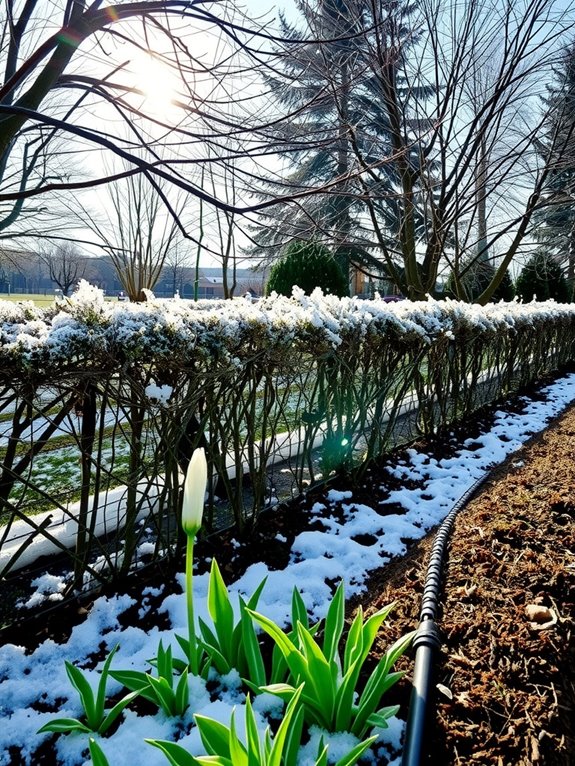
Once spring arrives and you can see what winter actually did to your plants, it’s time to assess the damage and help them recover. Cold air exposure leaves behind split limbs and cracked branches that’ll rot quickly without attention.
Start with these steps:
Remove damaged limbs carefully. Cut away any branches that split or crack during freezing weather. Make clean cuts just outside the branch collar—that’s the swollen ring where the branch meets the trunk. This prevents further breakage and stops disease from spreading through open wounds.
Apply wound protection where needed. After pruning, watch for signs of pests or disease moving into exposed wood. You don’t need to coat every cut with sealant, but monitor problem areas closely over the next few weeks.
Add 2–3 inches of mulch around the base. Spread wood chips or shredded bark in a circle around your plant, keeping it a few inches away from the trunk itself. This regulates soil temperature and protects roots from temperature swings that can still happen in early spring.
Prune with restraint—you’re removing dead wood, not encouraging new growth before conditions are stable enough. If you have plants that took a beating or lean awkwardly, consider installing stakes or support cables to guide them as they recover. This gradual approach builds stronger structure, so your garden handles next winter’s winds without the same damage.
Avoid the Biggest Winter Protection Mistakes
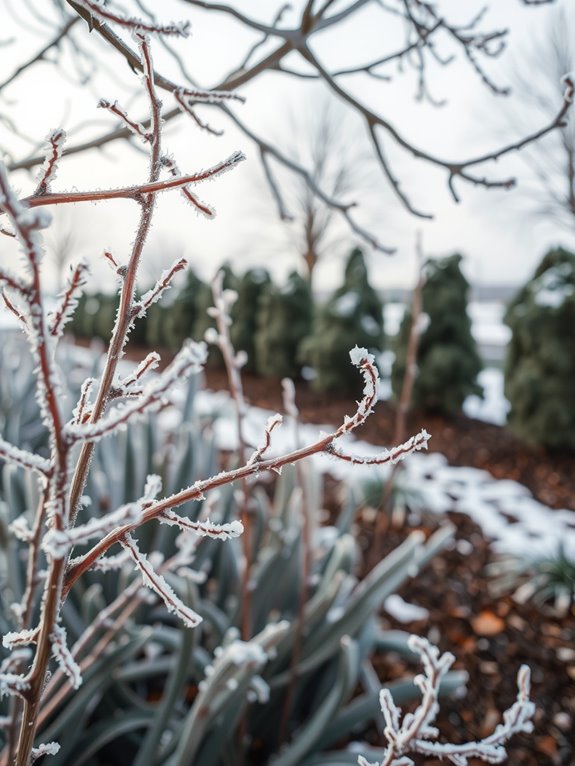
You’ve probably heard that wind chill is the main culprit behind winter plant damage, but here’s where many gardeners miss the mark. Wind chill doesn’t actually harm plants the way it harms you. Your plants respond to the actual air temperature, not that intimidating number flashing across weather reports.
Wind chill doesn’t harm plants like it harms you—your plants respond to actual air temperature, not weather reports.
The real problem most people face is neglecting soil moisture and root protection while obsessing over wind chill predictions. Dry, moving air causes genuine damage through desiccation—a process where plants lose water faster than their roots can replace it—especially to evergreens, even when temperatures remain mild. This happens because winter winds strip moisture from leaves and needles continuously.
Getting ahead of the problem beats scrambling when cold snaps arrive. Install windbreaks designed to reduce wind velocity by 75% over a distance that equals 10 times their height. If your windbreak stands 6 feet tall, it’ll provide meaningful protection roughly 60 feet downwind.
Apply burlap screens and mulch well before harsh weather hits. Mulch acts as insulation for roots, keeping soil temperatures steadier and protecting against temperature swings that can heave plants out of the ground. Use antidesiccants—waxy sprays you apply to vulnerable plants—to seal in moisture before winter really sets in. The timing of your preparation matters far more than the intensity of the winter itself.
Design a Wind-Resilient Garden for Your Climate
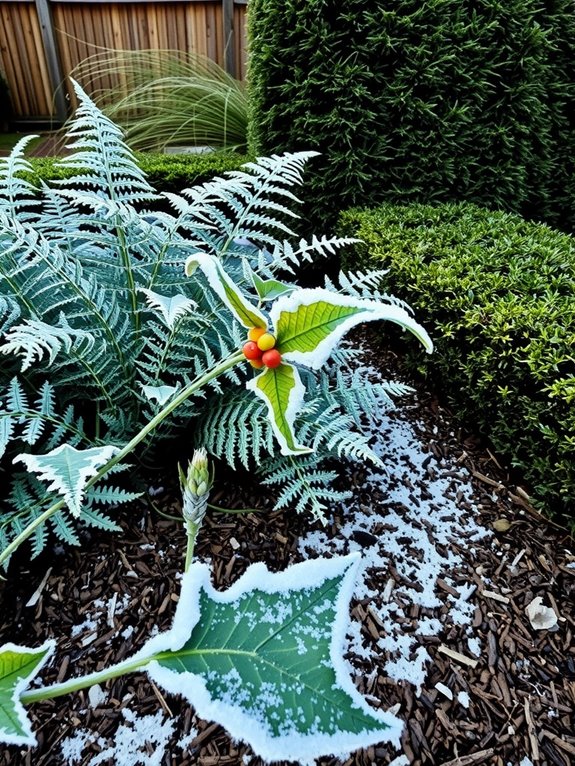
Start by spending time in your yard observing how wind actually behaves there. Notice where gusts accelerate between buildings or through gaps, where they slow down behind existing structures, and which direction brings the harshest winter winds. This direct observation tells you more than any general advice could.
Once you understand your yard’s wind patterns, choose plants with dense branching that won’t snap or strip bare under pressure. American arborvitae works well because its tight foliage and flexible wood handle strong gusts without breaking. Plant these sturdy species on the windward side of your garden—the side where wind hits first.
Positioned correctly, a windbreak reduces wind velocity by up to 75% across a distance roughly ten times the height of your plants. If you plant a row of 8-foot arborvitae, you’re looking at wind protection extending about 80 feet downwind. That’s real, measurable coverage that lets you grow more delicate plants further back in your yard.
The whole approach works because you’re reading what your climate already does and building with those patterns in mind, not fighting against them.
Assessing Your Local Wind Patterns
How’s the wind moving through your yard right now? Before planting anything, you’ll want to understand what’s happening in your specific space. Wind strips away the still air layer that surrounds plants, which means faster moisture loss and more heat escaping. That’s a real problem when temperatures drop.
Spend a few weeks watching how air moves around your property. Pay attention to wind direction and speed through different seasons, noting whether patterns shift from spring through winter. Look for spots where wind picks up speed—these are usually between buildings, along open fences, or across exposed stretches of lawn. At the same time, notice the calmer zones where trees or slopes naturally block gusts.
What you’re doing here is mapping out your yard’s microclimate. You’ll discover which areas stay relatively protected during storms and which ones take the full force of prevailing winds. These observations tell you exactly where you’ll need windbreaks made from materials like burlap screens, hedge rows, or slatted fencing that breaks wind without blocking all air movement. In the sheltered spots, cold-hardy plants will simply grow better because they lose less moisture and experience less stress from exposure.
Selecting Cold-Hardy Plant Species
Once you’ve mapped where the wind hits hardest in your yard, it’s time to pick plants that can actually handle it. Look for cold-hardy species with dense branching and multiple stems, since these features work together to reduce wind damage. American arborvitae and red cedar have rough bark that resists mechanical stress from ice-laden branches and strong gusts. These aren’t plants that barely survive—they genuinely perform well in harsh conditions.
Fastigiate European hornbeam offers a columnar shape that naturally parts wind rather than catching it broadside. The key advantage of multi-stemmed structures is simple physics: wind pressure distributes across several trunks instead of concentrating force on one. More dense branching means better deflection of cold air and less stress on individual limbs.
The denser your plant’s branching pattern, the more effectively it breaks up wind flow and protects itself from winter damage. Matching plants to your specific climate zone matters, but the architectural features—stem count, bark texture, branching density—do the real work against winter’s physical demands.
Strategic Windbreak Placement Techniques
Where you position your windbreaks matters just as much as which plants you choose. You want strategically placed barriers that reduce wind velocity by 75% or more across roughly ten times the windbreak height—that’s your invisible shield for the garden.
Think about putting dense windbreaks on the north side to block those harsh winter winds while still letting summer breezes slip through. Curved hedges channel airflow nicely, protecting vulnerable plants without trapping stagnant pockets of dead air. Create openings toward your south and west exposures so air can move where it needs to.
Multi-stemmed species like American arborvitae (Thuja occidentalis) work wonderfully because their rough bark and low-growing habit give you reliable protection right at ground level where it counts most. In tight spaces, tall, narrow windbreaks save precious real estate while directing wind movement exactly where you want it.
The real payoff comes from thoughtful placement. Plant placement determines how well your windbreak actually protects your vegetables, perennials, or whatever grows nearby. A windbreak that sits in the wrong spot wastes space and effort, but one positioned correctly handles the job with quiet efficiency.