You’ll want to plant your persimmon where it gets six to eight hours of daily sun and has well-drained soil. If you’re unsure about drainage, dig a small hole, fill it with water, and see how quickly it drains—anything faster than a couple inches per hour is usually fine.
When you’re ready to dig, make your planting hole about three times wider than the root ball. This gives the roots room to spread out into loose soil rather than hitting a wall of compacted earth. Backfill with the original soil you removed, which saves you money and lets the tree adjust gradually to your yard’s natural conditions. Water deeply right after planting to settle the soil and push out any air pockets hiding in there.
Finish up by spreading three to four inches of mulch around the base of your tree, keeping it a few inches away from the trunk itself. Mulch holds moisture in the soil and keeps weeds from competing with your young tree for nutrients. Getting these basics right sets a solid foundation for that first year, when your persimmon is still establishing its root system and figuring out its new home.
Step 1: Choose Your Location and Test Your Soil
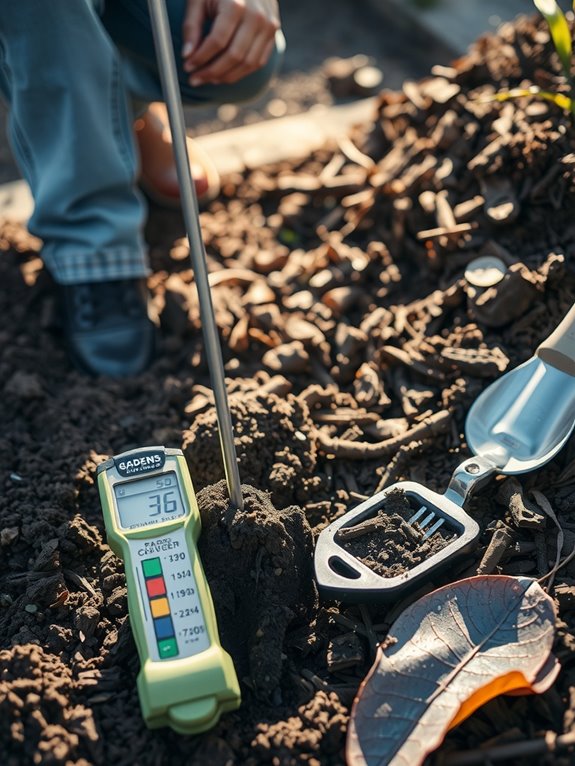
Where’s the sunniest spot in your yard? That’s where your persimmon tree wants to live. Full sun means at least six to eight hours of direct sunlight daily, which keeps the tree healthy and produces plenty of fruit.
Next, assess your soil. You want well-drained sandy loam that won’t stay waterlogged after rain. Poor drainage invites root rot, which will kill your tree before it gets started. If you’re unsure about your soil type, grab a soil testing kit from your local garden center or send samples to your county extension office for analysis.
Avoid frost pockets—those low-lying areas where cold air settles on chilly nights. Late frosts can damage blooms and prevent fruit from developing, leaving you without a harvest come fall.
Once you’ve found your ideal persimmon location, measure out where your planting hole will go. You’ll need adequate space for the root ball to spread and room for the tree to grow taller and wider over the next several years.
Step 2: Dig and Plant Your Persimmon Tree
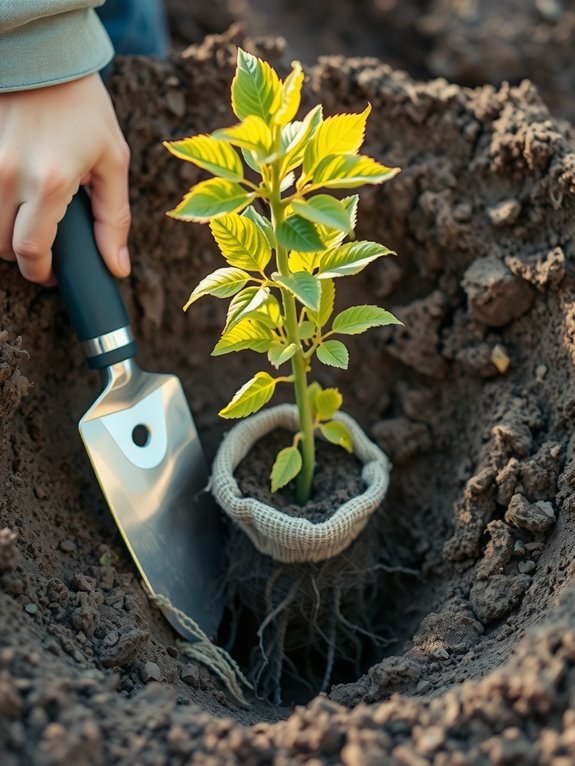
Now that you’ve picked the perfect sunny spot with good soil, it’s time to get your hands dirty. Dig your planting hole three times wider than your root ball and equally deep—this wider space lets roots spread out comfortably instead of circling in on themselves.
For bare-root persimmons, position the root crown just barely below soil level, no more than an inch above ground. If you’re planting from a pot, dig four times the root ball’s width but only half as deep, keeping the tree at whatever depth it was growing at before. The difference matters because potted trees have already adapted to their current planting depth.
Gently settle your persimmon tree into the hole, then backfill with your original soil rather than fancy amendments. Water deeply until the soil around the roots is thoroughly saturated, which helps eliminate air pockets that could dry out roots. Once that’s done, spread mulch generously around the base—about 3 to 4 inches thick works well—but keep it several inches away from the trunk itself. This gap prevents the bark from staying too moist and developing collar rot, while the mulch itself suppresses weeds and keeps soil temperature more stable.
Step 3: Water and Mulch for Establishment
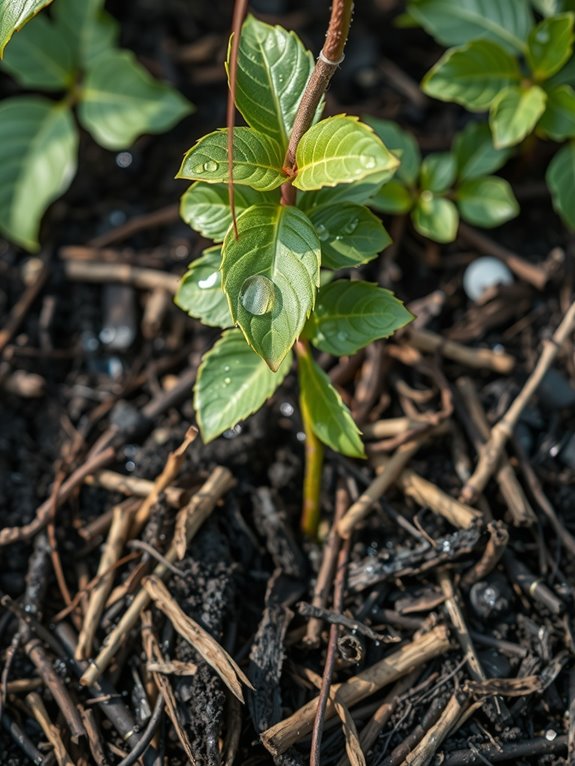
Your newly planted persimmon’s first season determines whether it establishes strong roots or struggles, so getting your watering technique down matters. Water deeply right after planting to push moisture through the soil layers, which settles everything in place and removes air pockets that can injure tender roots.
Once the soil is settled, lay down 4–6 inches of mulch in a circle around your tree, but keep it several inches back from the trunk itself. This gap prevents moisture from pooling against the bark and causing rot. The mulch layer above the soil does two jobs at once—it holds water in the ground longer and blocks weeds from competing with your tree.
Create a 4-foot weed-free zone around the base by clearing grass and other plants from that radius. Young trees need every bit of available water and nutrients, and weeds will steal both. Container-grown and bare-root trees both need the same steady approach: consistent soil moisture paired with proper mulch placement keeps them on track during that critical first year.