
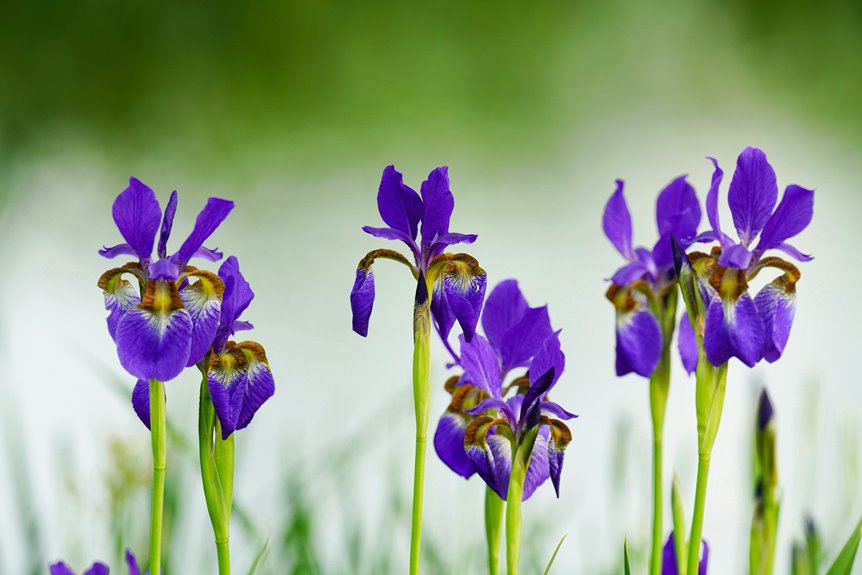
Fertilize bearded irises twice yearly: once in early spring when you spot new growth, and again about six weeks after the flowers fade. A slow-release 5-10-10 formula works best because that lower nitrogen number prevents your plants from going wild with leaves instead of blooms.
When you’re ready to feed them, keep the fertilizer about six inches away from the rhizome’s edge—those underground stems are sensitive to burning. Scratch the granules gently into the top layer of soil, then water thoroughly so the nutrients activate and reach the roots where they’re needed.
This two-window feeding rhythm keeps your irises nourished without stressing those delicate rhizomes. The timing itself does the heavy lifting, and when you hit those two windows correctly, you’ll notice a real difference in how many flowers appear and how healthy the plants look overall.
Why Regular Iris Feeding Boosts Blooms
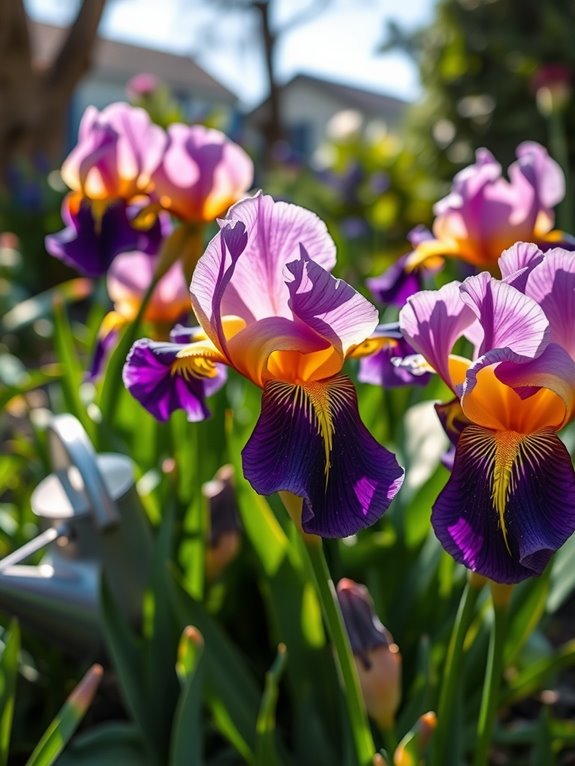
Bearded irises are heavy feeders that respond well to a predictable feeding schedule twice yearly. When you fertilize in early spring as new growth emerges, you’re giving the plants the nutrients they need to channel energy into flower production rather than leafy growth. About six weeks after the blooms fade, apply a second feeding that builds reserves for next year’s flowering cycle.
This two-part rhythm works because it matches how irises naturally grow throughout the seasons. A slow-release fertilizer with an NPK ratio of 5-10-10 does the job without pushing excessive foliage that can invite aphids and other pests. The higher phosphorus and potassium numbers support blooming and root development while the lower nitrogen prevents rank, leafy growth.
Consistency in feeding creates noticeable results over time, giving you more flowers with better color and fuller displays. You’re essentially working with the plant’s natural cycle rather than fighting against it, which is why this approach works so much better than sporadic applications.
The Two Critical Feeding Windows: Spring and Post-Bloom
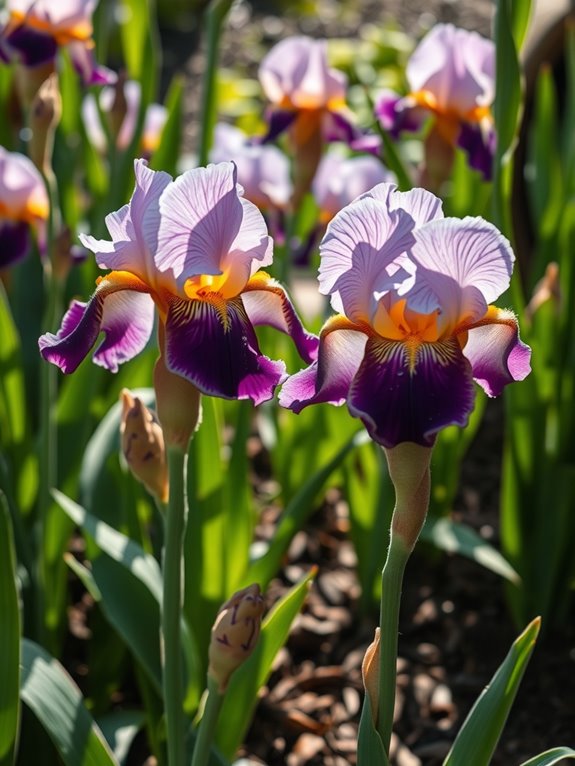
Your bearded irises perform best when you feed them at two specific moments during their growing year. These feeding windows are when your plants need targeted nutrition most, and timing really does matter for getting plenty of blooms.
| Feeding Window | Timing | Purpose | Fertilizer Type |
|---|---|---|---|
| Spring | Early spring as growth appears | Supports new growth and bud formation | Low-nitrogen, N-P-K 5-10-10 |
| Post-Bloom | Six weeks after blooming ends | Prepares plants for next year’s flowers | Low-nitrogen, N-P-K 5-10-10 |
When you fertilize in spring, you’re feeding those fresh shoots and flower buds as they emerge from the ground. That early nutrition helps your irises channel energy into producing more blooms rather than spreading themselves thin. Six weeks after the last flowers drop, your plants have spent a lot of reserves putting on their show. That second feeding in late spring or early summer helps rebuild what they used up, so they’ll have plenty of stored energy for next year’s display.
Here’s how to apply it properly: sprinkle your low-nitrogen fertilizer in a ring around the base of each plant, keeping it a few inches away from the rhizome itself. Water thoroughly right after spreading the fertilizer. This watering dissolves the granules and carries the nutrients down into the root zone where your iris can actually use them. The soil acts like a delivery system, moving those nutrients where they need to go with each passing rain or irrigation cycle.
Time Your Feeding Around First and Last Frost Dates
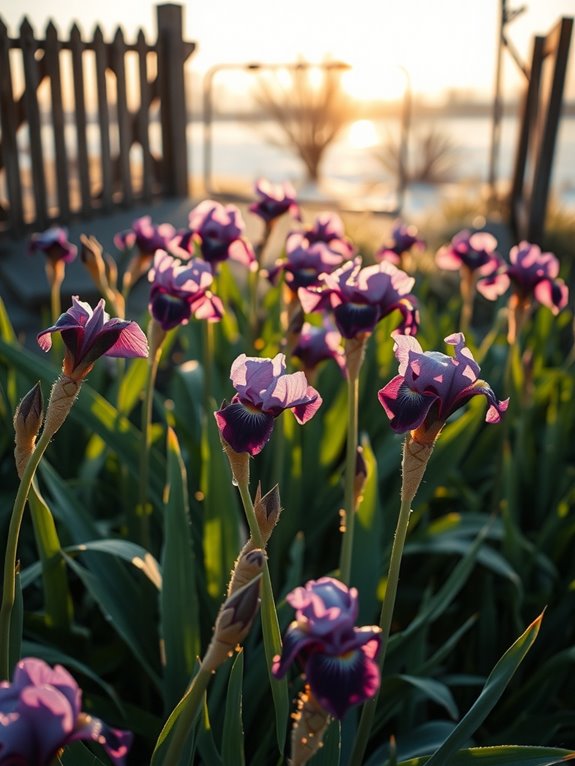
Why does timing matter so much when you’re fertilizing bearded irises? Your frost dates are basically the calendar you work backward from to get both feedings right. In climates with killing frosts, skip fall feeding entirely and instead apply fertilizer about six weeks before your first frost arrives. This prevents tender new growth that will just get zapped away when temperatures drop.
If you live in a late-frost region, flip the approach: apply your pre-bloom feeding around tulip time, right before those final cold snaps hit. Your growing season window is limited, so you’re working backward from frost dates to nail the timing on both applications.
After you apply fertilizer, water it in thoroughly to push nutrients down toward the root zone and keep the granules away from your rhizomes. Getting these timings right means your bearded irises will keep producing good displays year after year, rather than getting set back by frost damage or poor nutrient timing.
Low-Nitrogen vs. Balanced Formulas: Pick the Right Formula for Blooms
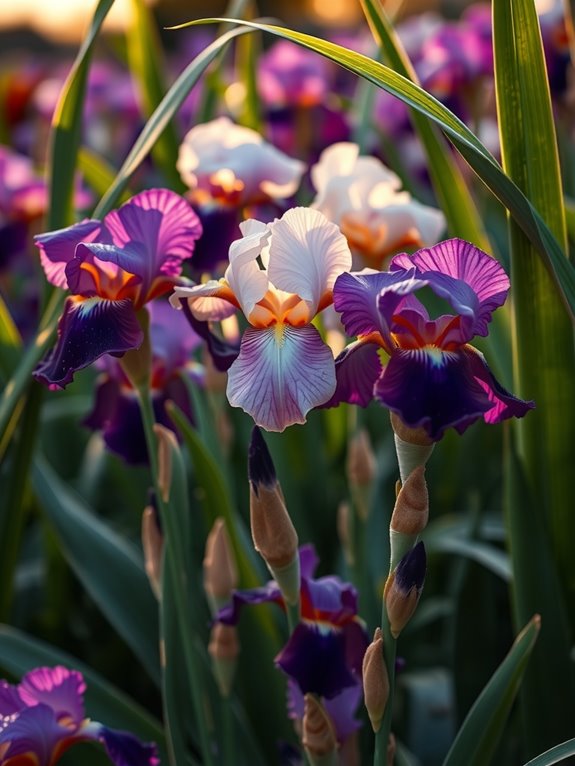
What you feed your irises really does matter as much as when you feed them. High-nitrogen fertilizers push leafy growth at the expense of blooms, so skip those and reach instead for low-nitrogen or balanced formulas that support flowers without overwhelming your plants.
| Formula Type | N-P-K Ratio | Best For |
|---|---|---|
| Low-Nitrogen | 5-10-10 | Bloom promotion |
| Balanced | 10-20-20 | Overall health |
| High-Nitrogen | 20-10-10 | Avoid for irises |
Consider organic slow-release options like bone meal or fish emulsion. These gentler materials work with your iris’s natural growth cycle rather than forcing it along. Granular fertilizers release nutrients gradually over weeks, which keeps disease risk low while giving you better control over what your plants actually receive. The steady, measured approach works better than dumping concentrated fertilizer at the roots all at once.
The Best NPK Ratios for Bloom
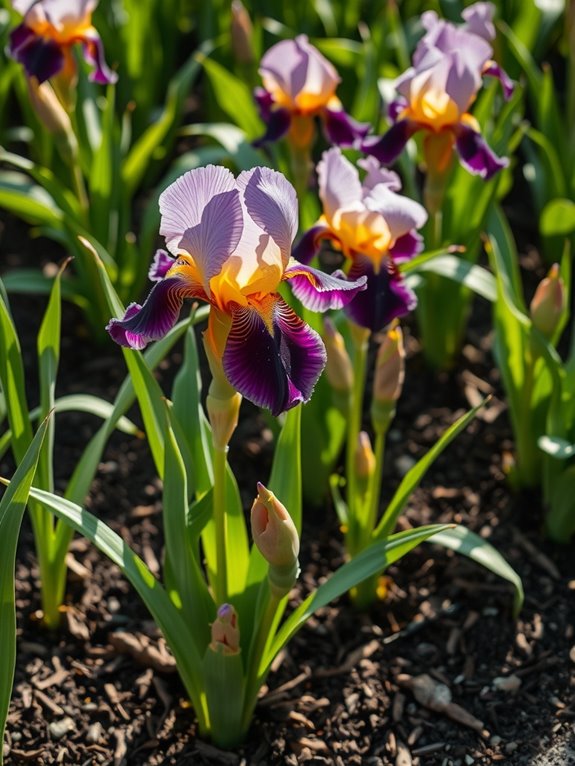
Your iris’s bloom potential lives or dies with the right nutrient balance. You’ll want to focus on low nitrogen fertilizers that actually support flowers instead of excessive foliage.
5-10-10 or 6-10-10 formulas give you phosphorus for robust blooms and potassium for overall plant health. The first number (nitrogen) stays deliberately low because high nitrogen pushes leafy growth at bloom’s expense. When you’re choosing between options, you’re really choosing flowers over foliage.
Organic fertilizer options like bone meal, fish emulsion, or alfalfa pellets work because they’re gentler on roots while delivering steady nutrients. These materials break down gradually in your soil, which means your iris gets fed consistently without the shock of a chemical spike.
Slow-release, granular formulations feed your iris gradually with each watering, reducing burn risk. Throughout their growing season, irises genuinely appreciate this steady approach rather than feast-or-famine feeding cycles.
Slow-Release vs. Quick-Acting Fertilizers: Which Works Better?
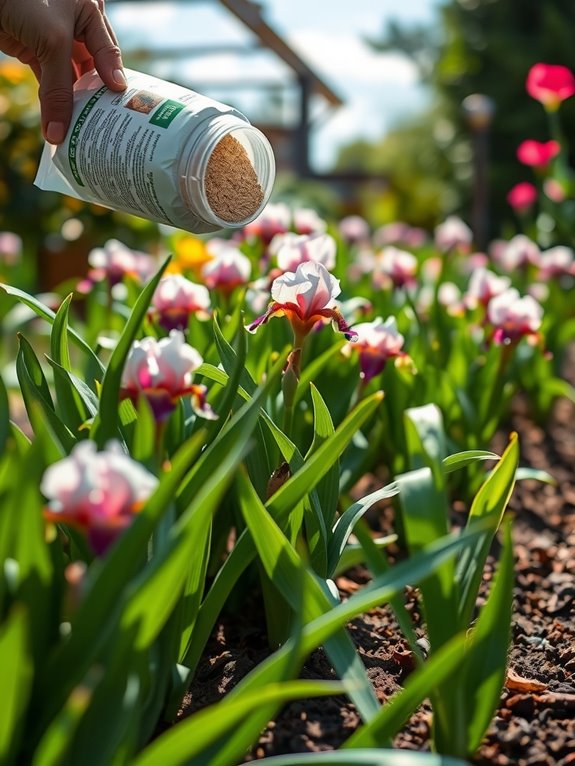
Now that you’ve picked the right nutrient balance, it’s time to decide how to deliver it—and that choice matters just as much as the formula itself.
Slow-release fertilizers work beautifully for irises because they feed your plants gradually over the entire growing season, matching the pace of your watering schedule. This steady drip of nutrients prevents salt burn, keeps blooms appearing consistently, and sidesteps the problem of excess leafy growth at the expense of flowers. You’ll apply them twice yearly: once in spring when growth kicks in and once after flowering finishes.
Quick-acting fertilizers do their job fast, but they demand respect around rhizomes and foliage. Without careful timing and plenty of water worked in afterward, they can actually scorch your plants rather than help them.
For most gardeners, slow-release granular products formulated for perennials hit the sweet spot between effectiveness and forgiving application. A balanced ratio like 5-10-10 pairs perfectly with this delivery method, giving you reliable results without the fuss of constant monitoring or the risk of nutrient burn that comes with faster alternatives.
How to Apply Fertilizer Without Damaging Rhizomes
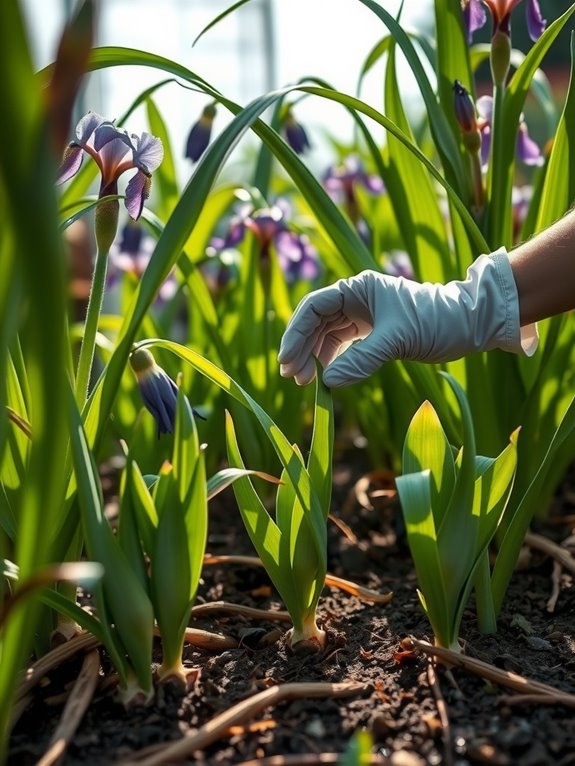
Create a protective ring of fertilizer around your iris rhizomes by drawing an imaginary circle about 6 inches away from the plant’s center. This distance keeps the fertilizer safely away from tender tissue that can burn if exposed to concentrated nutrients. Never dump fertilizer directly on top of the rhizomes themselves.
Once you’ve positioned your slow-release formula in that safe zone, gently scratch it into just the top inch or two of soil. This light incorporation lets nutrients reach down to the roots without stirring up the rhizomes or piling salts around them where they can cause damage.
Water thoroughly right after application so the fertilizer dissolves and moves downward into the root zone, where it belongs. This simple step keeps everything balanced and prevents the nutrients from sitting on the surface where they might concentrate and harm your plants.
Creating a Safe Application Ring
How do you keep fertilizer from burning those precious rhizomes hiding just below the soil surface? The answer’s simpler than you’d think: create a protective ring.
When you fertilize iris, you’re building a safety zone around the root zone while keeping fertilizer away from the rhizome itself. Here’s what works:
Measure outward – Sprinkle your slow-release fertilizer 6 inches away from the rhizome’s edge, creating a ring pattern around it. This distance matters because it lets roots access nutrients without the concentrated salts in fertilizer scorching the rhizome.
Choose wisely – Select low-nitrogen blends with N-P-K ratios like 5-10-10 to minimize aggressive foliage growth and rhizome stress. Higher nitrogen encourages leafy growth that weakens the rhizome rather than strengthening it.
Gently incorporate – Scratch the fertilizer lightly into the topsoil without disturbing buried rhizomes. You’re just mixing it into the top half-inch or so, enough to help water carry nutrients down to where the roots are working. Heavy digging defeats the whole purpose of keeping things gentle.
Water thoroughly afterward to dissolve the fertilizer and move nutrients toward the root zone. This approach delivers what iris roots actually need while protecting your rhizomes from potential burn damage.
Proper Soil Integration Technique
Once you’ve mapped out that protective ring, the real work begins in how you work the fertilizer into the soil. Gently scratch the slow-release fertilizer into your topsoil using a hand cultivator or small fork, creating shallow grooves about one to two inches deep that encourage root zone penetration without disturbing the rhizome below. This digging and scratching technique breaks up compacted earth, allowing nutrients to travel deeper where hungry roots await.
Water thoroughly immediately after—this step dissolves fertilizer particles and pushes them toward your plant’s feeding zone. The soil moisture also prevents salt buildup that can burn foliage, which happens when fertilizer sits dry on the soil surface. Think of it as giving your iris a gentle massage that awakens its appetite.
| Step | Action | Why It Matters |
|---|---|---|
| 1 | Scatter fertilizer | Even nutrient distribution |
| 2 | Scratch into topsoil | Protects rhizomes safely |
| 3 | Water immediately | Activates root absorption |
| 4 | Monitor moisture | Prevents salt damage |
The key here is timing and technique working together. By watering right after you scratch in the fertilizer, you’re activating the slow-release mechanism that feeds your iris over weeks or months, rather than all at once. Keep the soil consistently moist but not waterlogged during the growing season—think of how a sponge feels after you’ve wrung most of the water out. That’s the moisture level you’re aiming for around your iris bed.
Protecting Rhizomes From Contact
What’s the biggest mistake iris growers make? They dump fertilizer right on the rhizomes. Don’t do that.
Those rhizomes are sensitive to fertilizer burn, so keeping nutrients several inches away from them matters more than you’d think. The concentrated salts in fertilizer can damage or kill the exposed rhizome tissue if it makes direct contact.
Applying Fertilizer Safely
Create a ring around your iris plant, maintaining at least 3 to 4 inches between the fertilizer and the rhizome crown. Slow-release granules work best here since they break down gradually rather than dumping all their nutrients at once.
Use a hand rake to gently blend the fertilizer into the soil surface without disturbing the rhizome itself. Once you’ve worked it in, water the root zone thoroughly so nutrients move deeper into the soil where the fibrous roots can absorb them.
Wear protective gloves and a mask while handling fertilizer, following any safety guidelines printed on the package label. This simple spacing method keeps your irises healthy and feeding properly while protecting those vulnerable rhizomes from chemical burns.
Build Soil Health With Alfalfa Pellets and Compost Instead
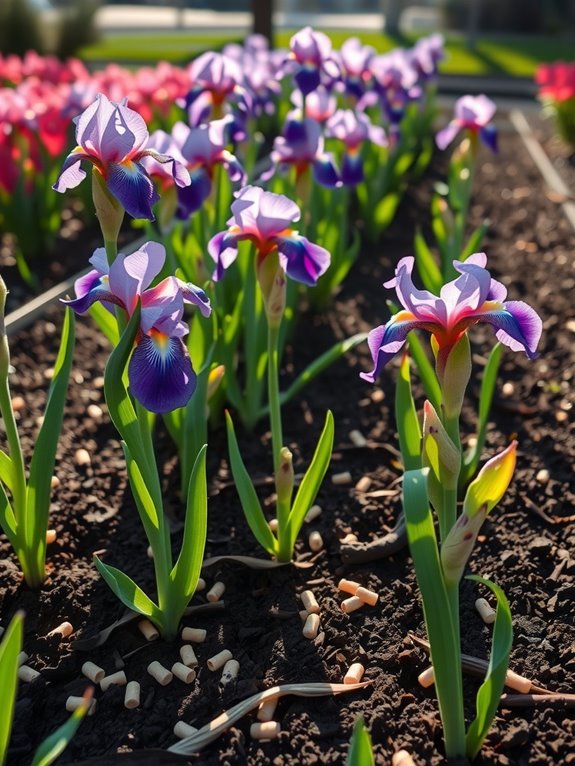
Instead of reaching for synthetic fertilizers, alfalfa pellets and compost work together to feed your irises from the ground up. Scratch about 1 to 2 cups of alfalfa pellets directly into soil around each iris clump, or blend them into your pre-plant soil for a gentle, slow-release nutrient boost that matches your plants’ natural growth pace.
Combining alfalfa with compost creates a solid foundation for healthy soil. This organic approach enhances soil structure, improves drainage, and boosts moisture retention while supporting the beneficial microbes that break down nutrients into forms your irises can actually use. The nitrogen in alfalfa tends toward moderate levels, so you won’t accidentally push foliage growth at the expense of blooms.
After applying these amendments, water thoroughly to release nutrients into your root zone and settle the materials around your plants. This prevents potential root burn from concentrated organic matter sitting too close to tender roots. You’re building real soil health here, not just feeding plants for a single season.
Five Common Fertilizing Mistakes
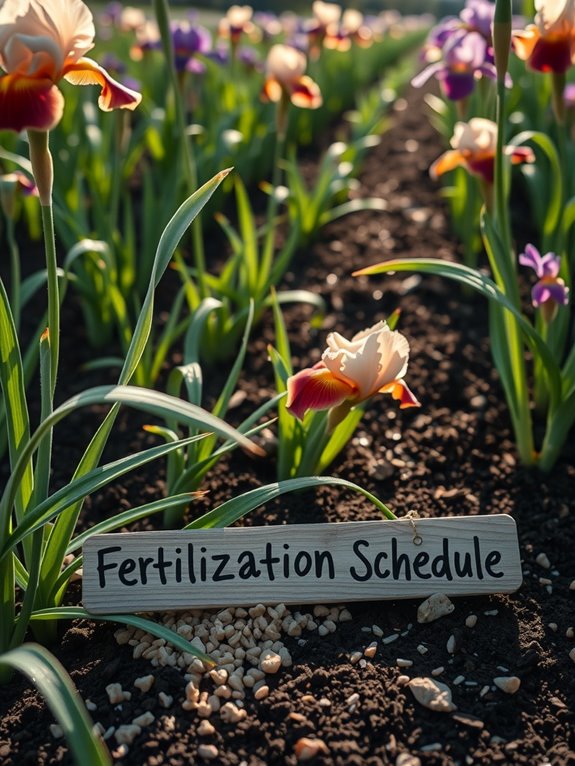
Even with the best intentions, it’s easy to slip into fertilizing habits that actually work against your irises. You’re not alone in facing these common pitfalls—many gardeners navigate them too.
- Timing nitrogen applications poorly disrupts blooming cycles, especially when you feed late in the season. That late feeding damages root systems in poorly drained soils and reduces next year’s flowers. Think of it this way: nitrogen tells your iris to grow leaves, not flowers, right when the plant should be settling down for winter.
- Applying fertilizer directly to rhizomes or foliage burns sensitive tissues and wastes your effort. Instead, gently scratch a balanced fertilizer like 10-10-10 into the top inch of topsoil about 4-6 inches away from the rhizome, then water it in thoroughly. This lets the nutrients seep down where roots can actually use them.
- Relying on heavy single feedings instead of slow-release applications creates nutrient imbalances that weaken blooms over time. A single large dose doesn’t feed your plant steadily—it washes through or sits unused, leaving gaps when your iris actually needs food.
Match your fertilizer’s N-P-K ratio to your soil’s alkalinity too. Too much nitrogen promotes leafy growth while inviting aphids and cutting into your flower production. A balanced approach that respects both your irises and their growing environment means better blooms and healthier plants overall.
When to Skip Fertilizing: Heat, Drought, and Newly Planted Iris
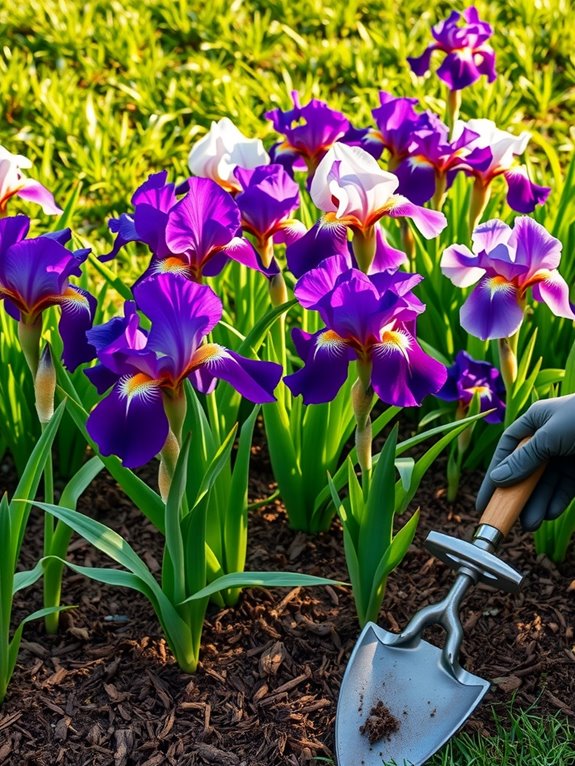
| Condition | Your Action | Why It Matters |
|---|---|---|
| Newly planted irises | Wait 6-8 weeks | Fresh roots are tender and can burn easily from fertilizer salts, plus the transplant shock needs time to settle |
| Extreme heat | Skip feeding | Fertilizer pushes new growth when plants can’t handle stress, leading to weak stems and pale flowers |
| Drought stress | Water first | Dry soil concentrates fertilizer into a salty paste around roots; water deeply to restore moisture before adding nutrients |
| Fall cooling | Stop fertilizing | Late feeding tricks irises into new growth right before winter dormancy, which kills those tender shoots |
| Dry soil | Water deeply | Nutrients dissolve in water, so parched soil means roots can’t absorb them no matter how much you apply |
The patience you show during stressful conditions actually builds stronger iris plants. When soil is dry or plants are struggling, fertilizer sitting in parched earth does nothing but accumulate and potentially damage roots later. Waiting for the right moment—when your irises have settled in, when soil moisture is steady, and when temperatures feel moderate—lets them use nutrients properly rather than waste them or suffer injury.