Your spider plant creates genetic clones called plantlets along drooping flower stalks after blooming. No pollination is needed for this process to happen. These baby plants develop as tiny offsets that you can root in soil or water within two to three weeks.
Bright indirect light for at least six hours daily triggers flowering and plantlet production on mature plants around one year old. When your spider plant receives adequate light, it’ll send out those distinctive runners with babies attached. You’ll recognize them when they appear—they look like little rosettes dangling from thin stems.
To propagate successfully, snip each plantlet just below where tiny root nubs are forming. This spot matters because those early root structures give the baby a head start. Pop them into moist potting soil or a glass of room-temperature water and keep the medium consistently damp for the first few weeks.
The water method works well if you want to watch roots develop. Fill a small jar with filtered or tap water left out overnight to remove chlorine. Change the water every three days to prevent rot and keep oxygen flowing to developing roots. Once roots reach half an inch long, move the plantlet to soil.
Common issues come from low light, which means no flowers and no babies. If your plant sits in a dim corner, it’ll produce long runners with fewer or no plantlets at all. Moving it closer to a bright window makes the difference between abundant propagation and disappointment.
What Makes Spider Plant Reproduction Asexual?
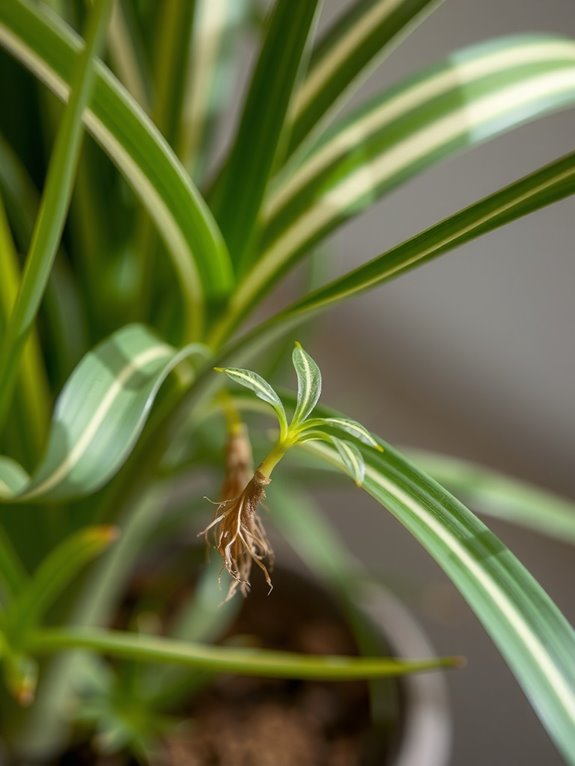
Ever wonder why your spider plant keeps producing those adorable baby plantlets without needing a mate? That’s asexual reproduction in action, and it works in a straightforward way. Your spider plant doesn’t rely on pollination or a partner to create offspring. Instead, it grows runners with plantlets that develop naturally along the flowering stalk after blooming finishes.
Here’s what makes this process so efficient: these babies are genetic clones of the parent plant, meaning they’re identical copies carrying all the same traits you love. Since spider plants have perfect flowers containing both male and female parts, sexual reproduction doesn’t factor into plantlet production at all. The plant simply produces new plants from itself, which is nature’s own cloning system working right there on your windowsill.
How Do Plantlets Form on Flower Stalks?
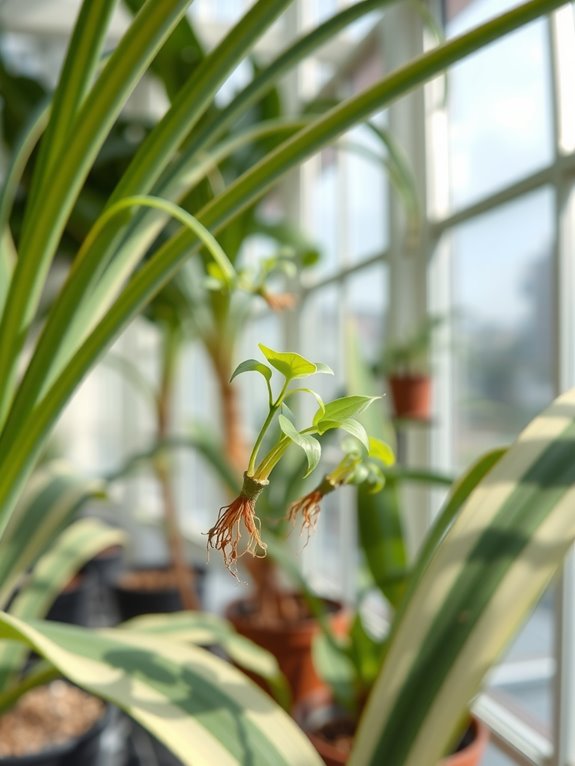
Spider plant babies develop along the flower stalks as they stretch and naturally droop downward. Your plant flowers first, then tiny plantlets form from offsets along that same stalk—all without needing a second plant involved. It’s a completely asexual process happening on a single stalk.
What makes this setup particularly handy is that plantlets can develop while still attached to the parent plant, giving them a head start before you decide to separate them. The whole operation depends on light conditions though. Brighter environments—around 12 to 16 hours daily under standard indoor lighting—increase flowering rates, which then triggers plantlet formation afterward.
If you want more babies, bump up your light exposure and let the flower stalks handle their business. More light means more flowers, and more flowers means more plantlets getting their start.
Why Blooming and Light Are Essential for Plantlet Production
Your spider plant won’t produce those dangling babies without flowers first, and blooming is genuinely the necessary starting point. Once flowering happens, the stem elongates and begins to droop, and that’s when the tiny plantlets form along its length.
Light does most of the heavy lifting here. Brighter conditions boost photosynthesis and encourage those flowering stems to arch while generating more plantlets along the way. When spider plants refuse to produce babies, insufficient light is usually the reason behind it.
You’ll get the best results with mature plants around one year old placed in bright spots where they receive at least six hours of indirect sunlight daily. Age matters, but light exposure matters equally. The combination of plant maturity and proper lighting creates the right conditions for those baby plants to develop.
How to Root Spider Plant Plantlets in Soil
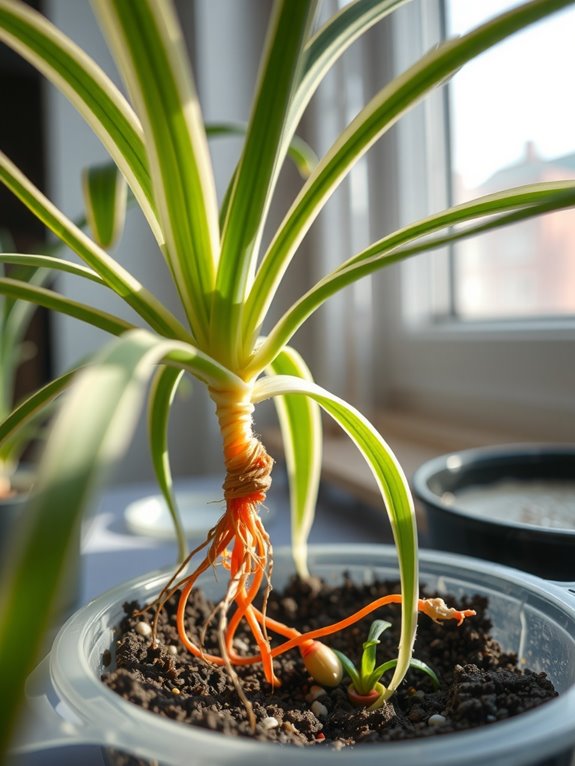
Once those little spiderettes are dangling from your parent plant, it’s time to give them their own roots. Grab a small pot—something around 2-3 inches works well—and fill it with a lightweight, peat-free mix like Growlite. Create a shallow depression in the soil where your spider plantlet can nestle comfortably.
Here’s the thing: keep that baby attached to the parent while it roots. This connection acts like an umbilical cord, feeding the plantlet while its root system develops. You’re basically letting the parent plant do the heavy work until the baby’s independent enough to stand on its own.
Keep the plantlet attached to its parent—this umbilical cord feeds your baby plant while roots develop independently.
Keep the soil consistently moist, but not waterlogged. Think damp sponge, not dripping wet. Position your setup in bright, indirect light because light powers photosynthesis, which fuels root development. The plantlet needs energy to grow those roots, and light provides exactly that.
After a few weeks, you’ll see roots poking out from the base of the plantlet. Once they look healthy and established—about a quarter-inch long or longer—snip the runner connecting it to the parent plant. Your new spider plant is now independent and ready to grow on its own terms.
How to Root Plantlets in Water (No Soil Needed)
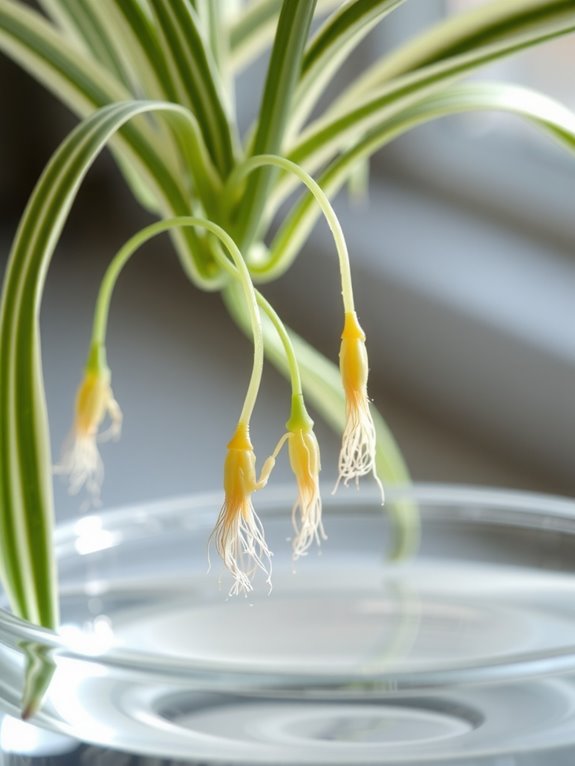
You can skip soil entirely and root spider plantlets in water, which works surprisingly well if you follow a few straightforward steps. Detach a healthy plantlet and place it in a narrow glass jar—something like a standard drinking glass works fine—filled with clean water, keeping just the base submerged while the leaves stay dry and above the waterline. Roots typically show up within two to three weeks, though the timeline depends on temperature and light conditions.
Wait until you see several inches of root development before moving the plantlet to soil, since young roots need time to establish themselves in water first. The key to success is changing the water every few days, which removes bacteria and prevents the mushy rot that happens when water gets stagnant. Fresh water also lets roots access oxygen more easily, helping them grow steadily and strong rather than struggling in depleted conditions.
Water Propagation Setup
Why bother with soil when water handles the hard work for you? Setting up water propagation for your spider plantlets is genuinely straightforward. Grab a clean glass jar and fill it with fresh water, then position your detached plantlet so its base sits submerged while leaves stay dry above the waterline. You’re building the right rooting environment without any mess.
If you’d rather skip the jar altogether, lay a moistened kitchen towel across a shallow container and rest your plantlet on top. Both methods encourage root development equally well because they keep the base consistently moist while allowing airflow to the leaves.
Change the water every three to four days to keep it fresh and oxygen-rich, which gives your plantlets their best shot at success. Within two weeks, you’ll see roots stretching three to four inches long. That’s your signal they’re ready to move into soil.
Root Development Timeline
During those first couple of weeks, your plantlet’s roots are quietly developing beneath the waterline while you wait. You’ll spot tiny white nubs emerging from the base of the stem—that’s the beginning of root development. Keeping the water fresh and oxygenated by changing it every few days actually speeds up the whole process by preventing bacterial buildup that slows growth.
Within two to three weeks, roots should reach a few inches long, and that’s your signal to move forward. Premature soil transfer before roots are substantial risks root rot and forces your plantlets to start over, so patience here pays real dividends. Once those roots are established and clearly visible, they’re ready for their soil home and can begin their next phase of growth.
Why Your Spider Plant Isn’t Producing Plantlets?
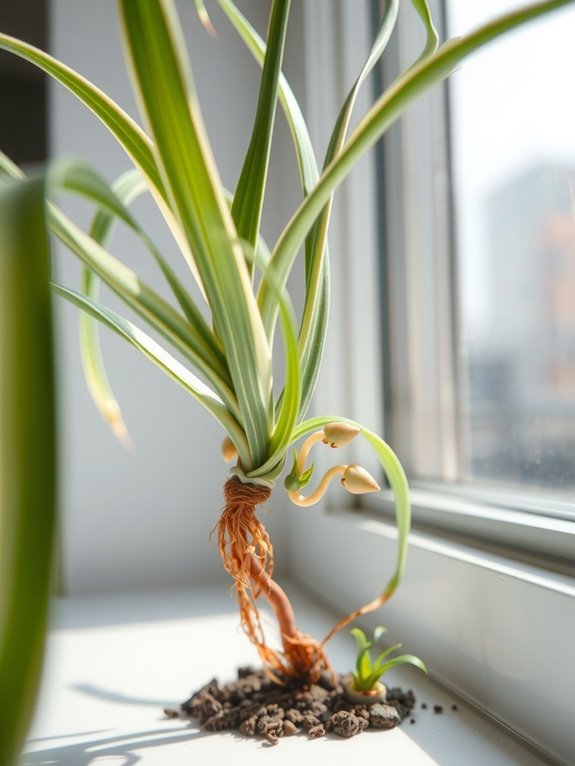
If your spider plant’s stems remain stubbornly bare despite months of care, you’re probably dealing with one of a few fixable issues. The good news? Most spider plant owners hit this same snag, and it’s usually solvable with a small adjustment or two.
Light is almost always the main issue. Spider plants need bright, indirect light—ideally within 3 to 6 feet of a window—to actually flower and produce those baby plantlets everyone wants. Think of light like a trigger: no bright light means no flowers, and no flowers means no babies forming on the stems. If your plant sits in a corner or away from windows, moving it closer to a bright spot should help within a few weeks.
Age plays a role too. Plants younger than one year just aren’t ready to bloom yet, no matter what you do. They need time to build up enough energy reserves first. If you’ve had your spider plant for less than a year, patience is honestly your best tool right now.
Beyond light and age, growing conditions matter. Spider plants appreciate warmth around 65 to 75 degrees Fahrenheit and humidity between 40 and 60 percent. If your home feels dry or cold, especially during winter, blooming becomes less likely. A small humidifier nearby or regular misting can nudge your plant in the right direction.
| Issue | Solution |
|---|---|
| Low light | Move plant 3-6 feet from bright window |
| Young plant | Wait until 1 year old for maturity |
| Dry air | Increase humidity to 40-60% with humidifier or misting |
| Cool temperatures | Maintain warmth between 65-75°F |
How to Separate and Pot Established Plantlets
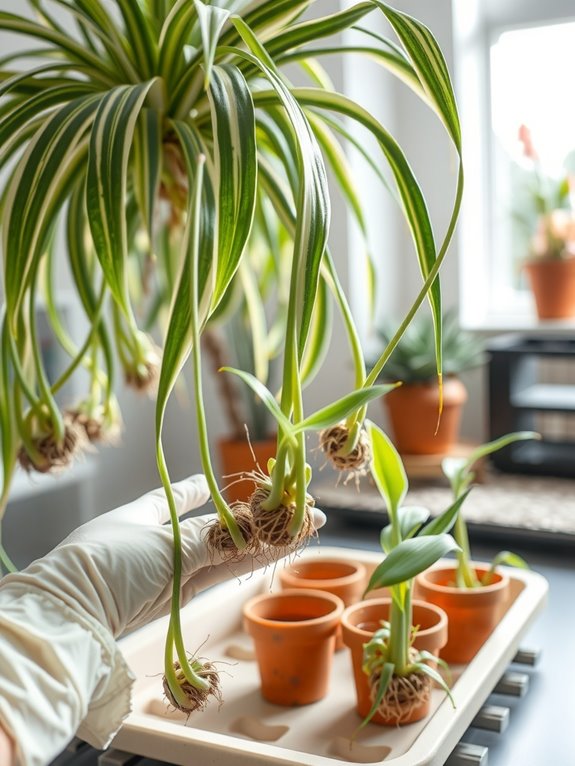
Once your plantlet’s roots stretch to about two or three inches long, you’re ready to separate it from the mother plant. Timing matters here because roots need enough length to support independent growth, but you don’t want to wait so long that they become tangled or damaged during the process.
Gather your supplies before you start: a small pot (roughly four to six inches wide), peat-free potting mix, and a clean, sharp knife. The peat-free mix is lighter than traditional soil and drains better, which helps young plants establish roots without sitting in moisture. A sharp knife makes cleaner cuts through the runner connecting your plantlet to its parent, reducing damage that could invite disease.
Position your plantlet so you can see where the runner attaches to the mother plant. Make a quick, decisive cut through the runner about an inch away from the baby plant’s base, then another cut near the mother plant. This double-cut approach gives you some wiggle room if your first attempt isn’t perfectly positioned.
Fill your pot with slightly moist potting mix and create a small hole with your finger. Gently nestle the plantlet’s roots into the hole, pressing the soil around them so they make good contact with the mix. The roots shouldn’t be crammed or folded—they work better when they can sit naturally.
Water the soil lightly until water drains from the bottom of the pot. Place your newly potted plantlet in bright, indirect light for the first week or two while it recovers from the separation. This reduced-stress period helps prevent transplant shock and gets your independent plant off to a steady start.
Timing And Root Development
When should you actually snip that runner and pot up your baby spider plant? Wait until you see visible roots developing—that’s your green light. You’re looking for a small root mass, not just tiny root nubs appearing in water or soil. This timing matters because established plantlets with developed roots handle the transition way better and experience less transplant shock.
Once rooting’s underway, snip the runner and plant your plantlet into a small 3–5 inch pot filled with soil-based mix. Give it standard care and let those roots settle in. The reason patience pays off here is straightforward: small pots prevent overwatering and let roots establish themselves without sitting in excess moisture. Resist the urge to upgrade to bigger pots too quickly, since young plantlets perform better when their root systems can access available soil without too much empty space around them. Once your plantlet’s truly established with a solid root mass, you can confidently move it to larger containers.
Potting Mix And Container Selection
Getting your spider plantlet off to a good start comes down to picking the right potting mix and container. For young plantlets, grab a lightweight, peat-free mix like Growlite and use a small pot, which lets roots spread out without sitting in soggy soil.
As your plantlet develops a stronger root system over a few weeks, you’ll want to move it up to a soil-based mix such as John Innes No. 2 in a slightly larger container. This shift matches what your plant actually needs at each stage of growth. The bigger pot gives those developing roots room to explore without overwhelming them with excess soil.
One non-negotiable detail: your pot absolutely needs drainage holes. Waterlogged soil kills more spider plants than just about anything else, so don’t skip this step. Keep the potting mix lightly moist but never soggy, and place your plantlet where it gets bright, indirect light. Aim for a spot near a window that doesn’t get blasted by direct afternoon sun. These conditions give your roots the conditions they need to establish themselves properly.
Severing And Transplanting Techniques
When your spider plant runner develops a healthy cluster of roots hanging from its plantlet, you’re ready to separate them. Grab sharp scissors and cut the runner a short distance from the parent plant to isolate your new plantlet cleanly.
Fill a 3–4 inch pot with light, peat-free potting mix. Position the plantlet so its crown sits right at soil level, spreading the roots evenly throughout the pot. Water thoroughly until moisture drains from the bottom—this settles the soil and eliminates air pockets around the roots.
If you’d rather keep things connected initially, trim the runner behind the plantlet instead and wait until roots establish themselves before potting both plants separately. This approach works well if you’re nervous about the transition.
Place your freshly potted plantlet in bright, indirect light where it won’t face harsh afternoon sun. Keep the soil consistently moist but not waterlogged—let the top inch dry slightly between waterings. This balance prevents root rot while supporting new growth as the plantlet settles in.
Using Bright Light to Maximize Plantlet Production
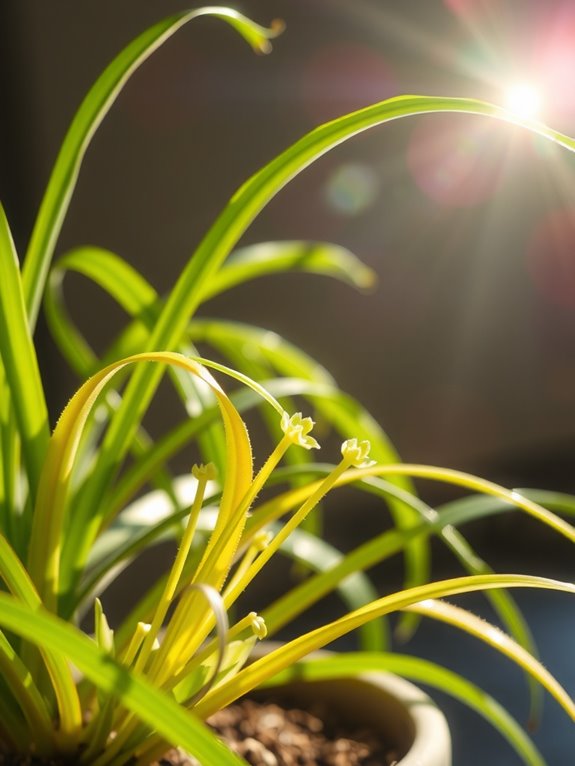
How’s your spider plant doing in that corner spot? It’s probably not producing many plantlets, and that’s because light is the real driver here. Bright light actually encourages your spider plant to flower more robustly, which means longer, arching stems that develop plenty of plantlets along the way.
When you move your plant to a brighter location—ideally within 2 to 3 feet of an east or west-facing window—you’re giving it the signal to bloom and propagate. More light speeds up maturity and flowering timing, so you’ll see those baby plantlets appearing sooner within the growing season. Without adequate light, your plant stays stubbornly vegetative with no flowers and no plantlets at all.
Pair bright conditions with a mature plant around one year old and proper watering, and you’ve got the foundation for good propagation success. Your spider plant responds to good light with more abundant growth. If your current spot gets fewer than 4 to 6 hours of indirect sunlight daily, moving it will make a noticeable difference within a few weeks.
Common Mistakes That Prevent Flowering and Babies
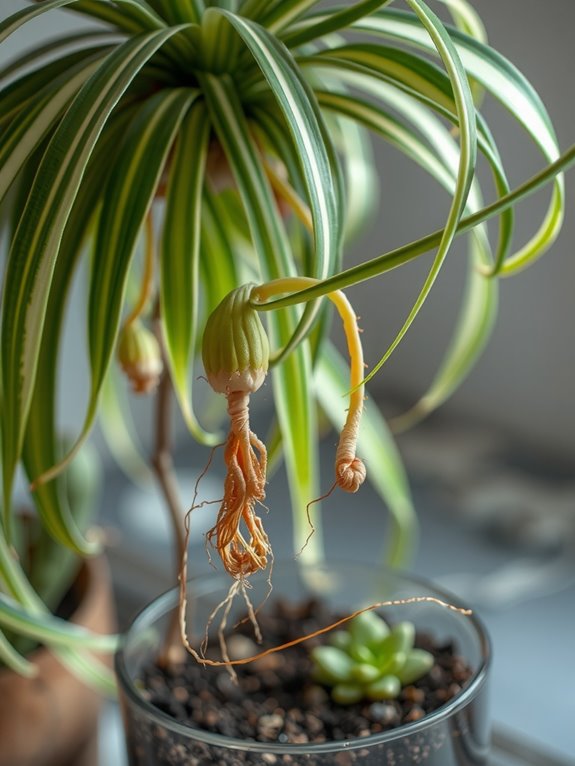
Even when you’ve nailed the bright light part, you might still find yourself staring at a leafy spider plant with zero flowers and zero babies. One major culprit is impatience. Your spider plant needs roughly a year of solid growth before it’s mature enough to flower and produce offsets. If your plant’s younger than that, keep nurturing it and let time do its work.
Another issue involves insufficient light despite your best efforts. Even bright windowsills sometimes don’t deliver the intensity plants need. South-facing windows typically provide 6-8 hours of direct light, which spider plants prefer for flowering. If your current spot falls short, move your plant closer to that window or add a grow light positioned 6-12 inches above the foliage for 12-14 hours daily.
Here’s the thing about babies: all spider plants flower and produce offsets when two conditions align—they’ve reached maturity and they’re getting consistent, abundant light. This isn’t a mystery reserved for certain varieties. Focus on meeting these straightforward needs, and the plantlets will come.