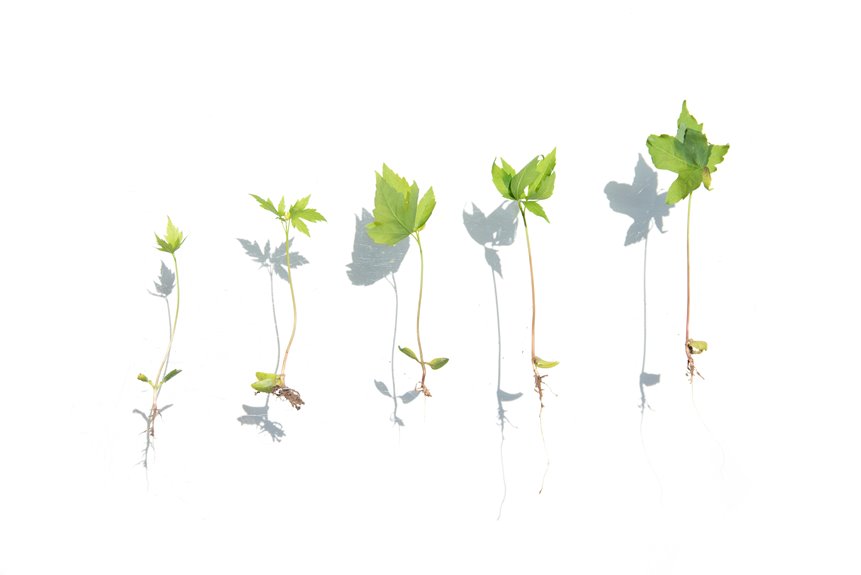
After two months, most plants land in the 12–24 inch range indoors or 2–4 feet outdoors, though your setup makes a real difference. Autoflowers tend to stay more compact and predictable, while photoperiod plants stretch noticeably with extended light hours. Your genetics determine the maximum size possible, but light intensity, soil quality, and temperature control whether your plant actually reaches that potential.
Look for rich green leaves, thick stems about pencil-sized, and white roots that have filled most of the container space. These signs tell you the plant is developing on schedule.
Stunted growth usually points to one of two problems: inadequate light reaching the leaves or nutrient deficiencies in your soil. Both are fixable once you identify which one’s holding you back.
Expected Indoor Height: 12–24 Inches at 2 Months
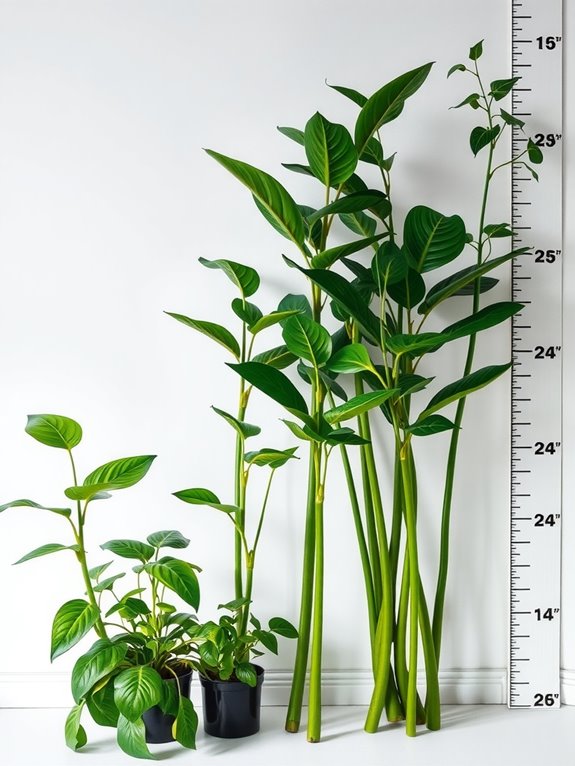
So what’s the target height you’re shooting for? After two months, your cannabis plants should be reaching somewhere between 12–24 inches during the vegetative stage, and that’s the healthy zone you want to hit.
The final height depends a lot on two main factors: your plant’s genetics and how intense your grow lights are. Indica-dominant strains tend to stay shorter and bushier, while Sativas stretch out and can easily hit 24 inches or beyond when conditions are dialed in. Auto-flowering varieties fit nicely into this range because their shorter lifecycle keeps them from getting too tall.
Getting solid vegetative growth comes down to giving your plants what they actually need. You’ll want 18 hours or more of quality light each day, balanced nutrients mixed at proper ratios, and consistent temperatures between 65–75°F. Light intensity matters because stronger lights let your plants build thicker stems and pack on leaves faster.
Here’s how it actually works: your genetics set the upper limit for how tall a plant can get, but light and nutrients determine whether you’ll reach that limit. A strain with tall genetics won’t stretch much if your light is weak or nutrients are unbalanced. Focus on what you can control—dial in your light distance (usually 24–36 inches above the canopy for LED panels), feed regularly with a balanced vegetative formula, and keep that grow tent temperature stable. Those three things working together are what gets you to that 12–24 inch mark.
Why Outdoor Plants Vary by Location and Daylight
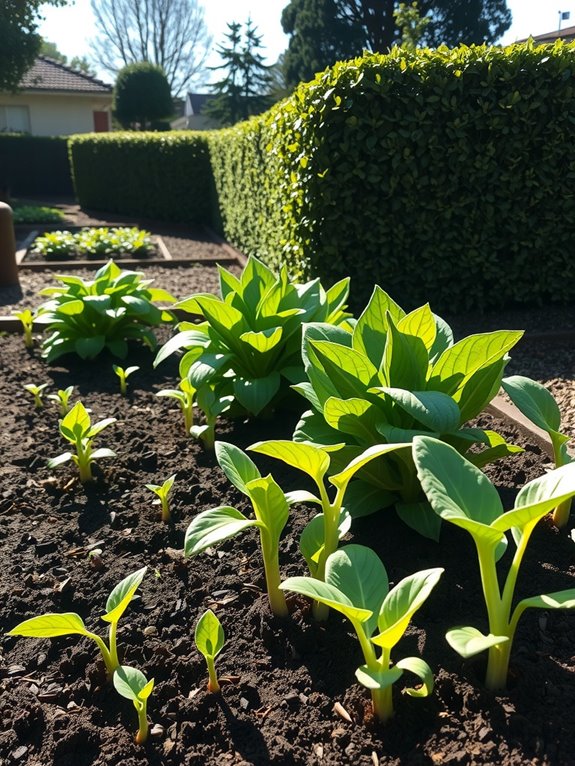
When you’re growing cannabis outdoors, your location shapes your plants more than almost anything else you can control. Your latitude determines how many hours of daylight your plants receive each day, which directly controls how long they stay in the vegetative stage before flowering begins.
Near the equator, daylight stays around 12 hours year-round, which means plants flower earlier and typically reach only about 2 feet tall by the two-month mark. Head north, and you get longer days during spring and summer—sometimes 16 hours or more—giving your plants extra time to bulk up before the light cycle triggers flowering. Northern growers can expect plants reaching 3 to 4 feet in that same two-month window.
Northern growers benefit from longer daylight hours, allowing plants to reach 3 to 4 feet tall within two months.
Geography also affects light quality and consistency. Regions with frequent cloud cover won’t deliver the same intense light exposure as sunnier climates, which slows photosynthesis and reduces overall plant size. A cloudy zone might produce visibly smaller plants than a sunny region at the same latitude.
The practical takeaway here is straightforward: track your area’s seasonal daylight patterns. Find out when sunrise and sunset occur during your growing season, note how many cloudy days your region typically gets, and you’ll have a solid foundation for predicting two-month height. This local knowledge lets you plan spacing, support structures, and harvest timing with real accuracy instead of just guessing.
How Strain Genetics Determine Your Plant’s Final Size
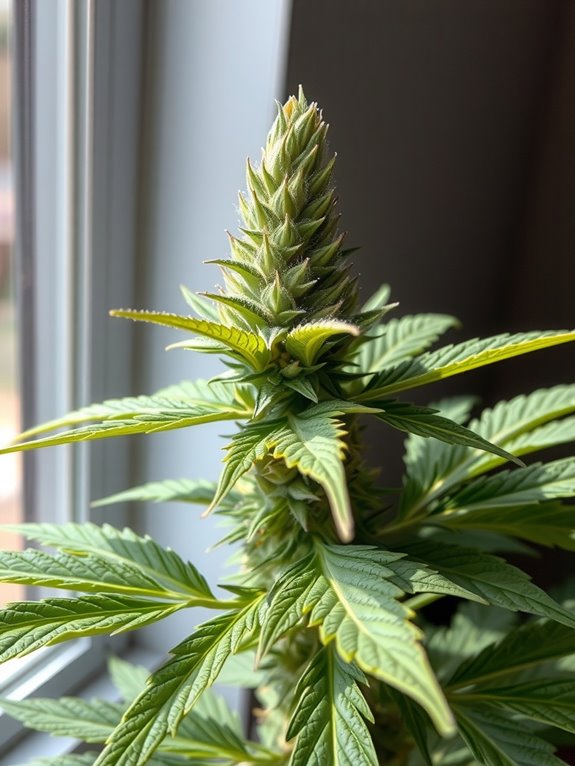
Your location sets the stage, but your strain choice writes the script for how tall your plants’ll actually grow. Strain genetics fundamentally determine your two-month growth trajectory and final size potential.
Indica-dominant strains stay shorter and bushier, typically reaching 24–36 inches after two months. They’re naturally inclined toward wider, denser growth patterns rather than vertical stretch.
Sativa-dominant strains grow tall and slender, often exceeding 36 inches during the same period. You’ll notice they develop longer internodes (the spaces between leaf nodes) and fewer lateral branches compared to indicas.
Photoperiod and autoflowering types respond differently to your grow setup. Photoperiod varieties develop more lateral branching than autoflowers, which affects overall plant structure and canopy shape. Autoflowering types remain compact at 24–36 inches with minimal height expansion, making them practical for tight spaces.
Even within the same genetic line, you’ll see variation based on light exposure and soil quality. A sativa grown under weak lighting won’t stretch as much as one receiving 18 hours of strong light daily. Similarly, plants in nitrogen-rich soil tend toward taller growth than those in leaner medium.
Know your strain’s baseline expectations before planting. Look at the seed packet or breeder notes for the typical mature height under standard conditions. This knowledge helps you set realistic height targets and plan spacing accordingly, moving past guesswork into confident setup decisions.
Autoflower vs. Photoperiod: Which Timeline Fits Your Goal
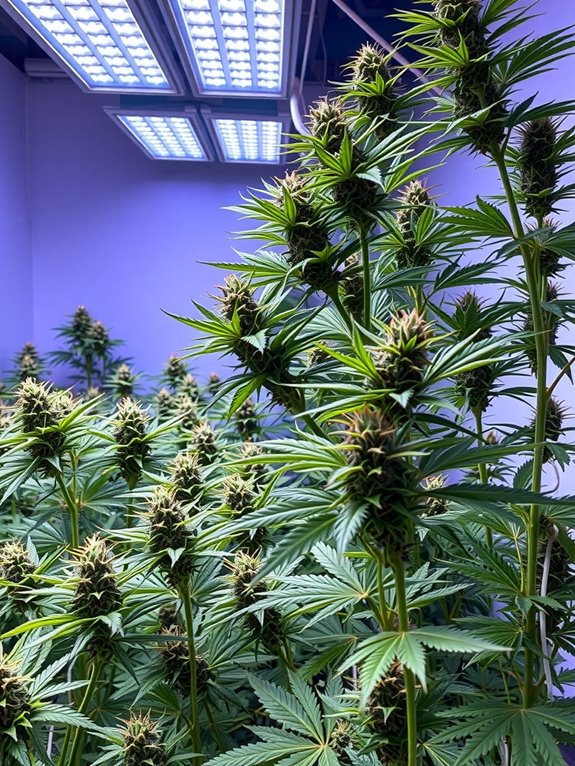
If you’re eyeing a two-month checkpoint, you’re looking at two fundamentally different growing paths with their own rhythms and requirements.
Autoflowers wrap up their entire cycle in about nine weeks, which means they’re already deep into flowering by week eight and typically maxing out around 24–36 inches tall. They handle themselves without you needing to fiddle with light schedules, so if you want straightforward growing with minimal fussing, this is your lane. The trade-off is that you get what you get—their flowering window isn’t something you can stretch or compress based on your needs.
Photoperiod plants operate on a different principle altogether. You control when they flower by adjusting how many hours of light they receive each day, which means you can keep them in their vegetative stage as long as you want. This gives you room to train taller plants, develop a fuller canopy, and dial in exactly when blooming happens. The catch is that managing those light cycles requires more attention and infrastructure than autoflowers demand.
Autoflower Timeline and Maturity
Wondering why your autoflowering plant looks so different from a photoperiod strain at the two-month mark? That’s because your autoflower timeline operates on a fixed schedule, independent of how many hours of light it receives each day.
Here’s what you’re working with: germination to flowering happens fast—typically 14–21 days regardless of your light setup. Total maturity arrives in 9–12 weeks, meaning you’re looking at harvest-ready plants by around two months. Most autoflowers plateau around 24–36 inches tall, though some strains can stretch to 48 inches maximum. Your genetics lock in final size early, which leaves less room for vegetative expansion compared to photoperiod plants.
Autos develop differently because they prioritize building one dominant main cola rather than spreading energy across lateral branches. This genetic predetermined growth pattern means you’re watching a compressed lifecycle unfold. By two months, you’re likely looking at harvest-ready specimens, not plants still building their frame.
The speed and predictability of autoflowers matter because you can plan your harvest calendar with confidence. You won’t find yourself waiting around wondering when flowering will finally kick in—it’s already happening on its own schedule.
Photoperiod Growth Control Options
When you run photoperiod plants, you’re holding the controls to your garden’s timeline. By adjusting your light cycle, you decide exactly when your plants shift from growing leaves and stems into making flowers. If you want taller plants, keep them under 18–24 hours of light daily for as long as you need. Want something more compact. Cut back the vegetative period and you’ll get smaller plants faster.
Here’s what separates photoperiod from autoflowering:
| Control Factor | Autoflowering | Photoperiod |
|---|---|---|
| Veg Period | Fixed (3–4 weeks) | You decide |
| Light Cycle Flexibility | None | Complete control |
| Height Target Achievement | Predictable | Customizable |
| Two-Month Sizing | ~24–36 inches | 1–3 feet |
| Timing Precision | Locked in | Your choice |
The real difference shows up in flexibility. Autoflowering plants flip to flowering on their own schedule, whether you’re ready or not. Photoperiod plants wait for you to tell them what to do. Once you switch your lights to a 12-hour on, 12-hour off cycle, flowering kicks in. This means you can keep plants in the vegetative stage for three weeks or three months depending on your space and goals.
That control matters practically. You’re not fighting against a predetermined timeline. Instead, you’re building a garden that matches your actual setup, whether that’s a small closet or a larger room.
Light Exposure and Its Direct Impact on Growth Speed
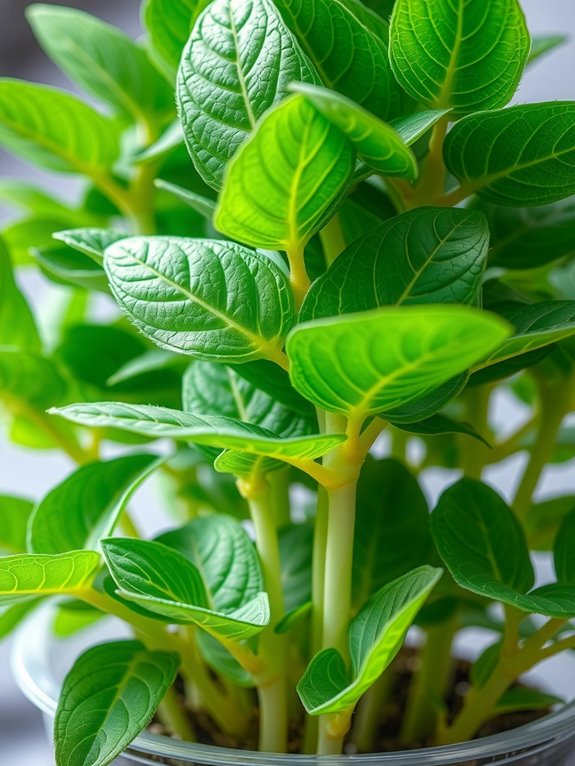
Plants respond directly to light duration and intensity—they’re basically solar-powered growth machines. Your cannabis needs at least 6 to 8 hours of direct sunlight daily to build sturdy stems and hit that two-month height gain. Weaker light leaves you with lanky, disappointing growth instead.
You can boost results by positioning reflective surfaces nearby, like white mulch or aluminum reflectors. These materials amplify how much light your plants actually use during photosynthesis, helping them reach their genetic potential without extra effort on your part. The logic is straightforward: more usable light equals faster, sturdier growth.
Light Duration Affects Growth
How much sunlight is your plant actually getting each day? Light duration shapes your plant’s growth over the next two months, and it matters more than you might think.
During vegetative growth, longer daylight hours fuel what you’re really after—sturdy stems and a wide canopy. Around 18 hours of light daily pushes plants to stretch upward and fill out horizontally. Even hitting just 6 to 8 hours of direct sunlight keeps stems strong and vertical instead of weak and floppy.
Here’s where consistency enters the picture. Your plant doesn’t handle random light patterns well. Inconsistent exposure triggers stress that noticeably stunts growth, leaving you with disappointing results. A steady schedule lets your plant settle into a predictable rhythm and direct energy toward height and structure.
The 12-hour light, 12-hour dark schedule is different territory altogether. That schedule signals flowering time to your plant, which means it stops focusing on vertical gains. If you’re still in the growth phase, stick with longer daylight periods to keep height development on track.
Think of light exposure like fuel in a tank. More daylight hours give your plant more energy to build sturdy architecture and push upward. Without enough light, you’ll watch elongated, spindly stems develop instead of the compact, thick growth that performs well.
Intensity Influences Height Development
Think of light intensity as the difference between a gentle reading lamp and stadium floodlights—both deliver light, but one packs real punch. Your plants respond dramatically to how bright that light actually is. During the first two months of vegetative growth, higher intensity triggers faster cell expansion and builds sturdier stems, which directly boosts plant height.
Intensity amplifies everything your plants can do. You’re basically giving them more fuel to build themselves taller and stronger compared to what they’d manage under weaker light. A plant under 400 watts of grow lights, for example, will typically stretch more vigorously than one receiving only 150 watts at the same distance.
Strain genetics matter here too. Sativas naturally love intense light and respond by stretching taller, while indicas tend to stay more compact no matter what you throw at them. That’s built into their DNA, so it’s worth knowing what you’re growing before you start.
Even with training techniques like topping or low-stress training applied, weak light won’t fill in the gaps. You still need solid light intensity as your foundation. Training methods work best when plants already have enough light to grow vigorously and recover well from being manipulated.
Stronger light intensity means noticeably bigger plants. It’s straightforward because the relationship between light brightness and growth rate is direct and measurable rather than dependent on luck or hidden factors.
How Soil Accelerates Growth in the First 2 Months
What’s the real secret behind plants that shoot up fast during their first two months? It’s all about your soil foundation.
You’re creating the perfect environment when you focus on these four essentials:
- Well-aerated soil rich in organic matter supports robust root development and early biomass accumulation. Think of this as giving roots room to breathe and explore, which means faster establishment and stronger plants.
- Soil pH around 6.5 optimizes nutrient uptake of essential elements during vegetative growth. When your pH drifts too far in either direction, plants struggle to absorb the nutrients you’ve worked to provide, even if they’re sitting right there in the soil.
- Balanced N:P:K ratio of 3:1:2 promotes leafy growth and stronger stems that accelerate height. Nitrogen pushes the green growth, phosphorus builds sturdy roots, and potassium strengthens cell walls so plants don’t flop over.
- Proper soil structure improves drainage and oxygen availability, reducing root stress. Heavy, compacted soil suffocates roots and traps water that causes rot. Loose, crumbly soil lets water move through and air reach the roots where they need it most.
Think of soil as your plant’s launching pad. When you nail drainage, oxygen flow, and nutrient balance, you’re removing obstacles to growth. Avoiding pH swings and nutrient imbalances prevents deficiencies that slow height gain. Your plants reward this attention with explosive early development that sets them up for success.
Temperature Control and 2-Month Height Gains
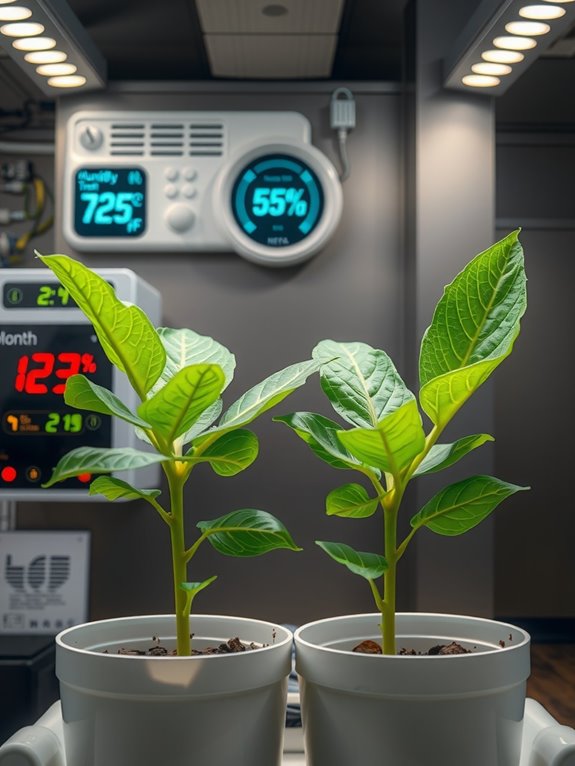
Keep your daytime temperatures steady around 20–25°C (68–77°F) because plants photosynthesize most efficiently in this range, which directly supports consistent vertical growth and builds sturdy stems. At night, let temperatures drop naturally to around 15–18°C (59–64°F)—this cooler period actually strengthens plant structure and helps fill out your canopy by reducing excess stretching.
Big temperature swings between day and night stress your plants and disrupt their growth rhythm. When temperatures fluctuate wildly, plants redirect energy toward surviving the stress rather than growing taller, which cuts into those expected 1–3 feet of height gains you’re targeting over two months. Think of it like trying to work out when you’re uncomfortable—your body’s just trying to cope instead of building strength.
The day-night temperature difference itself is the real workhorse here. That natural cool-down tells your plants it’s time to consolidate their growth rather than just stretching endlessly toward light. Stable conditions with a modest temperature gradient between day and night produce plants that are both tall and sturdy, not leggy or weak at the base.
Optimal Daytime Temperature Ranges
How much does temperature actually matter for your plants’ growth during those critical first two months? More than you’d think. You’re building the foundation for everything that comes next.
20–25°C daytime range keeps your plants’ metabolic processes moving at a steady clip without causing shock to their systems. Stay within this window and you’ll see consistent, predictable growth that gets you closer to your two-month height goals.
Stability matters because temperature swings disrupt how plants absorb nutrients and develop their stems. When conditions bounce around, so does your plant’s growth pattern—some days stretching faster, other days barely moving. That uneven development is what derails your timeline. Consistent temperatures work like a reliable rhythm that plants can count on.
Cooler nights balance out your daytime warmth and support that predictable growth trajectory. A 5–10°C drop between day and night mimics natural conditions and helps plants allocate energy more effectively. Think of it as creating a stable greenhouse environment, even if you’re working outdoors.
Temperatures above 25°C speed up your plant’s metabolism, which sounds good until water evaporates faster than roots can replenish it. Your plants end up stressed and thirsty. Below 20°C, stem elongation slows noticeably, and you’ll lose valuable days you can’t get back. You’re not chasing extremes—you’re hitting that reliable middle ground where growth happens steadily, month after month.
Nighttime Cooling And Growth
Why do nights matter just as much as days when you’re chasing serious 2-month height gains?
Your plants don’t rest at night—they’re actively processing nutrients and building structure. You’ll want nighttime temperatures sitting 8–11°C cooler than daytime, which keeps your vegetative phase plants humming along without stress. This temperature differential supports steady metabolism and prevents the growth stalls that tank your height goals.
When nights stay consistently around 15–20°C, you’re locking in robust stems and fuller canopies. Cooler nights boost nutrient uptake, meaning your plants actually use what you’re feeding them instead of letting it sit around. Without this cooling pattern, you’ll watch internodes stretch awkwardly while height gains lag behind schedule.
Here’s what happens at different temperature ranges:
Too warm nights squeeze down nutrient uptake and push internodes to stretch in weird ways. You get 15–20°C nights, and your stems build solid structure with predictable gains. The proper 8–11°C differential between day and night hits that sweet spot for 1–3 feet of growth over two months. Fluctuating temperatures throw off your height targets and drain plant vigor. Stable cool nights keep metabolism running steady night after night.
The reason this works comes down to simple plant biology. Cooler temperatures slow respiration rates, which means your plants burn through fewer stored carbs just staying alive. That freed-up energy goes straight into building new cells and expanding height. During warmer nights, respiration kicks into overdrive, and your plants waste energy on maintenance instead of growth. Temperature swings stress the plant’s system, forcing it to spend energy adapting rather than growing.
Nutrients in Veg: Why Balance Matters at 2 Months
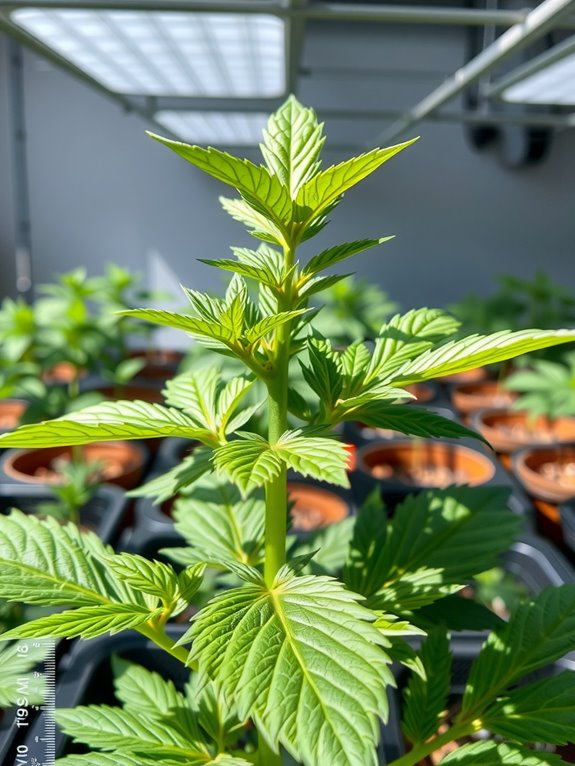
At two months in, your plants are hungry—and they’re picky about what they eat. Nutrient management during vegetative growth requires precision to keep your plants reaching that impressive 1–3 foot height you’re aiming for.
At two months in, precise nutrient management separates thriving plants from struggling ones—get it right now, avoid weeks of fixes later.
Nitrogen leads the charge
Aim for a 3:1:2 N:P:K ratio to fuel leafy growth and root development. This balance feeds the parts of your plant you actually see while strengthening what’s happening underground.
pH stability prevents lockout
Keep your growing medium around 6.5 pH to ensure nutrients actually get absorbed by your roots. When pH drifts too high or low, your plants can’t access the food you’re giving them, even if you’re feeding perfectly.
Balance prevents disasters
Over-fertilization yellows leaves and burns roots; under-feeding stunts vertical growth fast. Regular adjustments catch problems before they spiral into weeks of chasing deficiencies. Monitor your plants weekly and adjust your feeding schedule based on what you see—pale leaves mean you’re probably light on nitrogen, while burnt tips signal you’ve overdone it.
Get the nitrogen-to-phosphorus ratio right now, and you’ll watch them push upward. Rush it, and you’ll spend weeks fixing problems that could’ve been prevented.
Container Size: Why Pot Dimensions Limit Growth at Week 8
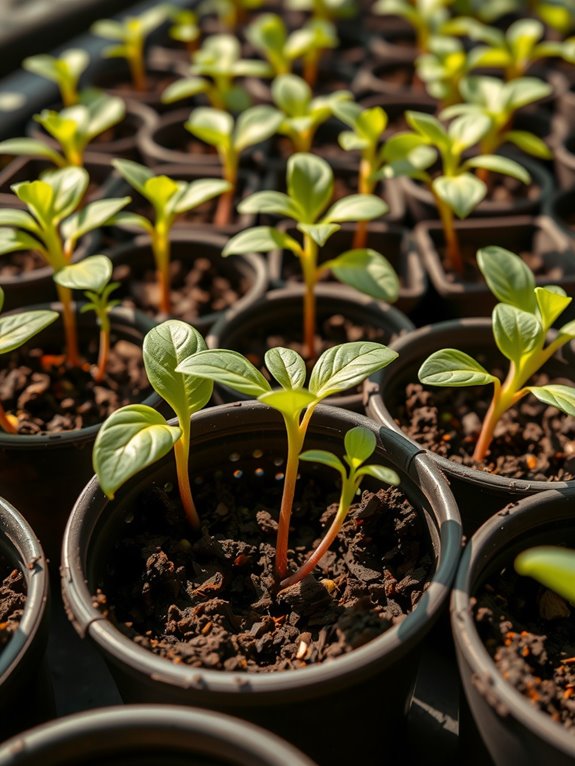
Your roots literally can’t stretch beyond what your pot allows, and that’s the main reason most growers hit a height ceiling by week 8. A cramped container squeezes root expansion, which stops vertical growth right in its tracks. When you swap to a larger pot, roots develop deeper and more extensive systems that pull in more nutrients and water, supporting taller plants overall.
Smaller containers push plants toward bushy shapes because they can’t access resources vertically the way they’d prefer. It’s not complicated—pot size directly controls how tall your plant gets.
The relationship between your container dimensions, drainage holes, and growing medium affects everything that happens inside: how air moves through the soil, how often you need to water, and whether nutrients stay available to the roots. A five-gallon container hits that sweet spot where most strains reach one to three feet tall in two months. You could go larger if you want extra insurance, but five gallons gives you the room you need without becoming unwieldy to move around or water properly.
Control Height Without Losing Vigor
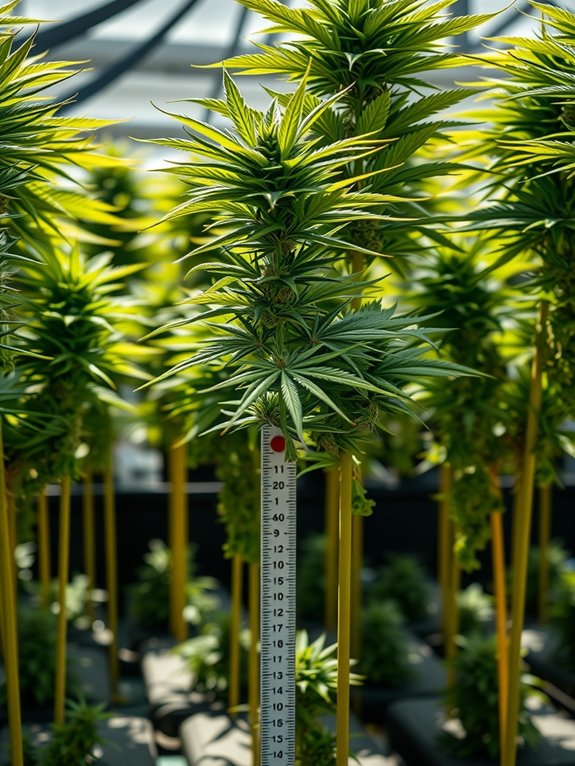
Once you’ve dialed in your container size and basic growing conditions, you actually have quite a bit of control over plant height—and that’s where training techniques become really useful.
The thing is, you can manage how tall your plants grow without draining their vigor. Here’s what actually works:
Pruning and topping during the vegetative stage pushes plants to branch out sideways instead of stretching upward. When you remove the main growing tip, the plant redirects energy to lower branches, creating a bushier shape that fits tight spaces better.
Low-stress training techniques like gently tying branches down with soft twine redirect growth horizontally without damaging the plant. This keeps leaves exposed to light while preventing that leggy vertical growth you’re trying to avoid.
Lighting matters more than people think. Giving plants 6 to 8 hours of direct sunlight daily prevents them from stretching thin and weak. Plants stretch when they’re reaching for light, so adequate exposure stops that behavior before it starts.
Pick shorter varieties if you’re working with limited vertical space. Some strains naturally stay compact while others grow tall no matter what you do, so choosing the right genetics saves you from fighting your plant’s natural tendencies.
Consistent light exposure and soil pH around 6.5 keep plants vigorous while you’re managing their size. You’re not sacrificing plant health—you’re just working with the biology instead of against it.
When to Start Training: Timing Matters at 2 Months
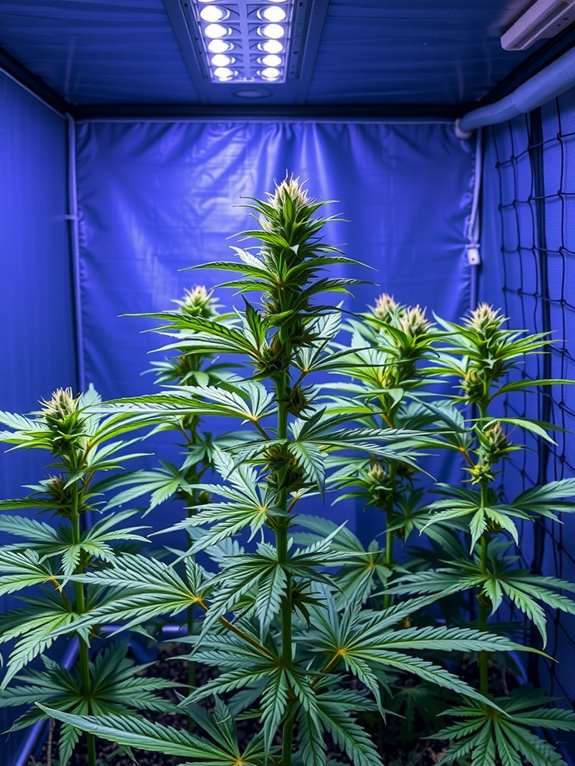
Two months in—that’s when you’ll get real results from training. Your plants are probably hitting 1–3 feet tall by now, giving you solid material to reshape before flowering starts. With your 18–24 hour light schedule keeping them in vegetative mode, they’re pumped for growth and can handle the stress of pruning, bending, and topping without bouncing back slowly.
The timing works because you’re reshaping your plant’s structure while it’s still flexible and actively growing. Start training now and you’ll direct where branches develop, control how tall everything gets, and prevent that sudden vertical stretch that happens right before flowering. Auto-flowering varieties move through their life cycle faster, so they need your attention earlier—waiting around with these speedsters wastes their narrow training window.
This two-month window lets you build the basic framework that’ll hold up all those heavy flower buds later on. You’re basically deciding right now whether your plant becomes a short, bushy producer or a tall, leggy one that’s harder to manage under lights.
Visual Markers of Healthy 2-Month Plants
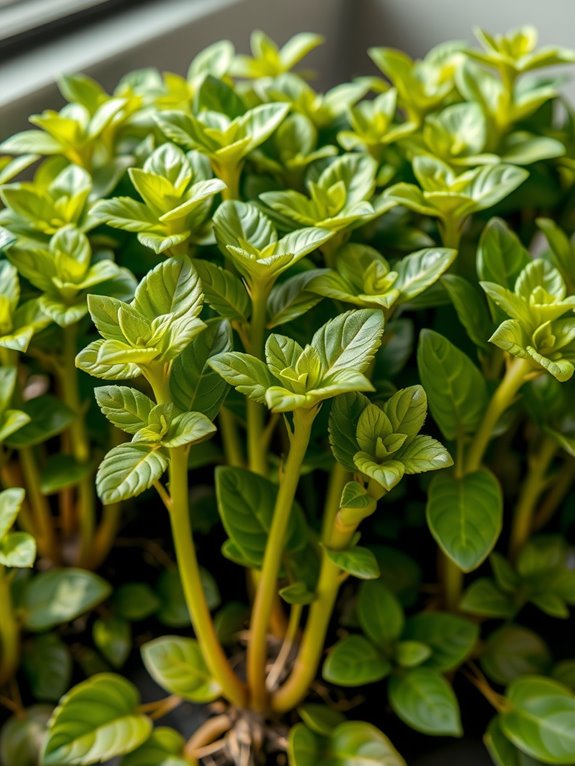
At two months, your plants should show three reliable signs of solid health. Look for a dense canopy with multiple branching points and thick stems—ideally pencil-sized or thicker—that hold their weight without drooping under their own load. These sturdy stems tell you the plant is building the structural support it’ll need when flower buds get heavy. The foliage should display that rich green color that signals the plant’s doing its job well.
Next, check your root system. The roots should have filled the container nicely without circling tightly around the edges, which would mean they’ve run out of room. A well-developed root ball supports everything that comes next.
You’ll probably notice tiny pre-flowers starting to form in the leaf axils—those little spots where branches meet the main stem. This is completely normal at this stage and actually useful information. Those early flowers let you identify males versus females before you’ve invested too much time and resources growing plants you don’t want to keep.
The whole picture at two months should feel substantial when you look at your plants. Thick stems, good leaf color, proper root development, and early flowering signals all point to plants that are ready for what’s coming in their next growth phase.
Foliage Density and Branch Structure
What’s the best way to tell if your plants are thriving at the two-month mark?
Look at your foliage density and branch structure—they’re your clearest growth indicators during the vegetative stage. You’re checking for the markers that separate healthy plants from struggling ones.
Start with the basics. Your fan leaves should display a vibrant green color without yellowing or brown spotting, which would signal nutrient problems or disease. Dense, interlocking foliage that creates a thick canopy throughout multiple nodes tells you the plant’s putting energy into robust growth rather than stretching for light.
Feel the central stem between your thumb and finger—it should feel thick and sturdy, roughly the diameter of a pencil or thicker depending on your variety. Strong branching should extend outward symmetrically from this main stem, not favoring one side. By the two-month mark, you should count 4–6 sets of true leaves, showing steady progression.
Growth patterns vary by type. Indica-dominant varieties typically show compact, chunky branch structure that stays relatively short and bushy. Sativa types stretch taller with more space between nodes and longer side branches shooting off the main stem. Neither approach is better—it’s what your specific strain naturally does.
That robust architecture you’re seeing means your root system below the soil is doing heavy work, pulling up water and nutrients to support all this upward growth. You’re building the foundation that determines how many usable buds you’ll eventually harvest.
Stem Thickness and Color Indicators
How’s that central stem looking these days? By two months, you’re aiming for stems thicker than a pencil—roughly the diameter of a #2 pencil, which tells you the plant has built solid structural support. A healthy stem shows consistent green color throughout, which means your vascular system is moving water and nutrients where they need to go.
Watch for uniform coloring across the stem’s length. That’s your signal the feeding schedule is working as intended. If you’re noticing reddish or purple hues without cold temperatures in the room, something’s off balance. These color shifts often point to phosphorus deficiency or micronutrient problems that need adjustment in your nutrient mix.
Run your fingers along the stem too. Smooth texture with zero waviness, edema (that puffy swollen look), or necrotic patches (dead tissue spots) means water uptake and pH are cooperating nicely. A robust central stem paired with sturdy side branches tells you the plant’s ready to develop a full canopy above. Keep your eyes on the stem itself—it broadcasts what’s actually happening with your nutrient status and overall plant health.
Root System Development Signs
Your stem’s looking solid, and that’s great—but here’s the thing: what you see above ground is only half the story. Your healthy root system is doing the work underneath, and you’ll want to check in on it.
After two months, here’s what you’re looking for:
White, firm roots with no slime or foul odor. These indicate a root system that’s ready to support your plant’s next growth phase. Dark, mushy roots mean rot has set in, so inspect them regularly when you water.
A visible central taproot supported by extensive lateral roots spreading throughout your growing medium. You want to see roots branching out in all directions, not just hugging the container walls.
Dense root mass filling your container. When roots pack tightly throughout the soil—not just at the bottom—your plant can absorb water and nutrients more efficiently. This readiness shows your plant can handle faster vegetative growth.
Watch for cramped root systems. If roots are wound up tight in a small container, you’ll see stunted top growth, smaller leaves, or slower development overall. Transfer to a pot that’s 2 to 4 inches larger in diameter. Within a few weeks, you’ll notice your plant puts out new stems and bigger leaf growth because the roots finally have room to spread and pull in more nutrients.
Five Growth Stalls: Recognizing Stunted Development Early
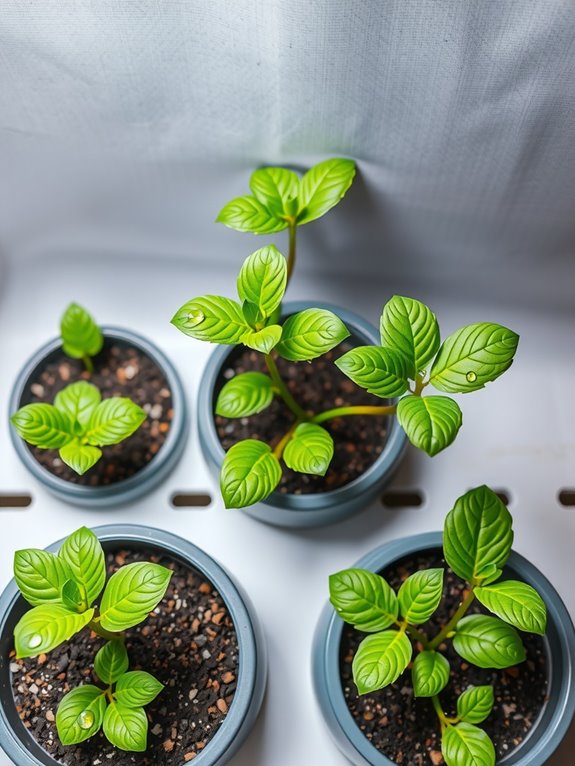
Sometimes your plants aren’t cooperating, and spotting the problem early really does matter. If your seedlings are still under 6 inches by week 4, something needs attention. By week 8, plants should reach 12–16 inches; anything shorter signals stunted growth.
A few common issues create these slowdowns. Insufficient light weakens stems and stops vertical growth cold. Nutrient deficiencies drag down everything—leaf development, branching, and root expansion all suffer together. Poor soil quality sits underneath it all, restricting what your roots can actually reach and absorb.
Your growing setup affects how quickly problems show up. Outdoor plants reveal weaknesses fast since natural sunlight exposes gaps in their health. Indoor growers have it tougher because artificial conditions can hide problems longer, which means you need to watch closely. Look for yellowing leaves, spindly branching, and sluggish foliage development. These signs tell you that adjustments need to happen now rather than waiting and hoping things improve.
Diagnosing Undersized Plants: Root, Light, or Nutrient Deficiency
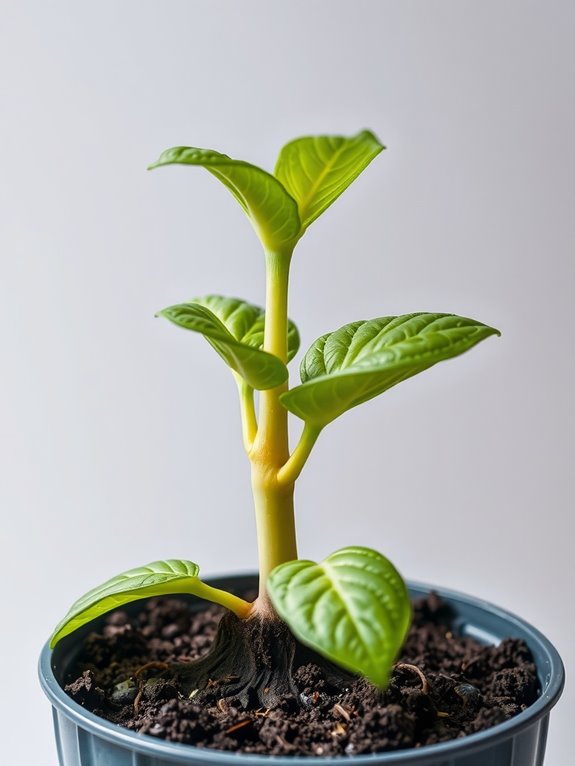
When your two-month plants are noticeably shorter than the expected 12–16 inches, it’s time to figure out what’s holding them back. Let’s work through the most likely culprits.
Root development issues
If roots are circling around the pot’s bottom in tight loops, they’ve simply run out of space. This restricts how much water and nutrients they can absorb, which directly limits how tall your plants can grow. Moving them to a larger container gives roots room to spread out and feed your plants properly.
Light insufficiency
Plants that don’t get enough light tend to stretch upward weakly, searching for brightness they’re not finding. Aim for 14–16 hours of direct sunlight or quality artificial lighting each day. Without sufficient light, your plants won’t have the energy reserves needed for healthy vertical growth.
Nutrient deficiency and soil problems
Nitrogen shortages during the vegetative stage will noticeably stunt how tall your plants get. But sometimes the nutrients are actually present in your soil—they just can’t be absorbed because the pH is off or the soil is too compacted. Check your soil’s pH level first, then amend compacted soil by mixing in perlite or coco coir to improve drainage and oxygen flow around the roots. Both materials are affordable and work quickly to loosen heavy soil so roots can breathe and access what they need.
When Size Signals Readiness for Flowering
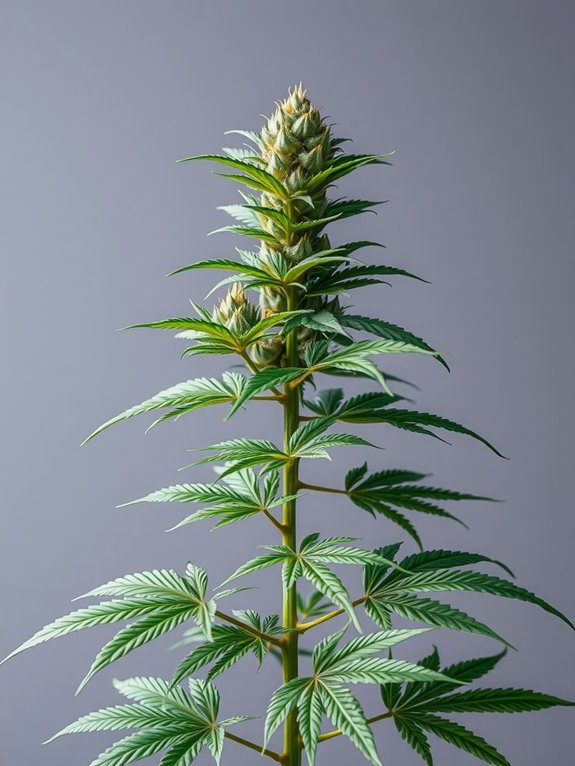
How do you know when your plant has reached the point where flowering makes sense? At the two-month mark, you’ll spot some reliable signals. Your plant should have dense foliage throughout its structure and roots that have filled out the pot—these show it’s genuinely ready for the next phase.
Height varies by strain, which matters for your space planning. Indica varieties typically stay between 1–3 feet tall, while sativas stretch taller and need more vertical room. Auto-flowering strains may already be approaching maturity on their own timeline, whereas photoperiod-dependent plants won’t flower until you shift their light schedule to 12 hours on and 12 hours off.
What you’re really looking for is a plant with filled-out branching, sturdy stems that don’t bend easily, and leaves covering most of the plant structure. When that lush vegetative growth looks established after two months, you can confidently adjust your lighting or introduce flowering conditions. The plant has built the framework it needs to produce flowers and eventually harvestable material.