Plant lily of the valley in early spring when the ground thaws, using bare root pips that establish roots before heat stress arrives. In warm zones where winters stay mild, fall planting works equally well, giving roots several weeks to develop during the plant’s dormant period. Skip the calendar and instead watch your soil thermometer—you want temperatures dropping below 60°F with ground soft enough to work. This cool-soil window lets roots settle in without fighting summer heat.
Your first-year plants won’t bloom. They’re busy underground building the root system and underground stems they need to flower later. Mark year two on your calendar for those fragrant white bells to finally appear. This delayed gratification might feel frustrating, but it’s actually how lily of the valley stays healthy long-term. Plants that rush into blooming without establishing strong roots tend to peter out after a season or two.
Timing matters because roots need time to anchor before temperatures spike. A bare root pip planted in spring’s cool soil can develop a solid foundation before July heat arrives. If you miss spring, fall planting in zones 3-8 gives roots months to grow while the plant sleeps underground. Either way, you’re working with the plant’s natural cycle rather than against it, which means less babying and fewer casualties down the road.
Early Spring: Best for Bare Root Pips
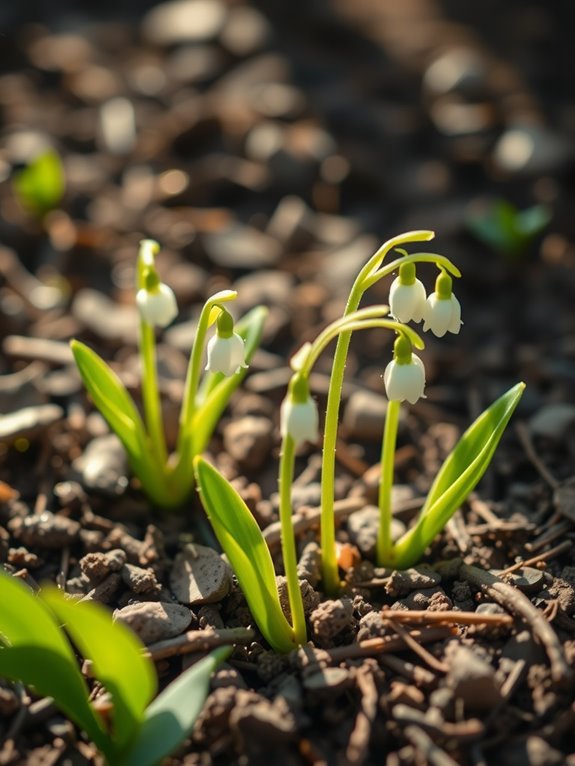
When’s the best time to get those bare root pips in the ground? Early spring, hands down. Your pips need to establish roots before the growing season kicks into high gear, and that window’s perfect for success.
Plant them while the soil’s still cool and dormant, ideally as soon as the ground thaws. Set each crown about an inch below the soil surface—that’s your sweet spot for strong root contact and protection from heat damage. The cool spring temperatures let your pips settle in without the stress that summer heat brings to those tender new roots.
Amend your soil lightly with organic matter like compost to keep it well-drained, since waterlogging spells real trouble for young roots. This timing sets you up nicely for flowering next season, giving your pips the stable start they need.
Fall Planting in Warm Zones
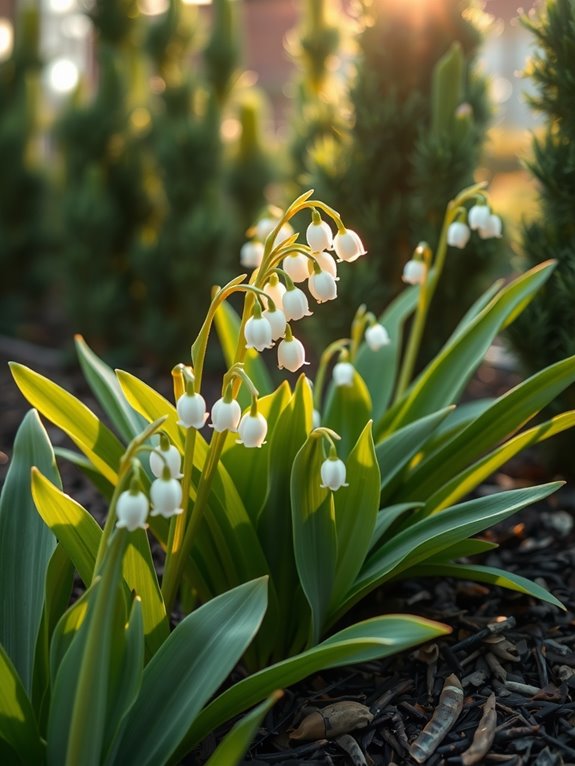
If you’re gardening in a warm climate, fall actually gives you a real advantage for Lily of the Valley. You’ll want to plant while the ground stays workable and soil temperatures drop naturally. This timing lets roots settle in during dormancy, so they’re ready to produce flowers when spring arrives.
What makes fall planting work in warm zones comes down to a few practical factors. Plant while soil remains workable and moisture levels stay balanced, steering clear of waterlogged conditions. Pick spots with partial shade and well-drained soil to handle the extra water from autumn rains without puddling up.
After planting, spread 2 to 3 inches of organic mulch around each plant right away. Mulch holds moisture in the soil and shields roots through those warm fall months when temperatures might spike unexpectedly. Materials like shredded bark or composted leaves work well and break down over time, improving your soil structure.
Your Lily of the Valley gets time to establish roots before the cold arrives, which means stronger growth once warm weather returns. The plants spend winter dormant but not inactive—their root systems are quietly spreading underground, ready to push up green shoots and flowers as soon as conditions warm.
Why Planting Dormancy Windows Matter More Than Calendar Dates
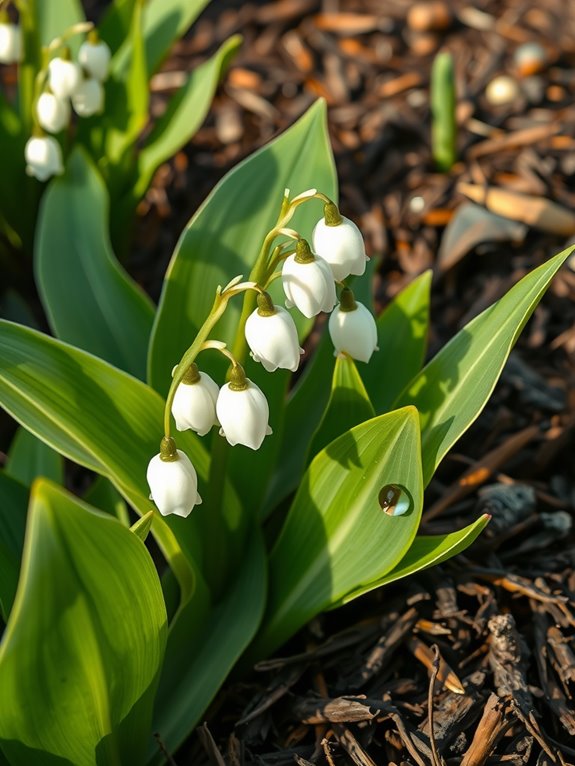
Rather than circling dates on your calendar, you’ll have better luck watching your Lily of the Valley’s natural rhythms instead. Temperature cues matter far more than specific calendar dates when it comes to successful establishment.
Dormancy windows—those periods when soil temperatures drop consistently below 60°F—signal your plants that it’s time to settle in and develop roots. This natural alignment with cool conditions creates the perfect environment for establishment before spring arrives with its vigorous growth demands. A true dormancy window gives roots precious weeks to establish themselves underground while the plant rests, typically needing 12 to 16 weeks of temperatures below 45°F to break dormancy properly.
Bare Root vs. Container: Timing Differences
How you purchase your Lily of the Valley actually shapes when you should plant it, and that timing question matters more than most gardeners realize.
Bare root and container plants follow completely different schedules, so let’s break down what works best for each one. Bare root plants arrive dormant in early spring—usually March or April depending on where you live—and that dormancy is actually your friend. The plant isn’t spending energy on new leaves yet, so it can focus on pushing roots into the soil while temperatures stay cool and moisture lingers naturally. You’ll substantially reduce heat stress on those tender roots by getting them in the ground before the growing season kicks into high gear.
Container plants, by contrast, give you way more flexibility. You can plant them almost anytime between late spring and early fall whenever your schedule allows. No narrow window, no frantic planting rush. This freedom is the real advantage of containers—you’re not locked into a specific week or month.
There’s one practical difference worth knowing about first-year performance. Bare root plants typically won’t produce flowers until their second year in the ground; they’re spending that first season building a solid root system. Containers sometimes bloom sooner since they’ve already developed more established root structures before you plant them. If you want flowers right away, containers give you a better shot. If you’re willing to wait and plan ahead, bare root stock establishes quickly once planted and usually costs less per plant.
Expect Blooms in Year Two, Not Year One
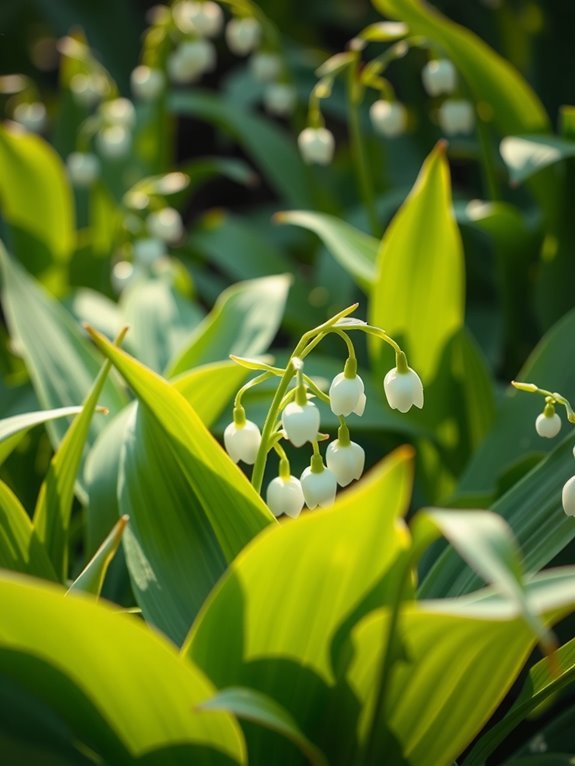
Why won’t your Lily of the Valley flowers show up that first spring? The answer lies in establishment, and it’s entirely biological rather than mysterious. These delicate plants need their first year to settle into new soil and develop a strong root system before dedicating energy to blooming. During year one, your plant focuses almost exclusively on root development rather than flower production—think of it as building a solid foundation before hosting guests.
Don’t worry, because blooming year two arrives reliably for most gardeners who plant correctly. By then, your Lily of the Valley has established itself and gathered enough carbohydrate reserves for a good flower display. Late fall planting actually supports this timeline by ensuring your plants experience proper winter dormancy, which they need to flower the following spring. You’re not being patient without reason; you’re giving your plant exactly what it needs to perform well.
How to Plant When Soil Temperature and Moisture Signal Readiness
Timing matters with Lily of the Valley, and waiting for the right soil conditions beats watching the calendar. Your soil tells you when it’s ready better than any date ever could. Watch for these specific signals before you plant.
Early spring is your window, when the ground thaws but still feels cool to your touch. Dig your finger a few inches down—the soil should feel workable, not muddy or rock-hard. This coolness matters because your pips need that temperature to settle in properly.
Moisture is equally important. After rain, water should drain completely within 5–6 hours without pooling on top. If puddles stick around longer, your pips risk rotting before they even sprout. Wet soil feels heavy and compacted; ready soil crumbles slightly in your hand.
Before planting day, soak your pips in lukewarm water for 2–4 hours. This hydrates the roots and jumpstarts the germination process. While they soak, work compost or other organic matter into your planting area—about 2–3 inches mixed into the top 6–8 inches of soil gives roots something nutritious to grow into.
Plant your crowns roughly an inch below the surface, spacing them about 4 inches apart. That shallow depth prevents rot while keeping them anchored. The crowns need that snug position to send out roots downward and shoots upward. When conditions align like this, your pips establish themselves confidently and reward you with blooms the following season.