

Plant strawberries in early spring when the soil crumbles easily between your fingers, which usually means late March through early April in Ohio’s Zone 6b. This timing—about four to six weeks before your last frost—gives dormant plants enough time to establish roots before they need to produce fruit.
When you’re ready to plant, position the crown right at soil level with roots fanned downward like fingers spreading out. This matters because burying the crown too deep can rot it, while planting too shallow exposes the roots to air and drying out.
Pick a spot that gets six to eight hours of direct sunlight daily and has soil that drains well. Soggy soil leads to root rot and fungal problems, so if your yard tends to stay wet, consider building a raised bed with better drainage.
Space plants twelve to twenty-four inches apart depending on the variety and how much room you want them to spread. Better air flow between plants means fewer disease problems down the line.
During the first six weeks after planting, pinch off any blossoms that appear. It feels counterintuitive to remove flowers, but this redirects the plant’s energy into building a strong root system instead of producing fruit it can’t adequately support yet.
Water deeply and add mulch around each plant, keeping it a few inches away from the crown itself. This keeps the soil consistently moist while protecting roots from temperature swings and preventing weeds from competing for nutrients.
Start in Early Spring When Soil Is Workable
When your Ohio soil’s finally workable—soft enough that it crumbles in your hand instead of clumping into a mud ball—that’s your signal to plant strawberries. This timing matters because you’re giving your plants a head start before summer heat arrives.
Spring planting is the ideal window for Ohio gardeners. Grab bare-root plants in winter or early spring, then get them in the ground as soon as conditions allow. The cooler soil temperatures help roots establish themselves before drought stress kicks in.
Here’s the practical reason this works: your strawberries develop strong root systems when soil stays consistently moist and cool. Wait too long into late spring, and you’re fighting an uphill battle against summer heat and drying conditions. Plant now, and you’re working with the season’s natural rhythm instead of against it. The 50-60 degree soil temperature range of early spring gives roots about 6-8 weeks to spread before temperatures climb above 70 degrees and slow their growth.
Plant Four to Six Weeks Before Your Last Frost: If Dormant
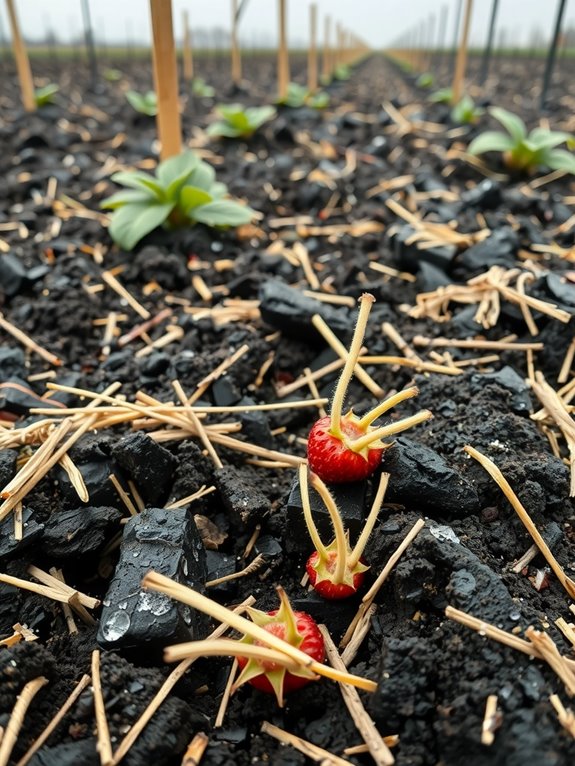
If you’ve got dormant strawberry plants ready to go, aim to plant them four to six weeks before your last frost date. In Ohio’s Zone 6b, that means late March to early April works best for getting them in the ground.
This timing matters because those four to six weeks let your strawberries develop a solid root system while the soil stays cool and moist. Better roots mean the plants can handle summer heat and produce more berries when the season arrives.
Keep an eye on your plants though. If you notice new shoots starting to pop up, wait before planting outdoors. Tender new growth can’t survive a late frost, so holding off until after frost danger passes keeps your investment safe.
Plant Crowns at Soil Level, Roots Down
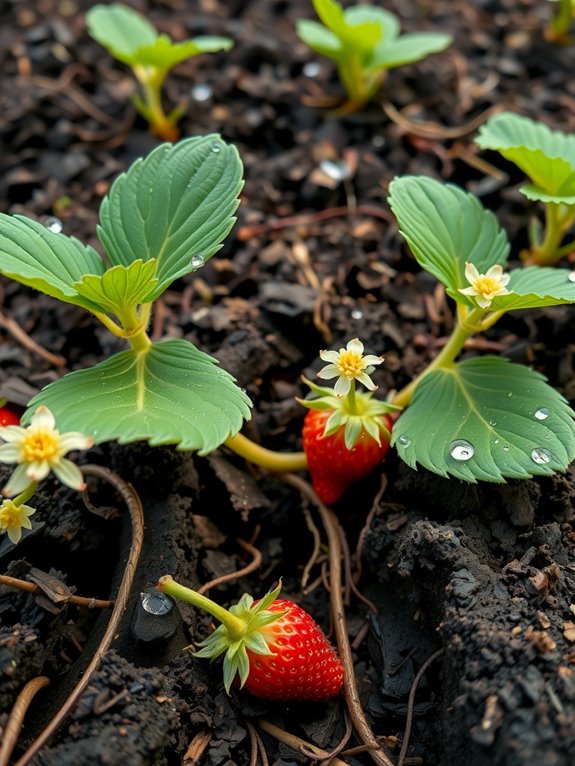
How you position that strawberry crown makes a real difference between plants that do well and ones that struggle right from planting day. You’ll want to plant your crown at soil level—right where the base meets the ground—without digging it deeper into the soil.
Spread the roots downward in a gentle fan shape, encouraging them to grow straight down rather than bending to the sides. For bare-root plants, set them in a shallow trench about 2-3 inches deep, cover the roots first with soil, then fill around them until your crown sits perfectly level with the ground surface.
After planting, firm the soil around it with gentle pressure and water thoroughly. This settles everything in place without washing away your careful work. You’re creating a solid foundation for the plant to establish itself and grow strong roots in the weeks ahead.
Choose a Full-Sun Bed With Well-Draining Soil
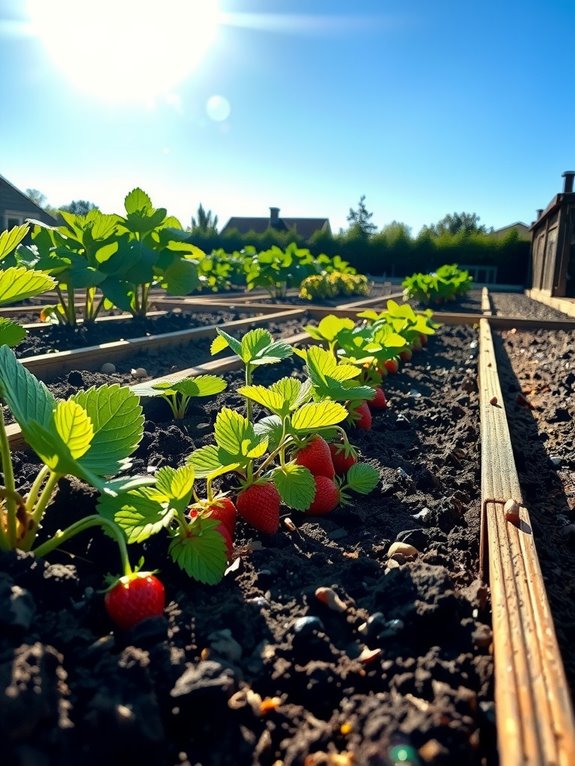
Your strawberries need at least six to eight hours of direct sunlight each day to develop their sweetest flavor and produce the biggest yields. Pick a south-facing spot if possible, since that gives you the longest stretch of strong afternoon light.
Equally important is soil that drains well. Wet, soggy ground invites root rot and crown rot, which’ll kill your plants fast. If your yard stays damp or clay-heavy, build a raised bed about twelve inches tall to keep excess moisture from pooling around the roots. A ridge system works too—just mound the soil up slightly to help water move away.
Before planting, work in two to three inches of finished compost to improve drainage and add nutrients at the same time. This gives your strawberries the loose, crumbly soil they prefer. Stay away from spots where potatoes, tomatoes, or sod grew recently. Those plants leave behind soil-borne pests and diseases that strawberries are particularly susceptible to, and you’ll just inherit the problems.
Sunlight Requirements For Growth
Where your strawberry bed sits substantially influences what you’ll harvest. You’ll want full sun—that’s at least 6–8 hours of direct sunlight daily for the best fruit production. This consistent light exposure maximizes both flavor and berry size, which means tastier harvests for your efforts.
Position your bed to catch strong morning light, which dries dew and prevents fungal issues from developing on foliage. In hot zones, afternoon shade shields berries from sunscald damage—that’s when the sun literally cooks the fruit on the side facing the heat. You’re aiming for that sweet spot where plants get their sunlight but stay protected from extreme afternoon intensity.
Open airflow around your plants matters just as much as the light itself. When moisture lingers on leaves, fungal problems creep in, so space your strawberries far enough apart that air can move freely between them. In Ohio’s Zone 6b, this means finding a spot that catches strong morning light while getting some afternoon protection from nearby trees or structures.
You’re not just planting strawberries—you’re setting up conditions where they actually produce well.
Soil Drainage And Amendments
What separates a strawberry patch that produces well from one that becomes waterlogged and fails? The quality of your soil drainage and how you amend it before planting.
You need loose, fertile soil rich in organic matter that allows water to flow freely without pooling around your plants. Work 2 to 3 inches of compost into your beds before planting to improve soil structure and drainage without compacting the earth. To test your soil’s drainage capacity, observe what happens after rain—if puddles stick around beyond 24 hours, you’ve identified a problem that needs fixing.
Poor drainage creates the perfect environment for root rot and fungal diseases that will damage your crop. If your Ohio soil drains slowly, build raised beds or ridges that lift roots above standing water, which becomes especially important during wet springs when moisture lingers in the ground.
Avoid planting where potatoes, tomatoes, or sod previously grew, since those residues leave behind pests and diseases that strawberries are susceptible to. The work you put into getting your soil right from the start pays off with healthier plants and better harvests later on.
Site Selection Best Practices
Finding the right spot for your strawberry patch might seem simple, but it’s actually where success begins. Location determines whether you’ll harvest sweet, plump berries or deal with rot and weak plants.
Look for a spot that gets six to eight hours of direct sunlight each day—strawberries need this light to develop their sugar content and flavor. Well-draining soil matters just as much, since strawberry roots sit shallow in the soil and quickly suffer in waterlogged conditions. If your yard tends to stay moist, raised beds filled with quality soil work well.
When you’re scouting locations, think about soil composition too. Strawberries prefer loose, fertile ground mixed with organic matter like compost or aged manure, which helps roots spread easily and access nutrients. Aim for soil with a pH between 6.0 and 6.8 for best results.
Also check what grew nearby before. Keep strawberry beds away from potatoes, tomatoes, and recently laid sod, since these can harbor diseases that strawberries catch easily. A spot that’s been growing grass or sitting empty for a season works better than ground that just held nightshade crops.
Good drainage prevents root rot and keeps your plants healthy from the start. Getting the foundation right from the beginning saves you from problems down the road.
Pinch Off Strawberry Blossoms the First Six Weeks
During the first six weeks after planting, remove every strawberry blossom that appears on your plants. I know this feels counterintuitive when you’re picturing bowls of fresh berries, but here’s why it works.
Those early flowers demand energy your plants desperately need elsewhere. By pinching them off, you redirect that energy toward building deep, spreading root systems and thicker, stronger crowns. Think of it like investing in your plants’ foundation before asking them to produce fruit. A robust root system means better water and nutrient uptake all season long, which leads to bigger harvests later.
This approach works across all strawberry types—June-bearing varieties, day-neutral, and ever-bearing alike. The timing matters most: once six weeks have passed, stop removing the blossoms and let them develop into fruit. Your early restraint pays off with noticeably larger yields when harvest time actually arrives.
Space Plants 12–24 Inches Apart for Air Flow
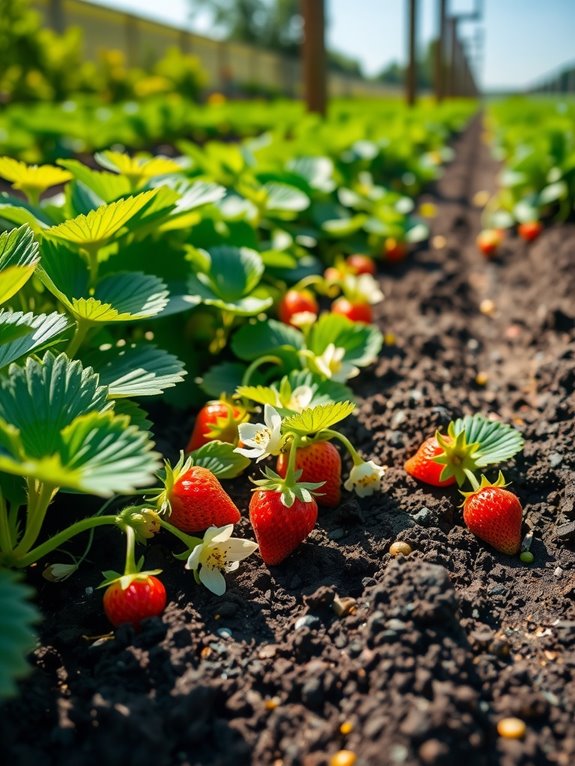
Once your strawberry plants have built strong roots and crowns, spacing becomes your next practical step. Position June-bearing strawberries 12–24 inches apart within rows, then keep 36–40 inches between rows themselves. This breathing room isn’t optional if you want healthy plants.
Proper spacing delivers real benefits:
- Reduces fungal diseases by letting air move freely around the foliage, which keeps humidity levels down where fungi can’t gain a foothold
- Prevents leaf crowding so moisture dries quickly after rain or watering instead of sitting on wet leaves
- Makes maintenance easier when you’re accessing plants for monitoring, picking runners, and spotting problems early
- Keeps your bed organized as plants send out runners and expand across the season
Think of it like giving each strawberry plant its own personal breathing space. You’re not cramming them shoulder-to-shoulder, you’re setting them up with the room they actually need to grow without fighting each other for air and light.
Water and Mulch Throughout Your First Season
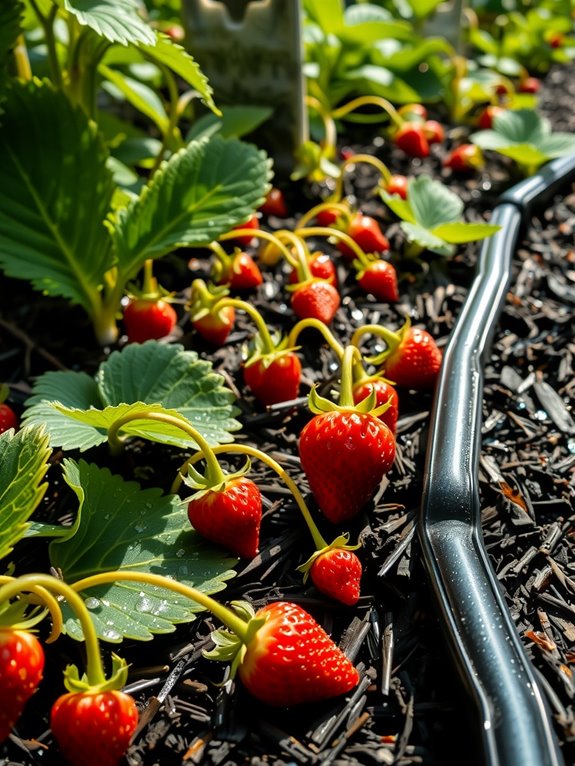
How do you keep newly planted strawberries from drying out while also preventing root rot? The answer lies in smart watering and mulching practices.
Set up drip irrigation or soaker hoses to deliver water consistently without drowning your plants. This approach keeps soil moist—not waterlogged—which is the sweet spot for healthy root development. Water deeply but let the soil dry slightly between waterings. Think of it like giving your strawberries a steady drink rather than dunking them in a bucket.
Apply 2–3 inches of straw or wood chips as mulch in spring. This protective blanket conserves moisture, suppresses weeds, and keeps your strawberry patch looking intentional rather than neglected. The mulch sits right on top of the soil, breaking the direct sun exposure that would otherwise bake away water quickly.
The combination works beautifully: mulch reduces evaporation while drip irrigation ensures steady hydration. Your first-season plants will establish stronger roots and crowns, setting you up for productive harvests ahead.