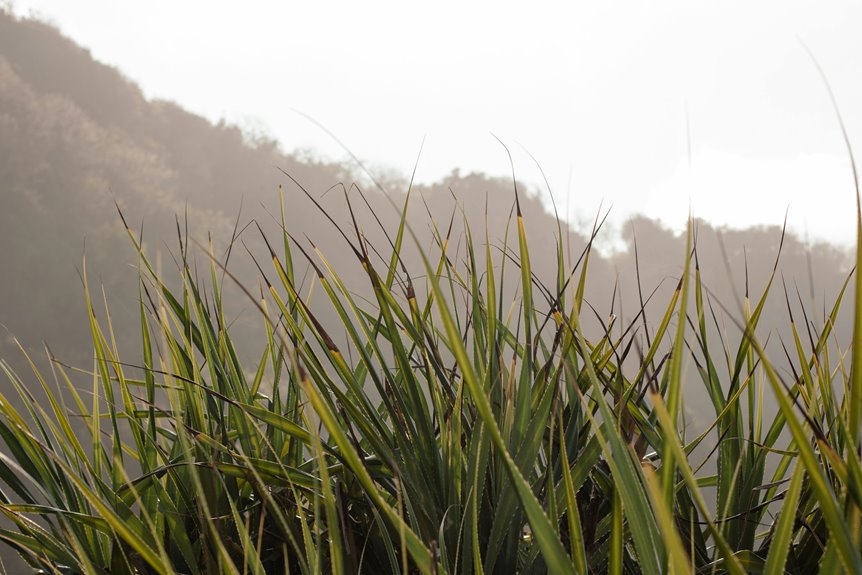
Your air plants need sunlight to stay healthy—without it, they’ll gradually weaken and eventually die. Aim for at least six hours of bright indirect light each day, which you can find near south, east, or north-facing windows. If your home doesn’t get enough natural light, full-spectrum LED grow lights work well as a backup. Run them for eight to twelve hours daily to give your plants what they need.
Light consistency matters more than you might think. Skipping light for a week causes real damage to your plants and can set back their growth. That’s why establishing a routine helps—your air plants count on steady light, just like they count on regular watering and air circulation.
If you’re wondering which window direction suits your specific plant type best, the answer depends on your local climate and how much direct sun each room gets. South-facing windows deliver the strongest light, while east and north-facing options provide gentler, more filtered illumination that works well for sensitive varieties.
Do Air Plants Need Sunlight?
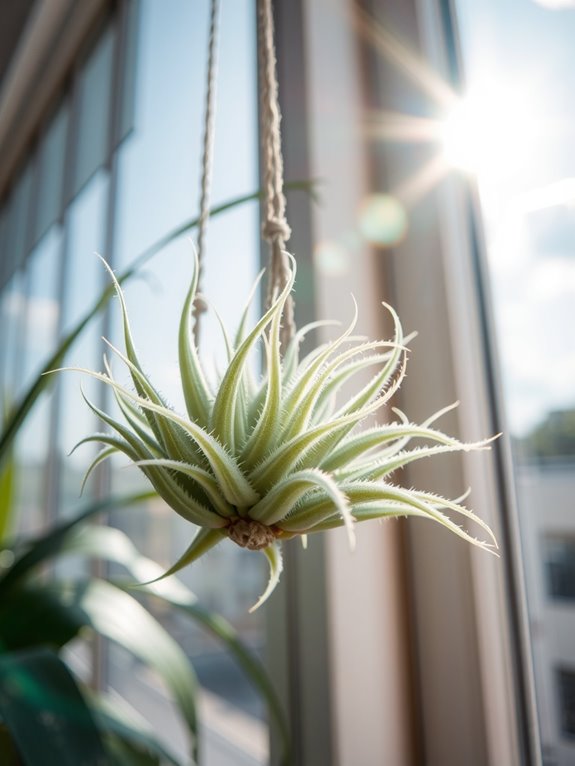
Your air plants absolutely need light to survive—there’s no getting around this one. Without adequate light, they’ll gradually weaken and eventually die, so it’s worth taking seriously.
The good news is you have real flexibility with how you provide it. Bright indirect light works best, which you can find near south, east, or north-facing windows. Aim for at least six hours daily of this filtered sunlight. Direct afternoon sun, though, can actually scorch the leaves on many varieties, so you’ll want to avoid positioning them in harsh, unfiltered rays.
If your space doesn’t get enough natural light, artificial lighting fills the gap nicely. Full-spectrum bulbs—the kind designed specifically for plants—will keep your air plants healthy when run for eight to twelve hours each day. The key is consistency rather than perfection. Pick a reliable light source, whether it’s a sunny window or a grow bulb, and stick with it. Your plants will respond with steady growth when they get dependable light day after day.
How Many Hours of Light Do Air Plants Need?
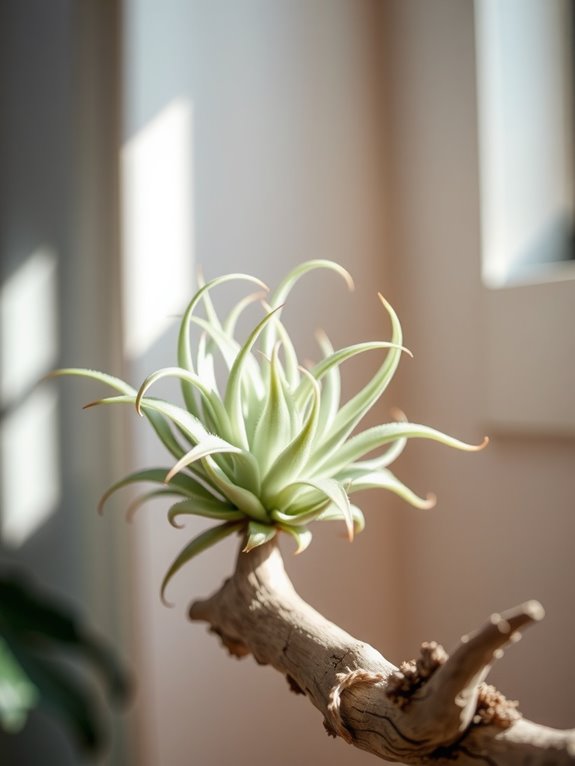
Your air plants will do best with at least 6 hours of bright, indirect sunlight each day, which keeps their leaves perky and their growth steady. Think of it like charging a battery—they need that regular light exposure to maintain their energy levels.
If your living space doesn’t get enough natural light, artificial lighting works just fine as a backup. Aim for 8–12 hours daily using full-spectrum LED or fluorescent bulbs, which mimic the wavelengths plants actually use for photosynthesis. The difference between natural and artificial light matters less than you’d think; what really counts is getting consistent exposure day after day.
The consistency part is where most people slip up. Whether you’re placing plants on a sunny windowsill or positioning them under grow lights, they need that steady daily dose to stay healthy. If you skip light for a week, your air plants will start to weaken and won’t bounce back as quickly. Set up a routine—maybe check your plants around the same time each morning—so you don’t accidentally neglect them.
Minimum Daily Light Hours
Air plants need at least 6 hours of bright, indirect sunlight each day to grow well and maintain their color. This baseline amount of light keeps them healthy without the risk of damage that direct sun can cause.
If your home doesn’t get much natural light, grow lights work just fine. Run them for 8–12 hours daily, and your air plants will do well. What matters most is keeping the light exposure consistent rather than worrying about exact timing.
Direct sunlight will scorch and dry out air plant leaves quickly, so avoid placing them on a south-facing windowsill without any filtering. Instead, position your plants 1–3 feet away from east- or west-facing windows. This distance and direction give you the balance you need—enough light to keep them healthy without the harshness that causes damage.
Artificial Light Duration Guidelines
Artificial grow lights work well when natural sunlight falls short, and they’re straightforward enough for most people to manage successfully. Maintain a consistent photoperiod of 8–12 hours daily to keep your air plants healthy and actively growing.
Position fluorescent or full-spectrum LED grow lights 6–12 inches above your plants for the right light exposure. The specific distance matters because lights placed too far away won’t deliver enough energy, while lights too close can stress delicate foliage. Set a timer to stick with your chosen schedule—consistency in timing matters more than cranking up the intensity.
Rotate your plants every few days so all sides receive balanced light exposure and develop evenly. Watch for signs of healthy growth: leaves should look vibrant and feel firm to the touch, not droopy or pale. The appeal of artificial lighting is simple—you control the timing, placement, and duration, which removes the guesswork that comes with relying on seasonal sunlight changes.
Do Light Needs Differ by Plant Type?
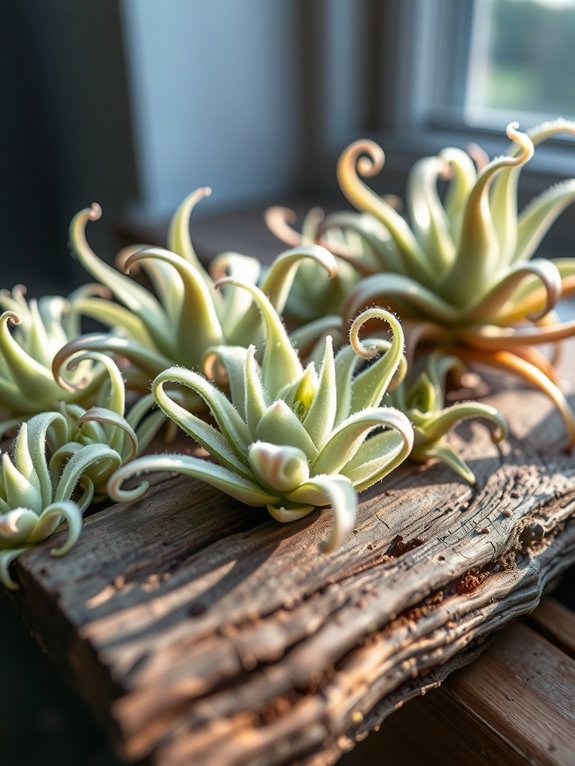
Your air plant’s light needs depend entirely on which type you’re growing, and this difference really matters for keeping it healthy. Green-leafed varieties require at least 6+ hours of bright, indirect light each day to stay happy. Their silvery-leafed relatives, called xeric types, come from dry climates and handle things differently—they tolerate direct sun and actually do fine in lower light conditions. Tropical mesic plants fall somewhere between these two extremes.
Knowing which category your plant belongs to shapes how you’ll position it in your home. A sun-loving xeric type can sit near a sunny window and won’t mind the direct rays, while a green-leafed variety would get scorched in that same spot. The green types prefer a spot where bright light filters through a sheer curtain or bounces off a nearby wall. Getting this distinction right keeps your plant from slowly declining under the wrong conditions.
Green Vs. Non-Green Leaves
Not all air plants handle light the same way, and knowing the difference helps you place them where they’ll actually do well. Your green-leaved varieties need at least 6 hours of bright indirect light each day to keep their color and energy up. Non-green types like Tillandsia Caput-Medusae and Butzii are the laid-back cousins of the air plant family—they’re perfectly fine in shadier spots.
Green leaves need consistent bright indirect light to maintain their color and vigor without getting scorched. Non-green varieties genuinely prefer shadier conditions and won’t suffer or weaken when you place them away from direct sun. Direct harsh sunlight can actually damage green-leaved plants, so filtered light through a sheer curtain works better than an open window.
Both types respond well to artificial lighting like standard LED grow lights positioned 12 to 24 inches above the plant. Non-green plants need shorter daily exposure—around 8 to 10 hours—while green varieties benefit from 12 to 14 hours under artificial light. The practical takeaway here is simple: matching your plant type to the light your home naturally provides means less fussing and healthier plants overall.
Mesic And Xeric Types
Why do some air plants thrive on your bright windowsill while others seem happier tucked away in a corner? The answer lies in understanding mesic and xeric types—two distinct plant personalities with different light demands.
| Type | Light Preference | Direct Sun Tolerance |
|---|---|---|
| Mesic | 6+ hours bright indirect light | Low; prone to stress |
| Xeric | Stronger, brighter light | High; very forgiving |
Mesic air plants sport greener leaves and need moisture along with gentler light conditions. Position them near a window where a sheer curtain filters the sunlight, keeping those intense afternoon rays from hitting the foliage directly. Think of it like giving them dappled shade—the kind you’d find under tree branches in nature. These plants came from forest environments where they grew attached to trees, so they’re used to partial shade.
Xeric varieties wear silvery or grayish foliage and actually thrive in stronger light situations. Their drought-tolerant leaves handle direct sun exposure well, especially morning light that’s less intense than afternoon rays. You can stick these in a south-facing or west-facing window without worrying about leaf damage or stress. They originated in dry, open environments where nothing filtered the sunlight, so they’ve adapted to handle it.
Matching your plant’s type to your home’s lighting creates the right conditions for healthy growth. A mesic plant in low light might develop pale leaves and stay smaller, while a xeric plant in dim corners may grow slowly and feel unnecessarily deprived. Spend a few days observing which areas of your home get bright indirect light versus direct sun, then place your plants accordingly. This simple observation takes about five minutes and makes a real difference in how well your air plants perform.
Tropical Versus Dry Climate
Your air plant’s light needs depend entirely on where it originally grew, and knowing this one detail changes everything about your care routine.
Tropical air plants evolved in forest understories where sunlight filters through layers of leaves and branches. They’re accustomed to bright but indirect light—think of that dappled shade on a forest floor. Their tender, green leaves actually get scorched by harsh direct sun, so placing them near a window facing south or west without some filtering works against their nature. A sheer curtain between the plant and midday rays keeps them happy and prevents that papery, bleached look that signals sun damage.
Xeric varieties tell a completely different story. These silvery-leafed plants come from arid regions where the sun beats down relentlessly with nothing to soften it. Their pale, waxy coating reflects intense light and heat rather than absorbing it, so they genuinely love sunny windowsills and don’t flinch from direct afternoon rays. You can place them in the brightest spot available without worry.
Xerographica is the exception that proves the rule. This popular variety tolerates full sun despite its tropical origins, which means it offers more flexibility if your bright-indirect options are limited.
Mesic air plants—those middle-ground species—prefer moderate light conditions and adapt reasonably well to both bright indirect and some direct morning sun. They’re useful if you’re uncertain about your plant’s exact origin, since they handle a wider range without complaint.
Matching light to origin means your plants get conditions similar to what they evolved to handle, so they’ll stay healthy and display their natural colors rather than looking stressed or faded.
What’s the Best Window for Your Air Plant?
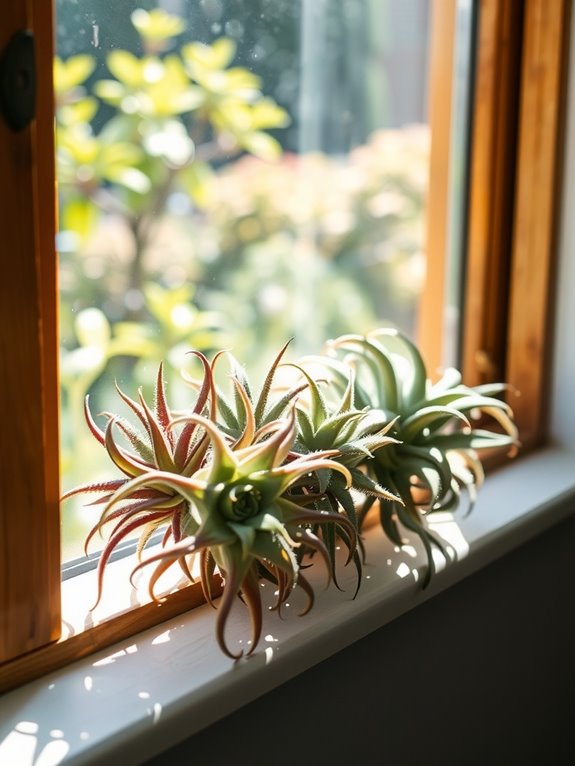
Your air plant’s happiness hinges on finding it the right window—and honestly, you’ve got plenty of options to work with. South-, east-, and north-facing windows all deliver the bright indirect sunlight your plant needs for at least six hours daily. West-facing windows work too, though that intense afternoon sun can scorch leaves, so filter it with sheer curtains or blinds to dial back the intensity.
Here’s where knowing your specific plant matters. Silver-leafed varieties can handle more direct rays than their green-leafed cousins, so check which type you’ve got before positioning it near a sunny spot. If your space feels light-starved, rotating plants every couple of weeks helps them grow evenly on all sides rather than reaching toward the nearest light source.
The real strategy is simple: choose the window you’ve got available, watch how your plant responds over a few weeks, and adjust as needed. Most air plants are pretty forgiving about finding their sweet spot.
What If Your Home Doesn’t Get Enough Light?
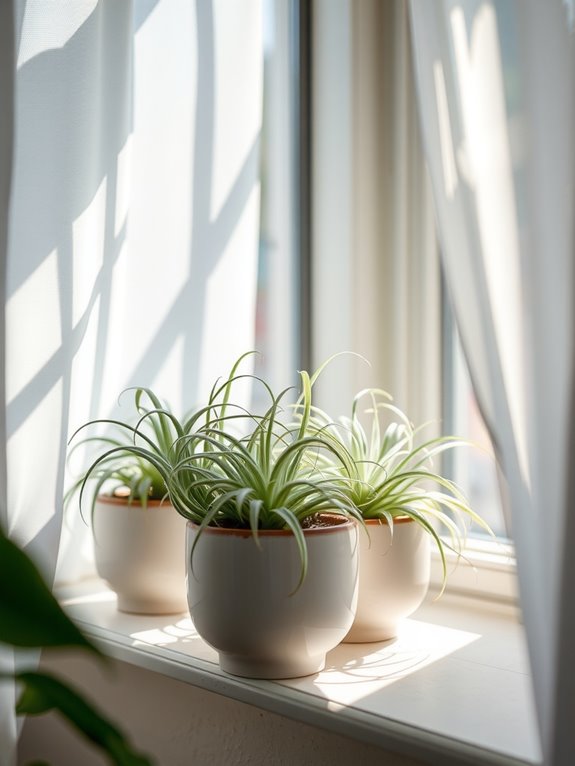
If your home doesn’t get enough natural light, there are straightforward ways to keep your air plants healthy. Fluorescent or full-spectrum LED grow lights running 8–12 hours daily provide the wavelengths plants need to photosynthesize and grow steadily. If you prefer to work with what you’ve got, certain varieties handle low-light better—non-green air plants, for instance, typically tolerate dimmer spaces more easily than their green-leafed cousins.
The practical approach combines multiple strategies. Position your plants as close as possible to whatever natural light enters your space, then layer in artificial lighting to fill the gaps. This dual approach gives you real flexibility, letting you succeed even when your rooms don’t get much sun. You’re essentially working with what nature provides while supplementing strategically, rather than relying solely on one solution.
Artificial Light Solutions
Not every home gets blessed with bright, sunny windowsills—and that’s totally okay for air plant parents. You can absolutely grow healthy air plants using artificial light instead. Full-spectrum or LED grow lights work wonderfully for these adaptable plants.
Here’s what you need to know for success:
Position lights 6–12 inches above your plants to avoid heat damage while ensuring adequate exposure. Run your artificial light setup for 8–12 hours daily to mimic natural daylight cycles. This consistent schedule matters more than the intensity of your light source.
Rotate your plants periodically so they grow evenly on all sides. This prevents them from leaning toward the light and developing lopsided growth patterns.
Watch for stress signals like color loss or curling leaves, and adjust your setup accordingly. Maybe your light is too intense, or perhaps it’s positioned too close to sensitive foliage. A little observation goes a long way in figuring out what works best for your specific plants.
Your air plants don’t need natural sunlight—they need consistent, quality light delivered on a regular schedule. By positioning your artificial light thoughtfully and maintaining that daily rhythm, you’re creating a stable growing environment where air plants can develop properly.
Low-Light Tolerant Varieties
What if your apartment gets mostly shade, or your workspace sits far from windows? You’re not out of luck. Certain air plants actually thrive in low-light conditions, making them perfect companions for dimmer spaces. Varieties like Tillandsia Caput-Medusae, Tectorum, and Butzii tolerate lower light far better than their green-leaved cousins. These non-green varieties can survive with surprisingly minimal indoor light levels.
Position them near windows with filtered or indirect light—east or north-facing spots work wonderfully. When natural light falls short, artificial lighting steps in nicely. Full-spectrum LED or fluorescent lights running eight to twelve hours daily keep your plants healthy and growing steadily. Rotate them periodically to make sure all sides catch decent light exposure. The mix of natural and artificial light gives you real flexibility in where you can place these plants around your home or office.
Supplementing Natural Brightness
When your home’s natural light just won’t cut it, artificial grow lights offer a reliable backup plan. Full-spectrum LEDs or fluorescents work wonderfully when indirect sunlight falls short. Position your air plants 6–12 inches below or above the light source and run it for 8–12 hours daily. This supplemental lighting keeps your plants healthy and growing steadily.
Here’s what makes this approach work:
- You’re never stuck with dim corners anymore—bring brightness exactly where needed
- Grow lights fit any budget, from basic fluorescents to trendy LEDs
- Your plants stay healthy year-round, even during gloomy winter months
- You’ll join other indoor gardeners who’ve solved this same challenge
The reasoning is straightforward: consistent light exposure mimics the sun’s natural patterns, which air plants depend on for photosynthesis and steady growth. Whether you pick affordable fluorescent tubes or pricier full-spectrum LEDs, the main thing is getting light in the right spot for the right amount of time.
Combine bright indirect natural light with supplemental lighting when needed, and you’ll maintain good color and steady growth throughout the year.
Can Artificial Grow Lights Replace Natural Light?
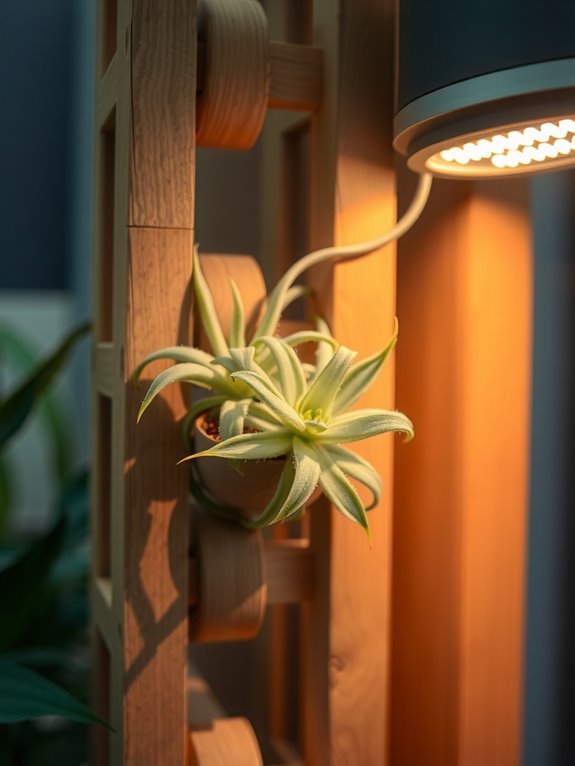
You don’t need a sunny windowsill to keep your air plants healthy. Artificial lighting works just as well as natural sunlight when you set it up correctly. Fluorescent lights and full-spectrum LED grow lights are your best options for this job.
Position your grow lights between 6 and 12 inches above your air plants, then run them for 8 to 12 hours each day. This mimics the light cycle your plants would get from the sun without any of the windowsill inconsistencies. The steady brightness your plants need becomes much easier to control indoors.
Check your light coverage every few days and rotate your plants if some areas seem dimmer than others. Uneven lighting leads to lopsided growth where one side gets stronger than the rest. Too little light will make your plants droop and lose their color, while too much brightness can actually scorch them, meaning you might need to add some shade cloth between the light and your plants.
Is Direct Sunlight Good or Bad for Air Plants?
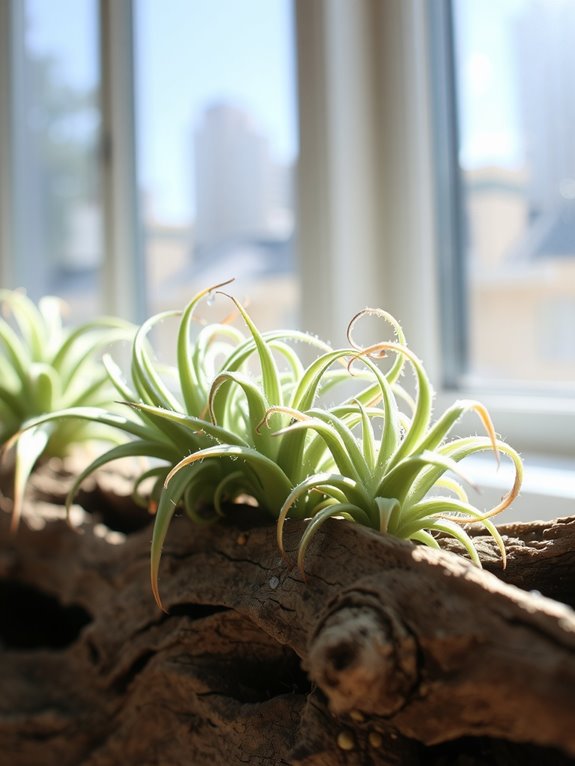
it’s complicated. Most varieties actually prefer indirect light, as harsh rays can deplete moisture and cause real damage. However, some silver-leafed varieties and xerographs genuinely tolerate direct sun better than others.
Watch for sunburn. Stress symptoms appear as browning or bleaching on the leaf surface. If you notice these signs, your plant is telling you the light intensity is too strong.
Water matters more in direct sun. Plants receiving 4+ hours of direct rays need watering every 2-3 days instead of the typical weekly soak. The intense heat accelerates moisture loss from both the leaves and the air around them.
Winter rays are gentler. Cool-season sunlight from November through February won’t harm sun-tolerant varieties as much because the sun sits lower in the sky and its rays pass through more atmosphere.
Bright, filtered spots keep most air plants healthy. Think of placing your plant near an east-facing window with a sheer curtain, or a few feet back from a south-facing window. This arrangement gives you the brightness your plant craves without the scorching intensity.
If your plant shows stress, relocate it to bright indirect light with some shade. Finding that balance takes a bit of observation—watch how the light falls in your space at different times of day, and you’ll quickly figure out what works for your specific plant.
What Does Light Deprivation Look Like?
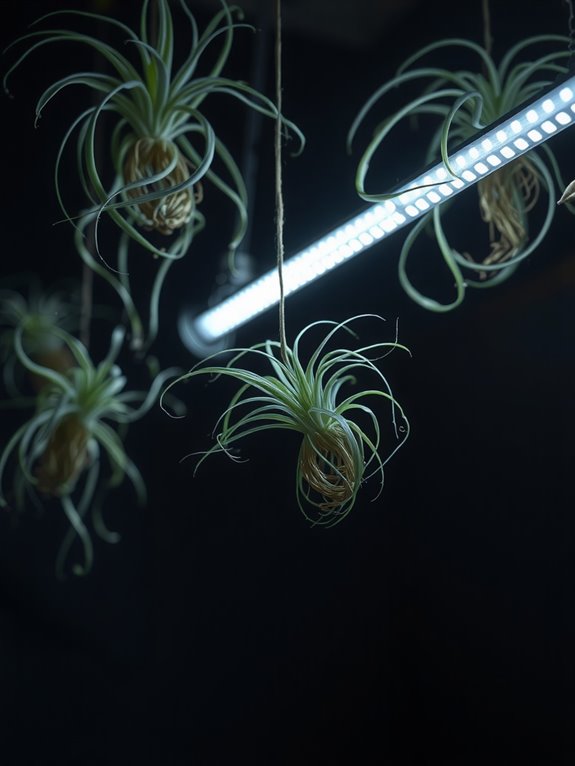
Your air plant won’t announce its light shortage with dramatic wilting—instead, the signs show up quietly over weeks. You’ll spot the problem when leaves gradually lose their bright green color and turn into a dull, grayish-green that tells you something’s off. The foliage starts curling inward as a defensive move, and you’ll notice growth basically stops. Leaves become soft and droopy, sometimes even falling off your display entirely.
Most air plants need at least 6+ hours of bright, indirect sunlight each day to stay healthy. If you’re seeing these warning signs, your first move should be repositioning your plant closer to a window where it gets natural light. If window placement isn’t possible, set up full-spectrum LED grow lights positioned 12 inches above your plant and run them for 8–12 hours daily. These lights mimic natural sunlight and work well in offices or dark corners. The sooner you catch light deprivation, the faster your plant bounces back and the less chance of permanent damage to its leaves and growth patterns.
What Does Too Much Sun Look Like?
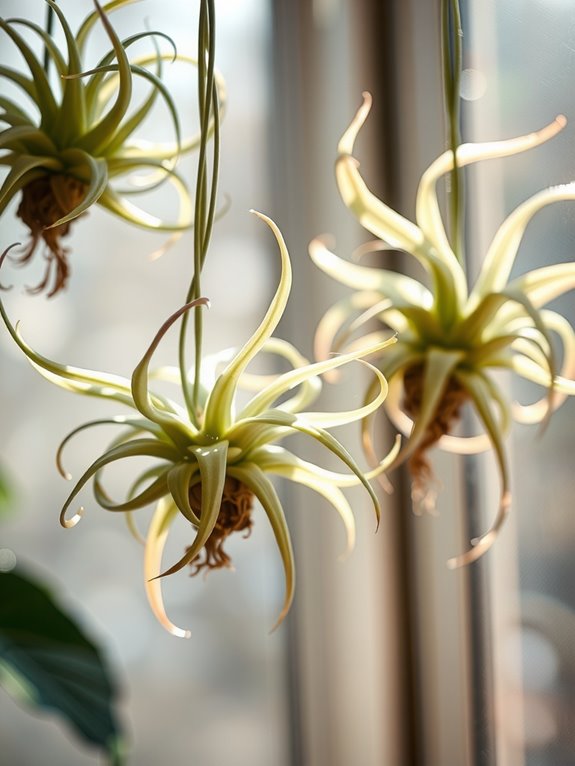
Can too much of a good thing harm your air plant? Absolutely. While your plant needs sunlight, excessive direct exposure causes real damage that you’ll want to prevent.
Watch for these telltale signs of sun damage: Brown, crispy leaf edges that feel papery to the touch. Faded or bleached leaves losing their vibrant color. Yellowing leaves that curl inward. A dry, withered appearance overall signals light stress.
Most tropical green-leaved varieties struggle with harsh direct sun, especially during summer months when the sun’s intensity peaks between 10 a.m. and 4 p.m. Silver-leafed xeric types handle more intensity, but even they appreciate breaks from the strongest afternoon rays.
If you spot these warning signs, move your plant to indirect light immediately. Consider shading it with sheer curtains or placing it near a window where sunlight filters through a thin fabric barrier rather than hitting the leaves directly. This reduces light intensity by roughly 50 to 70 percent, depending on the curtain thickness. Your air plant will recover when it gets the gentle, filtered sunlight it truly needs.
How to Adjust Your Setup When Light Is Wrong
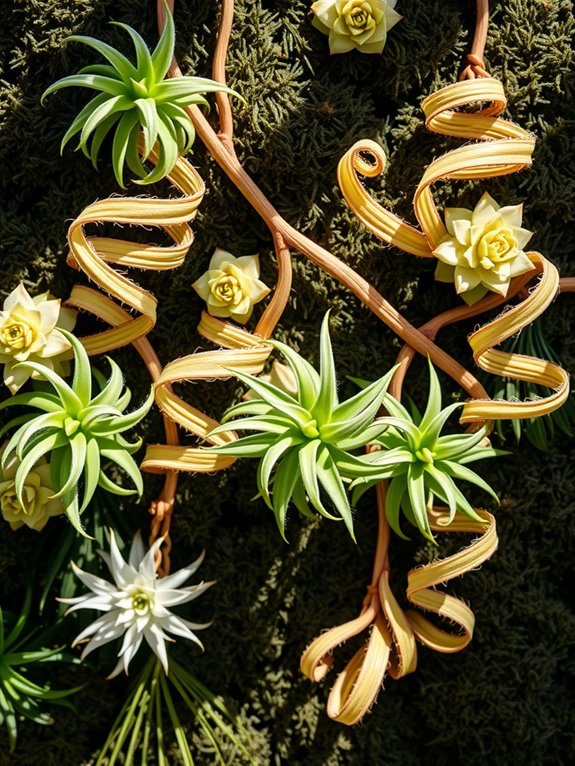
Once you’ve figured out that your air plant needs a light adjustment, here’s the reassuring part: you don’t need special equipment or to rearrange your whole room. A few straightforward moves will get your plant back on track.
| Problem | Solution |
|---|---|
| Too much direct sun | Move plant 1–3 feet from window or use sheer curtains |
| Weak, leggy growth | Relocate to brighter indirect light or add grow lights |
| Scorched leaves | Shade with blinds, especially November through March |
| Insufficient natural light | Install artificial grow lights for 8–12 hours daily |
| Uneven growth patterns | Rotate plant weekly for balanced sun exposure |
Start by positioning your plant near an east- or west-facing window where light comes in softer and more indirect. South-facing windows work fine too, but you’ll want to filter some of that intensity with sheer curtains or blinds. If you’re making a big shift in how much light your plant gets, take it slowly rather than moving it all at once. Your air plant adapts better to gradual changes. The real payoff comes from keeping conditions steady over time, not from hitting some perfect setup right away.
When you’re deciding where to put your plant, think about what the light actually does to the leaves. If you see scorching or bleaching, that’s your signal to pull it back from the window or add a filter. If growth looks pale and stretched out, your plant’s telling you it’s hungry for brighter light and might benefit from grow lights running 8 to 12 hours daily. A simple weekly rotation keeps all sides of the plant getting equal attention, which prevents that lopsided look where one side grows faster than the other.
Putting It Together: Your Complete Light Guide
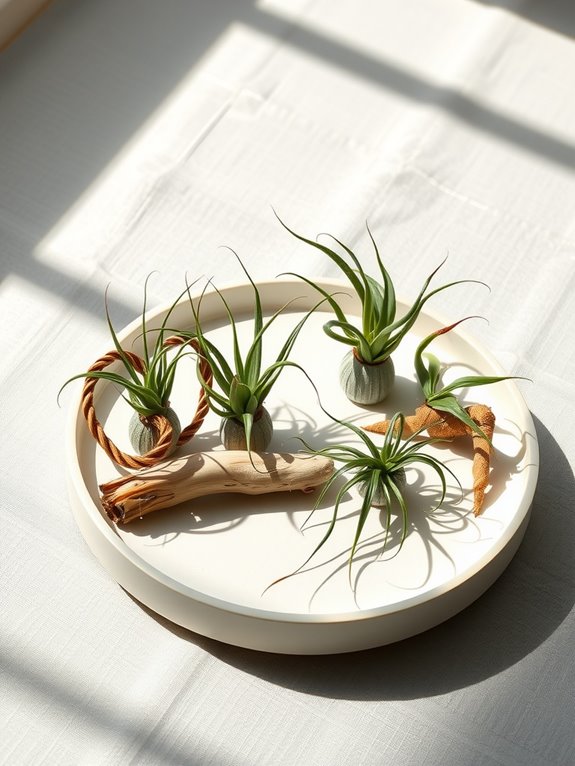
So here’s where everything comes together: your air plant thrives on about 6 hours of bright, indirect sunlight each day, and that’s the foundation for everything else you’ll do.
Positioning your plants correctly makes the real difference. South, east, or north-facing windows deliver reliable bright indirect light without scorching leaves. West-facing spots work beautifully when you filter the harsh afternoon rays with sheer curtains—think of the fabric softening that intense 2–4 PM sun into something gentler. Grow lights running 8–12 hours daily fill the gaps when natural sunlight falls short, which matters especially during winter months or in rooms without quality window access.
Pay attention to your plant’s signals as seasons shift. Leaf color changes tell you whether your setup is working or needs tweaking. Xeric and silver-leafed varieties can handle more direct sun than other types, but they’ll need water more frequently when exposed to intense rays—basically, more light means more evaporation. Monitor your plants every week or two and adjust their position as the sun’s angle changes throughout the year.