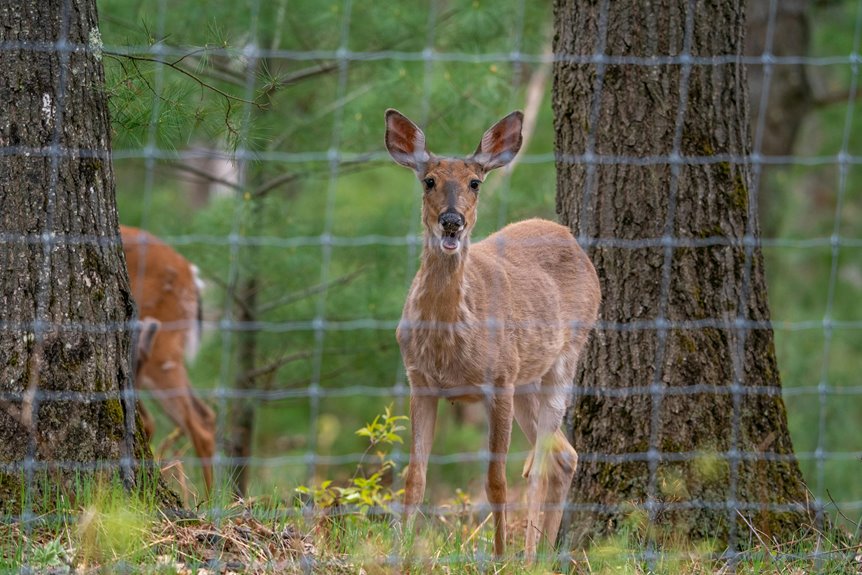
Yes, deer absolutely eat blueberries—leaves, shoots, berries, and all. They’re drawn to the natural sugars and nutrients, especially during spring when new growth is tender and packed with energy. The good news is you have several solid options to keep them away from your bushes.
Tall fencing remains your most reliable defense. A barrier that reaches 7 to 8 feet high stops most deer since they’re reluctant to jump into an uncertain landing space. If a full fence isn’t practical, layering chicken wire around individual plants works reasonably well. The wire creates a physical obstacle that feels risky to navigate, and deer prefer easier meals elsewhere.
Netting draped directly over plants prevents deer from reaching berries while still allowing sunlight and rain through. Secure the edges to the ground so curious deer can’t nudge underneath. For a less intensive approach, repellent sprays containing capsaicin make plants taste unpleasant. Irish Spring soap hung in mesh bags around your plants also deters browsing—the strong smell signals danger to deer.
Combining two or three methods works better than relying on one. A fence paired with occasional capsaicin spray, for instance, addresses both physical barriers and sensory deterrents. Timing your setup matters too. Install fencing or netting before June when berries ripen, since that’s when deer interest peaks. Rotating between different repellent types prevents deer from getting accustomed to one particular smell or taste over time.
Do Deer Eat Blueberries?
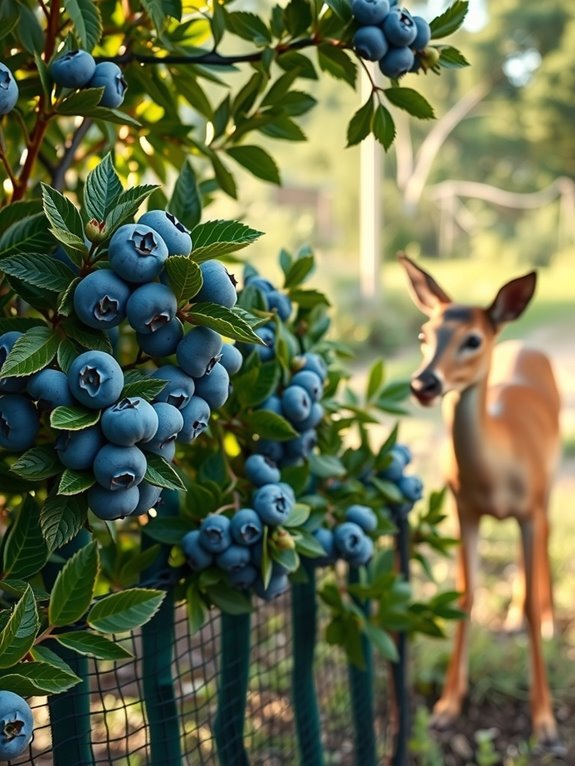
Why would deer pass up a blueberry bush when they’re hungry? They won’t. Deer are opportunistic grazers who’ll eat nearly anything within reach, including your blueberry plants’ leaves, stems, shoots, flowers, and berries—both ripe and unripe.
Deer are opportunistic grazers that will eat nearly anything within reach, including your blueberry plants’ leaves, stems, shoots, flowers, and berries.
Blueberries appeal to deer for solid reasons. These berries pack high-energy natural sugars and vitamins that deer actively seek out, especially when other food sources dwindle as seasons change. The tender new growth on your plants tastes particularly appealing to them, which is why deer keep coming back to the same patch throughout the growing season.
That repeated browsing causes real damage to your plants. Young blueberry bushes get weakened and stunted in their growth, while mature plants produce fewer berries overall. If you live in an area with heavy deer populations, protecting your blueberry patch becomes necessary rather than optional.
Early season typically brings the most aggressive browsing pressure in many locations. Staying alert during spring and early summer—when deer need to rebuild body condition and plants have the most tender growth—matters most for keeping your bushes intact.
Why Blueberries Attract Deer (And When Damage Happens)
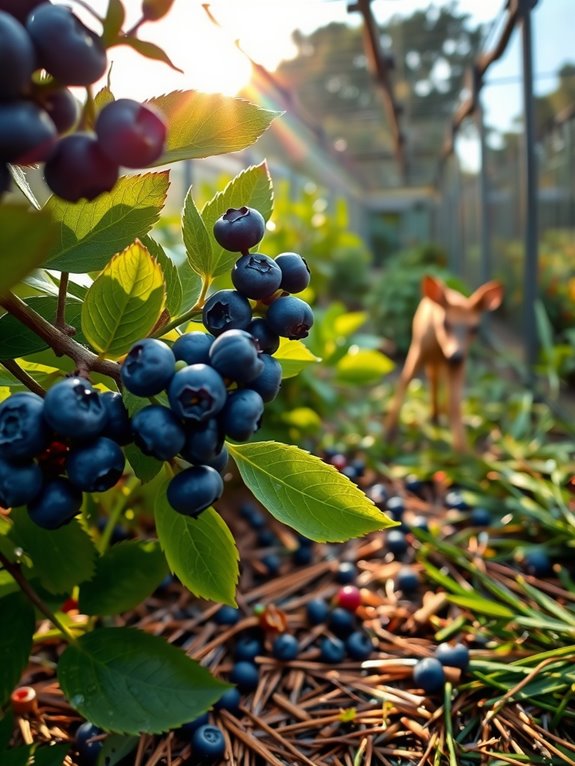
Your blueberry bushes look like an all-you-can-eat buffet to deer because those berries contain natural sugars and vitamins that hungry deer actively seek, especially when snow covers other food sources or late-season browse becomes scarce. The damage typically peaks in early spring when tender new growth emerges, making young leaves and stems easy targets that deer can strip down quickly.
What complicates your deer problem depends on your specific location. If your property sits near a forest edge or within a quarter-mile of a stream or pond, deer have both shelter and water nearby, making them bolder about visiting your yard. The presence or absence of natural predators like coyotes in your area also matters—areas with active predator populations see less aggressive deer browsing. Whether you’ve already installed fencing, used repellent sprays, or planted deterrent plants around your property all factor into how frequently and heavily deer will target your blueberries.
Nutritional Value and Energy
How’d you like a snack that’s packed with natural sugars and loaded with vitamins? That’s exactly what deer think when they spot your blueberry bushes. You’re dealing with plants that offer readily available energy—something deer desperately crave, especially when other food gets scarce.
Blueberries contain vitamin C and vitamin K, making them nutritional powerhouses that attract hungry deer year-round. When winter arrives and forage dwindles, your bushes become an irresistible buffet. Even unripe berries appeal to them because those natural sugars still deliver quick energy.
| Nutrient | Purpose | Deer Appeal |
|---|---|---|
| Natural Sugars | Quick Energy | High |
| Vitamin C | Immune Support | High |
| Vitamin K | Blood Health | High |
| Fiber | Digestion | Medium |
| Antioxidants | Cell Protection | Medium |
This nutritional profile explains why deer browse leaves, stems, shoots, and flowers alongside the ripe fruit. A deer can consume up to 7 pounds of vegetation daily, and your blueberry plants offer them concentrated nutrition in one convenient location. The combination of accessible energy and immune-boosting vitamins makes them particularly attractive during late fall and winter months when deer need maximum caloric intake. Think of your bushes as a 4-to-6-foot-tall convenience store stocked with exactly what deer’s bodies are asking for at the hungriest times of year.
Seasonal Availability and Accessibility
Timing matters more than you might think when it comes to protecting your blueberries from deer. When those berries start showing color and ripening, your bushes suddenly become the most appealing food source in the neighborhood. That’s when deer pressure peaks, especially if water, shade, and cover sit nearby—those features make your property feel like a five-star resort to hungry deer.
Early in the season, when new growth emerges in spring and early summer, the tender shoots and developing berries present easy targets. Hungry deer actively search for high-energy foods during these months, so this is when you’ll want to install bird netting or fencing before the real damage begins. A 6 to 8-foot fence works well for most situations, though 4-foot netting around individual bushes offers a less obtrusive option if you’re protecting just a few plants.
Understanding these seasonal patterns lets you stay ahead of trouble rather than scrambling to fix damage after it happens. Repeated browsing stunts growth and tanks your yields, so prevention installed at the right moment protects both fruit and plant structure. The window between spring growth and peak ripening in mid-to-late summer is your critical intervention period.
Plant Vulnerability During Growth
Why do deer seem magnetically drawn to blueberry bushes, especially when you’ve worked hard to establish them? The answer lies in timing and vulnerability. Your blueberry bushes offer exactly what deer crave: high-energy natural sugars that fuel their bodies, essential vitamins during lean seasons, and tender new growth that’s incredibly palatable. Fresh shoots appearing in early spring and both ripe and unripe berries year-round make your patch an all-you-can-eat buffet.
You’ll notice deer damage peaks when your plants push out that tender new growth. Young bushes face serious risk because they lack established defenses—their bark is thinner and their branches more flexible and easy to snap. Mature plants aren’t safe either, though. Repeated browsing stunts growth and crushes your yield expectations by preventing the plant from building up reserves for next season’s fruit production.
Early season pressure hits hardest before you’ve implemented protective measures consistently. Once deer discover your patch tastes good, they’ll return regularly, often following the same trails and visiting at dusk and dawn when visibility is low. That’s when real trouble starts, as a single deer can eat 5 to 10 pounds of vegetation daily during peak feeding times.
Quick Defenses: Repellents and Scare Tactics
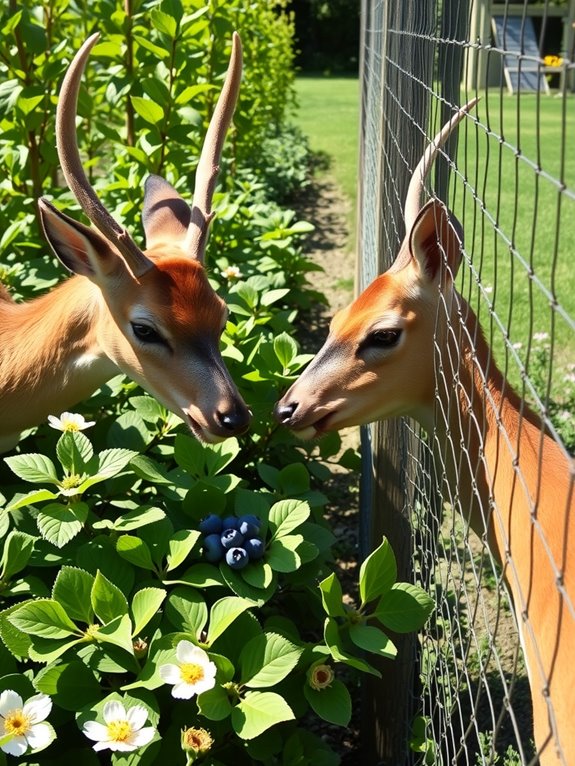
When deer start eyeing your blueberry bushes like an all-you-can-eat buffet, you have options before surrendering your crop. Quick deterrents can buy you time while you build stronger, lasting barriers.
Hang bars of Irish Spring soap in mesh bags around your plants—space them about 3 to 4 feet apart for even coverage. The strong scent disrupts deer’s ability to locate your plants, though results vary depending on how sensitive local deer have become to it. Deer sprays offer another non-toxic option, typically containing capsaicin or rotten-egg solids that taste bad enough to discourage browsing.
Visual scare tactics work surprisingly well too. Scarecrows or holographic eye balloons—those reflective balloons with large black dots that mimic predator eyes—convince deer your garden feels risky. Position them where they move slightly in the breeze, since stationary objects lose effectiveness after a few days. Deer notice when decoys never change position, so rotating their location every week or two keeps them from figuring out the trick.
The real payoff comes from combining repellents with physical barriers like fencing or netting. Neither approach works alone long-term, but layering them creates protection that lasts through the season. Repellents handle early pressure while you install permanent defenses, and then those barriers carry you through when hungry deer become bold.
Physical Barriers: Fencing, Cages, and Netting
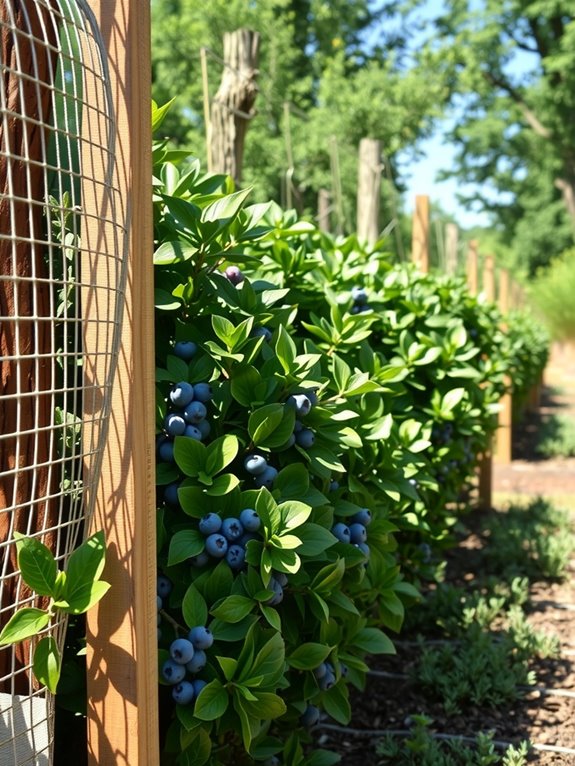
If repellents and scare tactics feel like temporary solutions, physical barriers are your next step—they actually stop deer instead of just annoying them.
You’ve got several solid options depending on your setup. A six- to eight-foot deer fence works well, built with chain-link or nonclimb horse wire, straight arms, and multiple strands. For smaller areas, consider these approaches:
- Tall fencing cages using 8-foot barriers with posts spaced 5–10 feet apart
- Chicken wire layers (two 4-foot layers stacked for larger gardens)
- Netting over hoops for individual plants or garden rows
- Small-mesh netting (1/4 inch openings) draped like protective tents
- Durable connections using hose clamps and welded T-post connectors instead of zip ties, which fail over time
The key with netting is consistency—leave it on year-round to protect ripening berries. Remove it temporarily, and deer will find their way in. This type of barrier requires upfront work and materials, but the payoff comes from actually keeping damage off your plants rather than managing it after the fact.
Building a Deer-Proof Blueberry Cage (Step-by-Step)
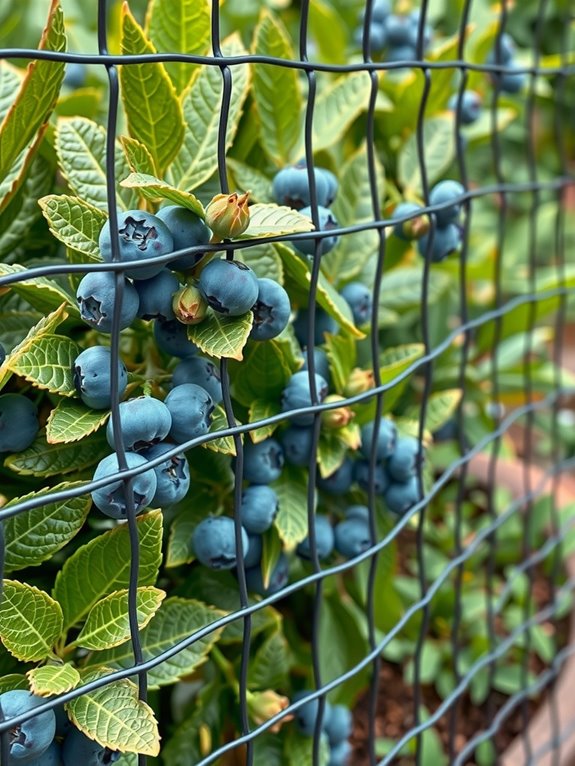
Ready to build something that actually works? Start by creating a sturdy frame using 8-foot posts spaced 5–10 feet apart, then connect them with 10-foot lengths of conduit. This rigid structure becomes your fortress against deer browsing.
| Component | Material | Purpose |
|---|---|---|
| Posts | 8-foot tall | Main support structure |
| Connectors | 3/4 square tube clamps | Durable joints |
| Joints | Welded supports | Weather resistance |
| Fasteners | Hose clamps | Long-lasting security |
Wrap double-layer 4-foot chicken wire around your frame—this material stops deer from reaching in while still allowing light and air to reach your plants. Install a hinged door frame somewhere convenient so you can actually get inside during harvest without wrestling with fencing.
Once the frame and wire are secured, top everything with netting to block deer from jumping over. The netting isn’t permanent, which is the nice part. After berry season ends and your plants have stopped producing, remove it and store the netting somewhere dry and out of direct sunlight so it holds up better year to year. This approach gives you real protection without being complicated or expensive to maintain.
Timing Your Defense Across Seasons
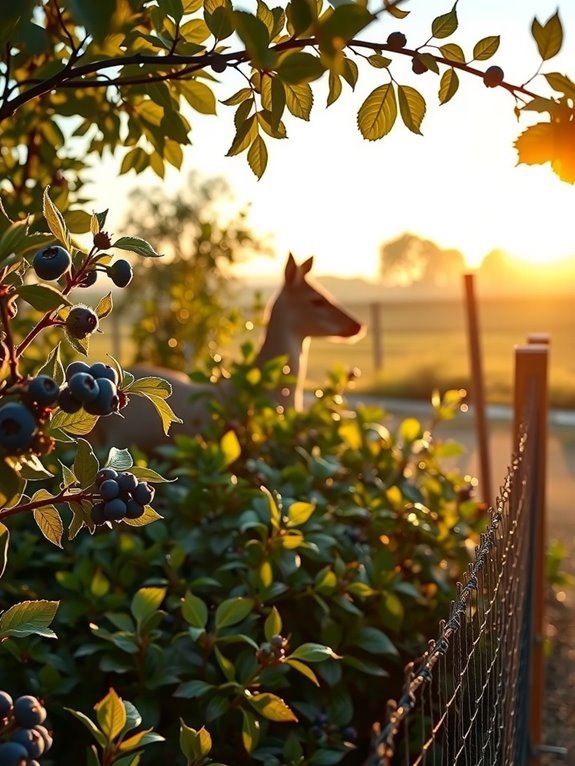
Your sturdy cage is built and ready, but here’s the thing—timing matters just as much as structure. You’ll want to deploy your defenses strategically throughout the growing season to outsmart persistent deer pressure.
Late Spring
Install netting and fencing before blueberries color up, which typically happens in June. This early move catches deer before they establish feeding patterns around your patch. Once they discover a food source, they’ll return nightly, making prevention far easier than disruption later.
Early Summer Through August
Reinforce your barriers as fruit develops because this stretch represents peak browsing season for hungry herds. June through August is when tender growth attracts maximum deer attention, so maintain constant vigilance during your harvest window. Walk the perimeter weekly to inspect fencing for gaps and netting for tears—deer are excellent at spotting vulnerabilities and will exploit them without hesitation.
After Rainfall
Reapply repellents within a few days of rain since moisture washes away scent-based deterrents quickly. A light misting isn’t enough to remove the spray entirely, but steady rain will. If you’ve used a commercial repellent like Bobbex or homemade pepper spray, plan to recoat after any significant rainfall.
Starting early prevents damage rather than fixing it after the fact. You’re protecting both new growth and ripening berries when you act proactively instead of scrambling to respond once deer have already found your blueberries.
Combining Methods for Maximum Protection
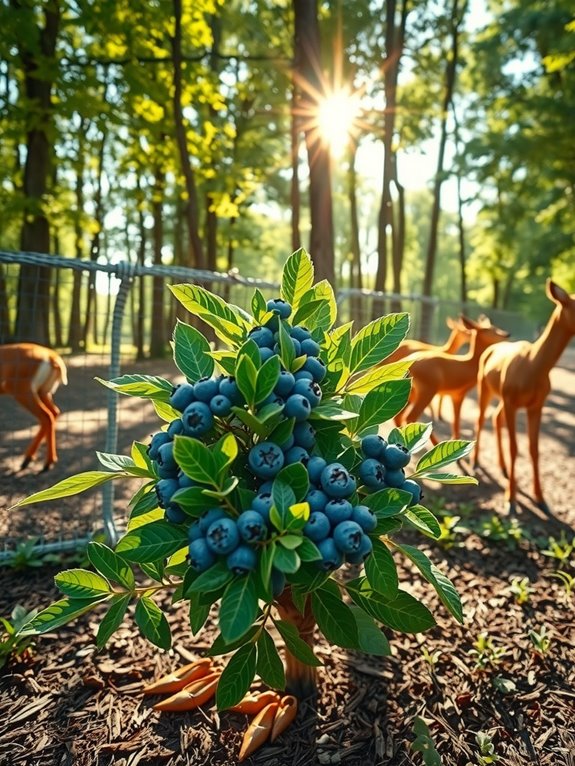
One fence alone won’t cut it when you’re serious about saving your blueberry harvest from determined deer. Layering your protection strategies gives you the best shot at actual results. Start with tall fencing—7.5 to 8 feet high—then add a two-layer barrier of chicken wire or metal fencing around the base. This combo blocks both jumping and low-level browsing in one go.
Layering your protection strategies gives you the best shot at actual results—combine tall fencing with a two-layer base barrier to block both jumping and browsing.
During ripening season, drape netting over individual plants or entire rows to shield your berries while your fence handles foliage protection. The netting acts as a physical barrier that deer simply can’t work around, even if they’re persistent about trying.
Rotate deterrent sprays and scent repellents between applications to keep deer from getting used to any single smell. They’re clever animals that adapt quickly to repeated sights and scents, so switching things up keeps them guessing. Use one spray for a few weeks, then swap it for a different scent-based option. This unpredictability wears down their confidence in raiding your patch.
The multi-pronged approach works because it addresses different parts of the problem at once. Fencing stops them from entering, netting protects the fruit itself, and rotating repellents prevent them from becoming comfortable with your defenses. Deer are persistent, but they’re also creatures of habit who prefer easier targets when your plants become too much trouble.