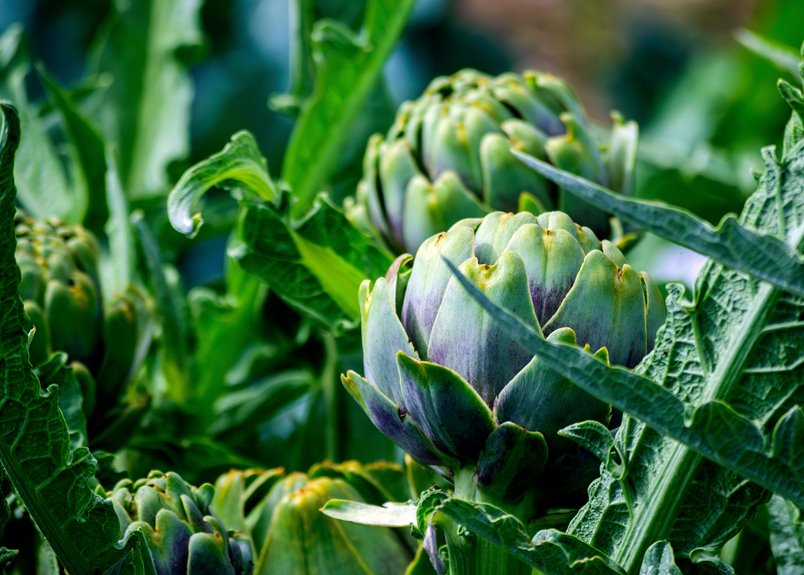
You’ll realistically harvest 6 to 10 buds per mature plant each season, though the actual number shifts based on your variety, how much sun your plants get, and how well you care for them. Imperial Star and Colorado Star varieties consistently produce 8–10 buds when conditions are decent. Just know that first-year plants give you smaller 3–4 inch chokes, so don’t expect full-sized harvests right away.
The path to bigger yields comes down to three things working together. Water consistently—aim for 1 to 1.5 inches each week, either from rain or your hose. Feed your plants every 3–4 weeks with a balanced fertilizer so they have steady nutrients flowing. Rich soil matters too, so work in plenty of compost before planting and mix some in around your plants during the season. When you nail these three factors, you’ll push your harvest toward that higher end of the range.
Real-World Yields: What One Mature Plant Produces
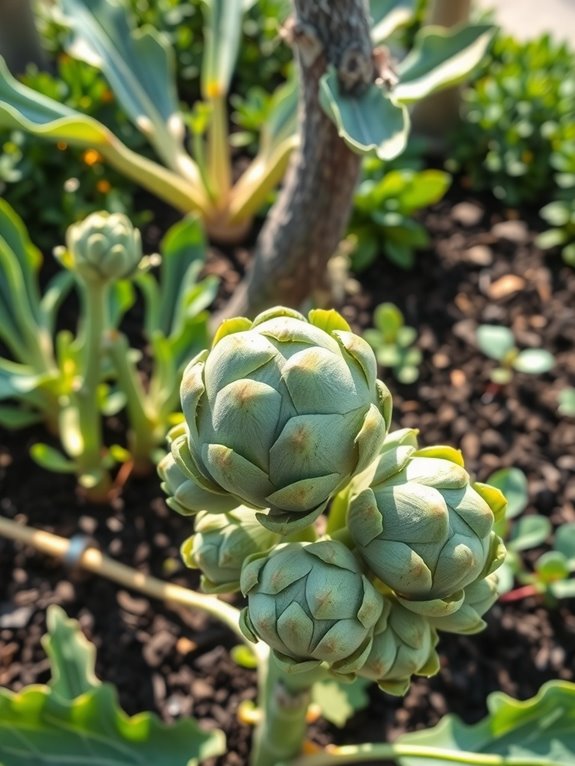
So what’ll you actually harvest from a single artichoke plant? Most mature plants yield 6 to 8 buds per season, though some varieties push toward 10. Your real-world numbers depend heavily on what you plant and how you grow it.
Most mature artichoke plants yield 6 to 8 buds per season, though variety and growing conditions heavily influence your real-world harvest numbers.
Annual production varieties like Imperial Star and Colorado Star deliver reliably, giving you satisfying harvests year after year. Globe artichokes, by contrast, often struggle in cooler climates and produce less consistently. This matters because you’re picking a variety partly based on where you live.
Climate and irrigation make genuine differences in your results. Adequate water and protected growing conditions coax out larger, more numerous buds—think of them as the foundation supporting everything else. First-year plants typically produce smaller 3–4 inch chokes, so patience pays off before you see peak production.
Your location and care directly determine whether you’re getting baseline yields or better ones. The combination of right variety, good water management, and suitable climate conditions stacks the deck in your favor from the start.
Why Your Variety Choice Makes or Breaks Your Harvest
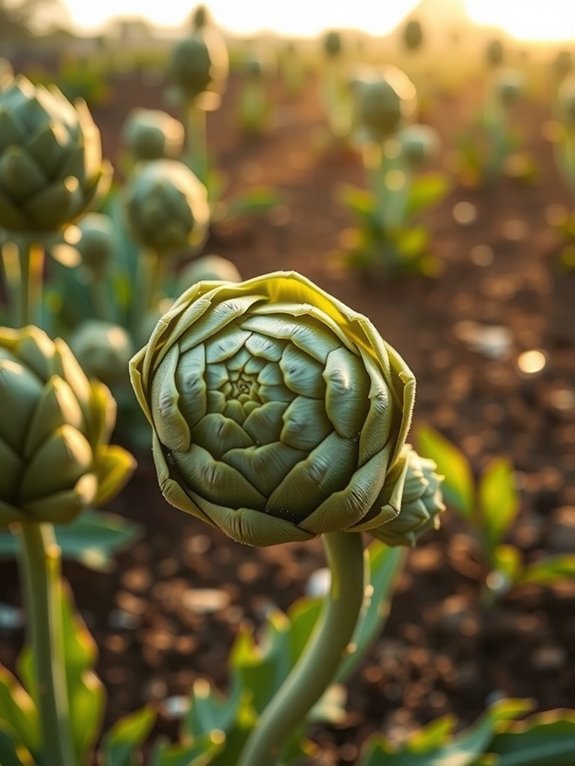
Your variety choice genuinely shapes whether you’ll harvest 6 buds or 10 from each plant—it’s not a minor detail. Imperial Star and Colorado Star are bred specifically for annual production, delivering solid yields even when your weather doesn’t cooperate. Green Globe, though, tends to underperform in most regions and needs more coaxing to produce decent harvests.
Here’s where things get interesting: if you can grow artichokes as perennials in a polytunnel or greenhouse, you’ll pull in significantly better harvests than pushing annual varieties through harsh outdoor seasons. The controlled environment keeps temperatures steady and extends your growing window by several months, which these plants really appreciate. That kind of setup requires some upfront investment in materials—a basic polytunnel runs $300-800 depending on size—but the payoff in consistent, larger harvests over multiple years makes the math work.
Annual vs. Perennial Varieties
Why does one gardener harvest a dozen plump artichokes in their first season while another waits two years for decent results? Your variety choice determines everything.
Imperial Star and Colorado Star are annual varieties that deliver what most gardeners want: immediate gratification. You’ll get 8–10 purple buds per plant and 3–4 inch chokes in year one. These 2–3 feet tall plants produce reliable first-year yields without any waiting.
Perennials take patience but offer long-term rewards. Once established in protected climates, they produce for 3–5 years and give you increasingly consistent harvests as time goes on. You’ll harvest fewer buds early on, but the trade-off is dependable production once the plant matures.
Annual artichokes restart fresh yearly without needing winter survival strategies, and they mean predictable, restartable harvests you can plan around. Perennials need division or cloning to propagate, which requires more hands-on work.
Choose annuals if you want results this season. Pick perennials if you’re willing to invest time upfront for steady production down the road. Either path connects you with gardeners who understand artichoke abundance through direct experience.
Climate Performance Differences
The variety you pick matters far less than where you’re planting it. Your climate genuinely shapes artichoke yields more than anything else. Early versus late varieties perform wildly differently depending on your growing season length. Colorado Star thrives in shorter seasons, delivering 8–10 violet-purple buds reliably. Green Globe, though, struggles in cooler regions and often produces fewer harvests annually.
| Variety | Best Climate | Per-Plant Production |
|---|---|---|
| Colorado Star | Short seasons | 8–10 buds |
| Imperial Star | Mild climates | 8–10 buds |
| Green Globe | Long seasons | 6–8 buds |
Your best bet for boosting production involves two practical moves: apply 2–3 inches of mulch around each plant and position them where they’ll get full sun daily. In cooler or protected climates, mulched plants consistently yield higher numbers than unmulched ones. Drought stress drops your bud count fast, so keep the soil regularly moist without waterlogging it. With consistent watering and mulch protection, you’ll hit those satisfying 8–10 buds per plant.
First-Year Yield Expectations
Your variety choice dramatically shapes what you’ll actually harvest in year one. Different cultivars deliver wildly different first-year results, and understanding this reality saves disappointment.
Consider these varietal differences. Imperial Star produces reliable 3–4 inch buds with consistent annual performance, making it a solid choice if you want predictable results. Colorado Star aims for earlier maturity with 8–10 buds per plant in ideal conditions, so you’ll get more smaller harvests spread across the season. Tavor yields larger 4½ inch buds plus 1–2 extra buds per plant if growing conditions cooperate. Green Globe, though, struggles initially—it arrives late with reduced first-year productivity, so patience matters if you choose this one.
Your climate and protection strategy work together with your variety choice. Most annual varieties reach 2–4 feet tall in year one, but bud count fluctuates based on temperature stability and consistent moisture. Winter protection like polytunnels or mulch stabilizes temperatures and dramatically boosts bud count by preventing the stress that reduces flowering.
If you want reliability without fussing, Imperial Star delivers solid performance across most growing conditions. If you’re willing to invest in protection using polytunnels or thick mulch layers, you can unlock fuller harvests from other varieties regardless of your regional climate.
Starting From Seed: Timing, Vernalization, and the First Season
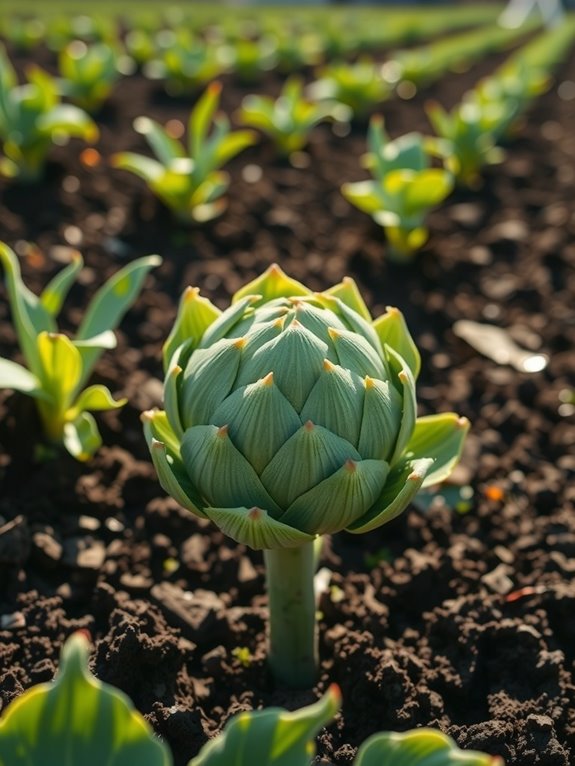
Getting artichokes to produce in their first year is totally doable if you start indoors 12 weeks before your last frost date. Plant seeds 1/4 inch deep in pre-moistened potting mix and keep them around 70–80°F, where they’ll sprout in 10–14 days. Once seedlings reach 2–3 inches tall, move them to 4-inch pots filled with fresh potting mix.
Here’s the trick that makes first-year production happen: expose those seedlings to cool 45–50°F temperatures for 10–12 days. This cold period triggers vernalization, which signals the plants’ internal clock that winter has passed and it’s time to form buds. Think of it as convincing your artichokes they’ve already gone through a dormant season, so they’re ready to produce when conditions warm up.
When your soil temperature reaches 60°F, transplant seedlings into the garden with about 3–4 feet between plants. If you live somewhere warm, flip the timing and plant seeds in autumn instead. Your plants will skip the indoor stage and develop through winter naturally, then produce those tender buds by mid to late spring without any artificial temperature manipulation needed.
Soil, Water, and Feeding: The Three Factors That Double Your Buds
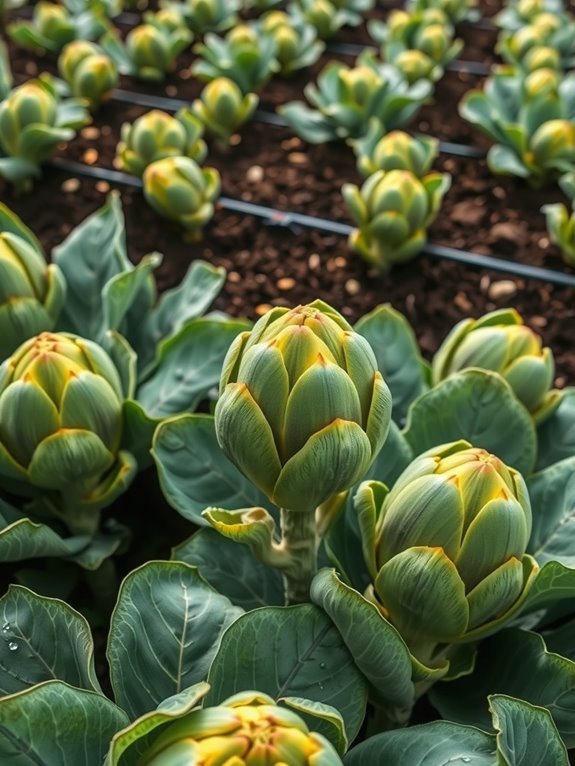
You’ll find that soil fertility, consistent moisture, and strategic feeding work together like a three-part recipe for doubling your artichoke harvest. Skip one ingredient, and you’re leaving buds on the table—literally.
Good soil gives your artichokes the foundation they need to produce those tender, meaty buds you’re after. Rich, well-draining soil packed with organic matter means your plants can access nutrients steadily throughout the growing season. Without it, even perfect watering and feeding won’t help much.
Moisture is the quiet player nobody talks about enough. Artichokes need about 1 to 1.5 inches of water per week, whether from rain or your hose. Inconsistent watering stresses the plant and signals it to shut down bud production. Think of it like this: your artichoke wants predictable conditions, not feast-or-famine swings.
Then there’s feeding, which gives your plant the actual nutrients to build those buds. A balanced fertilizer applied every three to four weeks during the growing season keeps productivity rolling. Nitrogen gets the leafy growth started, but phosphorus and potassium are what actually push bud development.
The magic is that these three factors don’t work separately—they work together. Good soil holds moisture better and makes nutrients available. Consistent water helps your plant absorb the fertilizer you apply. Regular feeding keeps the plant strong enough to produce multiple harvestable buds instead of just one or two scraggly ones.
Get all three dialed in, and your yield climbs noticeably.
Soil Fertility and Nutrition
Want to know why some artichokes practically burst with buds while others stay disappointingly small? It comes down to what you feed your soil before and during the growing season.
Start by working 2-3 inches of compost or aged manure into your planting area. Artichokes pull a lot of nutrients from the ground, and this initial boost gives them the foundation they need for robust growth. The organic matter does double duty—it feeds the plants while also improving your soil’s ability to hold water and air.
Early in the season, focus on nitrogen to build strong leaves. As your plants mature and start forming buds, switch to a balanced 10-10-10 fertilizer applied every 3 to 4 weeks as a liquid. This shift matters because young plants need leafy growth first, but mature plants need the full nutrient spectrum to pack those buds with size and quality.
Watch your plants closely during hot spells. Heat stress combined with nutrient shortages creates a perfect storm for skinny, sparse buds. When temperatures climb, increase your feeding schedule slightly and check soil moisture—plants that are struggling to stay hydrated can’t access nutrients efficiently anyway. Poor nutrition shows up quickly: yellowing leaves, slow growth, or buds that never reach full size are all signs your plants are hungry.
The payoff here is straightforward. Plants with adequate nutrition produce larger buds in greater numbers. This isn’t about luck or special techniques—it’s simply about meeting your artichokes’ actual needs.
Consistent Moisture Management
Once you’ve sorted out your soil fertility, water becomes your next real challenge—and honestly, it’s where plenty of growers run into trouble. Your artichokes want steady moisture, but not waterlogged conditions. Picture it this way: too little water shrinks your buds and cuts your harvest, while too much invites fungal diseases that can wipe out your plants.
Water directly at the root zone using a long-handled wand or drip line, keeping the leaves completely dry. This approach prevents fungal problems and makes sure moisture reaches the soil where your plants actually need it. Add 2 to 3 inches of straw or shredded leaves as mulch around each plant to lock in soil moisture between waterings.
Pay close attention during vernalization and flowering stages, since these phases need uniform moisture to get the most buds per plant. Combined with your regular 3 to 4 week fertilizer schedule, consistent watering turns your artichoke production from disappointing results into something genuinely solid.
Strategic Feeding Schedule
Getting your water situation dialed in sets the stage, but here’s the thing—even perfectly moist soil won’t deliver those 8 to 10 fat buds per plant without a solid feeding plan backing it up. Your artichokes are hungry plants, and timing your fertilizer applications really does matter.
Start strong with nitrogen-rich inputs when establishing plants. Think of nitrogen as the fuel for leafy growth and root development during those early weeks. Once your plants have settled in and started their growth phase, shift to a balanced 10-10-10 formula that keeps things steady without pushing too much of any single nutrient.
When flowering approaches, switch to potassium-heavy feeds like Seasol. Potassium supports bud formation and helps your plants channel energy into those developing flower heads rather than wasting it on extra foliage. Between your scheduled feedings, layer in compost or aged manure annually—this feeds your soil slowly and steadily, which artichokes genuinely appreciate.
Slow-release organic options work well too. They break down over weeks instead of flooding your plants all at once, keeping nutrient levels consistent without the risk of burning roots. This patience with feeding, combined with your consistent irrigation routine, keeps your plants producing at their best.
Growing More Artichokes Year After Year With Succession Planting
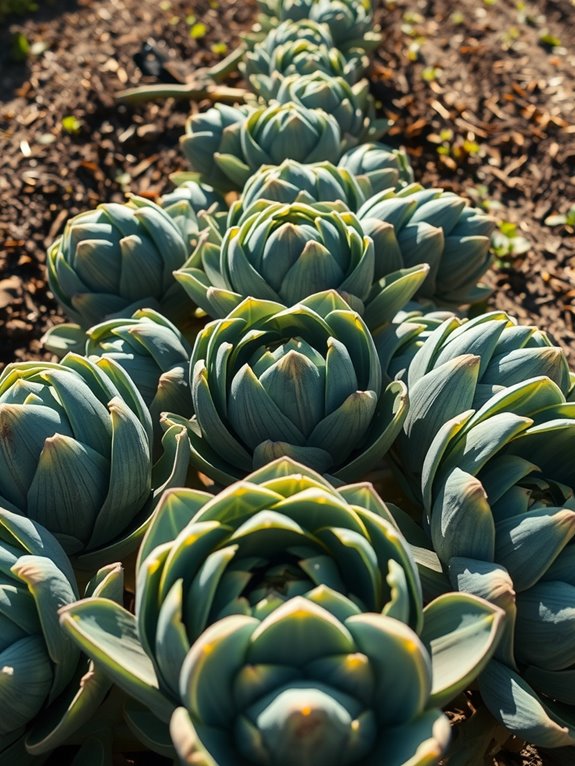
How’d you like to enjoy fresh artichokes from your garden for months instead of just a few weeks? Succession planting makes this possible by staggering your transplants every 6–8 weeks in cool climates, keeping a steady supply of harvestable buds rolling in throughout the season.
Here’s how the timing works out. Your first planting develops primary buds while your second planting is still building secondary ones and your third gets going on tertiary growth. By the time your earliest plants finish producing, the later ones are hitting their stride, so you’re never stuck with an empty harvest window.
Annual varieties like Imperial Star and Tavor are built specifically for multiple harvests in one growing season, which takes the guesswork out of planning. A single plant typically yields 6–10 buds, though Colorado Star varieties can push toward 8–10 per plant.
The practical side matters just as much as the timing. Keep your soil moisture consistent throughout the season—not waterlogged, just steady—and feed your plants regularly with balanced fertilizer. When you nail these basics alongside your staggered planting schedule, your artichoke patch becomes a reliable producer that keeps delivering fresh buds week after week instead of all at once.
Why You’re Getting Fewer Buds Than Expected: And How to Fix It
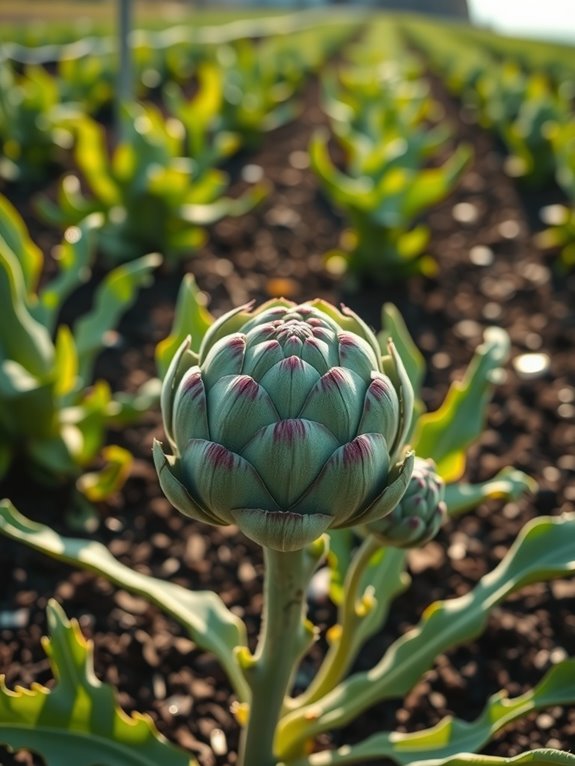
So you’ve planted your artichokes, followed the succession schedule, and—frustratingly—you’re harvesting three or four buds instead of the six to eight you’d counted on.
You’re definitely not alone in this. The fix is often simpler than you think, and it usually comes down to three core problems that sabotage bud production. When you water inconsistently, your plants experience drought stress that literally stalls bud development mid-formation. Heavy fertilization compounds this by pushing the plant to grow leaves instead of focusing energy on actual buds. Finally, insufficient sunlight or late-season temperature swings simply don’t give buds enough energy or stability to develop properly.
Three core problems sabotage artichoke bud production: inconsistent watering, heavy fertilization, and insufficient sunlight or temperature instability.
Here’s what actually works: commit to regular, even irrigation throughout the growing season. Aim for soil that stays consistently moist but not waterlogged—think of it like a wrung-out sponge. Once a month, apply a balanced fertilizer like 10-10-10, following package directions for your plant size. Skip the temptation to overfeed, which just encourages leafy growth at bud’s expense.
Location matters too. Your artichokes need at least six to eight hours of direct sun daily. Less than that, and the plant simply doesn’t produce enough carbohydrates to support robust bud formation. When you nail these three fundamentals—steady water, moderate monthly feeding, and solid sun exposure—you’ll find yourself harvesting those satisfying six to ten buds per plant.
Keeping Plants Productive Beyond Year One: Propagation and Replacement
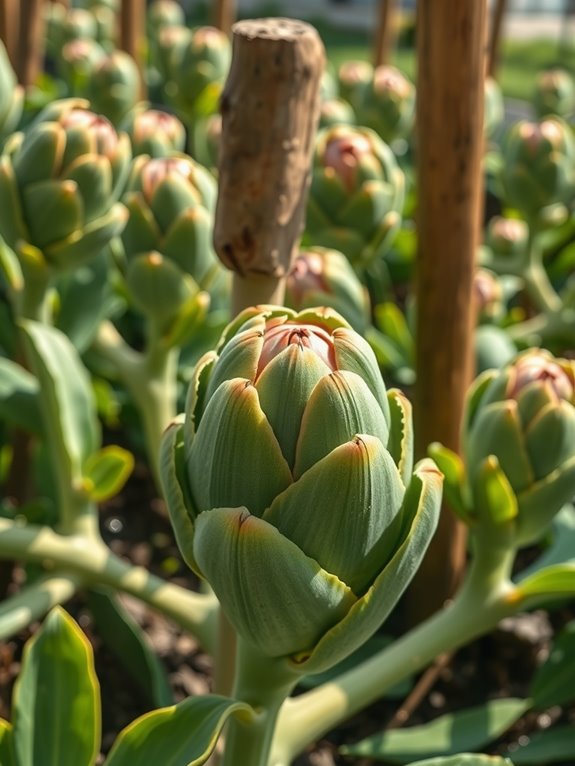
Once your artichokes have delivered solid harvests for three to five years, you’ll notice bud production starts to decline—and that’s when renewal becomes practical rather than optional. The good news is that you can skip starting from seed. Those small shoots sprouting around your plant’s base are offsets, and they’re your ticket to keeping productivity steady without purchasing new plants each year. Divide these offsets carefully and replant them to get back to that first-year output of 8–10 buds per plant annually.
This propagation method keeps your costs low while building knowledge you’ll actually use in your garden. Here’s how it works: offsets develop their own root systems while attached to the mother plant, so they’re already part-way to independence when you separate them. Dig around the base of your artichoke, identify offsets that are at least 6 inches tall, and cut them away with a sharp knife. Plant them into soil that’s rich with compost or aged manure—about 2 to 3 inches of organic matter mixed into the top 8 inches of bed works well.
Pair your replanting schedule with solid soil fertility and steady moisture to lock in consistent yields. Water your new offsets deeply twice weekly for the first three weeks, then back off to weekly watering once they establish. In colder climates where artichokes struggle through winter, you’ll simply replant more frequently to ensure you always have productive plants coming online. This staggered approach means you’re never caught without plants ready to produce.