Rabbits’ll munch through your lettuce, clover, beans, and tender young seedlings without hesitation. They’re also after ripe tomatoes, peppers, strawberry canes, and fresh apple tree bark—basically anything soft and nutritious. Come spring, that fresh growth spikes their appetite even more.
The good news is you can actually fight back. Fragrant herbs like lavender and catmint tend to turn rabbits away because of their strong scent. Fuzzy-textured plants also work as a natural deterrent since rabbits prefer smooth, easy-to-eat vegetation. A simple 2-foot fence buried a few inches deep creates a solid physical barrier that keeps them out of your beds. The real payoff happens when you combine these approaches together—layering defenses means rabbits have fewer options and will usually move on to easier pickings elsewhere.
Vegetables Rabbits Love to Eat
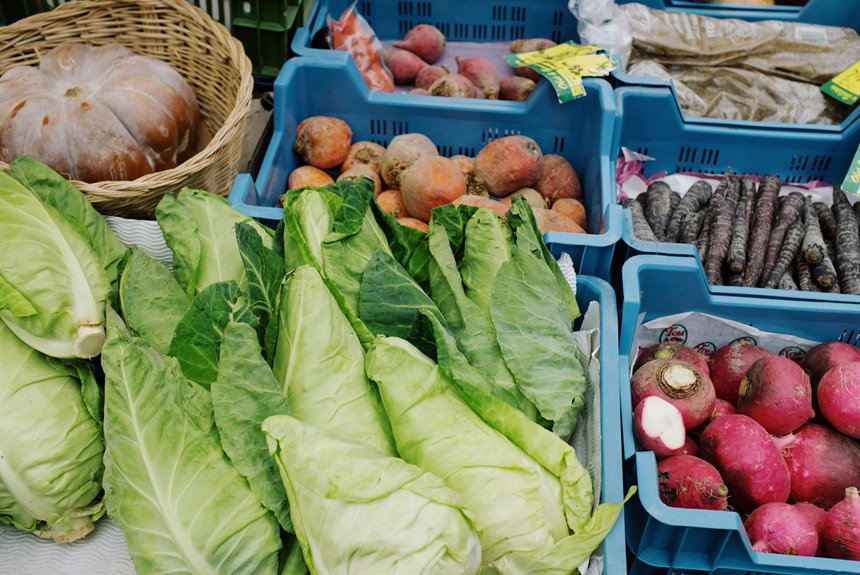
So what’s on a rabbit’s dinner menu? You’re looking at a pretty impressive veggie spread, honestly. Rabbits absolutely devour tomatoes and peppers when they get the chance, though their interest depends on ripeness and how warm the growing season has been. They’ll also happily munch through lettuce, clover, and tender young greens without hesitation. Beans and peas disappear fast too.
What makes these vegetables so irresistible to rabbits? They’re soft enough to bite through easily, packed with nutrients, and require minimal effort to eat. Your garden’s leafy vegetables take the biggest hit during spring—that peak damage season when rabbits are hungriest and have the most fresh options available. Unlike onions and garlic, which rabbits typically avoid because of their strong, pungent compounds, most common garden vegetables offer zero resistance to hungry rabbits.
That’s why protecting your veggie garden with barriers becomes your first line of defense. Rabbits are mobile and numerous enough that you’ll want solid prevention in place before damage happens. A 2-foot tall chicken wire fence buried 6 inches into the soil works well for keeping them out of beds, or you can use individual wire cages around prized plants. The investment in physical barriers pays off faster than hoping rabbits will simply prefer the wild plants beyond your property.
Why Seedlings and Young Growth Are Prime Targets
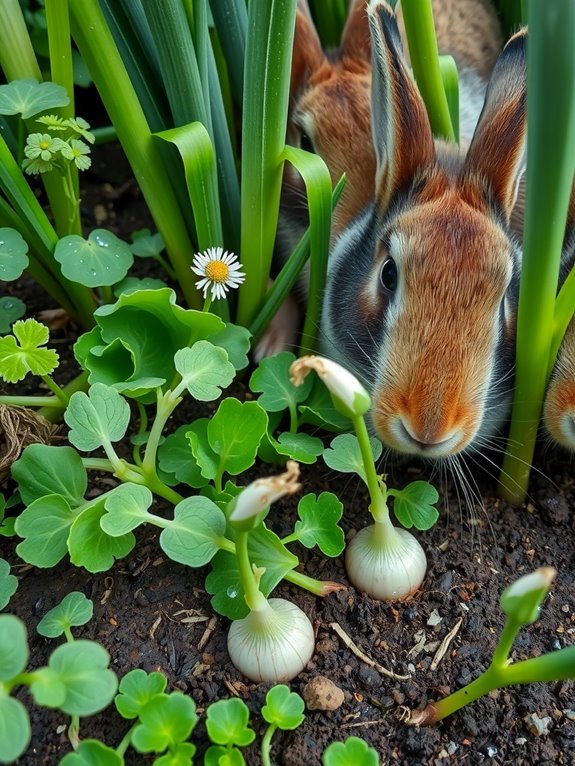
Rabbits head straight for your seedlings because they’re basically edible gold. Fresh, tender growth requires less chewing effort and delivers more nutrition per bite than mature plants, so young shoots become the obvious choice for a hungry rabbit. When spring arrives and seedlings push through the soil, rabbit activity spikes noticeably. They feast on abundant fresh shoots before larger plants develop tougher leaves and stems that are less appealing to eat.
Lettuce, brassicas, and soft herbaceous perennials sit at the top of the target list. Their small size puts tender leaves right at rabbit-mouth height, and their delicate texture makes them easy meals compared to established plants. You’ll spot the damage pretty quickly—look for clean, snapping cuts across stems and leaves rather than ragged, torn edges. That neat clipping pattern is the rabbit’s calling card, telling you exactly who’s been dining on your garden.
Fruits and Vines Rabbits Will Sample
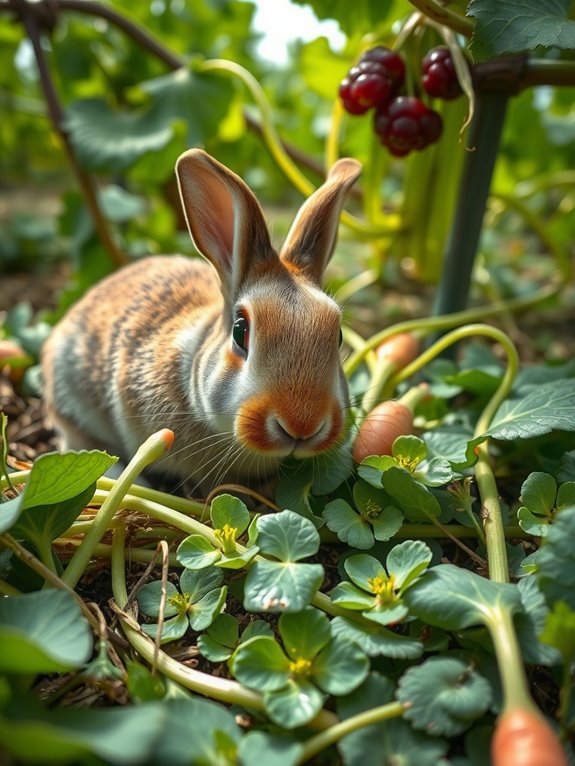
Once rabbits find your fruit trees and berry patches, they become regular visitors with a specific menu in mind. They’ll nibble tender new growth, sample leaves within easy reach, and gnaw on young tree trunks without much hesitation. Blackberry canes, mulberry trimmings, and branches from fallen fruit trees make particularly appealing snacks, especially when rabbits can wander straight into your growing areas.
The damage happens because rabbits are persistent and opportunistic. They return to spots where they’ve found food before, treating your garden like a well-stocked salad bar. Young trees are especially vulnerable since their bark is still soft and palatable, and low-hanging branches practically invite browsing.
Your best protection involves physical barriers that rabbits simply can’t get through or around. Wrapping tree trunks with quarter-inch poultry wire works well—wrap it about 2 feet up the trunk, which covers the height rabbits typically reach when standing on hind legs. For broader protection around vegetable and berry areas, install fencing that’s at least 2 feet tall and buried 4 to 6 inches deep to prevent rabbits from digging underneath. The key is making access difficult enough that rabbits move on to easier food sources elsewhere.
Vulnerable Garden Fruits
When you’ve got fruit trees and berry patches in your garden, rabbits treat them like an all-you-can-eat buffet. Apple and pear tree prunings disappear quickly, and fresh strawberry and blackberry canes attract rabbits with their tender, accessible foliage. Even young tree trunks with barriers installed face danger—rabbits simply nibble the lower shoots and bark that stick out beyond your defenses.
Willows and mulberry trimmings offer excellent chewing material that keeps rabbits entertained, though that’s little comfort when they’re sampling your actual crops. The real frustration is timing. Certain mature berries resist damage better than younger growth stages, which means your protective strategy needs to account for which plants face the highest risk during specific periods.
Understanding what’s vulnerable when allows you to plan your defenses smartly. Young growth is almost always more attractive to rabbits than mature foliage, so peak-risk periods tend to happen during spring and early summer when new shoots emerge. Physical barriers like 1-inch mesh fencing at least 24 inches tall work well for protecting individual plants, while tree guards made from plastic tubing or hardware cloth wrapped around trunks prevent bark damage up to about 18 inches high.
The key is matching your protection method to each plant’s growth cycle rather than applying the same approach to everything in your garden.
Climbing Vine Damage
Grapes, raspberries, blackberries, and other climbing vines represent an irresistible temptation for rabbits foraging through your garden. These fuzzy bandits target lower leaves and tender shoots first, systematically sampling your prized plants. You’ll want to establish protective barriers around vulnerable vines to keep them safe.
Two-foot-high semi-permanent fencing works well, as does poultry wire caging around individual plants. Tulle row covers and netting also shield climbing vines as they grow, adapting easily to expanding foliage. The key advantage of these methods is that they work whether your vines are young and tender or starting to mature. Physical barriers simply prevent rabbits from reaching the parts of plants they actually want to eat—the fresh, leafy growth that remains attractive throughout the growing season.
Combining fencing with predator presence creates a more effective defense. Dogs patrolling your garden or hawk-friendly spaces (like open perches and minimal ground cover near your vines) discourage rabbits from staying long enough to cause serious damage. Rabbits naturally avoid areas where they feel exposed or threatened, so layering different protection methods works better than relying on any single approach.
Plant Traits That Turn Rabbits Away: Fragrance, Texture, and Taste
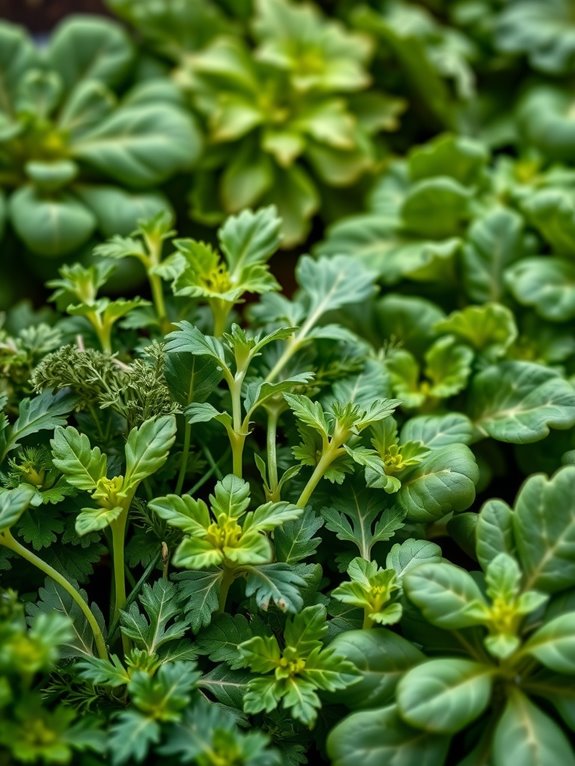
You’ve got three solid ways to keep rabbits away from your plants: fragrance, texture, and taste. Plants like lavender and sage have strong scents and pungent flavors that send rabbits looking for easier meals elsewhere. Fuzzy-leafed plants such as lamb’s ear and dense ground covers feel unpleasant in a rabbit’s mouth, so they’ll skip right past them. When you combine these traits together—pairing aromatic silvery artemisia with tough, spiky plants like agastache—you’re basically telling rabbits your garden isn’t worth the effort.
The beauty of this approach is that these plants do double duty. While they’re protecting your garden from rabbit damage, they’re also adding interesting textures and scents that make your space more enjoyable for you. Lavender blooms in purple spikes about 12 to 18 inches tall, depending on the variety, and releases its smell strongest when brushed or warmed by sun. Sage comes in several types—common green sage grows about 24 inches wide—and has that distinctive peppery-minty flavor rabbits find off-putting.
For texture alone, lamb’s ear lives up to its name with soft, fuzzy leaves that cover the plant densely. It spreads low along the ground and can fill in gaps between other plants. Agastache, sometimes called hummingbird mint, grows upright with narrow leaves and dense flower spikes that rabbits simply don’t enjoy chewing through. These plants work best when planted in groups rather than scattered throughout your garden, creating a barrier that signals rabbits to browse elsewhere.
Fragrant Foliage Deters Browsing
Why do rabbits turn their noses up at certain plants while gobbling down others? The answer lies in fragrant foliage and natural deterrence strategies you can use right now.
Rabbits actively avoid plants with strong aromatic compounds because they rely heavily on smell to identify food sources. Lavender and Agastache produce pungent foliage that signals “not appetizing” to hungry hoppers, while Artemisia’s silvery leaves emit scents rabbits find genuinely unpalatable. When a plant smells unfamiliar or intensely aromatic, rabbits typically skip it entirely rather than investigate further.
You’re essentially creating a fragrant barrier garden—one that says “nothing tasty here” without involving any actual toxins. Plant these aromatic species in clusters or along garden edges where rabbits typically enter, spacing them about 18 to 24 inches apart for effective coverage. This approach gives you beautiful, fragrant plants while protecting your vegetables and ornamentals through natural aversion rather than chemicals or fencing.
The beauty of this method is its simplicity. You get functional protection and gorgeous foliage at the same time, all without complicated installation or ongoing maintenance beyond basic watering and occasional trimming.
Textural Leaves Repel Rabbits
Beyond fragrance alone, the actual feel of a plant’s leaves plays a remarkably big role in keeping rabbits at bay. Texture creates natural deterrence because rabbits prefer tender, smooth foliage they can nibble comfortably.
Consider adding these texture-based plants to your garden:
- Lamb’s Ear – fuzzy, velvety leaves that feel unpleasant to rabbit mouths
- Artemisia – intricate silver foliage with a rough, delicate texture rabbits avoid
- Epimedium – heart-shaped, evergreen leaves with a tough, leathery quality
- Heuchera – dense, colorful foliage creating a protective barrier effect
Here’s why this works: fuzzy textures and dense, tough surfaces frustrate rabbits seeking easy meals. When a rabbit’s mouth encounters Lamb’s Ear’s velvety fuzz or Artemisia’s delicate roughness, the eating experience becomes uncomfortable and unpredictable. The dense growth pattern of Heuchera adds another layer of difficulty, making it harder for rabbits to access tender new shoots underneath. Rather than spending energy on an unpleasant meal, hungry rabbits will move on to softer plants elsewhere in your neighborhood.
Bitter Taste Prevents Consumption
While textured leaves create an uncomfortable eating experience, bitter-taste compounds offer another layer of defense that works from the inside out. You can leverage these compounds to make plants genuinely unappealing to hungry rabbits. Alliums like garlic and chives contain natural toxins that discourage grazing, so planting these pungent herbs in your garden teaches rabbits to look for meals elsewhere pretty quickly.
For added protection, you can apply capsaicin-based or pepper products directly to vulnerable plants—think of them as creating a spicy barrier that rabbits simply won’t tolerate. Spray these products at a concentration of about 1-2 tablespoons per gallon of water, coating both leaf surfaces thoroughly. Herbs with aromatic, minty foliage such as Calamint deliver similarly bitter flavors that turn rabbits away before they even take a bite.
The real advantage here is that you’re making your garden taste genuinely unpleasant to unwanted visitors. When you combine these bitter compounds with texture-based defenses, you create a two-part strategy that protects your vegetables on multiple fronts—rabbits face both an unpleasant sensation when they chew and an off-putting taste that discourages them from coming back for more.
Fragrant Herbs and Ground Covers Rabbits Reject
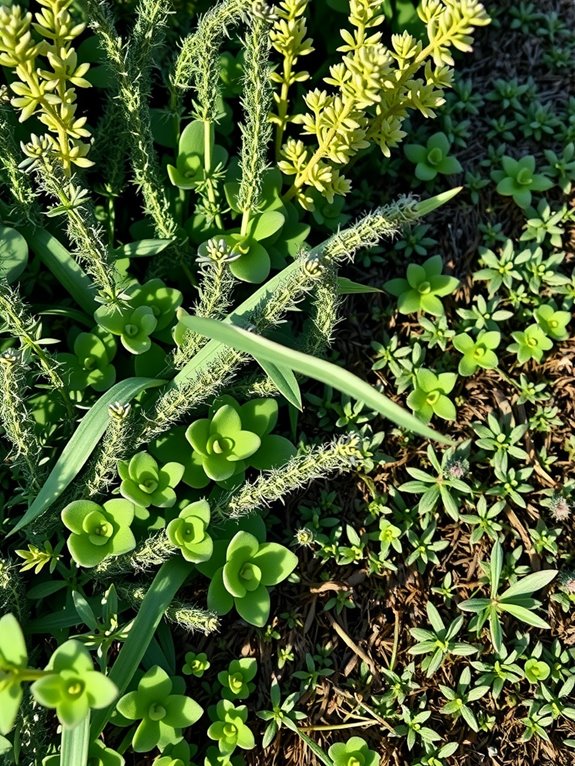
How’s this for a garden strategy: plant herbs and ground covers that rabbits actually dislike?
You’ll want to lean into fragrant herbs and ground covers that naturally repel rabbits through scent and texture alone. These plants do the work so you don’t have to keep fussing with fencing or netting.
Catmint and Artemesia offer intricate silver foliage with fuzzy leaves that rabbits consistently avoid. Hummingbird mint, also called Agastache, features strongly scented leaves with dense flower spikes that attract pollinators instead of becoming rabbit snacks. Cranesbill, a perennial geranium, spreads rapidly across 12-18 inches per season while its minty-scented foliage keeps rabbits at bay. Plant daffodil bulbs about 6 inches deep alongside these fragrant perennials to get reliable spring color that rabbits won’t nibble.
Fuzzy-leafed herbs with strong scents create a dual-defense rabbit barrier that naturally redirects pests to easier meals elsewhere.
This dual-defense approach—combining deterrent scents with unwelcome textures—creates a genuinely rabbit-resistant garden. You’re building a fortress using what rabbits naturally avoid rather than fighting against them constantly. The fuzzy leaves feel wrong in their mouths, and the strong aromas signal “not a food source” from several feet away. That combination means rabbits usually hop right past your beds looking for easier meals elsewhere.
Spring Bloomers and Perennials Rabbits Leave Untouched
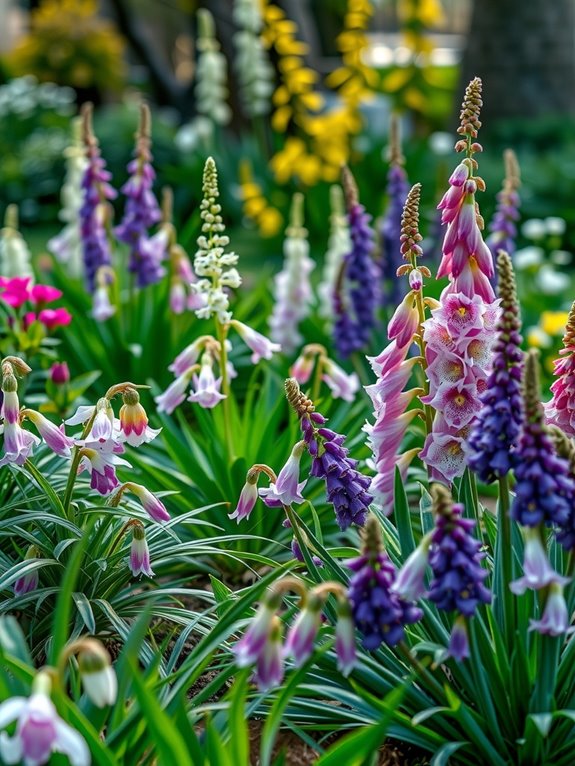
Want to fill your spring garden with color that rabbits will actually leave alone? It’s completely doable with the right plants.
Catmint gives you silvery-green foliage with a strong scent that rabbits dislike, plus purple flowers that stick around for months. The strongly scented leaves are what really keeps the nibbling at bay. Iris varieties bring reliable spring blooms with thick, sword-like foliage—those stiff leaves are naturally unappetizing to browsing rabbits. Daffodil bulbs stay untouched year after year, delivering bright spring color when you’re waiting for everything else to wake up.
Heuchera, also called coral bells, has proven rabbit-resistant for years and offers two benefits in one plant. You get delicate mid-summer flowers plus colorful foliage ranging from deep burgundy to lime green, depending on the variety you choose. This means your garden stays visually interesting even when flowers aren’t blooming.
These plants work together to create a low-maintenance design that actually performs. They’re perennials and spring bloomers that handle themselves without needing constant replanting or protection. You’re building a garden that produces real color while keeping rabbit damage off your to-do list.
How to Choose Rabbit-Resistant Plants
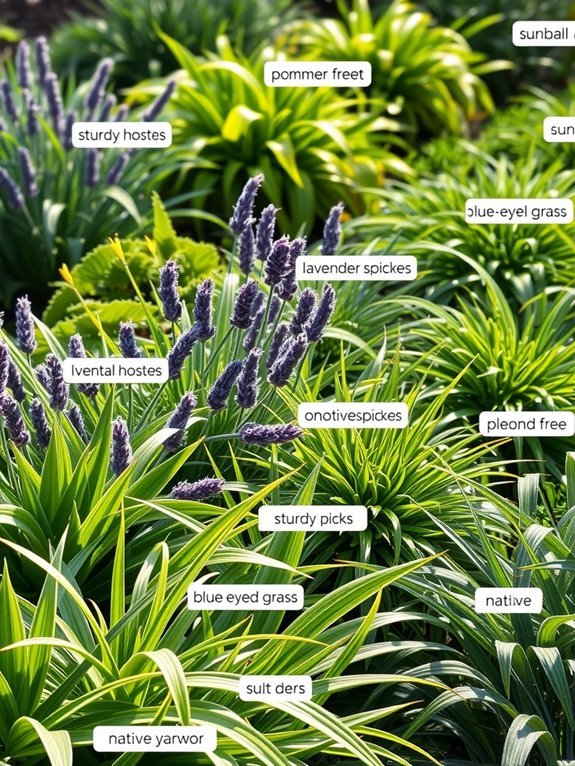
When you’re building a garden rabbits’ll skip, you’ll want to focus on plants with traits that naturally turn them away. Fuzzy leaves, strong scents, and bitter flavors just don’t appeal to their palates. Your best strategy combines fragrant perennials like lavender and sage with silvery-foliaged plants like artemesia, layering different textures and bloom times so you’ve got visual interest year-round while rabbits hop right past.
The key is mixing these deterrent traits throughout your beds instead of planting vulnerable favorites all together. When you scatter rabbit-resistant plants across your garden rather than grouping them in one spot, you create a design that’s genuinely rabbit-resistant. A rabbit foraging through your beds will encounter unfamiliar flavors and textures constantly, making your garden feel like a place to avoid rather than a buffet.
Think about how you’re spacing plants too. Leave about 18 to 24 inches between perennials so air flows through and each plant can show off its texture and scent. Dense planting might look fuller faster, but it actually makes it harder for the fuzzy leaves and aromatic oils to do their job of repelling rabbits. When plants have room to breathe, their defensive qualities become more noticeable to a browsing rabbit deciding where to eat.
Plant Traits That Deter Rabbits
Rather than fighting rabbits with sprays and barriers, you can outsmart them by picking plants they’d rather skip. Rabbits decide what to eat mostly through taste and touch, so selecting plants with specific traits puts the advantage in your hands.
Focus on these deterrent qualities:
Fuzzy or coarse texture. Plants like Cranesbill and Artemesia have leaves that feel rough or scratchy against a rabbit’s mouth. These physical barriers make browsing uncomfortable, so rabbits move on to easier meals.
Strong scents. Sage and Agastache pack aromatic leaves that repel rabbits through smell alone. A rabbit will often decide a plant isn’t worth eating before it even takes a bite.
Silver or intricate foliage. Russian Sage and similar plants catch a rabbit’s eye with their unusual appearance, yet they don’t appeal to the animal’s palate. The visual interest doesn’t translate into appetite.
Tough, spiky surfaces. Ruta and plants with prickly leaves or stems discourage nibbling through physical discomfort. A rabbit learns quickly that some plants just aren’t worth the effort.
Perennial, drought-tolerant options like Daffodil and Sedum deliver year-round color while staying off your rabbit’s menu. These plants handle dry spells without fussing, which means less maintenance for you and consistent protection across seasons. You’re building a garden that naturally resists damage without needing constant upkeep.
Garden Design For Rabbit Resistance
Since rabbits browse by taste and touch, the plants you choose and how you position them makes a real difference in keeping them away. When you layer plants strategically, you’re building natural barriers that work on multiple rabbit senses at once.
Fuzzy-foliaged plants like Artemesia and Lamb’s Ear work as your garden’s backbone because their dusty, velvety texture feels unpleasant in a rabbit’s mouth. Pair these with aromatic companions—Sage, Calamint, and Cranesbill—that rabbits simply won’t nibble. The combination of uncomfortable texture plus pungent scent creates a one-two punch that sends rabbits looking elsewhere for dinner.
Ground covers deserve serious consideration because they fill in the spaces where rabbits like to browse. Creeping Thyme grows densely at about 3-6 inches tall and smells pleasant to humans while repelling rabbits through its aromatic oils. Epimedium serves double duty as both a ground cover and structural element, reaching 12-18 inches high and creating a physical barrier that discourages browsing.
| Design Layer | Plant Choice | Rabbit Deterrent |
|---|---|---|
| Backdrop | Artemesia | Dusty, velvety texture |
| Mid-level | Sage | Pungent scent and flavor |
| Ground cover | Creeping Thyme | Dense growth, aromatic foliage |
| Accent | Calamint | Strong aromatic oils |
| Structural | Epimedium | Height barrier, dense habit |
You’re building a rabbit-resistant community where every plant does its job both aesthetically and functionally. This approach beats constantly repairing damage because the rabbits avoid the space entirely.
Rabbit-Proof Fencing: What Actually Works
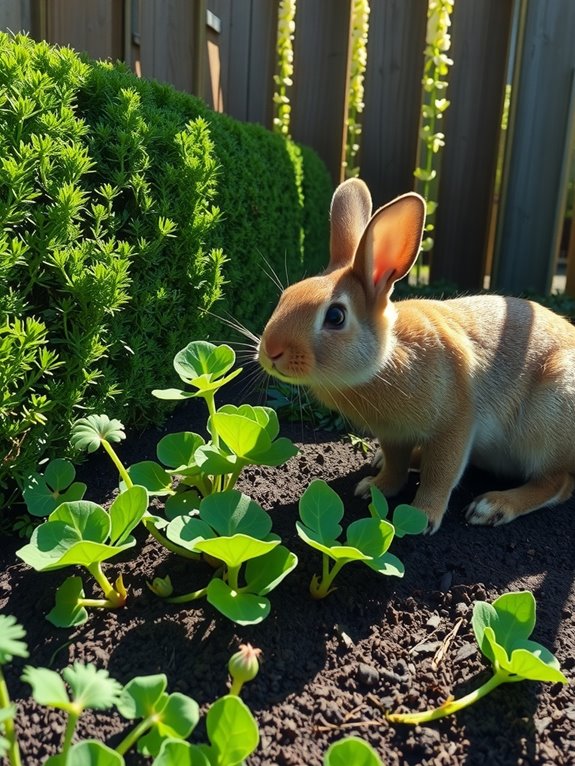
How do you actually stop rabbits from munching your garden to nothing? Rabbit-proof fencing works when you install it correctly and combine it with smart strategies. You’ll need poultry wire about 2 feet high, buried 3 inches deep to prevent those clever hoppers from squeezing underneath.
Rabbit-proof fencing works best when installed correctly with poultry wire buried deep to prevent clever hoppers from squeezing underneath.
Consider these practical approaches for your vegetable garden:
- Semi-permanent fencing around greens sections offers ongoing protection without constant effort
- Removable cages (18–24 inches tall) around young plants let you uninstall them after maturation
- Tulle covers on seedlings allow nearly complete sunlight while blocking rabbit access entirely
- Predator presence through hedges, yard cats, or dogs strengthens your defense significantly
Here’s the honest truth: barriers alone work best when paired with predators nearby. Neither strategy perfectly succeeds independently, but together they’re genuinely formidable against rabbit damage. The fencing keeps rabbits from entering your space, while the presence of natural hunters makes them think twice about sticking around.
Repellents and Deterrents for Garden Protection
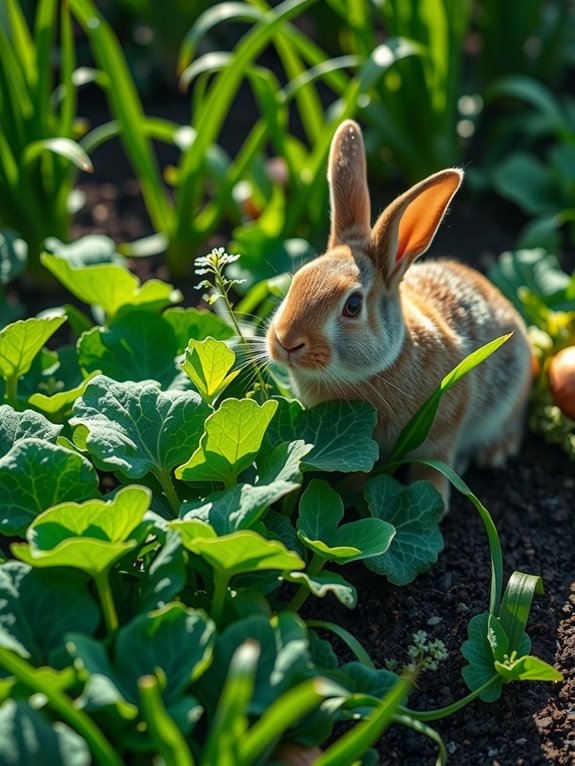
When barriers alone don’t quite cut it, repellents and deterrents become your next line of defense against persistent rabbits. You’ll find both commercial and non-commercial repellents work best when you reapply them after rain or irrigation. Consistency matters here because water washes away what you’ve put down.
Ground hot pepper, chili powder, and garlic spray cost less than store-bought options, though how well they work depends on your specific situation and how often you’re willing to reapply. Commercial products like Deer-Away or Hinder use unpleasant smells and tastes that rabbits naturally avoid. Capsaicin-based products take a different approach—they actually burn a rabbit’s mouth, which makes the plant decidedly less appetizing, but they also need frequent reapplication to stay effective.
Some gardeners swear by predator-scent deterrents like blood meal or human hair clippings scattered around vulnerable plants. These work on the principle that rabbits sense danger signals and prefer to feed elsewhere. You’ll typically need to refresh blood meal every few weeks and replace hair clippings when they break down.
Physical deterrents like dogs, motion-activated sprinklers, or invisible fences complement chemical repellents nicely because they address the rabbit problem from a different angle. A dog that actually patrols your garden creates an ongoing presence that no spray can match, while scare devices startle rabbits away at unpredictable moments.
The honest truth is that no single solution guarantees success across all situations. Your best bet involves combining multiple strategies—maybe a fence as your first line of defense, followed by a commercial repellent on high-value plants, with a scare device for additional pressure. This layered approach protects your garden far more effectively than relying on any one method alone.
Protective Barriers for Individual Plants
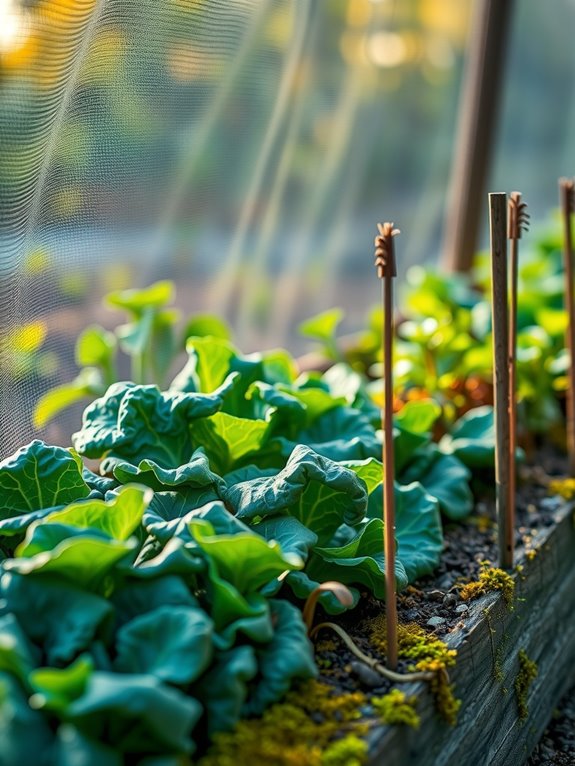
Sometimes you’ll want to protect specific plants rather than fence your entire garden, and that’s where individual barriers come in handy. You can build custom defenses around your most vulnerable crops using materials you probably have sitting around already.
Chicken wire cylinders work well for keeping rabbits away from young plants. Build removable cages that stand 18–24 inches tall using one-inch mesh, and bury them three inches deep so rabbits can’t tunnel underneath and bypass your defense.
Tulle fabric draping keeps insects and hungry animals off seedlings while still letting light through. Drape the lightweight fabric over broccoli, cauliflower, and carrot seedlings, but lift it regularly so your plants don’t grow right through it and get tangled up.
Semi-permanent fencing works best for greens and lettuces during their most vulnerable stage. Ring young plants with open-mesh barriers, then remove them once the plants get bigger and lose their appeal to rabbits, which prefer tender young leaves.
Trunk wraps protect the tender bark of young fruit trees from being stripped or nibbled. Wrap the trunks with protective material and add poultry wire cages around the base to stop rabbits from reaching the vulnerable wood.
Stacking these barriers with other methods like predators and strategic planting timing gives you the strongest defense against rabbits that keep coming back.
Design a Garden Rabbits Won’t Touch
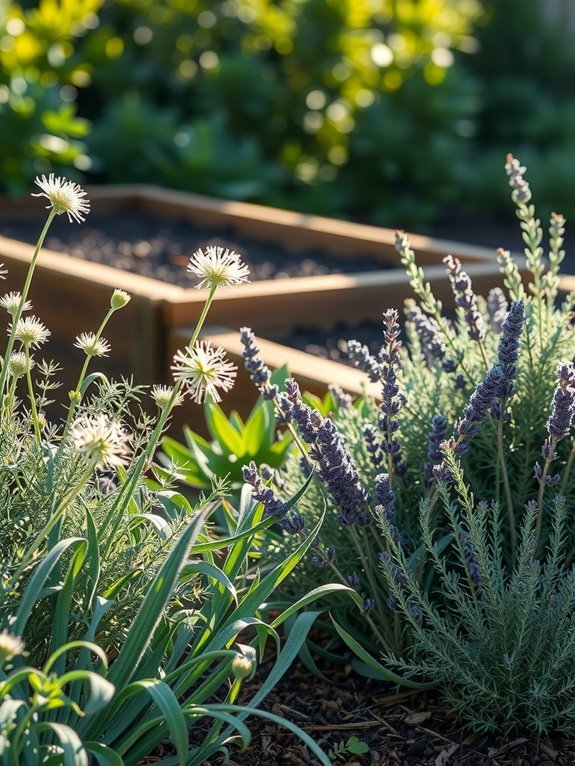
Why spend your weekends battling rabbits when you can plant a garden they’ll naturally skip over? By choosing the right perennials, you’ll build a landscape that keeps itself rabbit-free without constant fencing or sprays.
Rabbits avoid plants with strong scents and tough, unpalatable leaves. This isn’t random—their taste preferences are pretty predictable. When you layer aromatic plants throughout your beds, you’re essentially creating a flavor profile that says “not worth eating” to every cottontail in the neighborhood.
Catmint and lavender work as your first line of defense because their pungent oils genuinely repel rabbits. Plant catmint in clusters of 3-5 plants spaced 18-24 inches apart along bed edges where rabbits typically enter. Lavender does the same job and gives you the bonus of fragrance you’ll actually enjoy while weeding. Both reach about 2-3 feet tall and bloom for months, so they earn their garden space through looks alone.
For spring color that rabbits ignore, daffodils and Montauk daisies become your backbone plantings. These perennials have a bitter taste that rabbits learn to avoid after one nibble. Space daffodil bulbs 4-6 inches apart in fall, and they’ll return reliably each year without replanting.
Low-growing plants seal off the vulnerable ground level where rabbits like to browse. Creeping Thyme spreads 12-18 inches wide and creates a dense mat that’s uncomfortable for rabbits to walk through. Barrenwort grows 8-12 inches tall and fills spaces between taller plants, leaving nowhere for rabbits to access your beds easily.
Upright Sedum varieties finish blooming in late summer when other plants have faded, and their waxy leaves hold little appeal to hungry rabbits. Plant them 24 inches apart so they have room to spread without crowding.
This combination creates a cohesive garden where rabbits simply decide your yard requires too much effort and move on to easier meals elsewhere.