
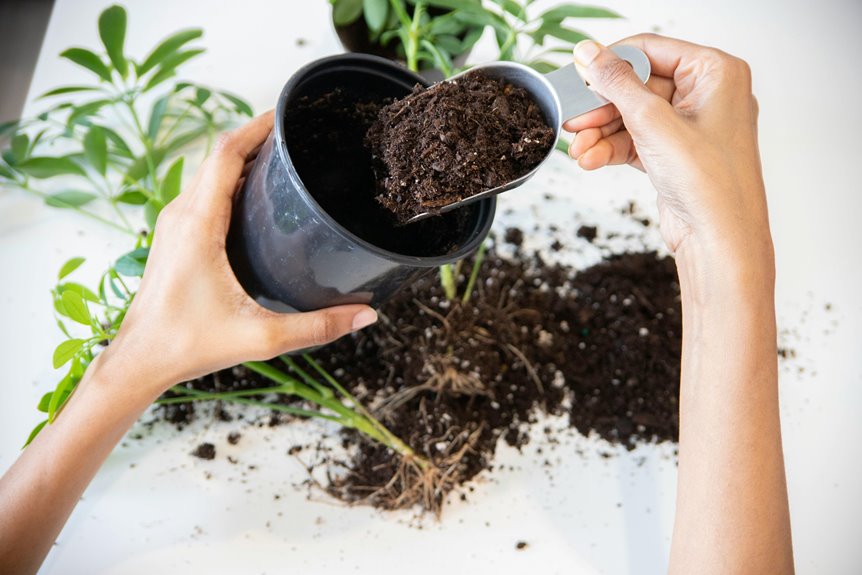
You don’t need to fertilize right after repotting because fresh potting mix already packs starter nutrients that stick around for four to eight weeks. If you feed too soon, you’ll actually stress those dormant roots, which can’t absorb nutrients efficiently yet. Salt buildup happens when roots can’t take in what you’re offering, and that creates a pretty hostile growing environment.
Here’s the better approach: wait two to four weeks and let your plant show you what it needs. Look for new growth signals like fresh leaves pushing out or stems standing noticeably perkier than before. Once you spot those signs, start with quarter-strength fertilizer and feed from there. Your plant will tell you when it’s ready, and that beats guessing any day.
Why Fresh Potting Mix Doesn’t Need Immediate Fertilization
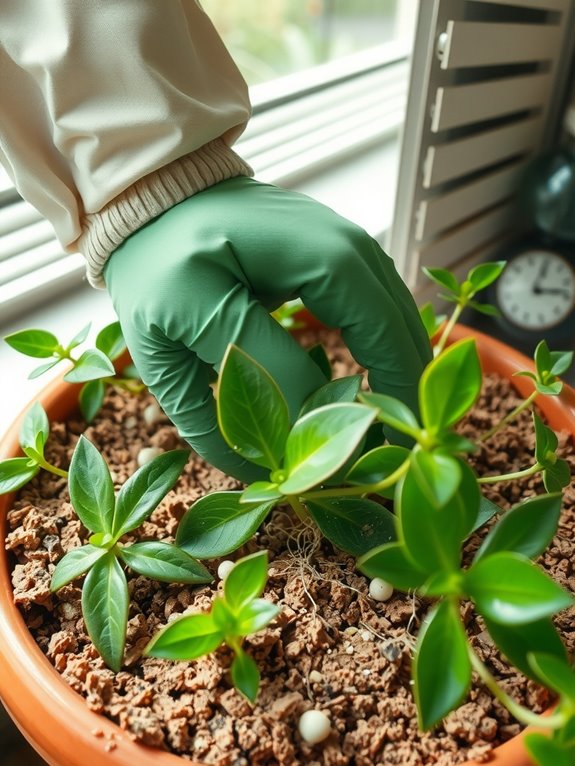
When you’ve just repotted your indoor plant, the urge to fertilize right away is totally understandable—but holding back is actually the smarter move. Fresh potting mix already contains starter nutrients designed to support your plant for several weeks, so adding fertilizer immediately would be overkill.
Fresh potting mix already contains starter nutrients—adding fertilizer immediately after repotting would be overkill.
Here’s the thing: repotting stresses plant roots. They’re temporarily inactive and working hard just to recover from being handled and transplanted into new soil. If you fertilize during this vulnerable period, you risk fertilizer burn, where excess salts accumulate around the roots and damage the delicate root hairs that absorb water and nutrients.
The best approach is waiting two to four weeks before you fertilize. This gives roots time to settle in, adjust to their new environment, and start actively pulling in nutrients again. During those first few weeks, the nutrients already mixed into your potting medium will do the heavy lifting while your plant recovers. Once you do start fertilizing, use a diluted solution at half strength to ease your plant back into feeding.
This patience period isn’t wasted time—it’s actually protective. You’re giving your plant exactly what it needs when it needs it, which prevents problems down the line rather than creating them upfront.
The 4–6 Week Rule: When Roots Are Ready to Feed
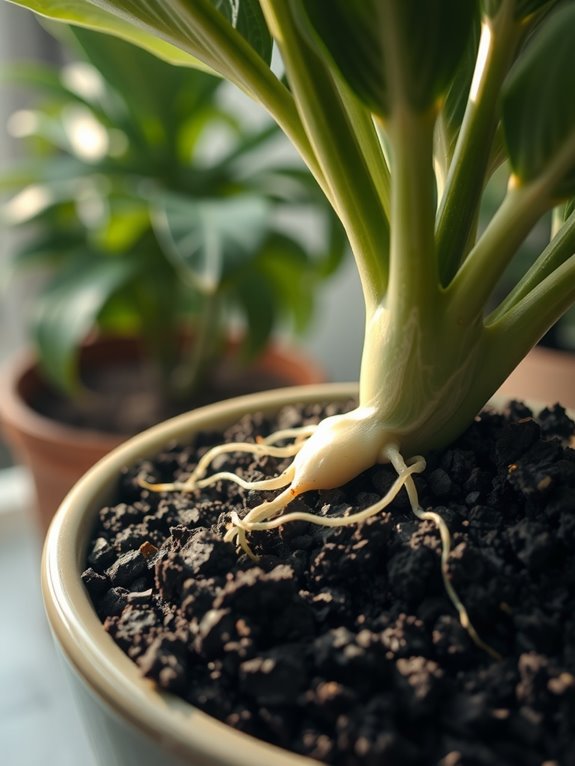
Wait four to six weeks after repotting before you fertilize—those fresh roots need time to settle into their new soil without the stress of nutrients hitting them right away. During this period, watch for signals that your plant is genuinely ready to eat: you’ll notice new leaves unfurling, stems perking up, and that satisfying firmness returning to the foliage when you gently squeeze a leaf.
Once you spot that growth momentum, it’s time to feed. Start with a quarter-strength fertilizer solution to keep things gentle while your plant readjusts to its pot. This diluted approach prevents nutrient burn, which happens when concentrated fertilizer salts damage tender new roots. Think of it like easing someone back into exercise after recovery—you don’t jump straight to heavy lifting.
The reason for this waiting period comes down to simple chemistry. Fresh potting soil contains nutrients already mixed in, so your roots are actually feeding from day one of repotting. Adding more fertilizer too soon creates an excess that can damage those delicate new root hairs. By waiting and watching for growth signals, you let the plant tell you when it’s genuinely hungry rather than guessing based on a calendar.
Fresh Roots Need Time
After you’ve settled your plant into its new pot, patience becomes your best tool—resist the urge to fertilize right away. Your fresh roots need time to explore and establish themselves in the new compost before they’re ready for nutrients.
Think of new roots like explorers mapping unfamiliar territory. They’re busy growing into the fresh compost, which already contains nutrient reserves. Adding fertilizer now overwhelms them and can actually cause damage.
Wait four to six weeks before feeding. This timeframe gives those delicate roots space to develop without chemical stress. You’ll know they’re ready when you spot visible new leaf or shoot growth—that’s your signal to start light feeding.
If your old compost was truly depleted, you can begin gentle nutrition after two to three weeks instead. The timing matters because young roots are tender and sensitive to salt buildup from fertilizers.
New Growth Signals Readiness
How do you know when your repotted plant is genuinely hungry? Watch for new growth signals—they’re your plant’s way of saying it’s ready. When you spot fresh leaves or shoots emerging, you’re witnessing roots that have established themselves in the new compost. This visible growth typically appears around the four to six week mark, though timing varies by plant species and season.
Don’t rush to fertilize just because you’re eager to help. Those new growth signals confirm your plant has recovered from repotting stress and can handle nutrients effectively. Starting with light, diluted nutrients—think quarter-strength fertilizer—protects against fertilizer burn while supporting this tender new development. The reason quarter-strength works is simple: your plant’s roots are still adjusting to fresh compost, so full-strength solutions can overwhelm them and cause damage.
Your plant sends honest signals about what it needs. When those fresh shoots appear, that’s your green light to begin feeding.
While You Wait: How to Care for Your Repotted Plant
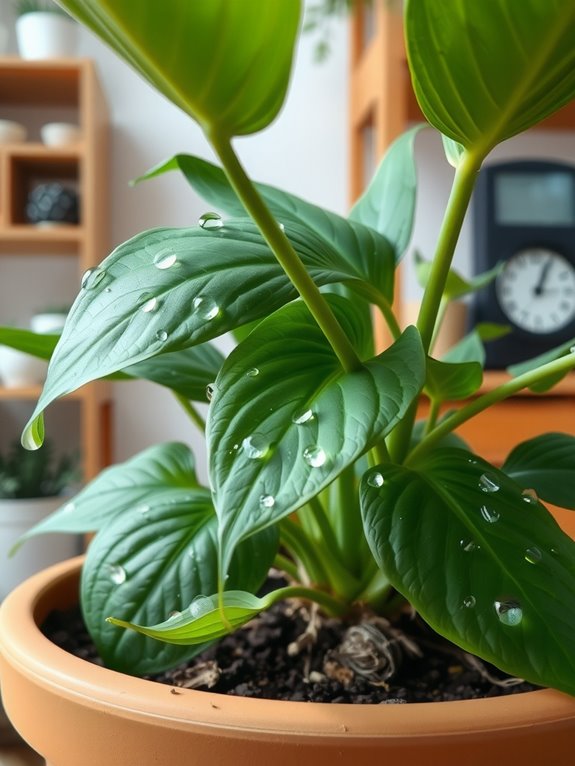
Once your plant settles into its new pot, the waiting game actually works in your favor—hold off on fertilizer for now. Fresh compost already contains nutrients, and your plant needs several weeks to spread roots through it before eating again. Jumping the gun with fertilizer can burn tender new roots that are still establishing themselves.
Instead, dial in the basics that matter most right now. Water when the top inch of soil feels dry to your finger, which typically means checking every few days depending on your home’s temperature and humidity. Bright, indirect light does the heavy lifting for photosynthesis without scorching stressed leaves. Keep the air around your plant from drying out by misting the leaves a couple times weekly or positioning pots near other plants to create a slightly more humid microclimate.
Pay close attention to how the soil feels—it’s your direct line to what’s actually happening in the pot. A good watering routine combined with proper light sets up ideal conditions for new growth. After four to six weeks have passed, you’ll spot fresh shoots pushing out or notice leaves that feel firm and plump again. That’s your signal the plant has recovered enough for a diluted fertilizer at half strength.
Signs Your Plant Is Ready for Fertilizer
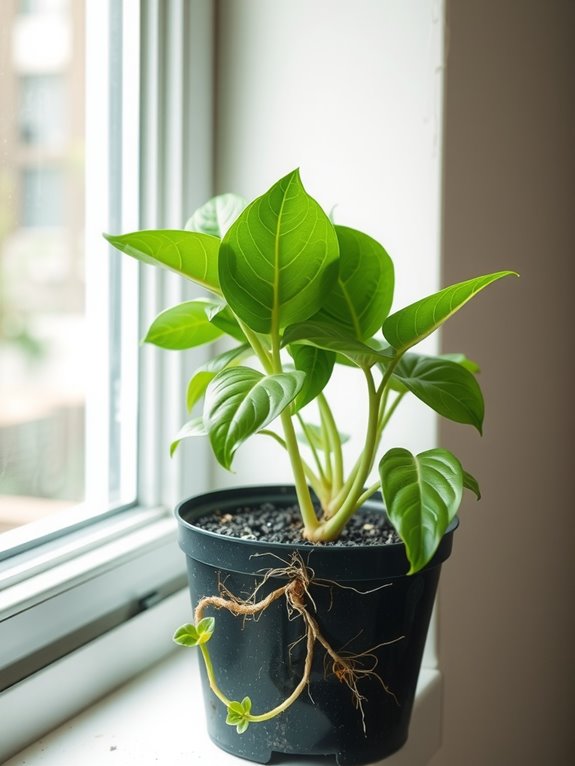
You’ve made it through those first four to six weeks, and now comes the fun part—figuring out when your plant actually wants food. The good news is your plant will basically tell you when it’s ready.
New growth is the clearest signal. When you see fresh leaves or shoots popping out, your plant’s actively building itself back up and can handle feeding. At the same time, check how the existing leaves feel in your hand—firm and bouncy means the plant has recovered from transplant stress, while droopy leaves mean it still needs rest. Your watering routine also tells a story. If water’s moving through the soil at a normal pace instead of sitting there or draining too fast, your root system has settled in and is ready for nutrients.
| Sign | What It Means | Your Next Step |
|---|---|---|
| New growth appearing | Plant’s actively building strength | Begin light feeding |
| Firm, turgid leaves | Recovery from stress is complete | Start monthly fertilizer routine |
| Normal water uptake | Root system has established | Use diluted-strength formula |
| Dormancy in winter | Plant’s naturally resting | Wait until spring arrives |
Once you spot these signals together, you’re ready to move forward. Mix a diluted fertilizer—something like a 10-10-10 formula at half strength works well for most houseplants—and apply it monthly during spring and summer when plants are actively growing. Skip feeding entirely during fall and winter when growth naturally slows down. This measured approach prevents the common mistake of overfeeding, which burns roots faster than underfeeding ever would.
What Happens If You Fertilize Too Soon: Root Burn and Nutrient Lockup
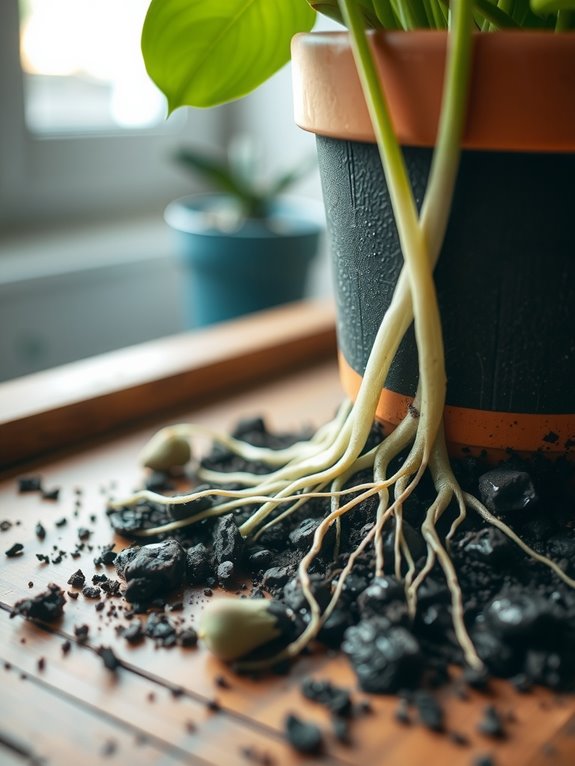
Why rush the feeding schedule when your plant’s roots are basically sleeping? After repotting, those roots enter a temporary dormancy period where they’re not actively soaking up nutrients yet. When you add fertilizer during this phase, it just sits in the soil waiting for roots that aren’t ready to use it.
Here’s the problem that unfolds: fertilizer accumulates around inactive roots without getting absorbed, and salt concentrations build up in the soil around the root ball. That concentrated salt creates a hostile environment that burns delicate root tissues from the outside in. Prolonged exposure leads to root dieback and potential rot, while the accumulated salts also create a nutrient lockup that prevents your plant from accessing the nutrients it actually needs, even after recovery begins.
The irony is that fresh potting soil already contains a baseline nutrient supply—most quality mixes include slow-release fertilizers mixed throughout. Those nutrients will feed your plant for 4-6 weeks depending on the brand. Dumping additional fertilizer on top of that means you’re layering extra salts into an environment where roots can’t process anything anyway.
Wait until you see new growth pushing out from the stems and leaf nodes. That’s your signal that roots have woken up and started actively absorbing water and nutrients again. At that point, you can resume your regular feeding schedule at half strength for the first application, then move to full strength once the plant shows vigorous new growth.
Gentler Alternatives for Repotted Plants: Seaweed, Mycorrhizae, and Rooting Hormones
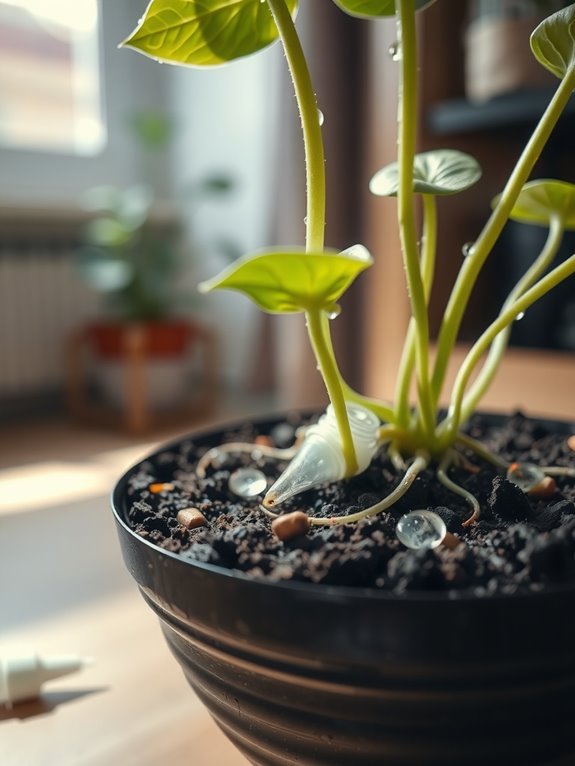
If you’re looking for ways to support your repotted plant without risking the chemical burn that comes with standard fertilizers, gentler alternatives exist. Seaweed-based tonics and humic acid products deliver nutrients so gently that stressed roots barely register the addition. Mycorrhizal inoculants work like invisible helpers, colonizing fresh repotting soil and boosting nutrient uptake through natural fungal networks. Rooting hormones accelerate root establishment during those critical 2–4 weeks post-repotting when your plant needs support without shock.
You can also mix worm castings directly into your fresh compost—typically around 20–30 percent by volume—for slow-release nutrition and improved soil biology. The castings break down gradually, feeding your plant over weeks rather than hitting it all at once. These options work because they respect the plant’s fragile state after the stress of being moved. They’re the practical move for plant parents who want real results without unnecessary risk.
Repotting in Fall or Winter? Expect a Longer Waiting Period

Those gentler alternatives we just covered—seaweed tonics, mycorrhizae, worm castings—they’re genuinely smart moves, but timing matters more than you’d think. Fall and winter repotting throws a wrench into your fertilizer plans.
When you repot during colder months, you’re working against nature’s rhythm. Your plant’s roots stay sluggish, barely active beneath that fresh soil. Here’s what actually happens: roots remain dormant longer, which increases fertilizer burn risk since they can’t absorb nutrients quickly. Most potting soils already pack 4 to 8 weeks of nutrients into their mix, so you’re adding more than your plant needs anyway. New growth signals when roots wake up and start working again.
The smarter move is waiting until you spot fresh leaves unfurling. That visible growth is your plant’s green light saying roots are ready to feed. Holding off on fertilizing until spring typically means safer feeding windows with less risk of salt buildup in the soil around those vulnerable new roots.
Watch for New Leaves: That’s Your Signal to Start Feeding
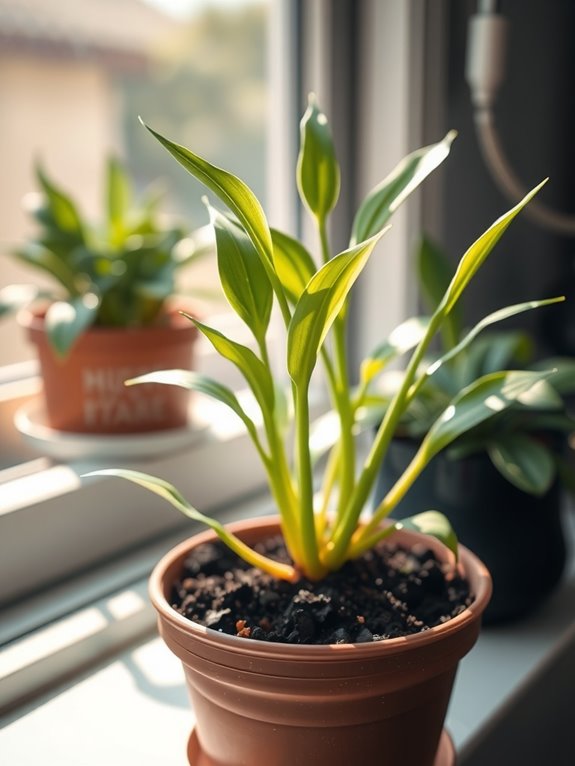
You’ll know your plant’s ready for nutrients when you spot fresh leaves or shoots pushing out. That visible growth signal matters because it tells you your plant has developed enough roots to actually use the food you’re giving it, rather than wasting fertilizer on a weak root system.
Once those new leaves start unfurling, mix up a diluted fertilizer at about 1/4 strength and apply it on a light, regular schedule. The reason you start weak is simple: young growth is tender and can get burned by full-strength nutrients, but a gentler dose feeds the plant without shocking it. You’re basically letting your plant’s own signals do the guessing for you instead of wondering if it’s ready yet.
New Growth Indicates Readiness
How do you know when your repotted plant’s actually ready for nutrients? You’re looking for new growth—that’s your green light. Fresh leaves unfurling from the stem tips, visible shoots extending beyond existing foliage, and vibrant coloring on emerging leaves instead of pale growth all signal that your plant’s roots have established themselves in the fresh soil.
Once you spot this new growth, your plant is communicating something straightforward: the root system has settled in and can now support feeding beyond what potting soil provides. This timing matters because it protects against fertilizer burn while giving your plant what it actually needs.
Start with a light feeding at quarter-strength—so if your fertilizer calls for one tablespoon per gallon, use about one-quarter teaspoon instead. This measured approach lets you gauge how your specific plant responds before moving to full-strength applications. The accelerated growth pace you’ll notice after that initial slow period following repotting is your confirmation that you’re feeding at the right moment.
You’re not rushing this step; you’re responding to what your plant shows you. That distinction makes the difference between feeding responsibly and creating problems that take weeks to fix.
Timing Your First Feeding
Once you’ve spotted new growth confirming your plant’s roots have settled into the fresh compost, you’re ready to think about feeding. The timing here really does matter because starting too early can damage those tender new roots. Give it a solid four to six weeks before adding any fertilizer, letting the roots spread through the compost without the shock of nutrients hitting them all at once.
When that waiting period ends, mix up your fertilizer to just 1/4 strength instead of the full concentration listed on the package. This gentler approach lets you see how your particular plant responds while cutting down on fertilizer burn—those brown, crispy leaf edges that mean you’ve overdone it. Pay attention to what happens over the next couple of weeks, watching for signs like new leaves unfurling steadily and healthy color developing.
If you repotted during the fall or winter months, skip the fertilizer step entirely until you see active spring growth appearing on your plant. The plant’s simply not using nutrients as quickly during cooler seasons, so anything you add now just sits in the soil. By waiting and spacing out your feeding schedule carefully, you’ll end up with plants that grow steadily and stay healthy through the seasons ahead.
Start With Diluted Fertilizer: A Lighter Touch for Recovery
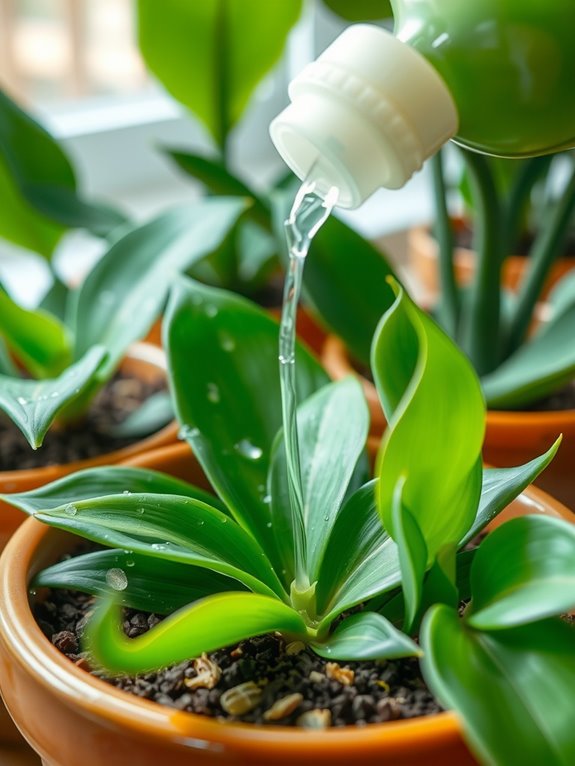
When your freshly repotted plant starts looking hungry, resist the urge to feed it full strength. Your plant’s roots are still recovering, and aggressive fertilizer dosing will burn them. Instead, adopt a gentler approach.
Mix your fertilizer at 1/4 strength—so if the label says one teaspoon per gallon, you’d use just a quarter teaspoon. This lighter concentration eases sensitive roots back into feeding without chemical shock. Apply this diluted solution every two weeks, watching carefully for how your plant responds over the next few weeks.
The real signal you’re waiting for is new growth. When you see fresh leaves emerging, that’s your plant telling you it’s ready for slightly more nutrition. At that point, you can gradually bump up the concentration, moving from 1/4 strength toward 1/2 strength over the course of a month.
Think of diluted fertilizer as a gentle reintroduction rather than a full meal. Your plant doesn’t need aggressive nutrition right now; it needs stability while roots establish themselves in fresh soil. By starting lighter, you’re giving those delicate root hairs the chance to adjust without getting singed by salts building up in the soil. This measured approach builds stronger, more resilient plants that’ll perform well for years to come.
What If Growth Doesn’t Resume? Nutrient Depletion After Two Weeks
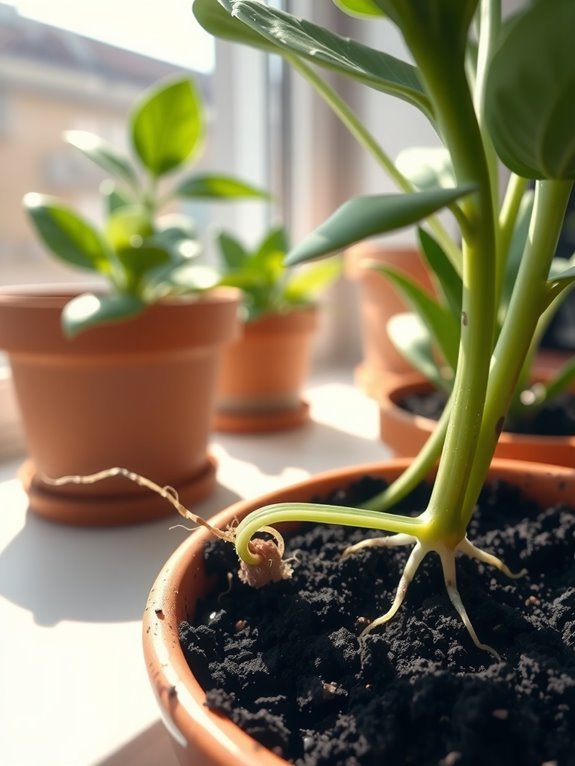
If two weeks have passed without fresh shoots appearing, something’s worth investigating—either your soil is running low on nutrients or your roots are just taking their sweet time getting established. Grab an inexpensive soil test kit from your local garden center and check the nitrogen, phosphorus, and potassium levels. These three nutrients are the heavy hitters your plant needs most.
While you’re waiting for test results, look at your plant’s leaves. Yellowing foliage or stunted growth are pretty reliable signals that feeding might help. Once you spot those first hints of new growth breaking through, it’s time to act carefully. Mix a half-strength fertilizer solution—this means using half the amount recommended on the bottle—and apply it gently around the base. This gentler approach supports recovery without overwhelming tender emerging roots, which can’t handle a full-strength dose without getting burned.
The timing here matters. Applying fertilizer before growth really starts tends to do more harm than good, so patience pays off. Wait for those green shoots to show up first, then feed.
Signs Of Nutrient Deficiency
- Pale new growth that lacks the vibrant color you’d expect
- Interveinal chlorosis, where leaf veins stay green but tissue between them yellows
- Stunted or noticeably slow development compared to your plant’s typical pace
- Overall sluggish performance despite proper light and watering
These symptoms tell you something important: your potting mix has probably run out of nutrients or you’re working with reused soil that’s been depleted. Fresh soil can trick you because it looks healthy and full of promise, but it actually contains very little nutrition for long-term plant growth. This is when feeding your plants with a balanced fertilizer—something like a 10-10-10 NPK formula applied every two weeks—becomes your next step. Many plant parents figure out nutrient needs the hard way, but catching these signs early means you can correct the problem before real damage happens.
Testing Soil Before Feeding
Two weeks after repotting, it’s easy to assume your plant needs feeding when it’s looking a bit flat. Before you grab the fertilizer bottle, pause and test your soil first. A simple soil test tells you whether nutrients are actually missing or if your plant is just settling into its new environment. Pick up an affordable test kit from your garden center, or send a soil sample to your local extension office for more detailed analysis.
When test results show nutrient depletion, a light feeding at one-quarter strength makes sense, spaced at least two weeks apart. If your soil reads adequate in nutrients, skip feeding altogether. New roots spreading through fresh compost need time to establish themselves, not an extra boost of food right now. Holding back prevents the stress that comes from overfeeding a plant that’s already adjusting to change.
Common Mistakes That Cause Root Burn and Plant Decline
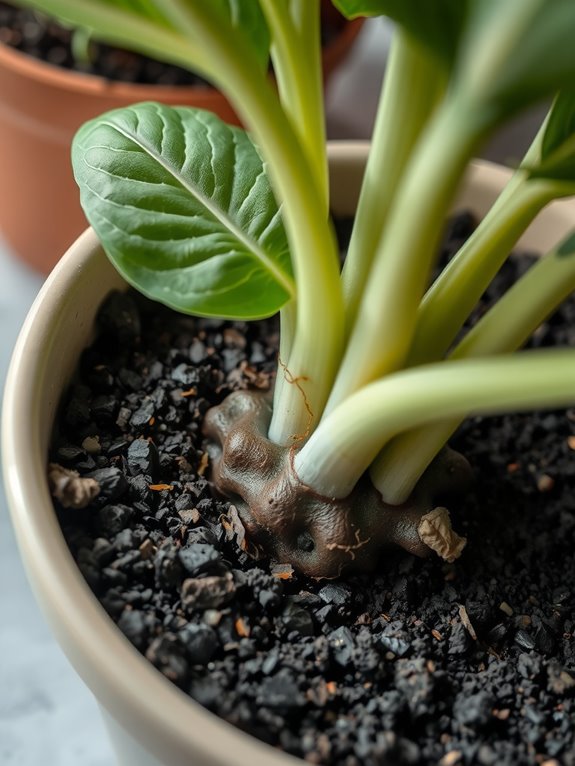
One of the quickest ways to sabotage your freshly repotted plant is feeding it too soon. Your roots aren’t ready yet, and that’s the honest truth. When you overfeed right after repotting, you’re essentially asking for trouble.
Here’s what goes wrong. Roots temporarily stop absorbing nutrients, causing fertilizer to accumulate and burn delicate root tissues. Stressed roots can’t process minerals effectively, leading to nutrient toxicity instead of growth. You’re also adding salt buildup to already-sensitive plants recovering from transplant shock. All of this damages the very roots you’re trying to help establish.
Instead, wait two to three weeks before feeding. Let your plant settle in and adjust to its new home. Fresh potting soil already contains the nutrients your plant needs during this recovery period. Watch for new leaves first—that’s your signal to fertilize lightly with a diluted solution at half strength. Patience here prevents decline later.
Can You Feed Repotted Plants Immediately? Your Top Questions Answered
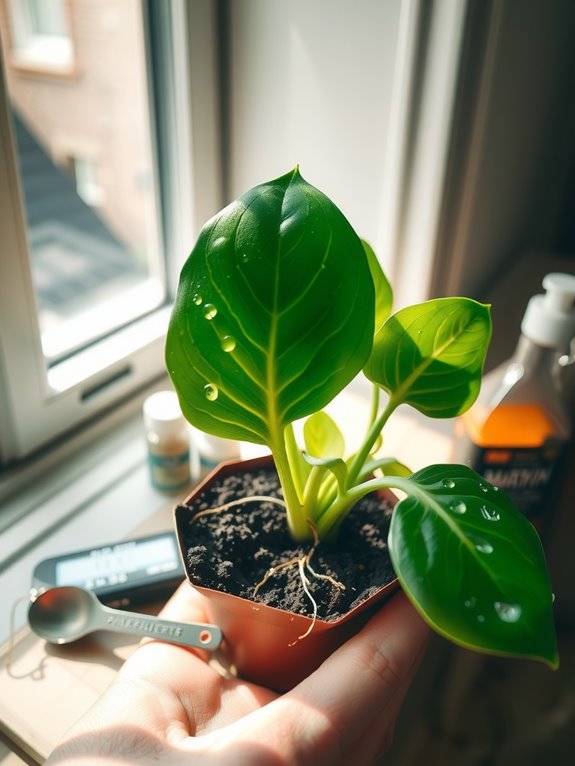
When should you actually start fertilizing after repotting?
Hold off on feeding your plant right after repotting. Your roots need about two weeks to adjust to their new home without the stress of fertilizer, which can actually burn tender new growth. The fresh potting soil you’ve used already has nutrients built in, so your plant won’t be hungry during this settling-in period.
Once those two weeks have passed, start with 1/4 strength diluted fertilizer and watch how your plant responds before you increase the concentration. If you’re uncertain about your potting mix’s nutrient content, bump the waiting period up to three weeks instead.
Winter repotting calls for different timing altogether. Skip fertilizing entirely until you see new growth emerging, since plants slow down dramatically during colder months and are much more prone to fertilizer damage. The waiting game pays off by keeping your plant healthy and preventing unnecessary problems down the road.
How to Monitor and Adjust Your Feeding Schedule Over Six Months
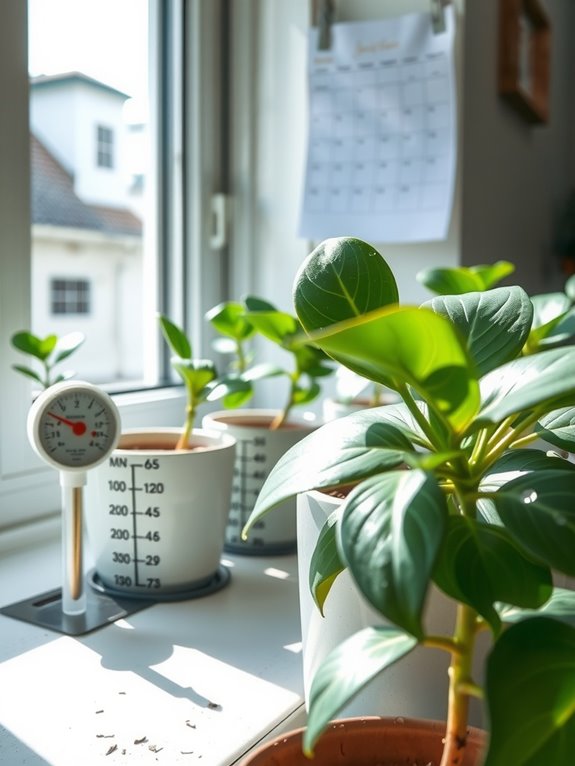
Your repotted plant is settling in, and now the real work begins—getting the feeding schedule right. Patience during this adjustment period pays dividends in healthy growth and root development.
Weeks 1–2: Let It Recover
Skip fertilizer entirely while your plant recovers from repotting stress. Instead, watch for wilting or yellowing leaves, which signal that the roots need time to establish in the fresh potting soil. The new medium already contains nutrients that’ll sustain your plant for several weeks.
Weeks 3–6: Start Slow with Quarter Strength
Once you spot new leaves emerging, begin feeding with a quarter-strength fertilizer solution mixed into your regular watering cycle. At this stage, your plant is signaling it’s ready for supplemental nutrients, and diluted feeding prevents salt buildup in the soil.
Months 2–4: Increase Gradually as Growth Accelerates
If leaf production speeds up and stems lengthen noticeably, bump up to half-strength fertilizer. Watch how your plant responds over two to three weeks—faster growth means you can inch toward full strength. Slower growth means holding steady at half strength a bit longer.
Months 4–6: Full Strength with Seasonal Adjustments
Building Long-Term Nutrition Habits After the First Year
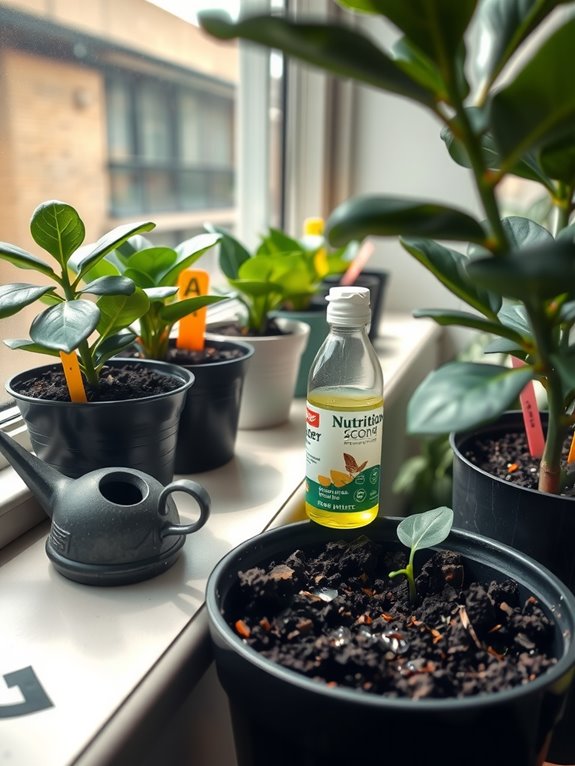
By month twelve, you’ve worked through the post-repotting phase and found what keeps your plant happy. Since consistency matters more than constant adjustments, stick with the schedule that’s working for you.
Your plant now has a mature root system that processes nutrients efficiently, so regular feeding becomes your main tool. During active growth in spring and summer, apply diluted fertilizer every two to three weeks. This keeps nutrients available without overwhelming the roots. As temperatures drop and growth slows, ease back on feeding—monthly applications or even a complete pause during winter dormancy work well depending on your plant’s type.
Here’s what a realistic seasonal schedule looks like:
| Season | Frequency | Strength |
|---|---|---|
| Spring/Summer | Every 2-3 weeks | Half strength |
| Fall | Every 4 weeks | Quarter strength |
| Winter | Monthly or pause | Quarter strength |
The leaves themselves tell you whether you’re on track. Yellowing foliage usually means the plant is hungry and needs more regular feeding. Brown leaf tips point to overfeeding—a sign to dial back your frequency or dilute the fertilizer further. Between waterings, feel the soil about two inches down with your finger; it should feel slightly dry before you fertilize again.
Your observations matter more than following any single rule perfectly. Small adjustments based on what you actually see—rather than strict adherence to a calendar—keep plants growing steadily through the seasons.