You don’t strictly need UV light for basic growth—plants photosynthesize fine with red and blue wavelengths alone. However, adding UV to your spectrum does pull out results that red and blue can’t quite reach on their own.
UV-A light, which sits around 315-400 nanometers in the spectrum, boosts leaf size and increases resin production in many plant varieties. UV-B, the shorter wavelength between 280-315 nanometers, triggers your plants to produce protective compounds that enhance flavor and potency by strengthening cell walls and concentrating secondary metabolites.
Think of UV like seasoning in cooking—your baseline meal works without it, but the right additions make something noticeably better. The real payoff happens when you use UV strategically during your final three weeks of flowering. That timing matters because plants respond to UV stress by ramping up their defense mechanisms, which translates directly into the compounds you’re after.
Dosage and timing are what separate good results from mediocre ones. Most growers see benefits from 2-4 hours of daily UV-B exposure during late flowering, though you’ll want to monitor your plants closely since too much can cause leaf damage. Start conservative with about 2 hours per day and adjust based on how your plants respond.
The specifics really do make the difference between plants that grow adequately and plants that perform at their potential.
What Is UV Light and Where Does It Come From?
UV light sits in that sweet spot between 10 and 400 nanometers, and here’s what matters: it’s already part of your world. You get it from sunlight naturally, so there’s nothing exotic about adding it to your grow room setup.
The two types worth knowing are UV-A (320–400 nm) and UV-B (290–320 nm), and they work differently on your plants. UV-A handles photomorphogenesis, which is just the fancy term for how plants build their shape and structure while ramping up their pigment production. UV-B does something more targeted—when you use it carefully, it triggers your plants to create protective compounds that boost flavor and resin development.
If you’re running an indoor setup, you can get UV-A from HID bulbs, T5 fluorescent tubes, or LED diodes. Each option delivers that UV wavelength your plants respond to without needing to hunt down anything unusual or hard to find. Think of UV as a precision tool in your spectrum toolkit, designed specifically to sharpen plant quality rather than just add light.
UV-A vs. UV-B: Which Wavelengths Matter for Plants?
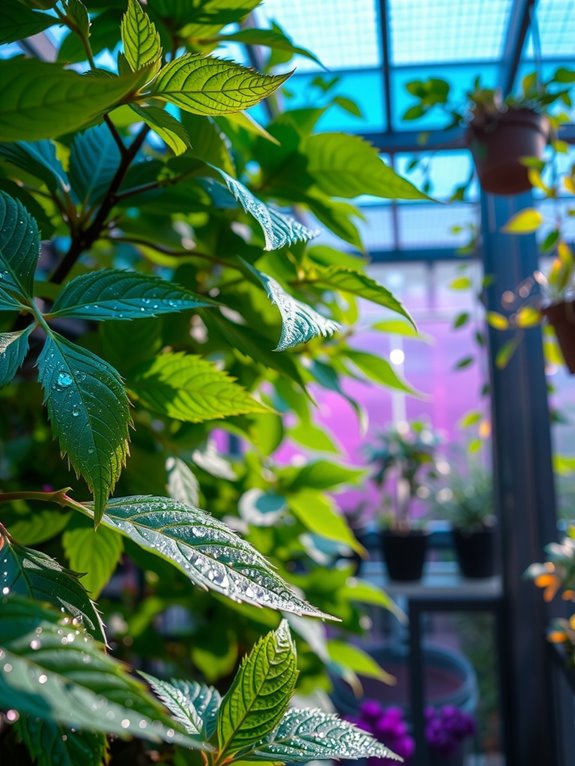
Now that you know UV light exists in your grow room, it’s time to understand which types actually do what you need. UV-A (315–400 nm) works by triggering photomorphogenesis, which is how plants develop their physical structure in response to light. This wavelength boosts the pigments that give your plants their color, while also increasing resin production along with flavonoids and terpenes—the compounds responsible for smell and taste.
UV-B (280–315 nm) operates differently. Moderate exposure triggers protective stress responses in plants, prompting them to build secondary metabolites that strengthen their resilience against environmental challenges. The tricky part is dosage. Too much UV-B bleaches plant tissues and stunts growth, so you’ll need to dial in the intensity carefully rather than assuming more is better.
Think of UV-A as your everyday essential light and UV-B as your strategic booster you use with intention. Together, they create a balanced approach to plant development. The key is knowing when and how much of each wavelength your specific plants need for the results you’re after.
Do Plants Need UV Light to Grow?
Your plants will grow just fine without UV light, and they’ll photosynthesize effectively using only red and blue wavelengths. Basic plant growth doesn’t require UV exposure at all—it’s genuinely optional rather than essential.
That said, many growers add UVA or UVB light strategically to push their results beyond baseline. Here’s what shifts when you include moderate UV in your spectrum:
| Benefit | Without UV | With Moderate UV |
|---|---|---|
| Photosynthesis | ✓ Works great | ✓ Works great |
| Stem strength | Standard | Noticeably robust |
| Flavor & aroma | Good | Enhanced |
UVA light (315–400 nm wavelength) gradually boosts the pigments your plants produce naturally. UVB light (280–315 nm) creates mild stress that prompts plants to build protective compounds as a defense response. Think of it like this: your plants reach their baseline without UV, but adding it as supplemental spectrum gives you measurably stronger stems and more developed flavor profiles.
When UV Boosts Plant Quality (And When It Doesn’t)
UV light won’t make or break basic plant growth, but it genuinely improves your final product. Red and blue wavelengths handle the fundamental growth work just fine on their own. When you add UV exposure strategically during late flowering, though, something worthwhile happens. UV-A boosts pigment production and terpene development, which means better flavor and aroma in your harvest. UV-B creates mild plant stress that triggers the production of protective compounds, increasing both potency and resilience. The key is keeping exposure brief—around two hours daily works well, not all-day coverage. This measured approach during late flowering separates a decent harvest from a noticeably better one. You’re fine-tuning quality without throwing off the balance between growth and final product characteristics.
How UV-A Increases Leaf Size, Biomass, and Growth Rate
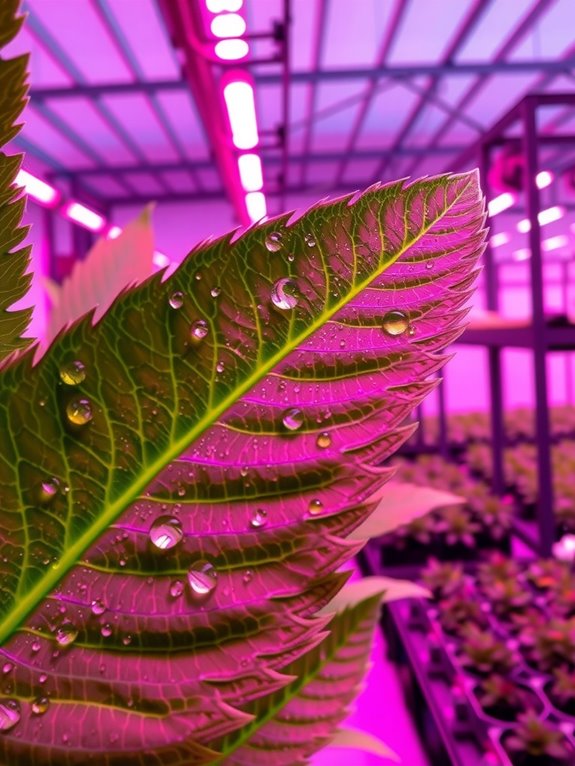
Why do plants exposed to UV-A light often develop noticeably larger leaves and pack on biomass faster than those grown under standard red and blue spectrums alone? The answer comes down to photomorphogenesis—the process where UV-A wavelengths between 315 and 400 nanometers trigger your plants to redirect energy toward structural growth. When you add UV-A to your setup, you’re sending a signal that conditions favor expansion, and plants respond by enlarging their leaf surface area.
More leaf surface means more photosynthetic capacity working for you, which naturally speeds up biomass accumulation. The growth doesn’t stop at the leaves either. Your plants strengthen their root systems at the same time, building a more balanced and sturdy plant from top to bottom. As a bonus benefit, plants exposed to UV-A synthesize additional flavonoids—the compounds that boost their ability to handle stress and maintain health over time. You’ll notice these plants look visibly fuller and more robust compared to ones grown without UV-A input.
How UV-B Triggers Protective Compounds for Flavor and Aroma
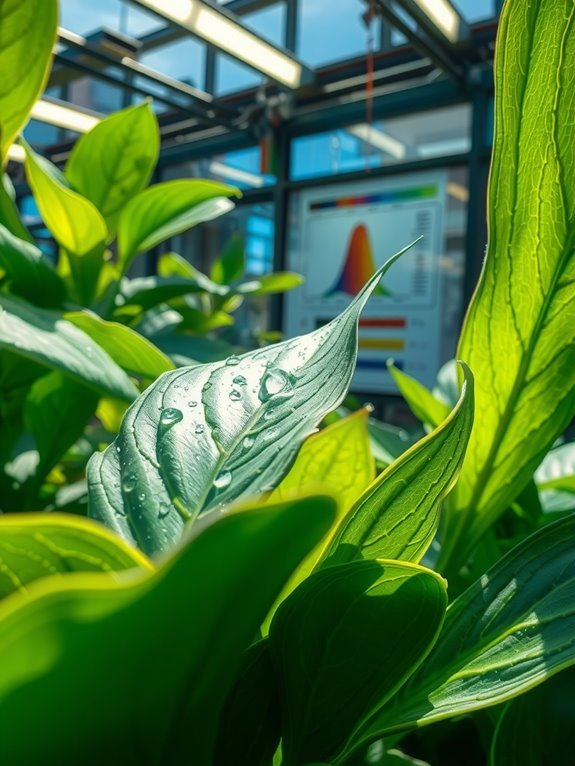
When you expose your plants to UV-B light at wavelengths between 280–315 nanometers, you’re triggering a mild stress response that activates their natural defense systems. This controlled stress ramps up flavonoid and terpene production—those compounds responsible for the deep, complex taste and aromatic qualities you’re looking for in your crops.
The tricky part is getting the dosage right. You’re aiming for around 2–6 micromoles per square meter per second of UV-B radiation. Too little, and you won’t get the flavor boost you want. Too much creates tissue damage that actually hurts photosynthesis and plant health.
Here’s what makes this work: UV-B light doesn’t perform well on its own. You need to integrate it with your full light spectrum—your regular grow lights or natural sunlight acting as the foundation. Think of UV-B as the seasoning rather than the main ingredient. Balance matters because that’s what converts plant stress into measurable quality improvements rather than just plant damage.
The timing piece matters too. You don’t run UV-B continuously throughout the day. Strategic exposure during specific growth stages, usually a few hours during peak light hours, gives you better results than constant bombardment. Your plants need recovery time between exposures to synthesize those valuable compounds without getting burned out.
UV-B Wavelength Activation Mechanisms
Think of UV-B light as a wake-up call for your plants’ defense systems. When you expose plants to moderate UV-B wavelengths between 290–320 nanometers, you trigger their natural stress response. Your plants activate protective compounds like flavonoids and phenolics that shield cells from damage. This defense strategy boosts flavor, aroma, and color at the same time.
The mechanism works because moderate stress pushes plants to produce more secondary metabolites—those compounds responsible for taste and appearance. Too much UV-B, though, overwhelms them. Excessive exposure causes bleaching and stunted growth, so balance matters. You’re asking your plants to work a bit harder, and they respond by developing richer chemical profiles.
Pair UV-B strategically with red and blue light during specific growth stages for the best results. Red light supports flowering and fruiting, while blue light promotes compact growth and chlorophyll production. Adding UV-B at the right moments creates a complementary effect across all three wavelengths. This combination approach works because different light spectrums trigger different metabolic pathways in plant tissue simultaneously.
Flavonoid And Terpene Production
By activating your plant’s built-in stress response, moderate UV-B light becomes a flavor and aroma amplifier rather than a threat. When you expose plants to carefully calibrated UV-B wavelengths, you’re flipping a switch that triggers protective compound production.
How UV-B Stimulates Flavor and Aroma Compounds
Your plants ramp up flavonoid production as a defense mechanism when exposed to UV-B, directly enhancing taste complexity and nutritional value. At the same time, terpene concentrations intensify, boosting aroma and creating that signature sensory experience you’re after. Secondary metabolites like resins and pigments accumulate strategically, strengthening both flavor profiles and plant resilience simultaneously.
Getting the Timing and Intensity Right
This is where precision matters. Apply UV-B during specific growth windows with exact duration and intensity measurements. Too much exposure damages plant tissues and actually degrades those protective compounds you’ve worked to build up. The balance between stimulation and damage is narrow but manageable with attention to detail.
Most plants respond well to 2-4 hours of UV-B daily during the flowering or final growth stages, depending on your species. Start at lower intensities around 0.5-1.0 watts per square meter and increase gradually over a week or two, watching for leaf damage or bleaching. If leaves start looking scorched or papery, dial back your duration or intensity immediately. Your plants will tell you when you’ve crossed the line.
Optimal Exposure For Quality Enhancement
How do you know you’re actually enhancing your plants rather than just stressing them out? The trick lies in mastering UV-B dosing—it’s genuinely a sweet spot situation. When you apply moderate UV-B exposure in the 290–320 nanometer range, you’re triggering protective compounds that boost flavor and aroma without damaging leaf tissues. Think of it like seasoning: too little does nothing, too much ruins the dish.
Timing matters more than you might think. Start with shorter exposures—maybe 15 to 20 minutes per day—and gradually increase duration while watching for any leaf damage signals like browning or bleaching. Keep intensity controlled as you build up, since your plants need time to adapt to the stress stimulus without actually getting harmed.
Pairing UV-B with red and blue wavelengths creates the real magic here. That combination builds stress resilience in your plants, which means they develop richer terpene profiles and deeper flavonoid concentrations alongside increased resin production. You’re not just stressing vegetation—you’re triggering the protective systems that make plants genuinely better in flavor, potency, and aroma.
The Risks: Why Excessive UV Causes Bleaching and Tissue Damage
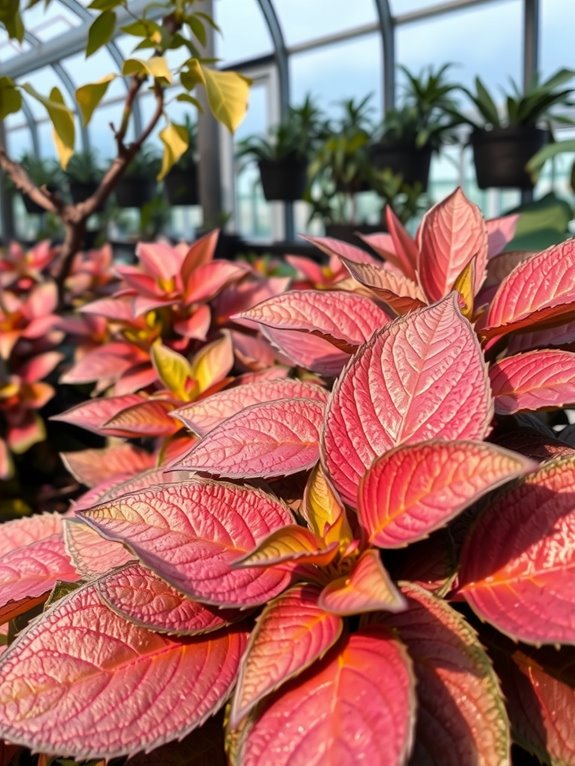
While UV light does boost those desirable flavonoids and terpenes your plants need, too much exposure bleaches leaves and fruits pretty quickly. This bleaching damages the chlorophyll and carotenoids that give plants their color and let them absorb light efficiently. Think of it like a sunburn on your skin—your plants have a tolerance threshold, and once you exceed it, their cell structures break down. This cellular damage stunts growth, reduces photosynthesis, and tanks your final yield.
The tricky part is that UV intensity, duration, and your specific plant type all interact with each other. A tender seedling can’t handle the same 300-watt UVB lamp for 12 hours that a hardened mature plant might tolerate. You’re aiming for that sweet spot where you’re building protective compounds without cooking the very tissues you’re trying to strengthen. Start with shorter exposure windows—maybe 15-20 minutes per day for UV-sensitive species—and watch your plants closely for signs of bleaching or wilting. If you see pale patches or papery leaf texture developing, dial back either the intensity or duration. Getting this balance right means you’ll actually see the color and potency improvements you’re after, rather than watching your investment wither under excessive light stress.
Bleaching And Tissue Damage
When you dial up UV light without caution, you’re largely burning your plants from the inside out. Excessive UV exposure damages the delicate systems keeping your plants healthy and productive.
Chlorophyll breakdown happens when UV rays bleach the pigments responsible for capturing light energy. Think of it like overexposing film—the colors fade, and your plants lose their ability to photosynthesize effectively. Growth stops almost immediately because the plant can’t convert light into the energy it needs to survive.
Tissue damage spreads across your entire plant. Leaves, fruits, and buds all suffer bleaching and discoloration as UV radiation penetrates their cell walls. Once those tissues weaken, your plant struggles to absorb the light spectrum it needs for basic functions. A plant with damaged leaves simply can’t do its job, no matter how much light you’re providing.
The solution comes down to balance and smart planning. Proper distance matters—most UV grow lights work best between 12 to 24 inches from your plants, depending on the wattage and your plant species. Control your exposure duration by starting with 4 to 6 hours daily, then gradually increasing based on how your specific plants respond. Different plants have different sensitivities, so watch for early signs of bleaching or browning. You’re aiming for the benefits of UV light without the destruction that comes from pushing too hard, too fast.
Overexposure Prevention Strategies
Why do so many growers end up with crispy, bleached plants after adding UV light? You’re probably pushing too hard, too fast. The trick is understanding what your plants can actually handle at each stage of growth, then building from there.
Keep your UV intensity in the moderate range—think 40 to 60 micromoles per square meter for most species. This matters because plants need time to develop the protective compounds that help them tolerate UV rays. Position your lights 12 to 24 inches above your canopy, which gives you room to adjust without creating hot spots. Cap your daily exposure at 8 to 12 hours, letting plants recover during darkness when they repair and strengthen themselves.
The real payoff comes from starting conservative and watching how your plants respond over a couple of weeks. If leaves stay green and the stems look solid, you’re in good shape. If you notice any bleaching or papery texture, dial it back. This gradual approach protects everything else you’re doing with your light spectrum while building stronger growth from the ground up. Tissue damage from overexposure takes weeks to recover from, so it’s worth being patient on the front end.
UV Safety: Optimal Distance and Exposure Duration
UV safety with your plants really comes down to finding that balance between giving them helpful light and accidentally cooking them. The good news is that once you understand the basics, it’s pretty straightforward to get right.
Position your UV lamp between 12 and 24 inches above your plant canopy, and adjust based on what your specific lamp’s intensity rating tells you. A lamp rated at 10,000 microwatts per square centimeter will need to sit higher than one rated at 5,000 microwatts per square centimeter. Start conservatively with just 30 minutes of daily exposure, then only increase the duration if your plants show no bleaching or discoloration after a week or two of observation.
The sweet spot for UV supplementation is during the final three weeks of flowering, when your plants naturally produce more protective compounds and can actually use that light effectively. Once you’re in that window and confident about your distance, you can bump up to two hours daily without much risk. Watch your leaves closely during this period—whitening, papery texture, or any tissue damage means you’re overdoing it and need to back off immediately. The goal here is supporting your plants’ natural defenses, not stressing them out with excessive light energy.
Building Pest and Disease Resistance Through UV
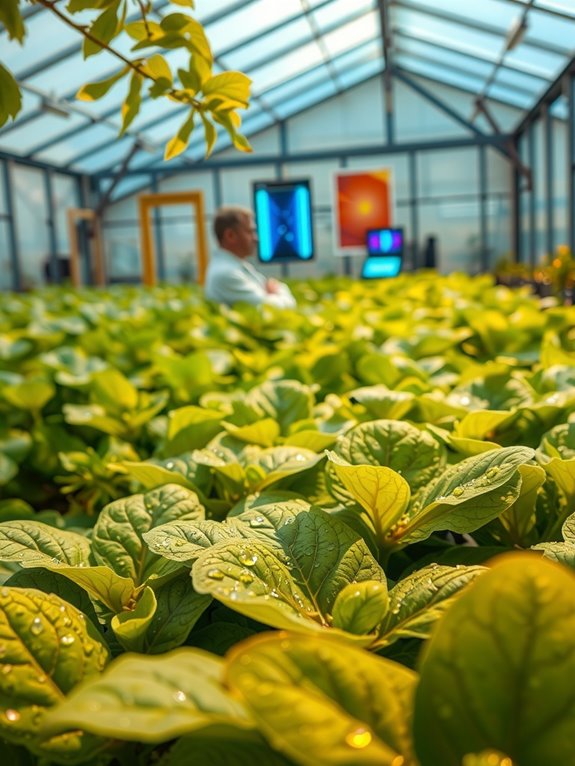
Beyond protecting your plants from UV damage, you’re actually triggering their own built-in defense system. When you expose plants to moderate UV-B levels—around 0.5 to 1.0 watts per square meter—you activate production of protective compounds like flavonoids and anthocyanins that naturally boost pest resistance. Think of it as giving your plants biological armor.
UV-A radiation works through a process called photomorphogenesis, thickening plant tissues and increasing resin production. Both of these changes make your plants physically harder for pests to damage. The denser cell structures and tougher stems become real barriers that insects struggle to penetrate.
The practical approach: use UV strategically during your final 2-3 weeks of flowering rather than exposing plants continuously. This targeted timing builds resilience without pushing your plants into stress damage territory. You’re coaching them into tougher versions of themselves that naturally defend against the threats they’ll face, without burning them out in the process.
Which Grow Light Systems Emit UV Naturally?
Not all grow lights produce UV the same way, and if you want to add UV to your setup, you’ve got solid options worth considering. More growers are recognizing UV’s role in boosting plant quality, so you’re in good company.
HID lamps (HPS and MH types) naturally emit UV wavelengths as part of their standard output, no special modifications needed.
UV-emitting T5 bulbs deliver both UV-A (320–400 nm) and the less common UV-B (290–320 nm) when you match them with the right power ratings. Pairing them properly makes a real difference in what you actually get.
Advanced LED systems from brands like California Light Works or MINT LED integrate UV-B diodes straight into the fixture itself, sometimes included at base prices rather than sold separately.
The practical part: position your UV setup at the same height and power level as your other bulbs so plants get even exposure across the whole canopy. Different heights mean some areas get blasted while others miss out. The wavelengths you’re after—UV-B especially—work to boost flavor and resin development in ways your plants respond to directly.
Adding UV to HID Lights: T5 Supplementation Strategy
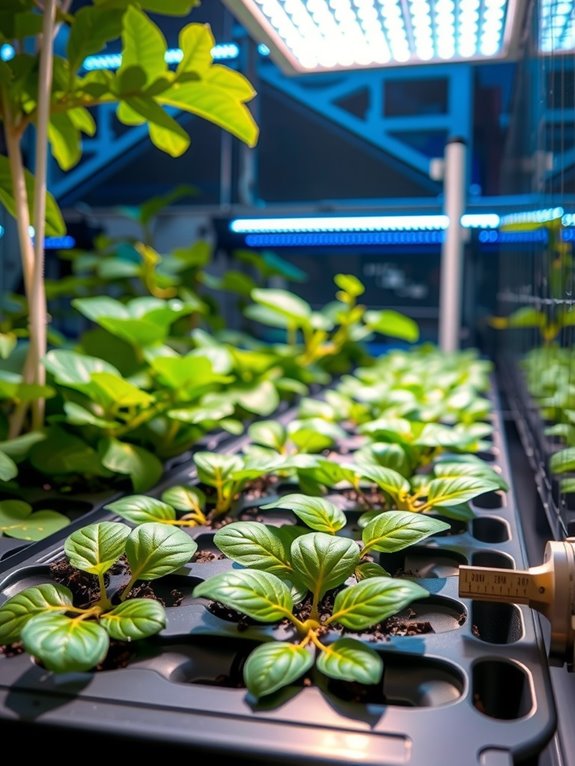
If you’re running HID lights and want to push your plant quality further, UV-T5 supplementation works well alongside your existing setup without requiring any major changes. These bulbs fill spectrum gaps that HID lights alone can’t quite reach, which translates to better flavor, aroma, and resin production on your final harvest.
Match your UV-T5 bulbs’ wattage to your other T5s—this keeps light intensity consistent across your canopy. Mount them at the same height as your regular T5s to prevent hotspots that can bleach leaves. The positioning matters because uneven light creates problems you’ll want to avoid.
Timing makes a real difference here. Two hours of UV exposure during the final three weeks of flowering gives you solid results without stressing your plants. This concentrated approach during late flowering works better than spreading it throughout your entire cycle, since that’s when your plants are most responsive to spectrum fine-tuning.
The whole setup costs considerably less than upgrading your HID fixtures, and you get noticeable improvements in plant quality. You’re basically adding finishing touches that separate a decent harvest from one you’ll actually be proud of.
Upgrading LED Lights With UV-B Diodes
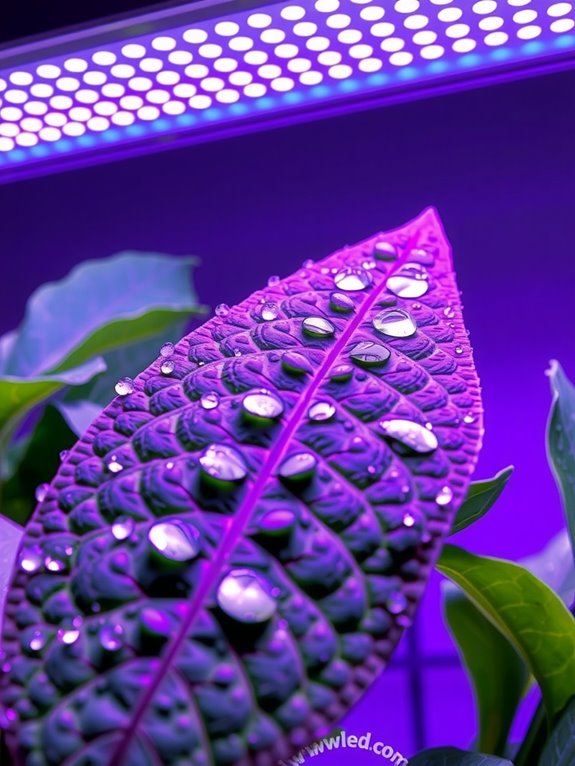
LED growers have a real advantage here—you can add UV-B diodes straight into your existing fixture without wrestling with the mounting headaches that come with supplemental T5s. When you’re ready to upgrade, here’s what actually works:
Position your UV-B diodes at the same height as your red and blue LEDs so light hits your plants uniformly without creating bleached or burned spots on top leaves. This matters because uneven UV-B exposure causes damage faster than you’d expect.
Keep your total light intensity in the same ballpark so you’re not bombarding plants with UV-B that scorches tissue and stunts growth. Think of it like seasoning food—a pinch enhances flavor, but dumping the whole shaker ruins the dish. Most growers find 3-6 micromoles per square meter per second (µmol/m²/s) of UV-B works well alongside standard LED spectrums without causing problems.
Use your UV-B dosage strategically and sparingly to trigger those plant compounds like flavonoids and secondary metabolites that boost aroma and taste. You don’t need UV-B running 12 hours a day—many growers see good results with just 2-4 hours during the photoperiod, or even shorter pulses a few times per week.
UV-B exposure won’t make or break basic growth, but pairing these diodes with your existing spectrum fine-tunes what you’ve already built. You get better stress resilience and richer flavor profiles without the hassle of installing separate fixtures. It’s practical tinkering that fits right into your current setup.
Is UV Worth It? Weighing Costs Against Benefits
So you’re wondering whether dropping money on UV diodes actually pays off, or if you’re just chasing hype.
UV exposure genuinely boosts resin production and stress tolerance in plants, which means better flavor, aroma, and pest resistance. But here’s the thing—you don’t actually need UV to grow plants successfully. Red and blue light handle photosynthesis just fine on their own. UV is more like the optional upgrade that polishes your final product.
The real question is whether those gains justify what you’ll spend. If you’ve already got a solid LED setup running, adding UV-B diodes during final flowering weeks makes practical sense. The key is keeping the dose modest—around two hours per day maximum—and maintaining proper distance to prevent leaf bleaching. Results vary depending on your specific spectrum and what plant species you’re growing, so it’s worth researching your exact setup before buying anything.
Sometimes the best investment isn’t new equipment at all. It’s actually understanding what you’re growing and how your current lights are already working for you.