

Yes, you can propagate snake plants successfully using three straightforward steps.
Start by picking your method. Division is your best bet if you want to keep those pretty striped patterns intact, since you’re working with established plant sections. Leaf cuttings take a bit longer but work great if you’re new to propagation and want to practice without pressure.
Next, prepare your cuttings properly. Let the cut ends sit in open air for two to three days so they form a protective callus layer. This step matters because it stops rot from setting in when you plant them. Skip this, and you’ll likely watch your cuttings turn mushy within weeks.
Finally, plant them in well-draining soil and position them where they get bright, indirect light at normal room temperature. Think of a spot near a north-facing window or a few feet back from a south-facing one. You’ll start seeing roots pop up in two to three months, though patience is part of the deal here.
Want faster results. Keep soil barely moist rather than wet, use a heat mat set to 70-75°F if your home runs cool, and avoid moving pots around while roots develop. A little rooting hormone powder on the cut ends speeds things up too, though it’s optional.
Choose Your Propagation Method: Division, Leaf Cuttings, or Rhizomes
So, which method should you pick? Snake plant propagation offers three solid routes, each with its own perks. Division works beautifully if your plant’s already mature—you’ll separate natural breaking points in the rhizome and pot each section independently. Leaf cuttings provide the easiest entry point for beginners; you’ll snip healthy leaves about 2-3 inches long, let them air-dry for a day or two, then nestle them into well-draining soil like cactus mix or perlite-amended potting soil. Here’s the catch though: variegated stock won’t stay patterned through leaf propagation—cuttings typically revert to solid green. If you want to keep those stripes, division is your better bet. Consider rooting hormone powder if you want extra insurance on your cuttings; it coaxes roots along more reliably. Fresh potting mix and snug containers ensure your plant divisions establish quickly, so don’t skimp on either one. Pick what matches your comfort level and your plant’s current condition.
Prepare Your Cuttings: Why Callusing and Timing Matter
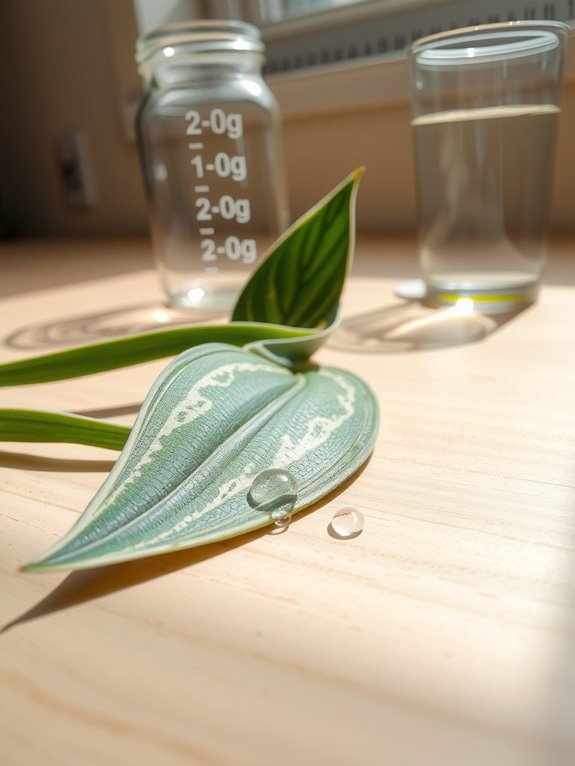
Before tucking those leaf cuttings into soil, let them sit undisturbed for a couple of days. During this callusing period, the cut ends develop a thin, protective layer that stops rot from taking hold when they’re planted in moist medium.
Most growers find two to three days works well, though some patience-havers wait a full week. Either way, you’re giving your cuttings a real head start by letting them toughen up first.
Plant each callused cutting with its cut end down into damp potting mix. Here’s a helpful detail: make two or three shallow notches along the bottom edge of the leaf before planting. This small step increases rooting success because it exposes more surface area to the soil.
With proper care and regular moisture, expect roots to form in six to eight weeks. The time you invest in callusing pays off through faster, more reliable growth.
Create the Right Environment: Light, Heat, and Rooting Timeline
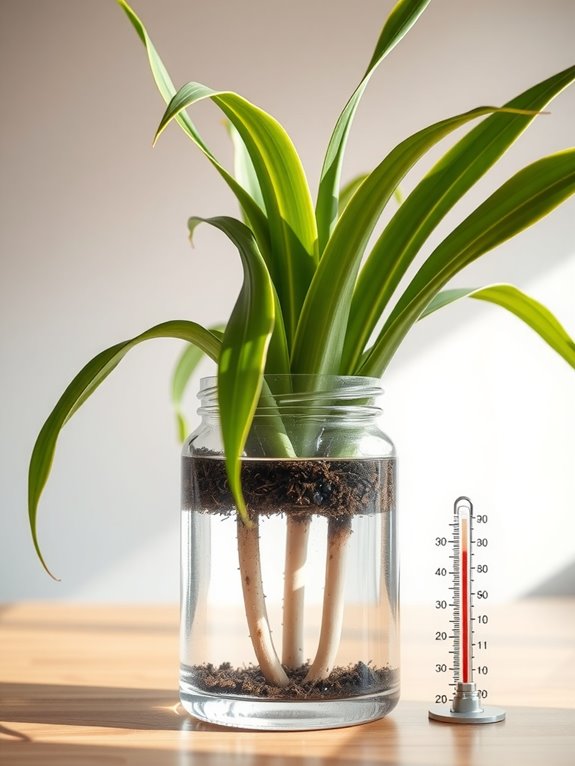
How do you know your propagation setup’s actually working? Start by creating the ideal conditions for root development. Place your cuttings in bright, indirect light—think filtered sunlight through a sheer curtain rather than direct rays that’ll scorch the leaves.
Keep the temperature steady between 21°C–32°C (70°F–90°F) since warmth encourages faster root formation. Use a well-draining soil medium like a mix of perlite and peat moss, which prevents the soggy conditions that rot cuttings before they have a chance.
Maintain 21°C–32°C warmth and use perlite-peat moss mix to prevent rot and encourage faster root development.
Here’s what to expect: roots typically show up in 2–3 months with soil propagation, though water methods can be slower. The timeline moves faster once callus formation completes and new roots start pushing through.
Check your soil moisture once a week. It should feel consistently moist—like a wrung-out sponge—but never waterlogged or clumpy. The combination of proper indirect light, steady warmth, and that balanced moisture level works together to push root development forward. Without all three pieces in place, progress slows down noticeably.