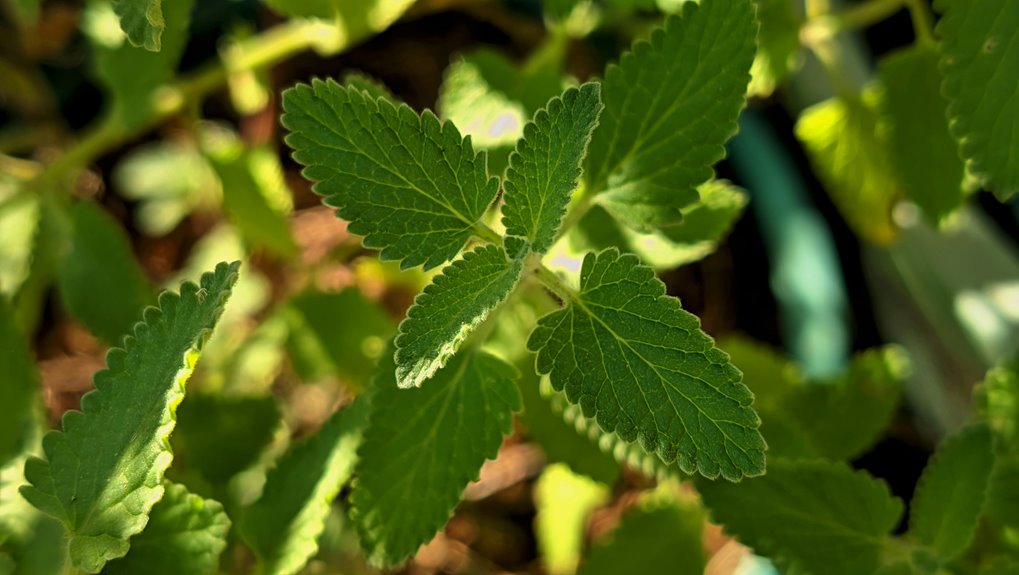
Your cat will go wild for catmint, which contains nepetalactone and actinidine—compounds that trigger playful, euphoric responses in her brain. These chemical compounds work similarly to catnip, giving your pet that blissed-out behavior you’ve probably seen before.
Garden mints like peppermint and spearmint work differently, though. They contain menthol and pulegone, which upset her digestive system rather than delight it. You might notice vomiting, diarrhea, or excessive drooling if she nibbles on these varieties. Fresh leaves pose less risk than concentrated oils since they contain lower amounts of these irritating compounds, but honestly, it’s simpler to skip garden mint altogether.
Instead, stick with catmint, catnip, or silver vine. These alternatives satisfy her natural instincts safely while keeping your garden from becoming a snack bar. You’ll get the playful behavior you want without the upset stomach or mess to clean up later.
Why Cats Love Catmint (But Not Other Mint Plants)
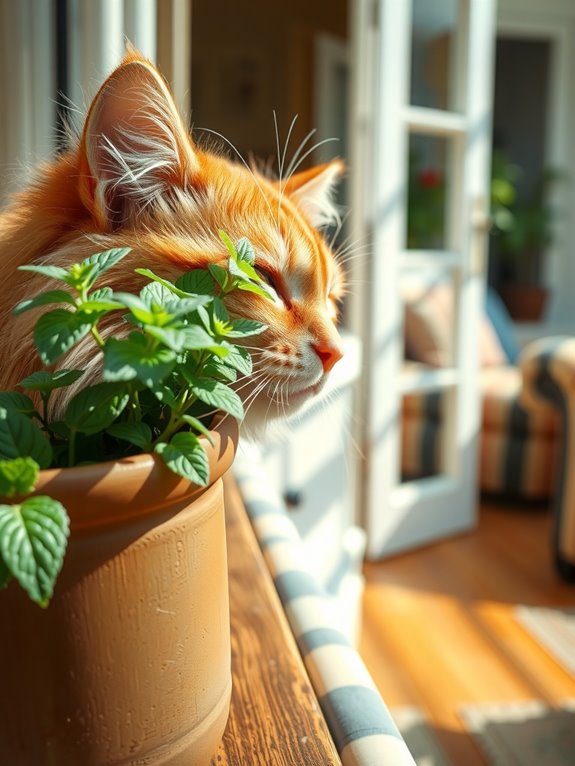
Ever wonder why your cat goes absolutely wild for catnip but completely ignores the peppermint plant on your windowsill. The answer comes down to chemistry and what’s actually safe for your pet.
Catmint contains two specific alkaloid compounds—nepetalactone and actinidine—that trigger a playful or euphoric response in cats. Their brains are literally wired to seek out these compounds. Other mints like peppermint and spearmint work differently. They’re packed with essential oils that can upset your cat’s stomach or respiratory system if your cat nibbles on concentrated amounts.
Think of it this way: catmint evolved to attract felines safely, while other mints developed their oils for different purposes entirely. When you offer catmint, you’re giving your cat something their brain naturally craves without the digestive risks that come with peppermint or spearmint. The choice becomes pretty straightforward if you want playtime without worry.
You can find dried catmint in most pet stores, or grow fresh plants in a sunny spot that gets at least six hours of direct light daily. Both forms work well for cats. If you have peppermint or spearmint growing at home, just keep those plants away from your cat’s reach and stick with catmint for interactive play.
Garden Mint vs. Catmint: What You Need to Know
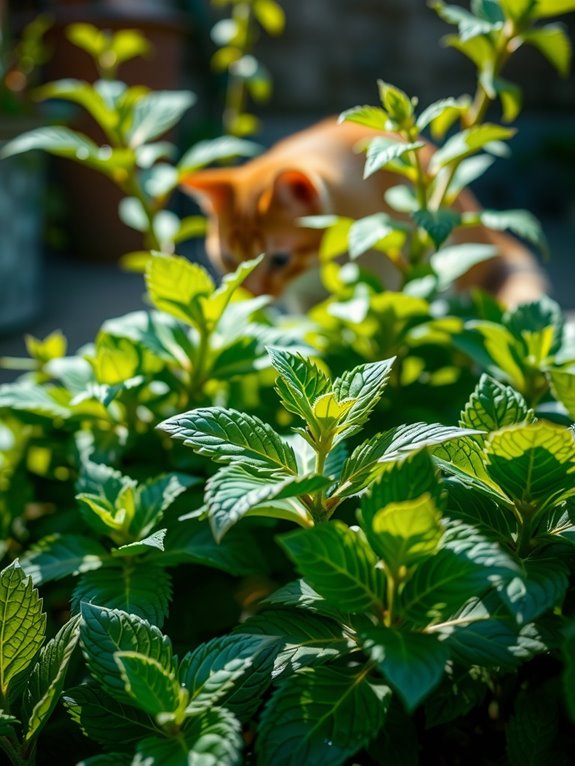
So what’s the real difference between the catmint growing in your garden and the peppermint you’re trying to keep away from your cat? The distinction matters quite a bit. Catmint naturally attracts cats through nepetalactone, a volatile compound found in the plant’s leaves and stems that can draw multiple felines to a single patch. Garden mint, by contrast, lacks this compound entirely and poses genuine safety concerns for your pet.
When cats ingest large amounts of garden mint or concentrated mint oils—think about 15 milliliters or more of essential oil—they risk gastrointestinal upset, drooling, tremors, and sometimes worse reactions depending on the cat’s size and sensitivity. Catmint remains generally safer in small amounts because cats typically self-regulate their consumption, nibbling just enough to get the effect they want before moving on.
Your garden mint plants may still get nibbled by curious cats, but they won’t hold the same appeal that catmint does. Understanding this difference helps you protect your feline companion while making smart plant choices for your space. Label matters. Safety matters. Your cat’s wellbeing matters most.
How to Identify Mint in Your Garden
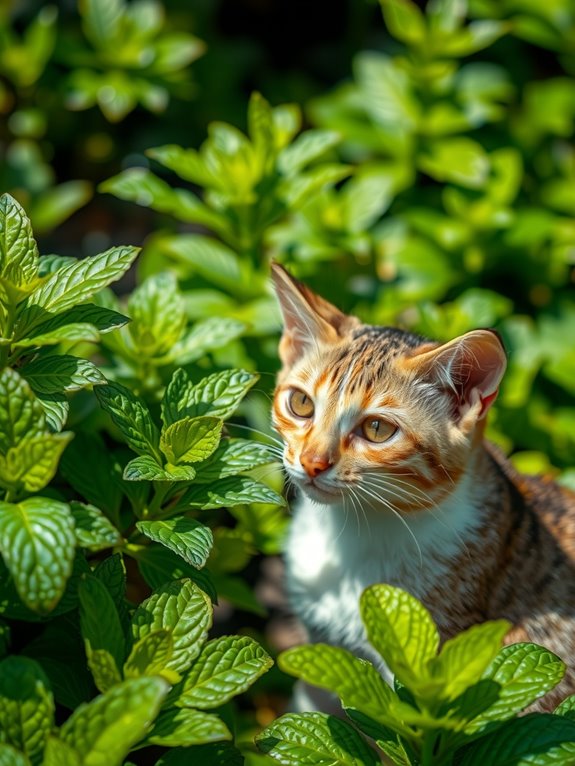
Because mint plants spread so aggressively through underground runners, you’ll want to spot them quickly before they take over your entire garden. Learning mint identification isn’t complicated when you know what to look for.
Square stems – Unlike most plants with round stems, Mentha species feature distinctly squared-off stems that feel angular under your fingers. Run your thumb along one and you’ll notice the four-sided edges right away, which is honestly the fastest way to confirm you’ve found mint.
Opposite leaves – Leaves grow in pairs directly across from each other along the stem, not scattered randomly. This paired arrangement stays consistent across all mint varieties, making it one of your most reliable spotting tools.
Tubular flowers – Tiny clustered blooms appear in purple, pink, or white, arranged in small spikes. These small flower clusters typically measure about 1 to 2 inches tall and form stacked whorls up the stem during growing season.
Minty aroma – Crush a leaf between your fingers, and you’ll immediately recognize that signature menthol scent. This sensory check works even when the plant isn’t flowering, which means you can identify it at nearly any point in the growing season.
The square stems and opposite leaf pattern give you your quickest identification tools, since you can spot these features without waiting for flowers to appear or needing to crush leaves. Once you’ve learned what to look for, you’ll recognize garden mint varieties wherever they pop up.
Why Common Garden Mint Is Toxic to Cats
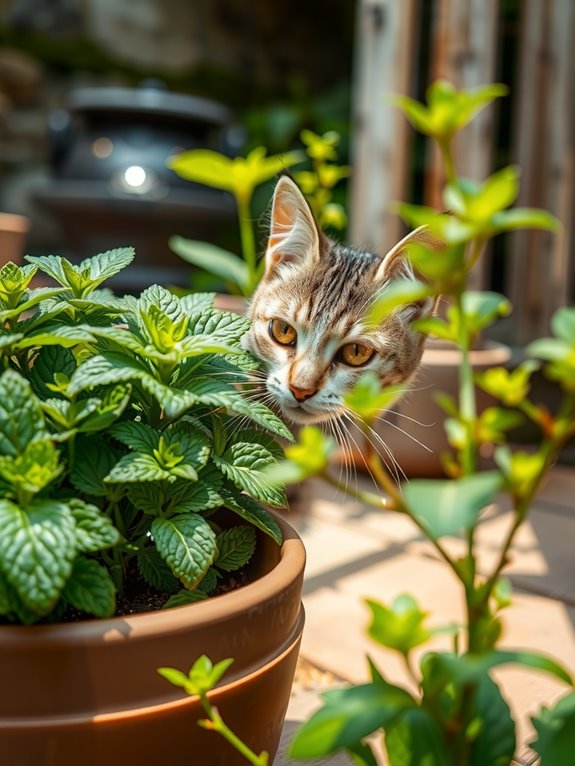
While mint might smell pleasant to you, it’s actually harmful to your feline friends. Garden mint contains menthol and pulegone, which are compounds that trigger digestive problems in cats such as vomiting, diarrhea, and upset stomach. Different mint species vary in how toxic they are—spearmint causes mild digestive upset, while pennyroyal is far more dangerous and can lead to liver failure and seizures.
The real problem is essential oils toxicity. Concentrated mint oils are much more dangerous than fresh leaves, and even small exposures can harm your cat. This matters because essential oils contain 10 to 20 times more of these toxic compounds than the plant itself.
Keep mint plants away from areas where your cat explores and plays. If your cat enjoys plants, consider cat-safe options like cat grass or spider plants instead. These alternatives give your cat something safe to nibble on without the digestive risks that mint poses.
Signs Your Cat Ate Toxic Mint: And When to Call a Vet
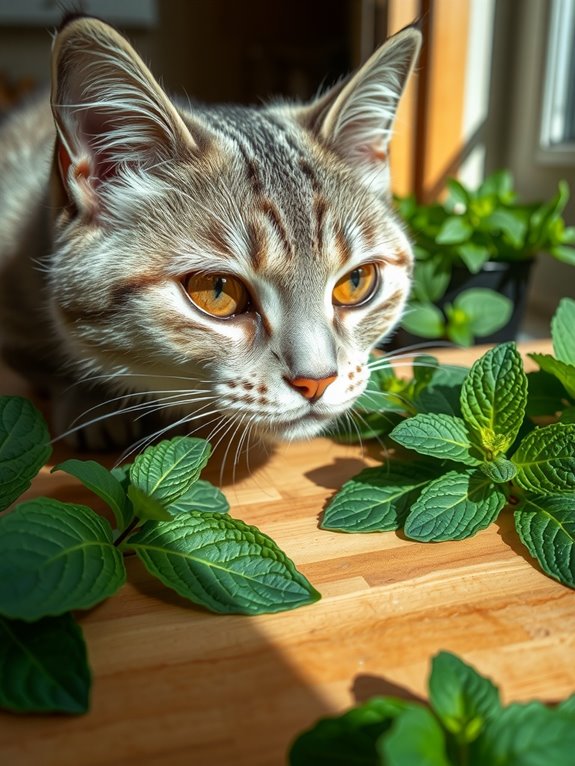
What should you watch for if you suspect your cat’s gotten into the mint?
Keep an eye out for these telltale signs that your cat may have eaten something toxic. Your careful observation could catch a problem early before things get worse.
Physical symptoms to notice
Vomiting and excessive drooling that seems out of the ordinary is a red flag worth taking seriously. You might also notice your cat walking in a wobbly, uncoordinated way, almost like they’re drunk or off-balance. Watch their breathing too—trouble breathing or rapid, shallow breaths are concerning signs. In more severe cases, tremors, seizures, or a sudden drop in heart rate can occur.
Why concentration matters
Peppermint essential oils and concentrated mint products pose a much bigger threat than fresh garden mint. A cat might nibble on some leaves from your mint plant without serious problems, but swallowing a significant amount—say, more than a few tablespoons of fresh mint—could trigger gastrointestinal irritation and those distressing symptoms listed above. Essential oils are where the real danger lies because they contain much higher concentrations of mint’s active compounds in a tiny volume.
When to call your vet
Don’t wait around if anything seems off. Call your vet right away if you notice any of these signs or if you know your cat got into essential oils. Your vet needs to know exactly what your cat ate and when it happened so they can provide the right treatment.
Cat-Safe Plants That Deliver the Same Appeal
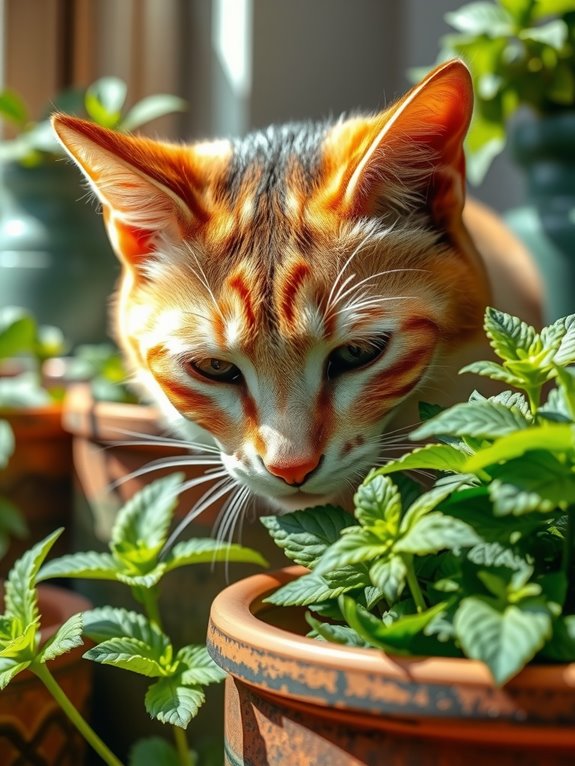
Now that you know what to avoid, here’s the good news: you can still give your cat the plant-based fun they’re craving without worry. Catmint and catnip are your best friends here—both deliver that irresistible appeal cats adore. Plant catmint in your garden or keep dried leaves in toys, and watch your cat roll and rub with genuine pleasure. These cat-safe plants trigger the same engaging behavior you’d see with risky alternatives, minus any toxicity concerns.
Catnip sprays work wonderfully for redirecting attention when you need it. Unlike toxic mint repellents that could harm your cat, these options keep your feline friend entertained safely. Start with small amounts since catmint effects typically last five minutes to two hours, which helps you avoid overstimulation. A little goes a long way with these plants, so you won’t need much to keep your cat happily occupied.
Building a Mint-Free Garden Your Cat Will Love
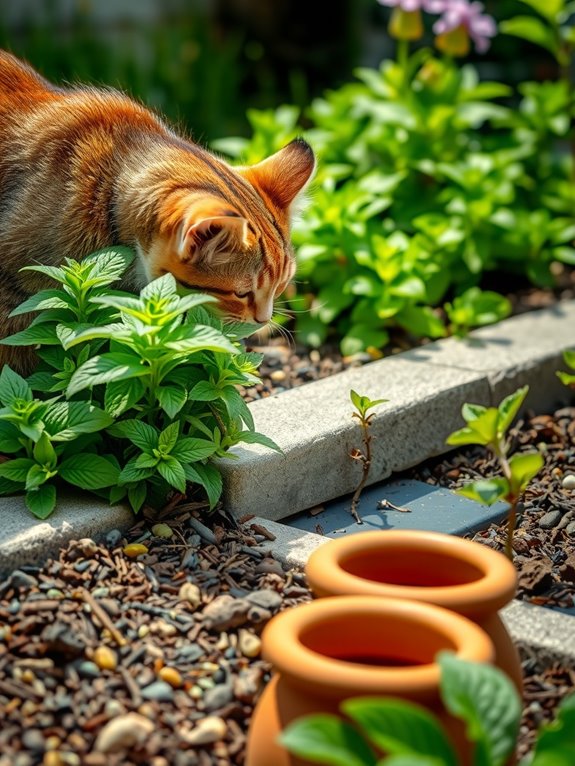
You can swap out those mint plants for cat-safe alternatives like catnip-free herbs, ornamental grasses, and spider plants that won’t become your cat’s favorite snack. When laying out your garden, position these safer plants in the 2-3 foot radius around your cat’s preferred lounging spots. This natural zoning guides your feline toward approved areas while moving less appealing plants to the garden edges where they’re less likely to catch attention.
If you want to keep cats entertained without the mint chaos, consider planting valerian or silver vine in designated zones about 3-4 feet from seating areas. Both plants offer the sensory enrichment cats crave—that rolling, rubbing satisfaction—without the destructive energy mint tends to trigger. Valerian grows 3-4 feet tall with clusters of small pink or white flowers, while silver vine stays more compact at 1-2 feet and produces small greenish-white blooms. Plant them in well-draining soil with about 6 inches of mulch around the base to protect the roots from digging. These plants give your cat a specific destination that channels their natural instincts away from your other garden beds.
Safe Plant Alternatives For Cats
If you’re committed to keeping your garden both beautiful and safe for your cat, swapping out Mentha species for purpose-built feline favorites is your smartest move.
You’ll find these cat-safe plants create a space where your furry friend can explore freely:
- Catnip and catmint – These catnip relatives deliver the stimulation cats crave without Mentha toxicity concerns
- Silvervine and valerian root – Aromatic alternatives that captivate cats naturally through scent compounds they find irresistible
- Grass varieties – Oats, wheat, and barley satisfy your cat’s grazing instincts safely when planted in 4-6 inch clusters
- Herbs like basil and thyme – Mild, fragrant options that won’t cause digestive problems even if nibbled regularly
Pair these cat-safe plants with non-ingestible cat toys and hanging baskets positioned 3-4 feet high to redirect attention away from trouble spots. The combination works because it gives your cat multiple appealing options that compete with less desirable plants for their interest. Your cat can nibble appropriately, explore freely, and stay healthy all at the same time.
Creating A Cat-Friendly Garden Layout
How’s this for a practical approach: designing a layout that keeps your cat entertained while protecting your prized plants from feline destruction. Start by creating separate zones in your garden space.
Dedicate one area specifically for cat activity—away from your delicate flowers and vegetables. Plant cat-safe grasses like oats or wheat in a 4-by-4-foot patch to satisfy your cat’s natural grazing instincts. The texture of these grasses feels satisfying to chew, and they’ll redirect your cat’s attention from your prized plantings.
Keep catmint and mint plants out of reach by relocating them to sheds or elevated hanging baskets mounted at least 5 feet high. Curious paws simply can’t access what’s up there. Use physical deterrents like chicken wire or decorative fencing around vulnerable ornamentals to discourage exploration without blocking your view entirely.
Place catnip toys and silvervine alternatives in your designated cat zone instead of scattered throughout the garden. Silvervine mimics catnip’s effects but works on cats that don’t respond to catnip, giving you options. This strategic separation lets your feline friend enjoy the garden safely while you enjoy undamaged plants. Both needs get met without compromise.