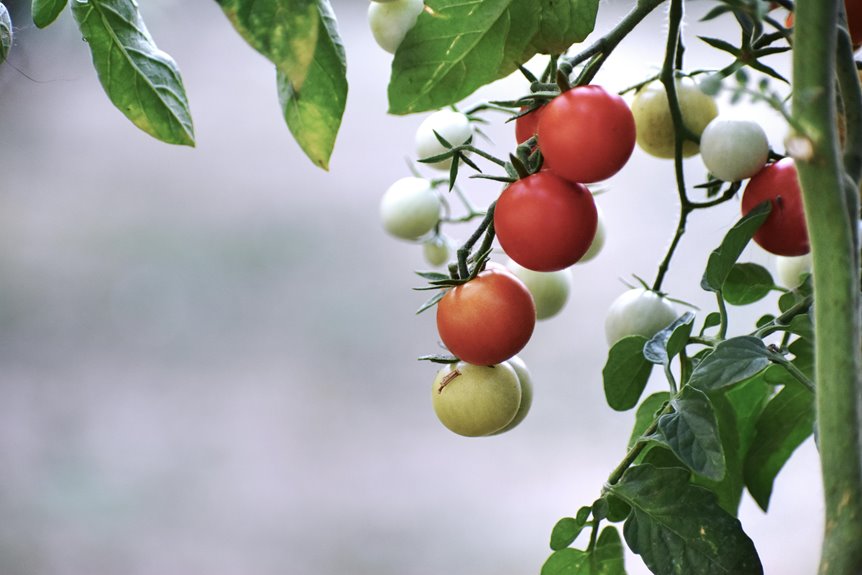
Your chickens can safely eat ripe red tomatoes in small pieces, but the plants themselves are off-limits. The leaves, stems, and unripe green fruit contain solanine, which is a toxic alkaloid that disrupts their digestion and causes nervous system problems. When you do offer ripe tomatoes as treats, keep portions tiny—think pea-sized pieces at most.
The best way to protect both your birds and your vegetable bed is to build a barrier around your tomato plants. Use hardware cloth fencing at least three feet tall, which will stop chickens from pecking their way through or accidentally brushing against the toxic parts while foraging nearby. Hardware cloth works better than regular chicken wire because chickens can’t peck holes through the stronger metal mesh.
If your flock does get into the plants despite your precautions, watch for signs of poisoning over the next day or two. You might notice drooping behavior, diarrhea, lack of appetite, or trembling and weakness in their legs. These symptoms point to solanine poisoning and mean you should contact a veterinarian right away, though most chickens recover once they stop eating the toxic plant material.
Can Chickens Eat Tomato Plants?
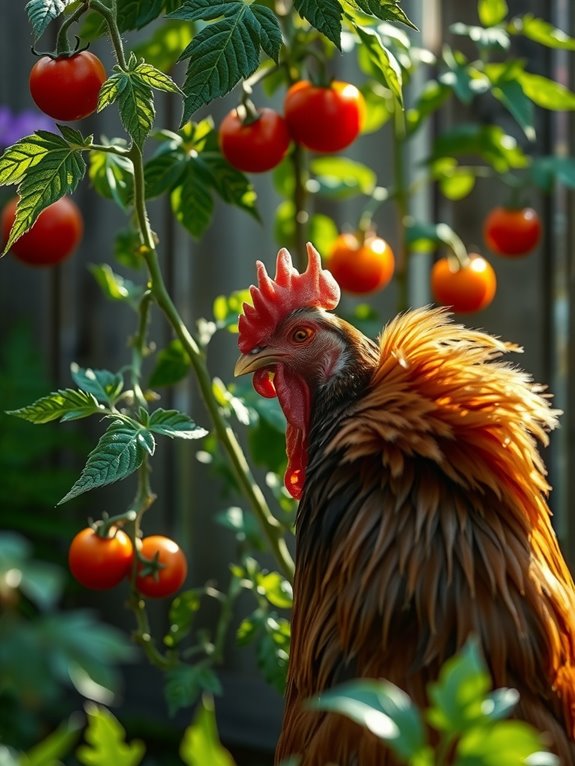
While it’s tempting to let your backyard flock peck through garden scraps, tomato plants are actually off the menu for chickens. The reason comes down to solanine, a toxic compound found in nightshade plants that can make your birds seriously sick.
The danger hides in the leaves, stems, and any green tomatoes still hanging on the vine. Once chickens eat these parts, solanine accumulates in their bodies and can trigger diarrhea, weakness, or worse outcomes. Younger birds are more vulnerable than older hens because their bodies are smaller and less able to handle toxins.
Here’s the good news: fully ripe red tomatoes are perfectly safe as occasional treats. The ripening process breaks down the solanine, making mature fruit a fine snack. But everything else on the plant stays poisonous.
Your best defense is a simple fence around your tomato bed, positioned at least 3 feet high since some chickens can jump surprisingly well. Hardware cloth or standard garden fencing works fine for keeping your flock away from the toxic plant material. This straightforward approach protects both your birds’ health and your tomato harvest at the same time.
The Difference Between Tomatoes and Tomato Plants
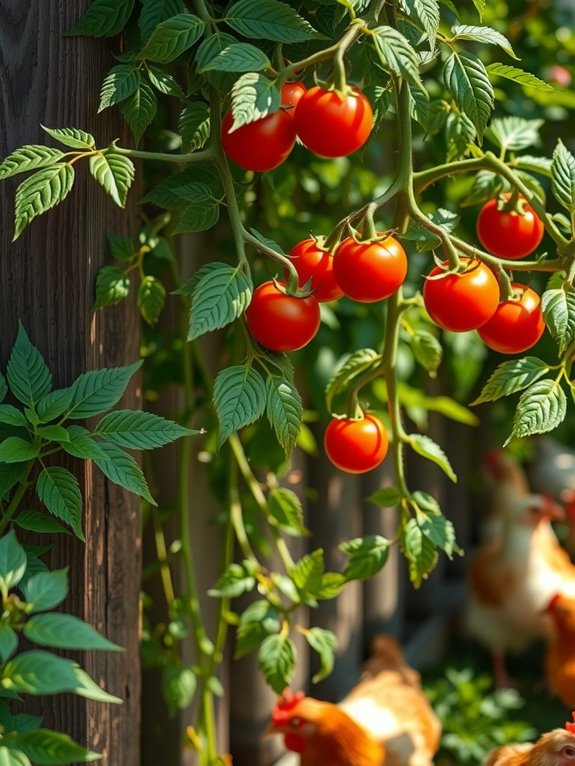
So here’s where things get interesting: your chickens can actually enjoy ripe tomatoes, but they need to avoid pretty much everything else on the plant. The fully red fruit is safe to eat, while the leaves, stems, and unripe green tomatoes contain solanine—a toxic compound that can make your birds seriously sick. Since tomato plants belong to the nightshade family, they naturally pack plant toxins that build up in the green parts.
Think of it this way: only the fully ripened, red fruit works for your flock. The plant parts don’t. This distinction matters because it lets you confidently offer tomatoes as a healthy treat while keeping your chickens away from the dangerous stuff. It’s really that straightforward—red fruit yes, green everything else no.
Which Parts of the Tomato Plant Are Safe?
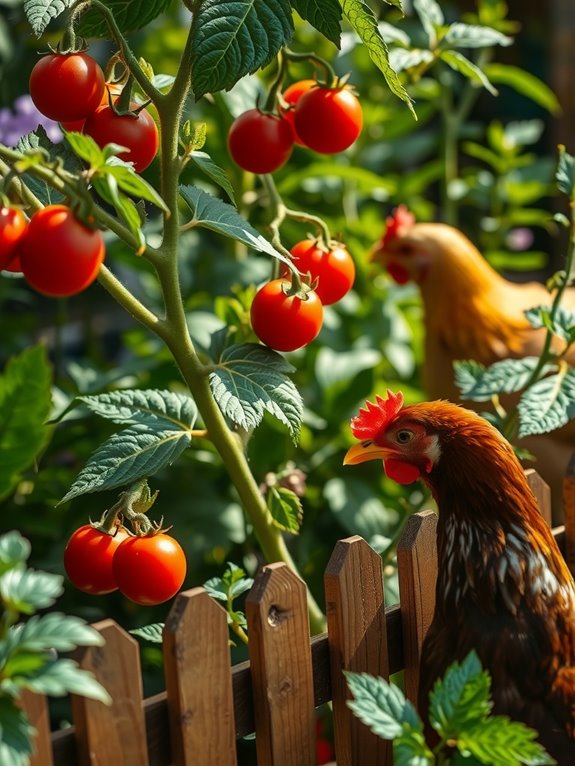
What exactly can you safely hand to your chickens when you’re standing in the garden with tomato plants all around? The answer is simpler than you might think.
Ripe tomato fruits get the green light. Everything else on the plant requires you to pump the brakes and think twice.
| Plant Part | Safe? | Why |
|---|---|---|
| Ripe tomatoes | Yes | Low solanine levels |
| Green tomatoes | No | High solanine content |
| Tomato leaves | No | Toxic solanine compound |
| Stems | No | Contains solanine toxin |
| Skins | Yes | Acceptable when ripe |
The troublemaker here is solanine, a natural toxin that builds up in tomato leaves, stems, and fruit that hasn’t ripened yet. Your chickens’ digestive systems struggle to process this compound without getting sick. Fully red tomatoes contain minimal solanine—usually below levels that cause problems—making them safe as occasional treats. Green tomatoes, on the other hand, pack high concentrations of the toxin and should stay completely off-limits. Tomato leaves are the worst offenders because they hold the most concentrated solanine levels of any plant part.
The safest approach keeps your flock away from the plant itself rather than trying to figure out which parts might be okay. Stick to offering only fully ripened fruits as occasional snacks, and your birds will stay healthy and happy.
Solanine: The Nightshade Toxin
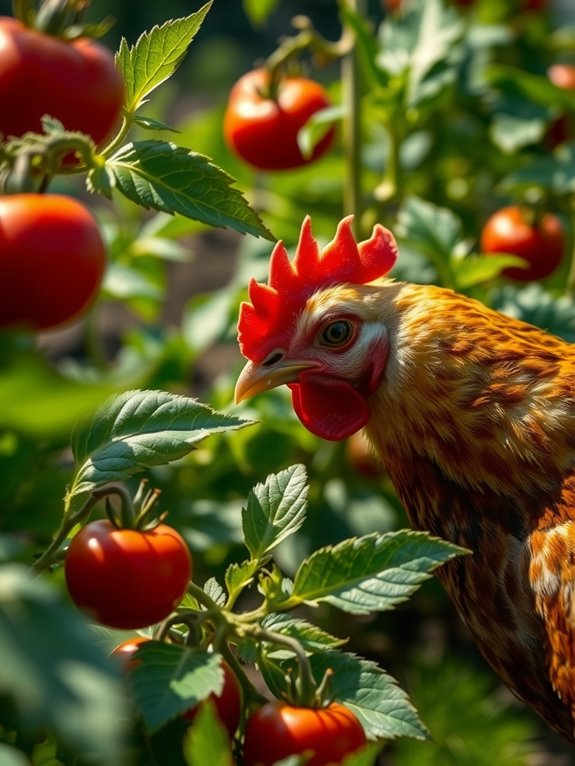
Ever wondered why tomato plants seem to have a built-in security system that keeps chickens away? It’s solanine—a poisonous alkaloid that nightshade plants naturally produce as their own defense mechanism. You’ll find solanine concentrated heavily in leaves, stems, and green (unripe) fruits, where it acts like a chemical warning label for anything thinking about taking a bite.
Here’s what matters: ripe red tomatoes contain much lower solanine levels—typically around 0.01 to 0.05 mg per gram—making them safer for your flock compared to their green counterparts. But those green parts? They pack 25 times more solanine, ranging from 0.5 to 1.3 mg per gram. If your chickens eat significant amounts of leaves or stems, they might experience diarrhea, vomiting, lethargy, and appetite loss. Those symptoms happen because solanine irritates the digestive tract and interferes with how your birds’ bodies absorb nutrients.
The smart move is straightforward: keep your birds away from tomato plant foliage entirely. Stick with ripe red fruit only, fed sparingly as an occasional treat rather than a dietary staple. Offer small pieces no larger than a pea to prevent choking and keep portions to about a tablespoon per bird per week. This approach lets you grow your tomatoes without worry while still letting your chickens enjoy a safe, occasional snack from your garden bounty.
Spotting Tomato Poisoning Signs
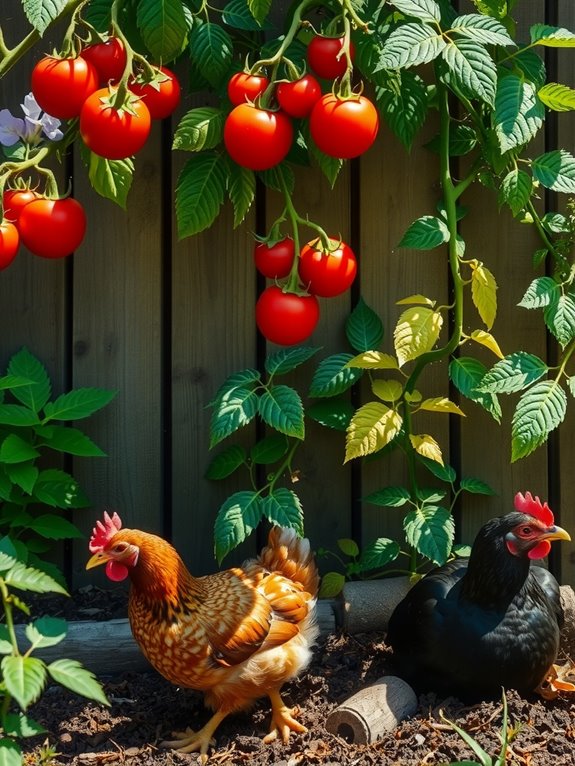
If your chickens seem sluggish, turn their noses up at feed, or start showing diarrhea and vomiting shortly after pecking around tomato plants, solanine poisoning is likely the culprit. The alkaloid solanine concentrates in tomato leaves, stems, and unripe fruit, making these parts particularly dangerous for poultry.
Move your flock away from the tomato patch immediately and set out fresh water—dehydration compounds the problem during poisoning. Watch closely over the next several hours to see if symptoms improve or get worse. Within 24 hours, healthy chickens usually shake off mild cases on their own, but if your birds don’t bounce back or show worsening signs like increased lethargy or persistent vomiting, call your veterinarian. Early treatment matters because a vet can provide supportive care like electrolyte solutions or medications that prevent secondary complications and help your birds recover faster.
Recognizing Illness Symptoms
Your chickens might start showing signs of tomato poisoning within hours to a few days after they’ve nibbled on tomato plant parts or green fruit. Watch for diarrhea, vomiting, lethargy, and reduced appetite—those are your main warning signs. Unripe tomatoes and leafy stems contain solanine, a nasty toxin that disrupts their digestive and nervous systems.
You’ll notice your flock acting sluggish or turning their beaks away from their usual feed. Diarrhea often shows up as the primary symptom and sometimes appears all by itself without other obvious signs of illness. In more serious cases, dehydration and weakness kick in fast, so watching carefully and acting quickly really matters.
If you spot any of these suspicious symptoms, remove all tomato plant access immediately and contact your veterinarian. Have details ready about exactly which plant parts your chickens ate and what behaviors you’ve observed. The sooner you act, the better the chances your flock will bounce back without complications.
Emergency Response Actions
Once you spot the telltale signs of tomato poisoning—diarrhea, lethargy, and loss of appetite—it’s time to act fast. Your chickens can’t recover if they keep eating the problem plants, so speed matters here.
Start by removing your flock from any tomato plants, leaves, stems, and green fruit right away. The sooner they stop pecking, the sooner the toxin exposure ends. Next, write down what you observed: which plant parts they ate, the exact time it happened, and each symptom you noticed. This information becomes gold when you call your veterinarian.
When you contact your vet, have these details ready: your birds’ ages, their health history before this incident, roughly how much they consumed, and a timeline of when symptoms appeared. A vet working with specifics can give you better guidance than one working from vague descriptions.
Watch your flock closely for the next 24 to 48 hours. Keep those detailed notes going—note the time of each symptom, how many birds show signs, and whether things get better or worse. Your vet will want this running log to understand how the poisoning is progressing in your specific situation.
Ripe Tomatoes vs. Unripe: Which Are Safe for Chickens?
Stick with ripe, red tomatoes when feeding your flock since they’re genuinely safe treats for chickens. Skip the green, unripe ones entirely because they contain solanine, a toxic alkaloid that can seriously upset your birds’ digestive systems. The reason ripeness matters so much comes down to chemistry: solanine levels drop dramatically as tomatoes mature and turn red, which is why fully ripe fruit poses no real risk to your chickens.
The solanine in unripe tomatoes can cause digestive upset ranging from mild stomach irritation to more serious issues depending on how many your chickens eat. Rather than gamble with your flock’s health, compost those green tomatoes instead and save the red, ripe ones as occasional treats. Your birds will be healthier for it, and you’ll avoid the guesswork of wondering whether that particular tomato is ripe enough to be safe.
Ripeness And Safety Standards
When it comes to feeding tomatoes to your flock, ripeness matters—a lot. You’ll want to understand the difference between safe and risky choices for your birds’ health.
The main concern is solanine, a natural toxin that concentrates heavily in unripe tomatoes and plant parts. As tomatoes ripen and turn red, solanine levels drop significantly, making mature fruit much safer for your chickens. Think of it this way: an unripe green tomato can contain solanine levels that upset a chicken’s digestive system, while a fully red tomato has dropped those levels to amounts your birds can handle without problems.
Here’s what breaks down by safety level:
Ripe red tomatoes are your best choice as occasional treats. A fully mature tomato with deep red color throughout has solanine concentrations low enough that chickens can eat them without concern.
Unripe or partially ripe tomatoes—the green or yellow ones—should stay completely off your chickens’ menu. These contain dangerous solanine concentrations that can cause stomach upset, weakness, or worse in your birds.
Plant material like leaves, stems, and even tomato skins poses the highest risk no matter how ripe the fruit is. Keep your flock away from tomato plants themselves and only offer the actual fruit flesh as treats.
Stick with bright red, fully mature tomatoes given occasionally rather than daily. Your birds will get a tasty snack, and you’ll know you’re making smart feeding decisions based on real safety standards.
Unripe Tomato Toxicity Concerns
Why does that green tomato sitting on your chicken run fence pose a genuine threat? You’re dealing with solanine, a toxic alkaloid that concentrates heavily in unripe tomatoes. Your flock’s digestive systems simply can’t process it safely.
| Tomato Type | Solanine Level | Safety Status | Feeding Recommendation | Risk Level |
|---|---|---|---|---|
| Ripe Red Tomatoes | Low/Absent | Safe | Occasional treats | Minimal |
| Unripe Green Tomatoes | High | Unsafe | Avoid completely | High |
| Tomato Leaves | Very High | Toxic | Never feed | Severe |
| Tomato Stems | Very High | Toxic | Never feed | Severe |
| Green Tomato Skins | High | Unsafe | Avoid | High |
Unripe tomatoes contain roughly 2-5 times more solanine than their ripe counterparts. When chickens eat green tomatoes in quantity, they risk anything from mild digestive upset to more serious health problems down the road. A single green tomato won’t necessarily kill your bird, but regular access to unripe fruit stacks the odds against them.
The leaves and stems are even worse, containing solanine levels that make them outright dangerous. These plant parts should never end up in your coop or run, whether fresh or dried. Stick exclusively with ripe, red tomatoes when you want to give your flock a fruity treat. Keep those green ones off limits and your birds will thank you for it.
Safe Portions: How Much Ripe Tomato Per Chicken?
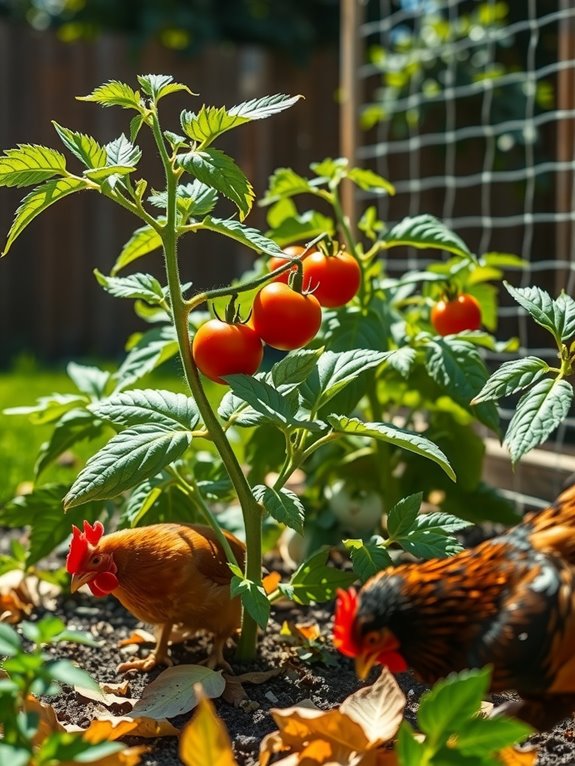
So how much ripe tomato can your flock actually handle? Treat tomatoes as an occasional snack, not a dietary staple. Start with a few bite-sized pieces per chicken—roughly the size of a grape or small marble—and watch how they respond before increasing portions.
Begin with modest amounts to gauge individual tolerance and preference. Offer small chunks, about one to two tablespoons per bird for a standard-sized chicken, and monitor your flock’s reaction over several days for any digestive upset or behavioral changes. Larger flocks need proportionally more than solo chickens, so if you’re feeding ten birds instead of two, you’d offer ten to twenty tablespoons total rather than dividing the same small amount among more mouths.
Since there’s no universal magic number, you’re building your own safe baseline through observation. Ripe tomatoes work well as occasional treats when you respect moderation. Your chickens will enjoy the variety, and you’ll feel confident knowing you’re feeding them responsibly.
Why Leaves, Stems, and Flowers Are Dangerous
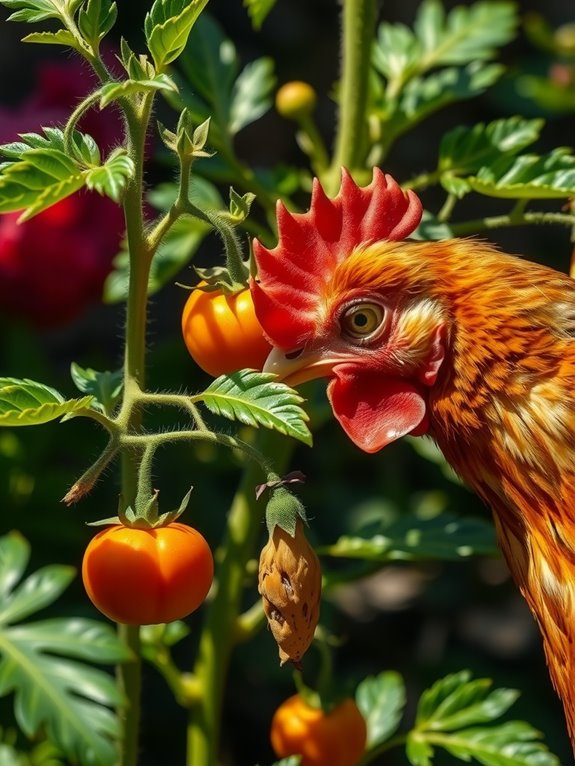
Your chickens will get sick if they eat tomato leaves, stems, and flowers because these parts contain solanine, a toxic alkaloid that disrupts their digestive and nervous systems. The green portions pack about three to five times more solanine than ripe red fruit, so even a few pecks at the foliage can cause diarrhea or neurological issues in your birds.
Chickens aren’t picky eaters, and they’ll happily munch on garden plants if they can reach them. The best approach is to fence off your tomato patch with at least a 3-foot barrier, or limit free-range time in areas where tomato plants grow. This simple precaution keeps your flock safe while still letting you grow tomatoes in your garden.
Solanine Toxicity In Plants
Those vibrant tomato leaves your chickens are eyeing in the garden aren’t the nutritious snack they seem to be. Tomato plant parts contain solanine, a toxic alkaloid that causes real problems for your flock, and you’re dealing with a genuine health risk here.
The danger varies depending on which parts your chickens consume. Leaves and stems pack the highest solanine concentrations—sometimes reaching 32 milligrams per 100 grams of plant material—making them the most hazardous. Flowers contain moderate toxin levels that still pose significant risks to your birds. Unripe green tomatoes hold solanine too, though the alkaloid decreases as tomatoes mature and turn red.
When chickens ingest these solanine-rich parts, they’ll experience digestive upset, lethargy, and potentially serious illness. Symptoms can appear within a few hours of consumption and may include weakness, trembling, and reduced appetite.
Your best move is to fence off those tomato plants entirely. A simple four-foot chicken wire barrier or dedicated garden enclosure will keep curious birds safely away from temptation. Once your tomatoes fully ripen to a deep red color, the solanine content drops dramatically, making the ripe fruit itself safe for your flock to enjoy. Just keep them away from the green parts entirely.
Dangerous Plant Parts Explained
Understanding which tomato plant parts contain the highest solanine levels helps you keep your chickens safe from poisoning. The leaves, stems, and flowers are where the real danger lives in this nightshade family situation.
These green plant materials pack concentrated solanine—sometimes reaching 500 milligrams per kilogram in young leaves—which triggers serious digestive problems in birds. Even nibbles of a few leaves can cause vomiting, diarrhea, and weakness within hours. The unripe green portions carry way higher solanine content than ripe red tomatoes, which sit at safer levels of just 5 to 10 milligrams per kilogram.
Your chickens’ natural pecking habits make garden access risky since they can’t distinguish between safe and dangerous plants. Fencing off your tomato patch with 4-foot chicken wire and removing fallen leaves and stems keeps your birds from accidental exposure. Clear away plant debris regularly, especially during pruning season when fallen stems pile up around the garden beds.
Health Risks For Chickens
Why do tomato leaves cause such problems for your flock? The answer is solanine, a toxic alkaloid that builds up in the green parts of tomato plants. When your chickens peck at tomato leaves and stems, they’re eating something that messes with their digestive systems and nervous systems.
Here’s what happens when chickens eat tomato plants:
- Digestive problems show up fast, usually within a few hours. Your birds might vomit, get diarrhea, or stop eating normally.
- Nervous system effects include weakness, trembling, or odd behavior as solanine accumulates in their bodies.
- Organ damage can develop even from small repeated exposures over weeks or months.
The risk depends on which part of the plant your chickens find. Leaves and stems pack about two to three times more solanine than ripe red tomatoes do, which makes them the real danger. Ripe fruit is much safer, but the leafy parts should stay off limits completely. Free-range flocks wandering near tomato gardens face real exposure, especially in summer when plants are leafy and green.
A simple solution is garden fencing placed at least 3 feet high around your tomato beds. Standard 3-foot chicken wire works well and keeps curious birds out while letting you tend your plants in peace.
Green Tomatoes vs. Ripe Tomatoes for Your Flock
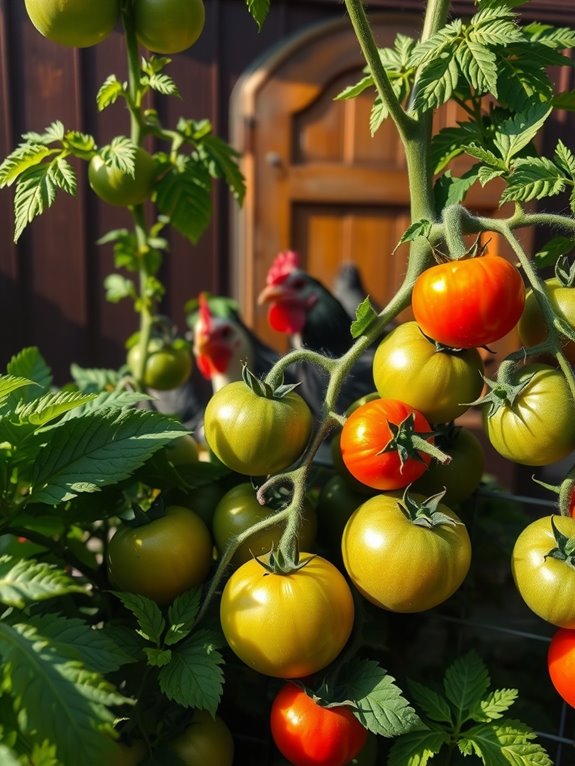
When you’re deciding which tomatoes to toss to your chickens, ripeness matters quite a bit. Green tomatoes contain solanine, a toxic alkaloid that can upset your flock’s digestive system, so you’ll want to avoid them or feed them only sparingly at best. Ripe tomatoes, on the other hand, are generally safe for chickens when offered in moderation.
The key difference comes down to that solanine compound—ripeness breaks it down significantly. As tomatoes ripen and turn from green to red, the solanine levels drop dramatically, making them safe for your birds to eat. You can serve fully ripe tomatoes raw or cooked as occasional treats your chickens will genuinely enjoy.
Before offering any tomatoes to your flock, check that they’re fully red and soft to the touch. A ripe tomato should yield slightly when you gently squeeze it, about like the feeling of a ripe peach. When in doubt about whether a tomato has ripened enough, skip it and grab a clearly red one instead. Your chickens will do just fine without green tomatoes, and you’ll feel better knowing you’re keeping toxins off their menu.
Protect Your Garden From Chickens
Now that you know which tomatoes are safe for your flock, it’s worth understanding why chickens can’t have the rest of the plant. Tomato plant leaves and stems contain solanine, a toxic compound that disrupts their digestive systems and causes real discomfort.
Tomato plant leaves and stems contain solanine, a toxic compound that disrupts chicken digestive systems and causes real discomfort.
Protecting Your Plants
The most straightforward approach is physical barriers. Fence off tomato beds with 2-3 foot tall sturdy wire fencing or bird netting secured at the edges so chickens can’t slip underneath. Alternatively, raised garden boxes at least 18-24 inches high keep free-ranging birds from pecking at foliage while you’re not watching.
Fallen fruit needs quick attention since rotting tomatoes smell appealing to chickens and create an open invitation to trouble. Do a daily sweep during harvest season, especially after rain when fruit drops faster.
Redirecting Their Natural Instincts
Chickens dig and scratch because it’s hardwired into them, not because they’re trying to ruin your garden. Carve out a separate foraging zone with loose soil, sand, or mulch where they can scratch to their heart’s content. This gives them an outlet for their digging behavior while keeping your tomato beds undisturbed.
Watching for Problems
If your chickens do nibble plant stems, watch for loose droppings or diarrhea over the next few days. One accidental bite rarely causes serious harm, but repeated access to foliage can lead to ongoing digestive issues. Tighten up your fencing if you notice any breaches or see hoof prints where they shouldn’t be.
What to Do If Your Chicken Eats Tomato Plant Material?
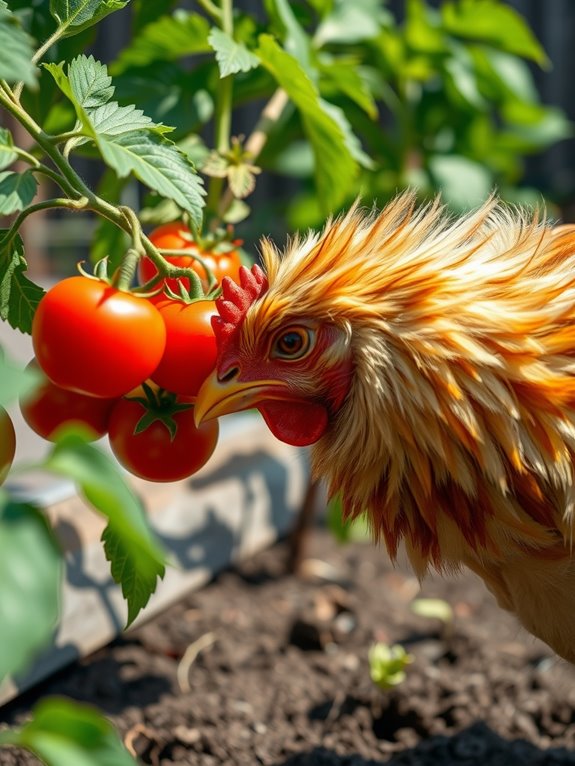
Your chicken got into the tomato patch, and honestly, it happens to the best of us. The good news is that one nibble usually won’t cause serious harm, but you’ll want to keep your eyes open for the next few days.
Tomato plants contain solanine, a toxin that hangs out in the leaves, stems, and any green fruits still on the vine. Watch for signs of digestive trouble like diarrhea, along with lethargy or changes in appetite. Jot down what you observe and when you notice it, since these details help your vet figure out what’s going on if symptoms do pop up.
Feed your flock their regular balanced diet plus safe treats like mealworms or cracked corn to support their gut health and redirect their curiosity away from garden plants. If your chicken starts acting off—won’t eat much, seems sluggish, or has loose droppings—call your veterinarian for advice rather than waiting it out.
Going forward, the real solution is prevention. Build sturdy fencing around your garden beds using chicken wire or hardware cloth at least 3 feet tall, since chickens can be surprisingly athletic jumpers. You could also remove garden access entirely during growing season by keeping your flock in a separate run or coop. These practical barriers keep your birds away from danger while protecting your tomato harvest from becoming chicken snacks.
Why Ripe Tomatoes Benefit Your Flock’s Health
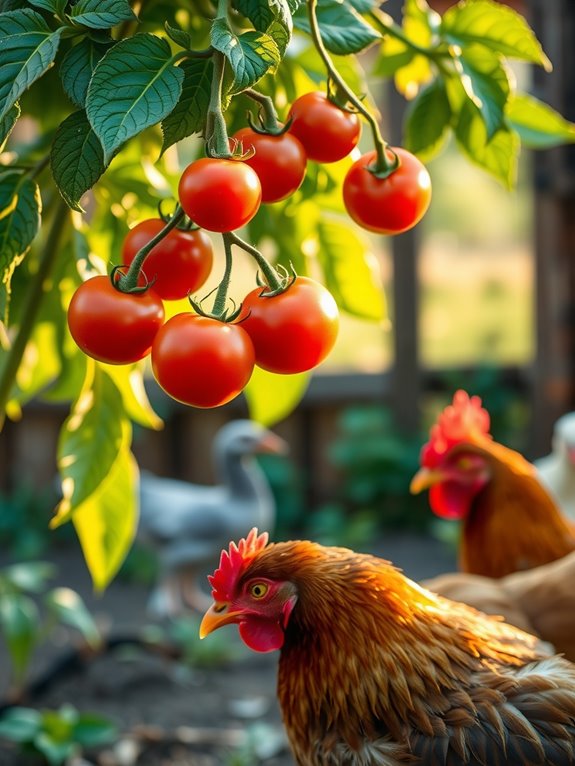
When you feed your flock ripe tomatoes, you’re boosting their health with vitamin C, potassium, and folate that support immune function and everyday bodily processes. The real payoff shows up in your egg basket—tomato powder mixed into feed at about 2-3% of daily rations can noticeably improve both egg production and yolk color. That’s because lycopene and lutein, powerful compounds naturally present in tomatoes, get converted by your chickens into nutritionally richer eggs with deeper, more golden yolks.
Keep portions reasonable by treating ripe tomatoes as occasional snacks rather than dietary staples. A handful of chopped tomato per bird a few times weekly works well without overdoing it. The sensory reward is immediate—you’ll watch your birds peck eagerly at the juicy pieces, and over time, you’ll crack open eggs with noticeably better yolk color and nutrition. That’s solid reasoning for adding ripe tomatoes to your chicken care routine.
Nutritional Value For Flocks
Ripe tomatoes give your chickens genuine nutritional benefits worth adding to their diet in practical ways. Vitamin C, E, and K work together to support your birds’ health, while lycopene, beta carotene, and lutein pack serious antioxidant power. These compounds boost eye health and show up directly in your eggs’ nutritional profiles.
Here’s what your flock actually gains from tomatoes:
- Antioxidant support strengthens immune function and protects against cellular damage
- Eye health enhancement through lutein accumulation in egg yolks
- Egg quality improvement with richer yolk coloration and nutritional density
When you add tomato powder to your flock’s diet, use about four teaspoons per two pounds of feed for best results. You’ll likely notice better egg production and improved bird weight over time. Keep tomatoes supplemental though—they work best alongside your regular balanced poultry feed, not as a replacement for it.
Egg Quality Enhancement Benefits
How’d you like your eggs to have deeper golden yolks and pack more nutritional punch than standard store-bought varieties? It’s actually pretty straightforward—adding tomato powder to your flock’s diet does the job. When you incorporate tomato powder at 5 to 10 grams per kilogram of feed, your hens will produce eggs with noticeably richer yolk color and increased nutritional content.
Those golden yolks contain elevated levels of lycopene, beta carotene, lutein, and vitamins A, C, E, and K. Your family gets better nutrition directly from your backyard without much fuss. The reason this works is that lycopene and carotenoids from tomatoes accumulate in the yolk, which is where hens store fat-soluble nutrients for their eggs anyway.
Stick with ripe tomatoes and tomato products rather than green ones. The ripeness matters because ripe tomatoes have significantly higher levels of the compounds that will actually show up in your eggs. It’s a simple adjustment that gives you genuinely better eggs than what most people buy at the grocery store.
Safer Treat Alternatives to Tomato Plants
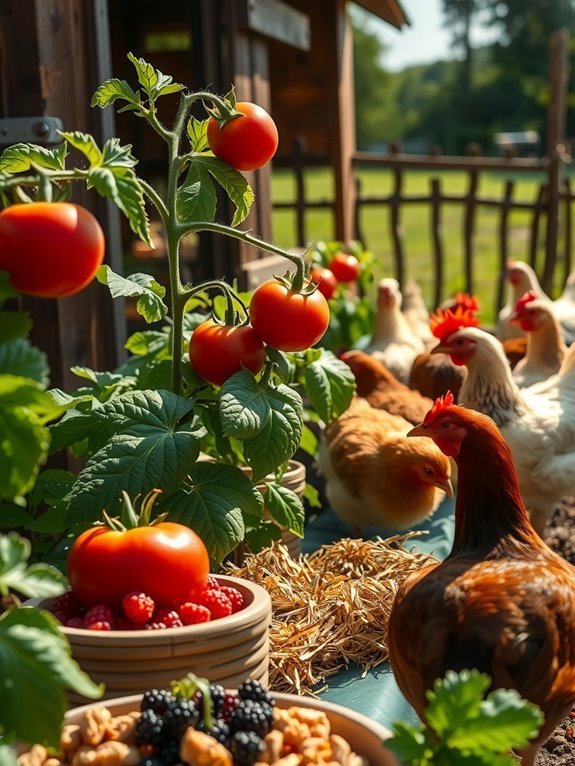
What’s the best way to keep your chickens happy while steering clear of tomato plant toxins? You’ll want to swap those risky green parts for genuinely nutritious alternatives that’ll have your flock doing well.
Consider these safer treat options:
- Ripe tomatoes in moderation – Use whole fruits as occasional treats, avoiding unripe ones entirely since the green parts contain solanine, a compound that can upset chicken digestion
- Cooked tomato leftovers – Serve small amounts alongside regular feed, which breaks down solanine and makes the fruit gentler on their systems
- Tomato powder additions – Mix up to 4 teaspoons per 2 pounds of feed to boost egg production and deepen yolk color without the toxin risk
The practical benefit here is real. By fencing tomato plants and choosing these alternatives, you’re protecting your birds from harmful compounds while still offering food variety. Your chickens get nutritious treats without exposure to toxins, and you get to feel confident about what you’re feeding them.
Garden Layouts That Keep Your Flock Safe From Tomato Plants
Strategic garden planning works because chickens follow the path of least resistance. Position your tomato beds far from free-range areas, creating a physical distance that naturally discourages your flock from wandering that direction. Install a sturdy picket fence directly around your tomato plants at about two feet high—roughly at chicken eye level—to block access effectively.
The reason this height matters is simple: chickens can jump higher, but they won’t bother trying if they can’t see what’s on the other side. A solid barrier removes temptation rather than relying on your birds to understand which plants are off-limits.
Consider rotating your garden layouts seasonally so your flock can safely access fallen fruit in designated zones while staying away from plant foliage and green parts that contain solanine, the toxic compound in tomato plants. You’re basically creating separate neighborhoods: one for tomatoes, one for chickens, each with clear boundaries.
Provide a dedicated foraging space with safe vegetation near your coop—things like lettuce, clover, and kitchen scraps work wonderfully. When your birds have engaging alternatives to peck at, they lose interest in restricted garden areas. This works because you’re meeting their natural foraging instincts while keeping your harvest protected. The combination of barriers, separation, and appealing alternatives means your tomatoes stay safe and your chickens stay healthy and content.