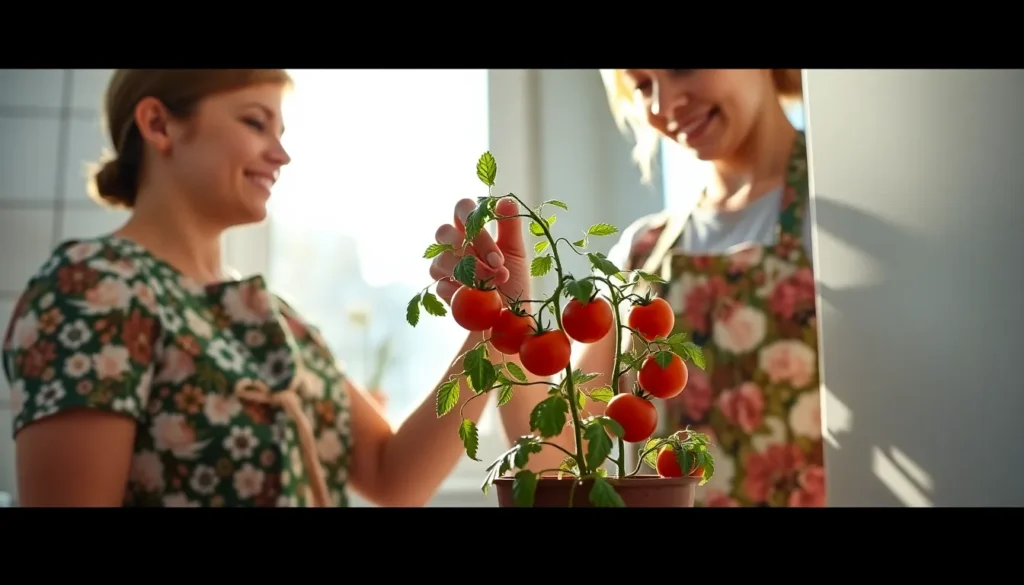
Growing fresh tomatoes year-round doesn’t have to be just a dream. We’ve discovered that indoor tomato growing transforms any home into a productive garden space, giving us access to juicy, homegrown tomatoes regardless of weather or season.
Indoor tomato cultivation offers incredible advantages over traditional outdoor gardening. We can control every aspect of our plants’ environment – from temperature and humidity to lighting and nutrients. This means we’ll enjoy faster growth, higher yields, and protection from pests and diseases that typically plague outdoor crops.
Whether we’re dealing with limited outdoor space, harsh climate conditions, or simply want fresh tomatoes on our kitchen counter, indoor growing opens up endless possibilities. We’ll explore the essential techniques, equipment, and varieties that make indoor tomato growing not just feasible, but incredibly rewarding for gardeners of all experience levels.
Choose the Right Tomato Varieties for Indoor Growing
Selecting the appropriate tomato varieties makes the difference between a thriving indoor garden and a disappointing harvest. We’ll explore the key characteristics that make certain tomato types perfect for container growing and limited indoor spaces.
Determinate vs. Indeterminate Varieties
Determinate tomatoes stop growing once they reach a predetermined height, typically 3-4 feet, making them ideal for indoor containers. These varieties produce all their fruit within a 4-6 week period and require minimal staking or support structures. We recommend determinate types like ‘Patio Princess’ and ‘Bush Early Girl’ for beginners since they’re easier to manage in small spaces.
Indeterminate tomatoes continue growing throughout the season and can reach heights of 6-10 feet or more. They produce fruit continuously until frost kills the plant, which means longer harvests but more complex support systems. These varieties work well in indoor setups with high ceilings and sturdy trellises, though they require more attention to pruning and training.
Best Compact Varieties for Container Growing
‘Tiny Tim’ produces clusters of small red tomatoes on plants that stay under 12 inches tall, perfect for windowsill gardens. This variety thrives in 6-inch pots and produces fruit in just 45 days from transplant.
‘Patio Choice Yellow’ offers bright yellow cherry tomatoes on compact 18-24 inch plants that work beautifully in hanging baskets. The variety delivers excellent flavor and consistent production throughout the growing season.
‘Red Robin’ creates dense, bushy plants reaching only 8-10 inches in height while producing abundant small tomatoes. We’ve found this variety particularly successful in 4-6 inch containers under grow lights.
‘Tumbling Tom’ varieties cascade gracefully from hanging containers, producing red or yellow cherry tomatoes on trailing stems up to 18 inches long. These plants work exceptionally well in vertical growing systems.
Cherry and Dwarf Tomato Recommendations
Cherry tomato varieties adapt perfectly to indoor growing conditions due to their naturally smaller plant size and prolific fruit production. ‘Sweet 100’ produces long clusters of intensely sweet cherry tomatoes on indeterminate vines that can be trained vertically in limited space.
‘Stupice’ delivers full-sized tomatoes on compact determinate plants that mature in just 60-65 days. This variety originated in Czechoslovakia and tolerates cooler indoor temperatures better than many alternatives.
‘Micro Tom’ holds the record as one of the industry’s smallest tomato plants, reaching only 5-8 inches tall while producing marble-sized red fruits. We recommend this variety for children’s gardens or when growing space is extremely limited.
‘Orange Hat’ produces bright orange cherry tomatoes on plants that stay under 10 inches tall, making them perfect for countertop gardens. The variety offers exceptional vitamin C content and adds vibrant color to indoor growing displays.
Select Proper Containers and Drainage Systems
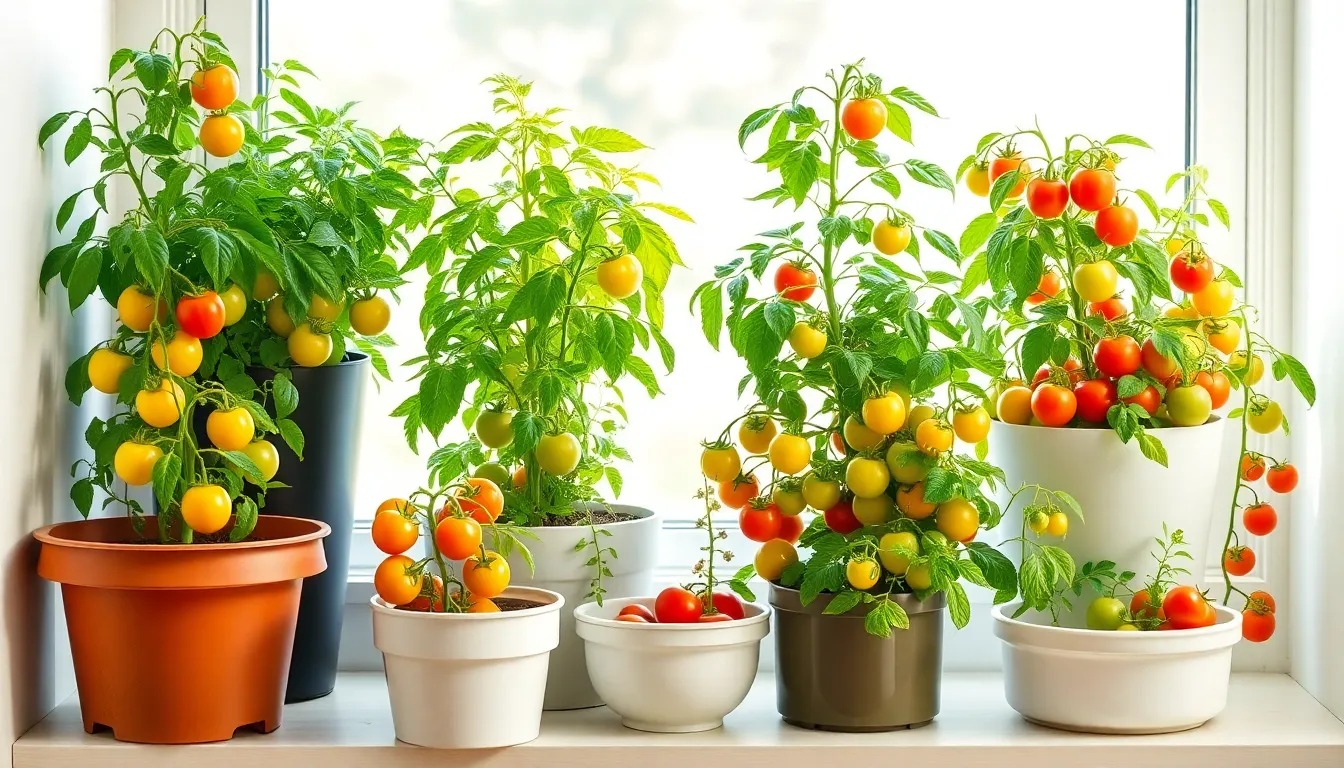
We’ll need the right containers and drainage systems to ensure our indoor tomatoes thrive in their new environment.
Container Size Requirements for Different Varieties
Patio or bush tomatoes work well in 5-gallon containers, though we’ll need to water and feed them more frequently due to the limited soil volume. Compact varieties like ‘Patio Princess’ and ‘Bush Early Girl’ can flourish in these smaller spaces while still producing substantial harvests.
Micro tomatoes such as ‘Tiny Tim’ and ‘Red Robin’ can succeed in 7-inch pots, making them perfect for windowsill placement where space is at a premium. These miniature varieties require less root space but still deliver flavorful cherry-sized tomatoes.
Indeterminate varieties demand larger containers of 10 gallons or more because of their sprawling growth habits and extensive root systems. Cherry tomatoes like ‘Sweet 100’ and ‘Stupice’ fall into this category and will reward us with continuous harvests when given adequate container space.
Essential Drainage Features
Adequate drainage holes are crucial for preventing waterlogged soil that can lead to root rot and plant death. We should ensure our containers have multiple drainage holes that allow excess water to escape while keeping the soil properly moist.
Coffee filters or broken pottery pieces can cover large drainage holes to retain soil while still allowing water to flow freely. This simple technique prevents soil from washing out during watering while maintaining proper drainage.
Elevated container placement using saucers or pot feet helps improve airflow around drainage holes and prevents water from pooling underneath our containers.
Material Options for Indoor Tomato Pots
Plastic or fiberglass containers retain moisture better than clay alternatives, reducing our watering frequency and providing more consistent soil moisture levels. These lightweight options are also easier to move when we need to relocate our plants for optimal light exposure.
Ceramic pots offer excellent moisture retention and attractive appearance but tend to be heavier and more expensive than plastic options. We should consider the weight factor if we plan to move containers frequently.
Light-colored containers work best for indoor tomato growing since dark or black containers can absorb and retain excessive heat that may damage delicate root systems. White, tan, or light gray containers help maintain optimal root zone temperatures.
Provide Adequate Lighting for Indoor Tomato Plants
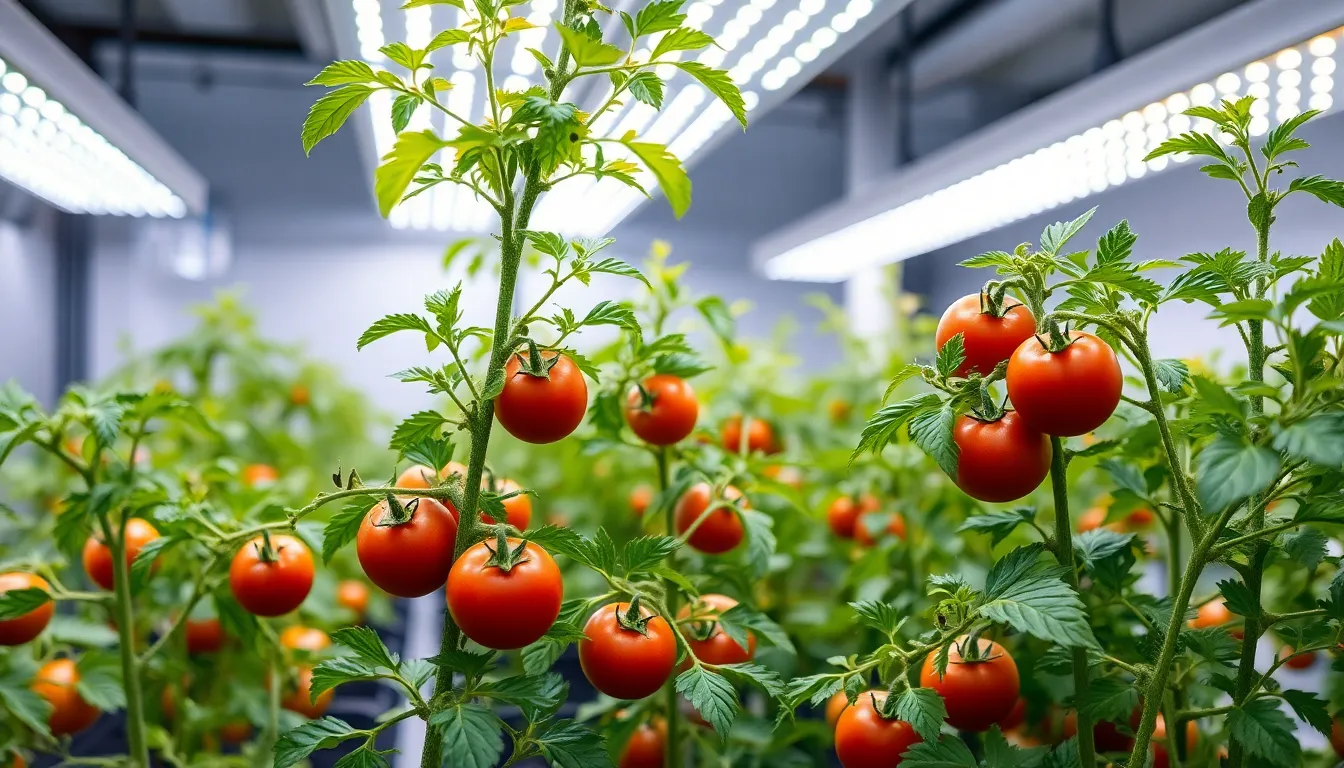
Getting the lighting right makes the difference between thriving tomato plants and disappointing harvests. We’ll guide you through the essential lighting requirements that ensure your indoor tomatoes produce abundant, flavorful fruit.
Understanding Light Requirements for Tomatoes
Tomatoes demand at least eight hours of sunlight daily to develop properly indoors. Natural light from windows rarely provides sufficient intensity for optimal growth, especially during winter months or in homes with limited sun exposure. Supplemental artificial lighting becomes necessary when natural light falls short of these requirements.
Most indoor environments can’t match the intensity of outdoor sunlight, which typically reaches 10,000 to 25,000 foot-candles on a bright day. Indoor tomatoes need consistent, high-quality light to trigger photosynthesis and support healthy fruit development. Without adequate lighting, plants become leggy, produce fewer flowers, and yield smaller harvests.
LED Grow Light Recommendations
LED grow lights offer the most efficient solution for indoor tomato cultivation. We recommend full-spectrum LEDs that include both blue and red light wavelengths, as these promote healthy plant growth and encourage fruiting. Blue light supports vegetative growth and strong stems, while red light triggers flowering and fruit production.
Choose grow lights that provide 20 to 40 watts per square foot for tomatoes. This intensity ensures your plants receive enough energy for robust growth and fruit development. Full-spectrum LEDs consume less electricity than traditional fluorescent or incandescent options while generating less heat, reducing the risk of burning your plants.
Position LED lights 1 to 2 inches above seedlings initially to prevent stretching and leggy growth. Adjust the height as plants mature, maintaining the optimal distance to prevent light burn while ensuring adequate coverage. Quality LED systems often include adjustable hanging hardware that makes height modifications simple.
Positioning and Timing Light Exposure
Provide 16 to 18 hours of daily light exposure to simulate long days that encourage fruiting. This extended photoperiod helps indoor tomatoes produce more flowers and fruit compared to shorter lighting schedules. Set timers to maintain consistent lighting schedules, as irregular exposure can stress plants and reduce yields.
Rotate plants daily if you’re using natural light from windows to ensure even growth on all sides. Uneven lighting creates lopsided plants that may struggle to support heavy fruit clusters. For artificial lighting setups, ensure consistent coverage across all plants by positioning lights to eliminate shadows and dark spots.
Maintain consistent light positioning throughout the growing season for optimal results. Plants grown under consistent lighting conditions develop stronger stems, more uniform growth, and better fruit production than those with irregular light exposure. Monitor your plants regularly and adjust light height as they grow to maintain the proper distance.
Create the Ideal Growing Medium and Soil Mix
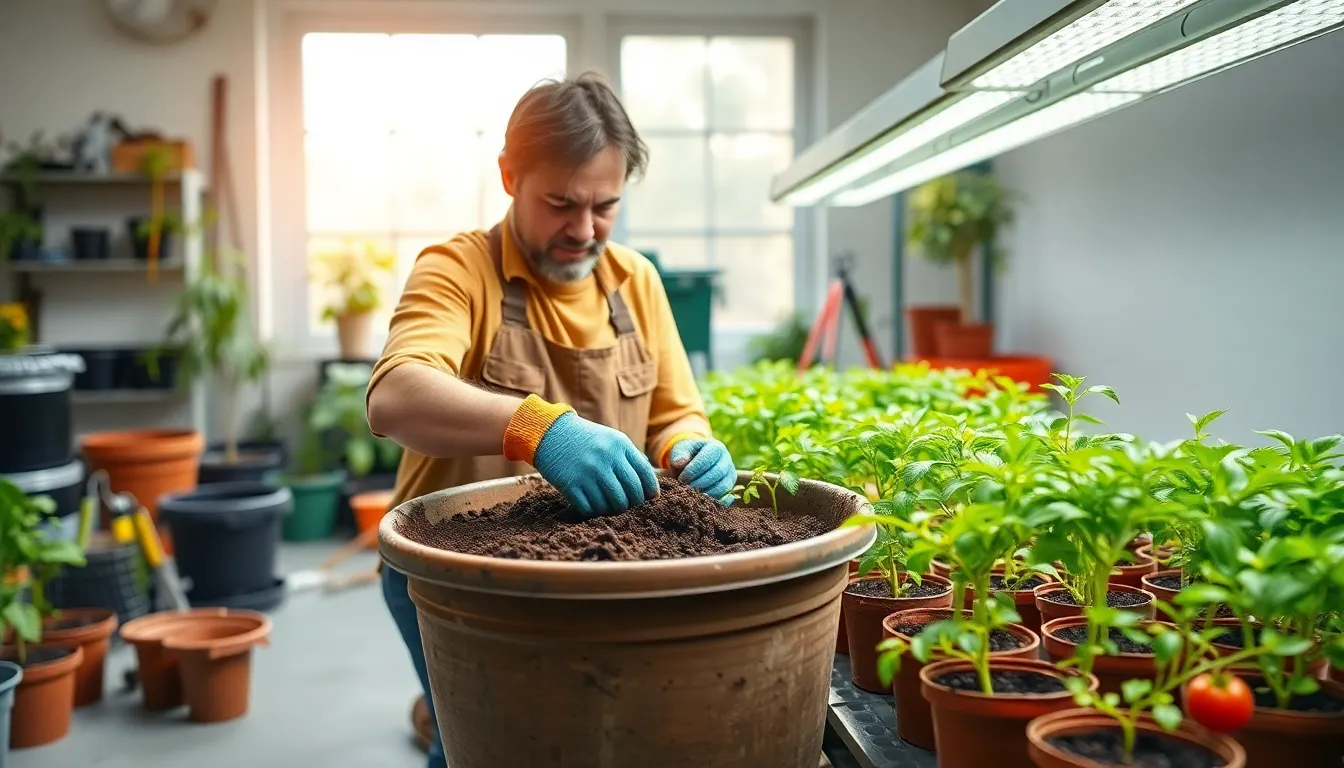
Success with indoor tomatoes starts with the right soil foundation. We’ll explore the essential components that create an optimal growing environment for container tomatoes.
Best Potting Soil Combinations
Peat moss or coconut coir forms the moisture-retaining backbone of our ideal tomato mix. These organic materials hold water effectively while providing the slightly acidic environment tomatoes prefer. Coconut coir offers superior sustainability compared to peat moss and resists compaction over time.
Perlite or vermiculite adds crucial drainage and aeration to prevent waterlogged roots. We recommend using 20-30% of these lightweight materials in our soil blend. Perlite provides better drainage, while vermiculite retains slightly more moisture and nutrients.
Compost delivers essential nutrients and improves overall soil structure. Quality compost should comprise 25-30% of our growing medium. This organic matter feeds beneficial microorganisms and slowly releases nutrients throughout the growing season.
Our recommended mixing ratio combines equal parts peat moss or coconut coir, perlite, and compost. This balanced blend ensures proper drainage while maintaining adequate moisture retention. The mixture should feel light and crumbly when lightly moistened for planting.
Nutrient Requirements for Container Growing
Balanced NPK fertilization supports healthy tomato development from seedling to harvest. Container tomatoes require regular feeding since frequent watering leaches nutrients from the soil. A 10-10-10 fertilizer ratio provides equal amounts of nitrogen, phosphorus, and potassium.
Nitrogen promotes vigorous foliage growth during the vegetative stage. We apply nitrogen-rich fertilizers every 2-3 weeks during early growth. Excessive nitrogen later in the season can reduce fruit production, so we adjust feeding schedules accordingly.
Phosphorus supports strong root development and flower formation. This nutrient becomes particularly important when tomatoes begin setting fruit. We ensure adequate phosphorus availability by incorporating bone meal or rock phosphate into our soil mix.
Potassium enhances fruit quality and disease resistance. Regular potassium supplementation improves tomato flavor and helps plants withstand environmental stress. Wood ash or potassium sulfate can boost potassium levels when needed.
Calcium and magnesium supplementation prevents common deficiency disorders. We side-dress plants with these nutrients to avoid blossom end rot and leaf yellowing. Crushed eggshells or calcium carbonate provide readily available calcium sources.
pH Level Considerations for Tomato Plants
Optimal pH ranges from 6.0 to 7.0 for maximum nutrient uptake. Tomatoes thrive in slightly acidic to neutral soil conditions. This pH range ensures all essential nutrients remain available to plant roots.
Testing soil pH regularly helps maintain ideal growing conditions. We check pH levels monthly using digital meters or test strips. Consistent monitoring prevents nutrient lockout that occurs when pH levels drift too far from the optimal range.
Adjusting pH requires exact amendments based on current levels. Lime raises pH in overly acidic soils, while sulfur lowers pH in alkaline conditions. We make gradual adjustments over several weeks rather than dramatic changes that shock plant roots.
Proper pH balance maximizes fertilizer effectiveness. Nutrients become unavailable to plants when soil pH falls outside the acceptable range. Maintaining correct pH levels ensures our carefully planned fertilization programs deliver maximum benefits to our indoor tomato plants.
Maintain Proper Temperature and Humidity Levels
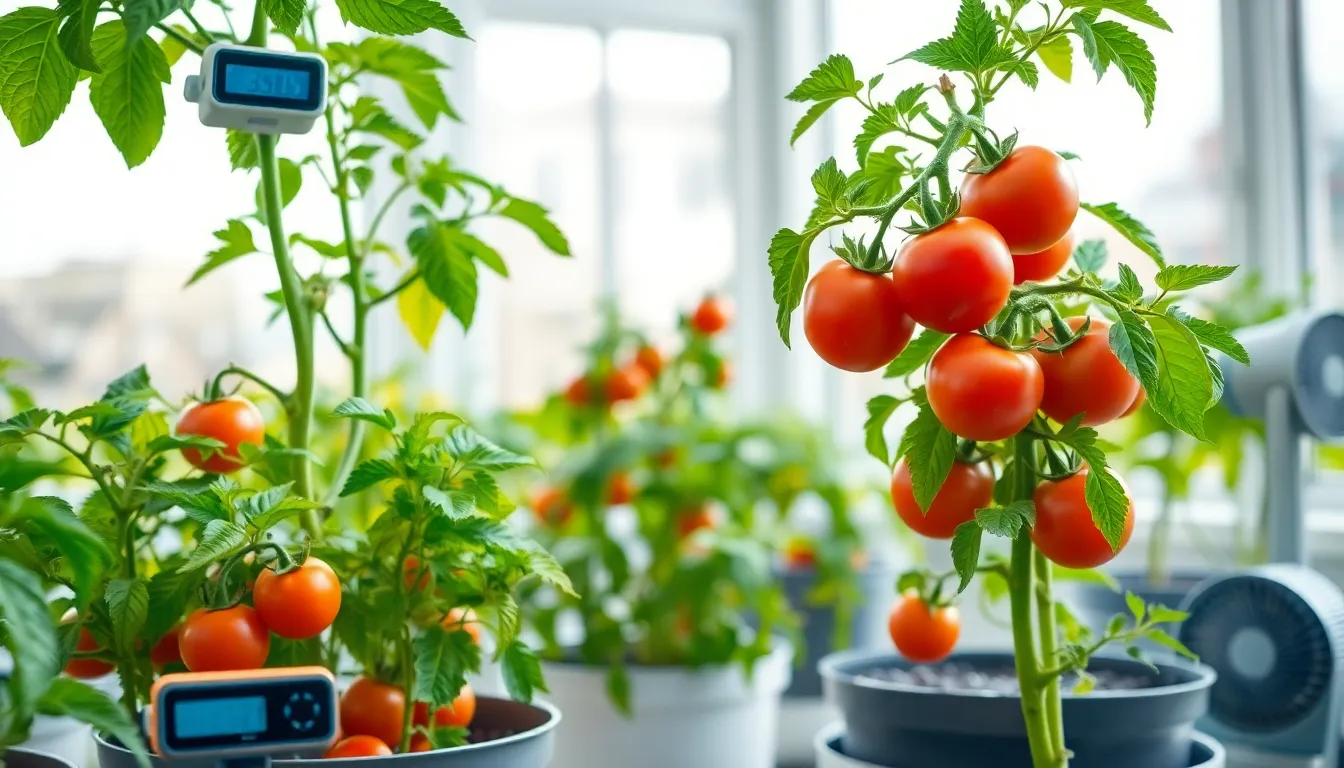
Creating the right environmental conditions is crucial for our indoor tomato success. Temperature and humidity control directly impacts plant health, fruit development, and overall yields.
Optimal Temperature Ranges for Growth
Daytime temperatures between 70 and 80°F (21-27°C) provide the ideal growing environment for our mature tomato plants. We’ve found that maintaining these temperatures consistently promotes vigorous growth and healthy fruit set throughout the growing season.
Nighttime cooling to 60-65°F (16-18°C) supports proper plant metabolism and prevents stress. This temperature drop mimics natural outdoor conditions and helps our plants conserve energy for fruit production during daylight hours.
Seedling temperatures require special attention, starting at 58-60°F (14-16°C) before transplanting to larger containers. We gradually increase temperatures as our seedlings establish their root systems and develop their first true leaves.
Average room temperatures work perfectly for most indoor growing situations since they naturally fall within the 70-80°F range our tomatoes prefer. We monitor temperatures with digital thermometers to ensure consistency throughout our growing space.
Managing Humidity in Indoor Environments
Indoor humidity levels typically don’t require special equipment since most homes maintain adequate moisture for tomato growth. We focus more on preventing excessive humidity buildup rather than increasing moisture in the air.
Natural home humidity usually provides sufficient moisture for our plants without additional intervention. Most indoor environments maintain moderate humidity levels that support healthy tomato development without creating problems.
Moisture monitoring helps us identify potential issues before they affect our plants. We watch for condensation on windows or containers that might indicate humidity problems in our growing area.
Gentle air movement prevents stagnant air pockets that can lead to fungal issues or pest problems. We position our plants where they receive natural air circulation from household ventilation systems.
Ventilation Requirements for Healthy Plants
Adequate air circulation prevents moisture accumulation around our plants while promoting strong stem development. We ensure our tomatoes receive gentle airflow without exposing them to harsh drafts that could damage leaves or flowers.
Strategic plant placement away from heating vents and air conditioning units protects our tomatoes from temperature fluctuations. We position containers where they benefit from natural air movement without experiencing sudden temperature changes.
Grow light ventilation becomes essential when using artificial lighting systems that generate heat. We maintain 1 to 2 inches between our lights and seedling tops to prevent stretching while ensuring adequate air circulation around the fixtures.
Room ventilation through existing household systems usually provides sufficient airflow for our indoor tomato gardens. We supplement with small fans only when growing in enclosed spaces like closets or basements with limited natural air movement.
Establish a Consistent Watering Schedule
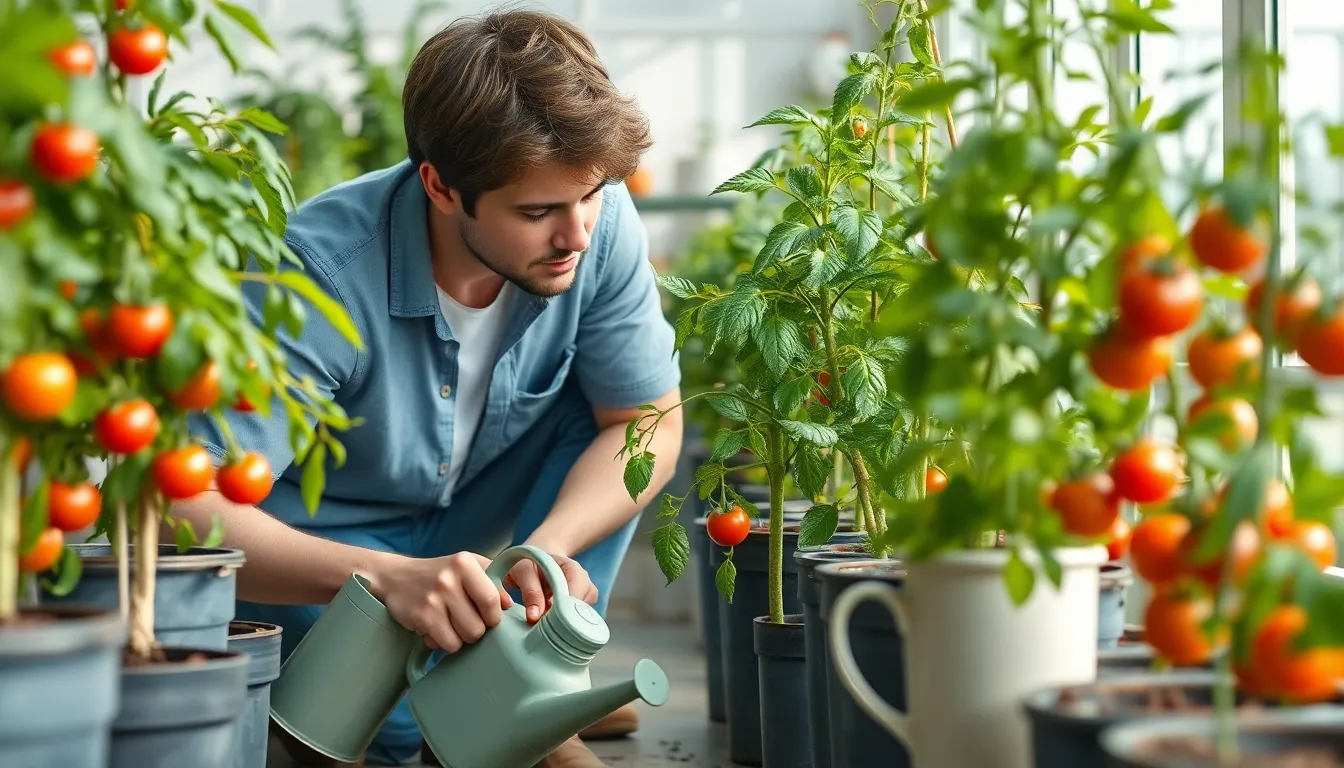
Creating a reliable watering routine for indoor tomatoes becomes essential once you’ve established optimal growing conditions. We need to monitor soil moisture levels daily to ensure our plants receive adequate hydration without compromising root health.
Signs of Proper Soil Moisture
Visual inspection reveals when our tomatoes need water through subtle plant cues like slight leaf dimpling. We can check soil moisture by inserting our finger into the soil up to the first knuckle, watering when it feels dry at this depth.
Darker soil color typically indicates adequate moisture retention, while lighter colored soil suggests dryness. We should look for consistent moisture throughout the root zone without creating waterlogged conditions that damage plant health.
Properly hydrated tomato plants maintain firm leaves and stems without wilting during daylight hours. We’ll notice healthy plants show slight morning turgidity that remains stable throughout the day when moisture levels stay optimal.
Watering Frequency for Different Growth Stages
Seedlings require light but frequent watering sessions to maintain consistently moist soil without creating soggy conditions. We should keep seedling soil slightly damp at all times since young roots can’t access deep moisture reserves.
Transplanted plants need thorough watering once the top inch of soil feels dry to encourage deep root development. We water these established plants until we see drainage from the container holes, ensuring complete soil saturation.
Fruiting plants benefit from slightly increased watering frequency during hot weather or active fruit development periods. We maintain consistent moisture during fruiting stages since water stress can cause blossom end rot and reduced fruit quality.
Avoiding Common Watering Mistakes
Overwatering creates soggy soil conditions that lead to root rot and fungal diseases in indoor tomato plants. We prevent waterlogged soil by ensuring proper drainage and allowing soil surface to dry between watering sessions.
Underwatering causes consistent dryness that stresses plants and reduces fruit production significantly. We avoid letting soil become completely dry since stressed tomato plants struggle to recover and produce quality fruits.
Water conservation techniques like drip irrigation help us maintain optimal moisture without excessive water waste. We can carry out water saving methods that deliver moisture directly to root zones while preventing surface evaporation losses.
Support Your Indoor Tomato Plants Properly
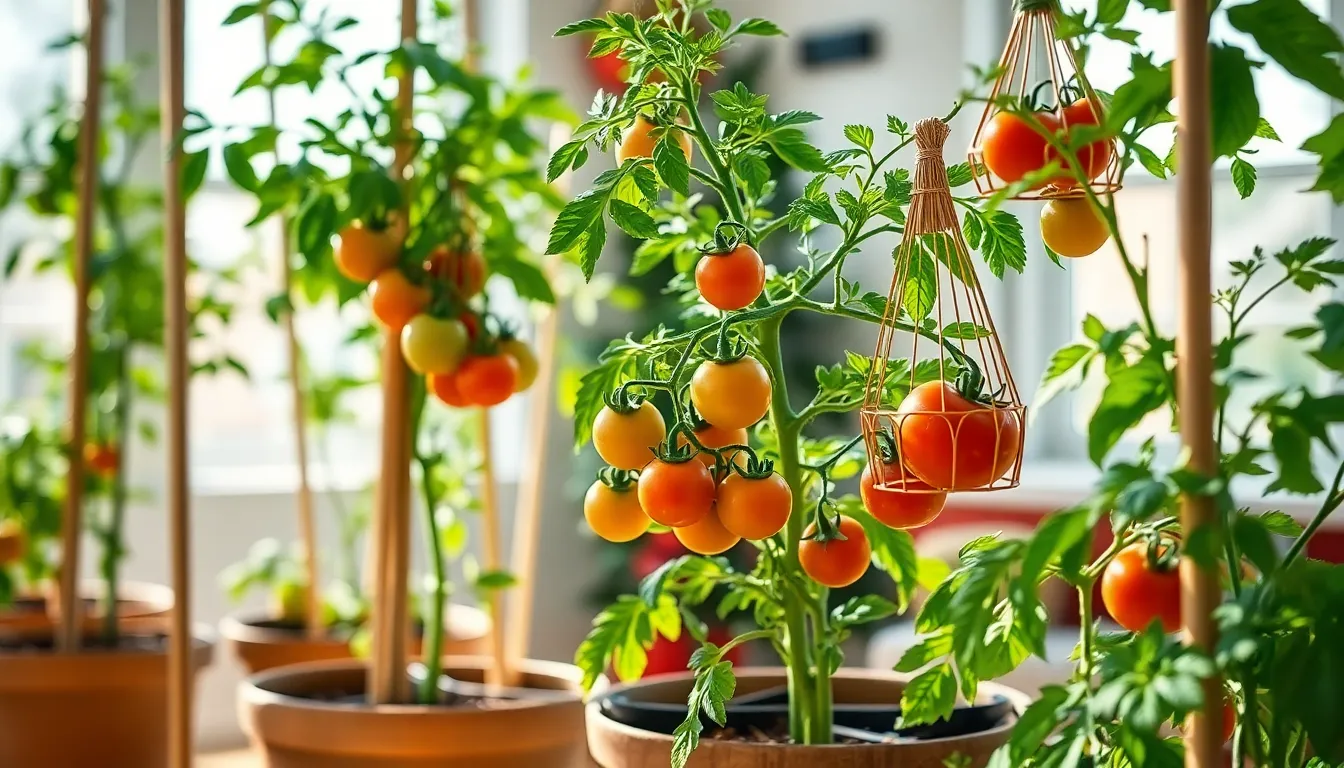
Tomato plants grown indoors require robust support systems to prevent sprawling and encourage healthy upward growth. Without adequate support, we risk broken stems and damaged fruit, while proper staking or caging improves air circulation and reduces disease risk.
Staking and Caging Options for Containers
Stakes provide essential vertical support for our indoor tomato plants, with wooden, bamboo, or metal options that insert deep into the potting mix. We tie main stems to stakes using soft ties to prevent injury as plants develop and mature.
Cages offer 360-degree support that reduces the need for frequent retying as our plants grow taller. Conical or collapsible tomato cages fit perfectly inside containers and provide comprehensive structural support for developing branches.
Trellises work exceptionally well for indeterminate varieties that need vertical climbing space within our limited indoor environments. Small wire frames or trellis systems allow vines to climb efficiently while maximizing our available growing area.
Training Techniques for Limited Space
Pruning suckers focuses plant energy on main stems and fruit-bearing branches rather than unnecessary side growth. We remove these side shoots regularly to maintain our plants’ productive potential and structural integrity.
Pinching growing tips controls vertical growth once our plants reach their desired height in our indoor space. This technique stops upward expansion and encourages branching or increased fruit production instead.
Rotating containers ensures even light exposure and balanced growth throughout our plants’ development cycle. We turn pots periodically to prevent lopsided growth and maintain uniform plant structure.
Supporting Heavy Fruit Development
Tying fruit clusters prevents branch breakage under the weight of developing tomatoes as they mature on our indoor plants. We use soft ties or plant clips to secure fruit-bearing branches directly to stakes or cage structures.
Double support systems provide maximum stability for especially heavy or tall plants that produce abundant fruit loads. Combining stakes with cages creates the strongest foundation for our most productive indoor tomato varieties.
Strategic branch support maintains plant health and maximizes our indoor tomato yield while utilizing space efficiently. These techniques ensure our plants remain structurally sound throughout their entire growing season.
Hand-Pollinate Your Indoor Tomato Flowers
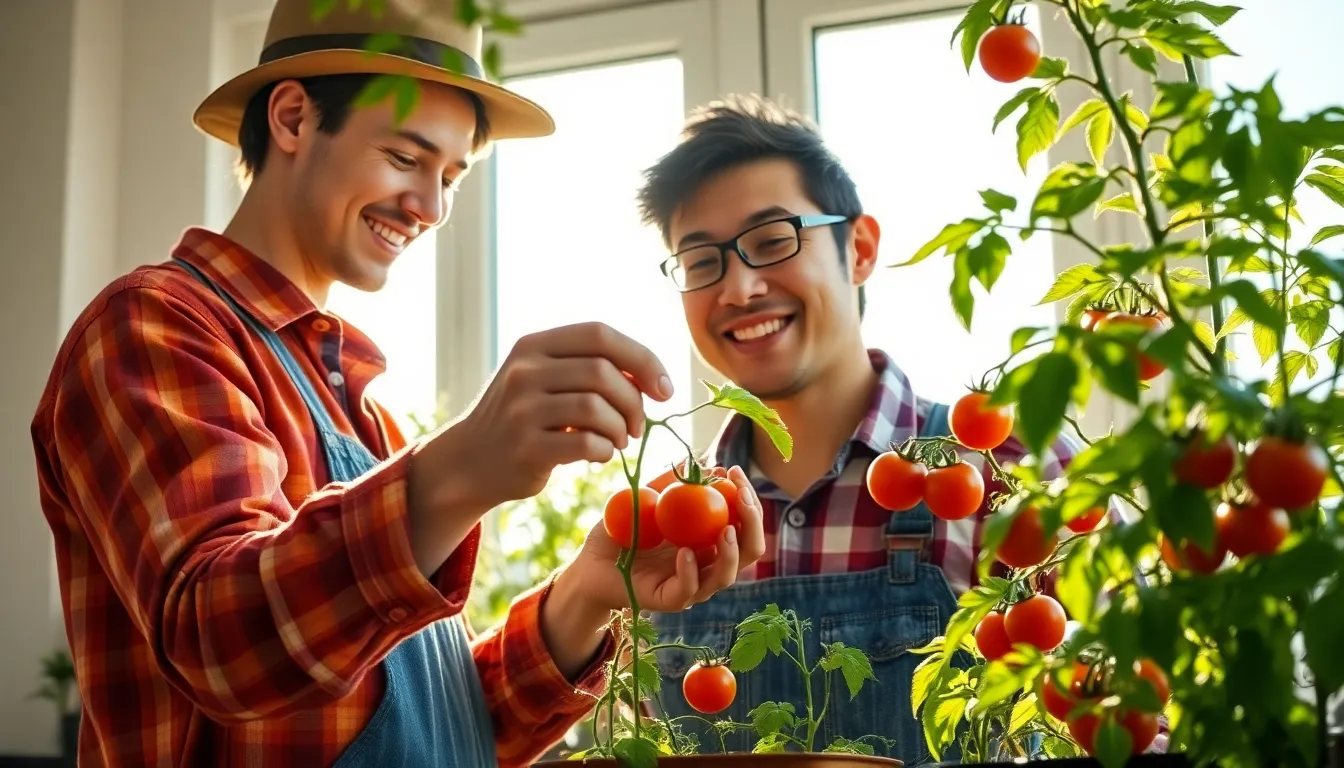
Indoor tomato flowers won’t pollinate themselves without our help. We need to step in and take on the role that nature typically handles outdoors.
Why Indoor Tomatoes Need Manual Pollination
Indoor tomatoes require manual pollination because they lack the natural pollination aids present outdoors, such as wind and bees. Our indoor plants miss out on the gentle breezes and busy pollinators that outdoor tomatoes depend on for successful fruit development.
Tomato plants are self-pollinating but still benefit from assistance to ensure that pollen transfers from the stamen to the pistil. Without this transfer, our carefully grown indoor plants won’t produce the juicy tomatoes we’re working toward. The absence of natural movement means pollen simply sits in the flowers instead of moving to where it needs to go for fertilization.
Step-by-Step Pollination Techniques
Shake the Plant Gently to mimic natural wind conditions that outdoor tomatoes experience. Lightly shake the plant once or twice a day during flowering to encourage pollen movement from flower to flower.
Use an Electric Toothbrush for more effective pollen distribution throughout your indoor tomato plants. Touch the back of a flowering stem with an electric toothbrush to vibrate the pollen loose, similar to bee pollination that occurs in outdoor gardens.
Q-tip Method provides the most precise control over pollination in our indoor growing setup. Use a Q-tip or small paintbrush to transfer pollen from one flower to another, gently brushing the center of each bloom to ensure complete coverage.
Best Timing for Pollination Success
Pollination should occur when the flowers are open and receptive, typically during the day when the plant is most active. We get the best results by performing pollination mid-morning to mid-afternoon when flowers are fully open and pollen is most viable.
Morning hours between 10 AM and 2 PM offer optimal conditions for successful pollination attempts. Our indoor tomato plants show the highest receptivity during these peak daylight hours when their biological processes are most active.
Daily pollination during the flowering period ensures we don’t miss any opportunities for fruit development. Consistent attention to this process dramatically increases our harvest potential from each indoor tomato plant we’ve carefully nurtured.
Monitor and Prevent Common Indoor Growing Problems
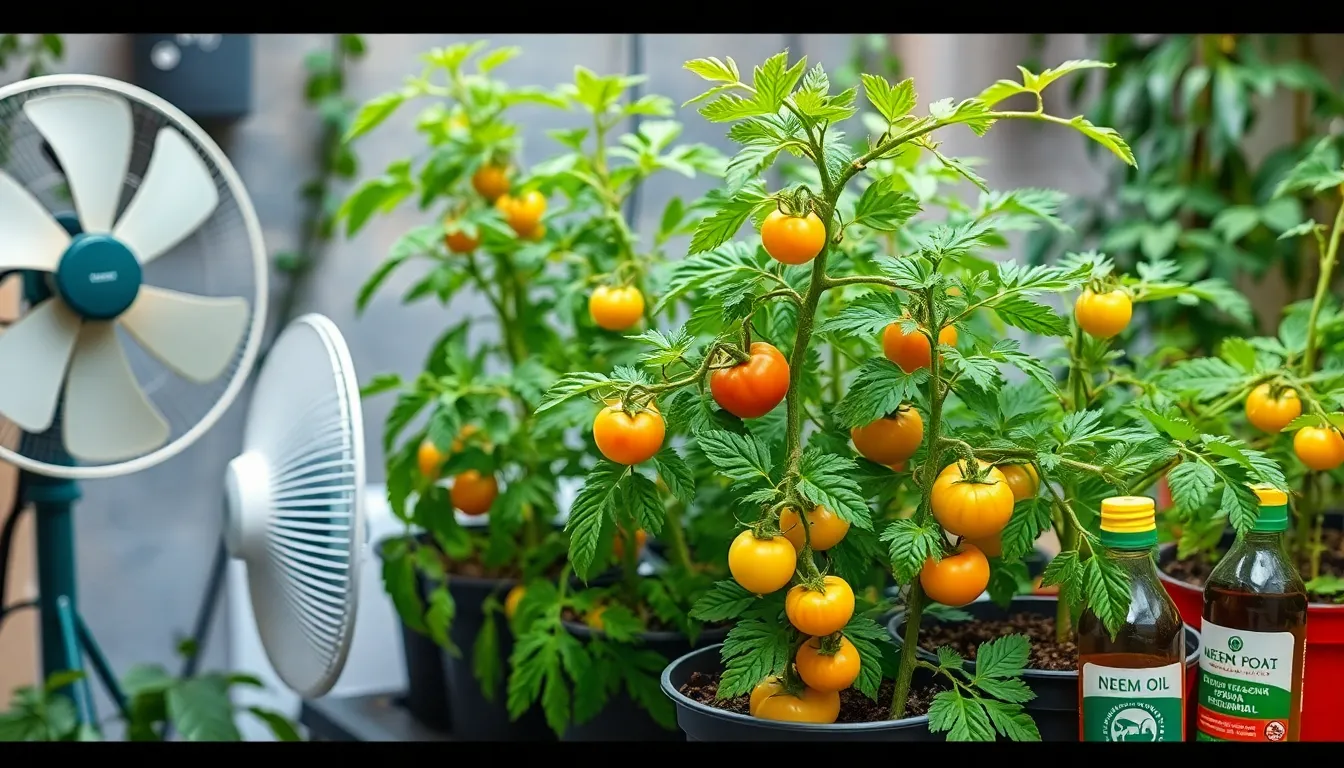
Even with proper setup and care, we’ll encounter challenges when growing tomatoes indoors that require quick identification and response.
Identifying Nutrient Deficiencies
Yellowing leaves signal the most common nutrient problems in indoor tomato plants. We notice this discoloration typically indicates nitrogen or magnesium deficiency, starting with older leaves at the bottom of the plant and progressing upward if left untreated.
Purpling leaves reveal phosphorus deficiency, which becomes particularly noticeable on younger foliage and stems. We observe this condition more frequently in cooler growing conditions or when using soil mixes with poor phosphorus availability.
Brown tips on tomato leaves indicate potassium deficiency, appearing first as yellowing along leaf edges before turning brown and crispy. We find this problem often develops during fruit development when plants require increased potassium for proper fruit formation.
Stunted growth combined with pale green coloration suggests multiple nutrient deficiencies requiring immediate attention. We recommend conducting soil tests to determine exact nutrient needs rather than guessing at fertilizer requirements.
Interveinal chlorosis appears as yellowing between leaf veins while veins remain green, typically indicating iron or manganese deficiency. We see this condition more often in alkaline soil conditions where these micronutrients become less available to plants.
Managing Pests in Indoor Environments
Aphids represent the most persistent indoor tomato pests, clustering on new growth and leaf undersides where they feed on plant sap. We control these tiny green or black insects using neem oil applications every 3 to 5 days until populations decline significantly.
Whiteflies create clouds of small white insects when we disturb infected plants, causing yellowing leaves and sticky honeydew deposits. We eliminate these pests using yellow sticky traps placed near affected plants and weekly insecticidal soap treatments.
Spider mites thrive in dry indoor conditions, creating fine webbing on leaves while causing stippled yellow damage patterns. We increase humidity around plants and apply neem oil treatments twice weekly to control these microscopic pests effectively.
Natural predators provide sustainable pest control answers for indoor gardens without chemical interventions. We introduce ladybugs for aphid control or predatory mites for spider mite management in larger indoor growing operations.
Preventive measures include regular plant inspection, maintaining proper air circulation, and quarantining new plants before introducing them to established growing areas. We check leaf undersides weekly and remove any suspicious insects immediately upon discovery.
Preventing Disease in Container Plants
Root rot develops when we maintain consistently waterlogged soil conditions, causing black, mushy roots and wilting even though moist soil. We prevent this deadly condition by ensuring containers have adequate drainage holes and allowing soil to dry slightly between waterings.
Leaf spot appears as dark circular lesions on tomato foliage, spreading rapidly in humid conditions with poor air circulation. We control this fungal disease by spacing plants properly, avoiding overhead watering, and removing affected leaves immediately upon detection.
Powdery mildew creates white, powdery patches on leaves and stems, thriving in environments with high humidity and limited airflow. We prevent this common disease by maintaining consistent air circulation, avoiding overcrowding, and treating early infections with baking soda answers.
Disease resistant varieties offer the best long term protection against common tomato diseases in indoor environments. We select cultivars specifically bred for container growing that show resistance to verticillium wilt, fusarium wilt, and tobacco mosaic virus.
Good air circulation remains our most effective disease prevention strategy, reducing moisture buildup that promotes fungal and bacterial infections. We position fans to create gentle airflow around plants without creating cold drafts that stress the plants.
Harvest Your Indoor Tomatoes at Peak Ripeness
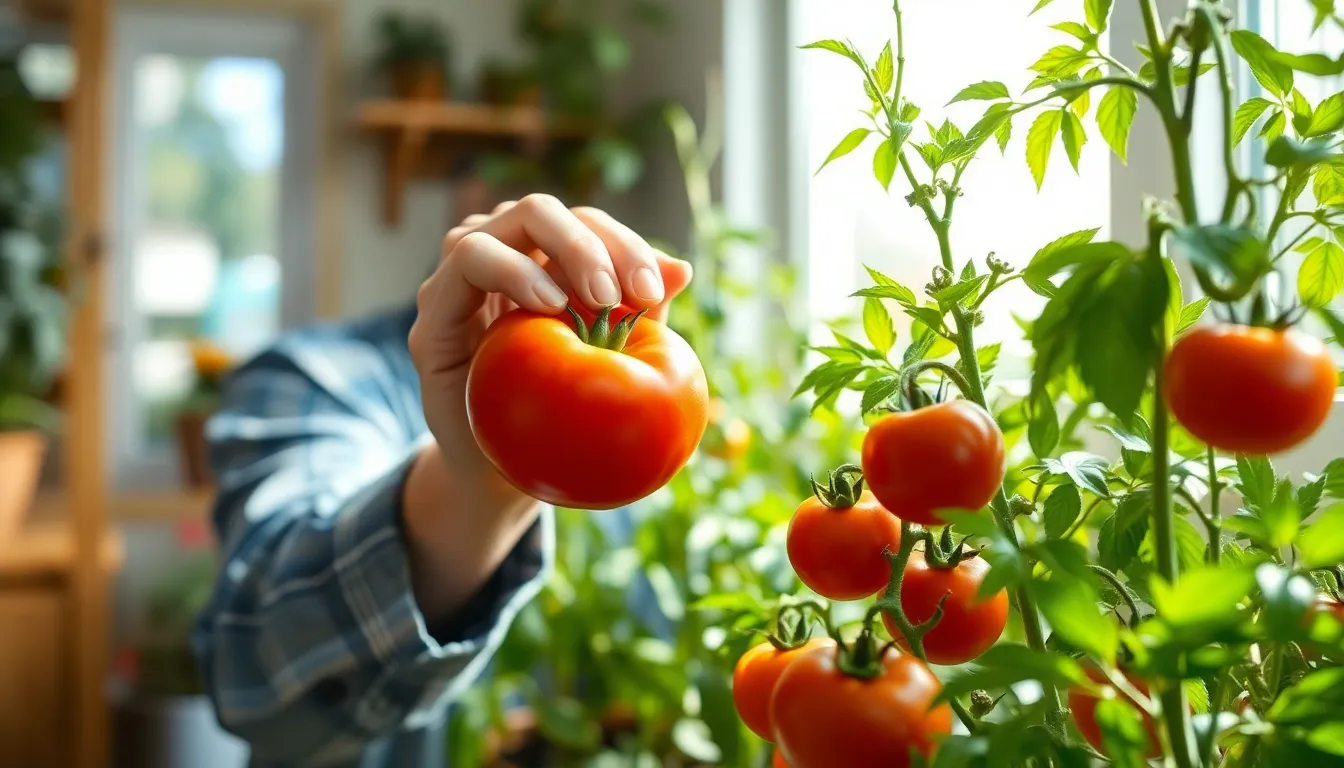
After months of careful cultivation, we’ll know when our indoor tomatoes are ready for harvest by watching for exact visual and tactile cues.
Signs of Tomato Readiness
Ripe tomatoes display their full color spectrum, transforming from green to vibrant red, sunny yellow, deep purple, or staying beautifully green depending on the variety we’ve chosen. We should feel for a slight softening when gently pressing the fruit, indicating the sugars have developed and the flesh has reached optimal texture. The skin develops a glossy appearance and loses the hard, waxy feel of unripe fruit.
Most importantly, ready tomatoes detach easily from the vine with minimal pressure. We can test this by giving the fruit a gentle twist near the stem connection point. If it releases naturally without resistance, it’s reached perfect ripeness for harvesting.
Proper Harvesting Techniques
Gentle twisting near the stem provides the safest harvesting method for both plant and fruit health. We position our fingers close to where the tomato connects to the vine and rotate slowly until the fruit naturally separates. This technique prevents damage to the remaining plant structure and avoids bruising the harvested tomato.
Pulling or yanking can tear the vine and create entry points for diseases that might affect our remaining crop. We should harvest during the cooler parts of the day when plants are fully hydrated and less stressed from heat or artificial lighting.
Extending the Growing Season Indoors
Consistent lighting remains the foundation of extended indoor tomato production throughout winter months. We need to provide at least eight hours of direct sunlight or supplement with grow lights when natural illumination becomes insufficient during shorter days.
Temperature control becomes critical for sustained growth, requiring us to maintain steady conditions around 70 to 75 degrees Fahrenheit. Fluctuations outside this range can slow production or cause flowers to drop before setting fruit.
Soil moisture management involves keeping our growing medium consistently moist but never waterlogged. Well-draining soil prevents root rot while ensuring our plants receive adequate hydration for continuous fruit development.
Nutritional support through balanced fertilizers promotes healthy growth and sustained production during extended growing periods. We should provide regular feeding schedules that match our plants’ increased metabolic demands during artificial growing conditions.
Regular pruning removes excess foliage and redirects energy toward fruit production rather than vegetative growth. We’ll need to continue hand pollination throughout the extended season since indoor environments lack natural pollinators.
Variety selection favors compact or dwarf cultivars that adapt better to indoor conditions and space constraints. These smaller plants require less energy for structural support and can dedicate more resources to fruit development.
Space management prevents overcrowding that can lead to poor air circulation and increased disease pressure. We should ensure adequate spacing between plants to maintain healthy growing conditions throughout the extended season.
Conclusion
Growing tomatoes indoors opens up a industry of year-round fresh produce right in our homes. We’ve covered everything from selecting the perfect compact varieties to mastering the art of hand pollination and creating optimal growing conditions.
With the right containers lighting and consistent care we can enjoy homegrown tomatoes regardless of our climate or outdoor space limitations. The key lies in maintaining proper environmental controls and staying attentive to our plants’ needs.
Whether we’re beginners starting with determinate varieties or experienced gardeners tackling indeterminate types the rewards of fresh flavorful tomatoes make every effort worthwhile. Our indoor gardens can produce abundant harvests when we apply these proven techniques consistently.
Frequently Asked Questions
What are the best tomato varieties for indoor growing?
The best indoor tomato varieties include compact determinate types like ‘Patio Princess’ and ‘Bush Early Girl’ for beginners, and cherry varieties such as ‘Tiny Tim,’ ‘Sweet 100,’ and ‘Red Robin.’ Micro varieties like ‘Micro Tom’ and ‘Orange Hat’ are perfect for small spaces, while ‘Tumbling Tom’ works well in hanging baskets.
How much light do indoor tomato plants need?
Indoor tomato plants require at least 8 hours of direct sunlight daily for optimal growth. Since natural window light is often insufficient, especially in winter, LED grow lights with full-spectrum capabilities are recommended. Position lights 12-18 inches above plants and maintain a consistent lighting schedule.
What size container do I need for indoor tomatoes?
Container size depends on the variety: 5-gallon containers work for patio or bush tomatoes, 7-inch pots for micro varieties, and 10+ gallon containers for indeterminate types. Ensure containers have multiple drainage holes to prevent waterlogging and root rot.
How often should I water indoor tomato plants?
Monitor soil moisture daily and water when the top inch feels dry. Seedlings may need water every 2-3 days, while mature fruiting plants often require daily watering. Water thoroughly until drainage occurs, but avoid overwatering which can lead to root problems.
Do I need to hand-pollinate indoor tomato plants?
Yes, indoor tomato plants benefit from hand-pollination since they lack natural wind and bee pollination. Gently shake plants, use an electric toothbrush on flower clusters, or transfer pollen with a Q-tip. Pollinate daily during mid-morning to mid-afternoon for best results.
What temperature is best for indoor tomatoes?
Maintain daytime temperatures between 70-80°F (21-27°C) and nighttime temperatures of 60-65°F (16-18°C). This temperature variation supports healthy plant metabolism and fruit development. Avoid extreme temperature fluctuations which can stress plants and reduce yields.
How do I support indoor tomato plants?
Use stakes, cages, or trellises to support growing plants. Wooden, bamboo, or metal stakes work well, while conical cages provide comprehensive support. Tie plants loosely with soft materials and prune suckers to manage growth and improve air circulation.
What soil mix should I use for indoor tomatoes?
Create a well-draining mix using peat moss or coconut coir, perlite or vermiculite, and compost. Maintain a pH between 6.0-7.0 for optimal nutrient uptake. Use quality potting mix rather than garden soil to prevent compaction and drainage issues.
How do I know when indoor tomatoes are ready to harvest?
Harvest tomatoes when they show full color development, feel slightly soft to touch, and detach easily from the vine. Pick during cooler parts of the day and handle gently to avoid bruising. Some varieties can be harvested when partially ripe and will continue ripening off the vine.
What are common problems with indoor tomato growing?
Common issues include nutrient deficiencies (yellowing leaves indicate nitrogen deficiency), pests like aphids and spider mites, and diseases caused by overwatering or poor air circulation. Maintain proper watering, ensure good ventilation, and monitor plants regularly for early problem detection.