You’re helping plants grow strong when you build living soil by adding 2–4 inches of compost or mulch, which feeds the microbes that release nutrients your plants need.
Keep cover crops like clover growing year-round to store nitrogen naturally in the soil instead of buying it.
Time your fertilizer to match growth stages—seedling, flowering, fruiting—rather than just guessing when to apply it.
Space plants properly so they get air circulation and don’t crowd each other out for light and water.
Rotate crops from year to year to break pest cycles that build up when you grow the same thing in one spot.
Minimize tilling because it damages soil structure and brings dormant weed seeds to the surface where they can sprout.
Cover bare soil with mulch or plant cover crops to lock in moisture and prevent erosion from rain and wind.
These practices work together because healthy soil feeds plants, healthy plants resist pests better, and good spacing means less disease pressure overall.
There’s plenty more to discover about fine-tuning each one for your specific crops and growing conditions.
Build Healthy Soil That Feeds Plants Naturally
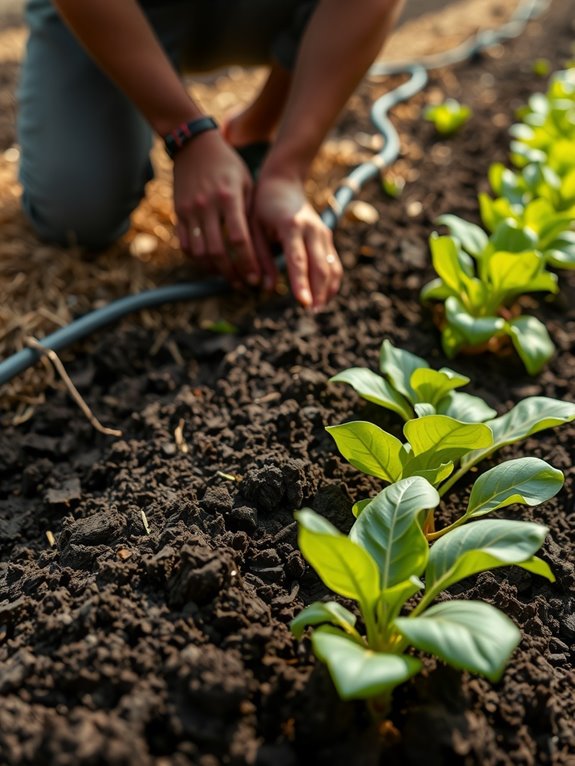
Ever wonder why some gardens explode with growth while others seem to struggle? The answer usually comes down to what’s happening below the surface in your soil.
Think of healthy soil as a living sponge. It holds moisture like a champion and stops erosion dead in its tracks. You’re feeding an invisible army of microbes and organisms that work nonstop recycling nutrients into forms your plants can actually use.
Start by adding organic matter to your beds. Compost, leaf mold, or wood chip mulch—use about 2 to 4 inches worked into the top 6 inches of soil. These materials fuel the soil organisms while improving structure and water retention at the same time. The microbes break down this organic stuff and release nutrients your plants need.
Keep living roots in the ground year-round with cover crops like clover or rye. They store nitrogen in the soil and power your soil food web, which means less work for you later on.
Finally, minimize tilling. Every time you dig up your beds, you’re breaking apart the delicate mycorrhizal networks—those underground fungal threads that connect plant roots directly to nutrient sources. Less disturbance means better soil structure, lower erosion, and a more resilient nutrient cycle that feeds your plants naturally.
Choose Crop Varieties for Field Conditions and Yield Potential
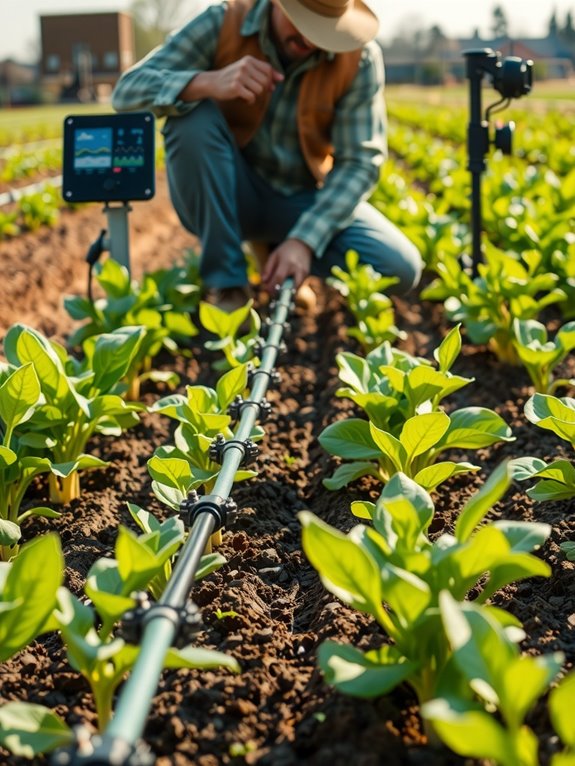
Now that your soil is in good shape, picking the right seed varieties becomes your next smart move. Your local agronomist can help match varieties to what your field actually gets—think rainfall amounts, soil type, and how long your growing season runs. These details shape everything about how your crops perform.
Early-maturing varieties work well when drought or short rainy seasons are in the picture. They mature in 90–110 days, depending on the type, which keeps them ahead of weather trouble. Genetically modified varieties often deliver higher yields, need less tillage to plant, and can reduce the chemical inputs your field requires.
Iowa’s soils respond well to regionally adapted varieties because they’re bred for your specific conditions. Talk with your agro-dealer or extension officer about seed varieties that have actually performed in your area. They can point you toward specific options suited to your soil type and rainfall pattern.
The variety you select directly builds on the soil work you’ve already done. A well-matched seed makes good soil even more productive, which is why taking time to choose wisely pays off in real yield numbers when harvest comes.
Plant at the Optimal Time and Depth
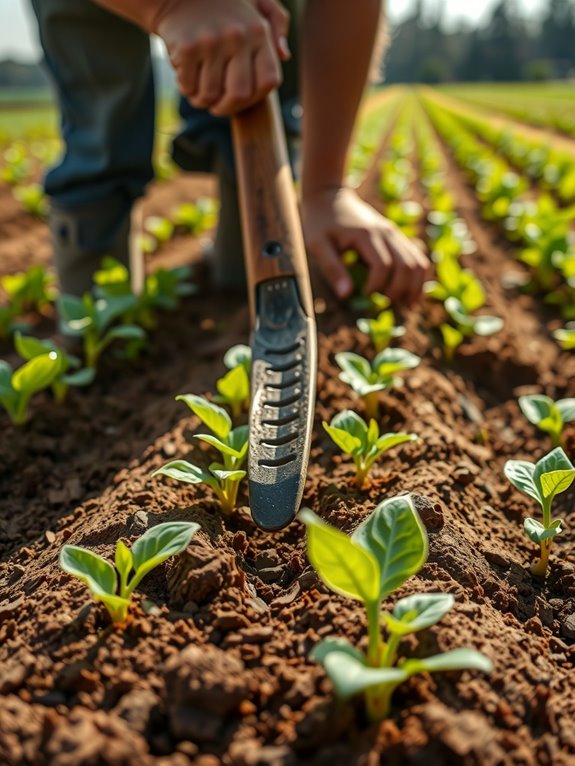
Once your variety’s locked in, timing and depth become your next pivotal calls. You’ll want to plant when soil temperatures hit at least 50°F and keep rising—that’s when seeds actually wake up and grow. Corn typically goes down in 30-inch rows, while soybeans thrive in 15 or 30-inch spacing. Getting depth right matters because proper spacing prevents crowding, letting each plant grab enough light, nutrients, and moisture.
Plant soon after rains or when irrigation’s ready to maximize germination success. Modern planters use GPS guidance to keep rows straight and minimize overlap, which means less wasted seed and cleaner stands. Timing it right gives you stronger emergence and early vigor that sets your whole season up for success—and honestly, that head start is worth the attention to detail.
Protect Soil and Root Systems by Minimizing Disturbance
Your soil’s like a living neighborhood—constantly buzzing with microbes, fungi, and root networks doing their jobs. When you minimize disturbance, you’re protecting this entire ecosystem.
Your soil is a living neighborhood—protect its microbial ecosystem by minimizing disturbance.
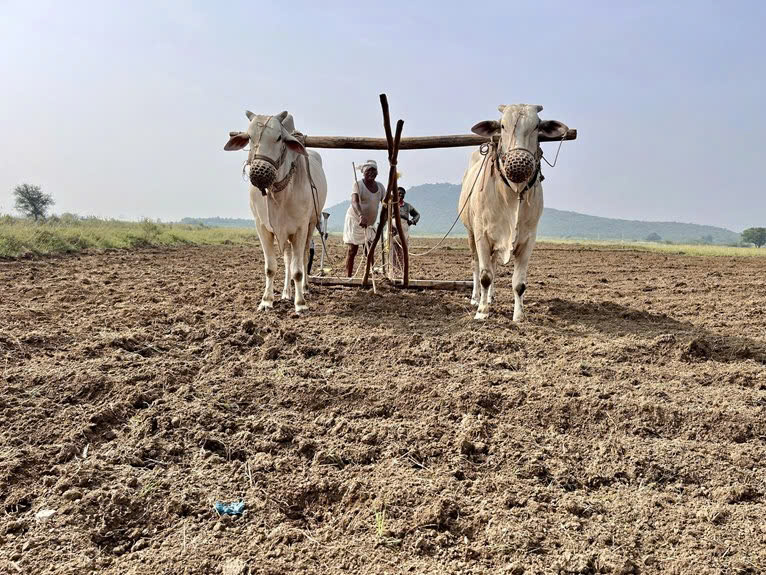
Skip excessive tillage. Reduced or no-till practices slash fuel costs while preventing soil erosion and keeping root systems intact. You’re essentially letting the soil structure hold together instead of breaking it apart year after year with heavy machinery.
Rotate your livestock regularly. Moving animals every 3 to 7 days distributes manure evenly across pastures, avoiding the concentrated damage that compacts soil and kills microbial activity in one spot. Think of it like giving different sections of your land breathing room.
Leave residues and plant cover crops. Plant material shields soil year-round, boosts organic matter by 1 to 2 percent annually, and creates root-friendly conditions. Crops like clover, rye, or hairy vetch add nitrogen back into the soil while their roots prevent erosion between your main plantings.
Apply fertilizer with precision. Spot-treating plants with measured amounts maintains nutrient availability without unnecessary soil disruption or runoff. This approach cuts down waste and keeps your costs lower.
These practices work together. Your healthier soil supports stronger plants, better water retention, and the microbial networks that actually run the show underground.
Keep Soil Covered Year-Round With Cover Crops and Residue
Bare soil is basically an open invitation for erosion, nutrient loss, and a whole host of problems you’d rather avoid. The solution is straightforward: keep your ground covered year-round with cover crops and plant residue. Think of this as protective armor for your soil.
During off-seasons, plant cover crops like clover or winter rye to anchor your soil in place. These living roots store nitrogen underground while you’re waiting for your next planting cycle, and they prevent that topsoil from washing away during heavy rain. When you leave crop residue on the surface instead of tilling it under, you’re creating a physical barrier that shields the soil beneath.
Organic mulch does something similar, creating that protective layer your soil needs to stay put. By keeping erosion at bay, you’re also strengthening your soil structure, feeding the organisms living in it, and making sure nutrients stay available where your plants can actually use them rather than running off with rainfall.
This approach works because you’re letting soil biology do what it does naturally, rather than fighting against it with constant disturbance.
Time Nutrient Applications to Match Crop Demand

Start with a soil test to see what nutrients your soil actually contains and at what levels. This gives you a clear picture of what your plants need rather than guessing. Once you know those numbers, you can apply fertilizer when your crops are actively growing and can use it, rather than spreading it around whenever feels convenient.
Timing matters because plants absorb nutrients most efficiently during specific growth stages. Seedlings need different ratios than plants heading into flowering, and applying fertilizer when roots are actively growing means less runoff into groundwater. If you apply 100 pounds of nitrogen in spring when your plants only need 40 pounds, you’ve wasted money and created an environmental problem.
Think about matching your feeding schedule to your crop’s actual hunger. Tomatoes pull heavily on calcium and potassium during fruit development, so a foliar spray or side dressing of compost around week 4-6 after transplanting works better than one big application at planting. Cool-season crops like lettuce need lighter, more frequent applications of nitrogen-rich fertilizer, while warm-season crops often benefit from a single deeper feeding mid-season.
Soil Testing Guides Fertilizer Plans
How’d you like to stop guessing what your soil needs and start knowing for sure? Soil testing is your strategic asset for smart fertilizing. Instead of spreading fertilizer everywhere and hoping something sticks, you’ll apply exactly what your crops are asking for.
A soil test reveals the nitrogen, phosphorus, and potassium levels currently sitting in your ground. You’ll also learn your pH balance and organic matter content, which directly affect how available those nutrients become to your plants. Most importantly, the results pinpoint specific deficiencies matched to your crop’s growth stages, so you’re not treating problems that don’t exist.
With this information in hand, you’ll build a fertilizer plan that actually works. You’re using science to guide your decisions instead of following some generic recommendation that fits nobody perfectly. This precision approach has a practical benefit too: it protects waterways from excess runoff while keeping more money in your pocket through lower input costs and better harvests.
Fellow farmers who’ve adopted soil testing consistently report better yields and reduced spending on fertilizers they didn’t need. The difference comes down to matching what’s in the ground to what your crops actually require at each stage. That’s how you join the group getting real results.
Matching Growth Stage Nutrient Needs
Timing matters more than most farmers realize when it comes to feeding crops. You’re not just spreading fertilizer across your fields—you’re working out a feeding schedule that matches what your plants actually need at each growth stage.
Your soil test results are your roadmap here. When soil temperatures climb to around 50°F, roots start waking up and begin pulling nutrients from the soil. That’s your signal to apply pre-plant nutrients like nitrogen and phosphorus. After that, you’ll apply additional fertilizer at specific growth stages when plants hit peak demand periods.
For corn, that means a nitrogen boost around V-stage growth. Grain crops need secondary nutrients when they start tasseling. Timing these applications right reduces nutrient runoff into waterways, cuts down on what gets lost to leaching, and lets your plants actually absorb what you’re putting down instead of wasting product.
The rhythm looks something like this: pre-plant applications go down before you plant anything. Early growth stages get their nitrogen boost when plants are establishing roots and shoots. Peak demand periods, like tasseling, are when you’ll add secondary nutrients the plant needs to move toward reproduction.
Getting this synchronization right takes some planning, but it protects both your budget and the environment around your fields. Your crops use what you apply instead of washing it away.
Manage Water Movement to Retain Moisture and Nutrients
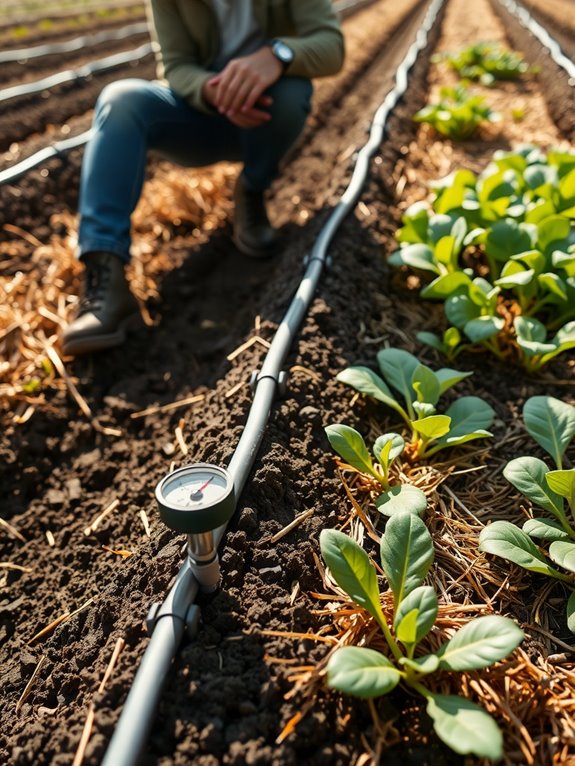
Water movement through your soil is worth paying attention to because it directly controls how long moisture and nutrients stick around in the root zone where your plants can actually use them. When water rushes through too quickly, it takes valuable nutrients with it—nitrogen, phosphorus, potassium—straight past your plants’ reach and into runoff. Slow things down, and you get a different story.
Cover crops, mulch layers about 2–4 inches deep, and conservation drainage systems like woodchip bioreactors all work by the same principle: they create friction that lets water soak in gradually instead of racing away. A woodchip bioreactor, for example, filters runoff while slowing its movement, which gives the soil time to absorb and hold onto both water and the nutrients dissolved in it.
The practical payoff is real. Your plants get steady access to available nutrients over weeks rather than days, you lose less fertility to runoff, and your soil structure actually improves as water has time to work through the pores instead of compacting everything in its path. This isn’t complicated magic—it’s just physics working in your favor.
Soil Moisture Retention Strategies
Why does water slip right through some garden beds while others stay consistently moist? The difference comes down to how well your soil holds onto moisture. Here’s what actually works:
Keep soil covered year-round with mulch, cover crops, or crop residues that act like a blanket reducing evaporation. A 2-4 inch layer of wood chips or shredded leaves protects the moisture below from sun and wind while microbes in the soil break it down into organic matter.
Minimize tilling and digging because no-till practices protect soil structure, preventing cracks where water escapes. When you leave soil undisturbed, the natural channels and pores stay intact, letting water move down instead of running off the surface.
Add organic matter regularly**—compost, leaf mold, or wood chips boost your soil’s water-holding capacity dramatically. A sandy soil mixed with 3-4 inches of compost** can hold roughly twice as much water as untouched sand. This matters because organic matter acts like a sponge, soaking up water and releasing it slowly to plant roots over time.
Living roots from cover crops sustain soil microbes, which create tiny spaces that hold water better. Time your watering for early morning or evening when evaporation drops. Drip irrigation delivers water directly where plants need it instead of soaking the whole bed, so less water gets wasted to the air or runoff. These strategies work together, building soil that actually holds onto moisture.
Nutrient Cycling and Infiltration
Keeping soil moist is only half the battle—you’ve also got to make sure the nutrients stay put instead of washing away with all that water. You’re working with nature’s recycling system here. Living roots feed soil microbes that break down organic matter into plant-available nutrients. Cover crops like clover and vetch store nitrogen and prevent leaching losses while slowly releasing nutrients as they decompose.
| Strategy | Benefit | Result |
|---|---|---|
| Cover crops | Capture nutrients | Reduced leaching |
| Reduced tillage | Protects mycorrhizal networks | Better nutrient retention |
| Soil organic matter | Improves structure | Increased infiltration |
When you build soil organic matter and protect those fungal networks through conservation tillage, you’re creating better infiltration and water-holding capacity. Your soil becomes a sponge that holds both moisture and nutrients exactly where your plants need them. The mycorrhizal fungi work like tiny pipelines, connecting plant roots directly to nutrient sources while reducing losses to runoff. A soil rich in organic matter can hold up to 25,000 gallons more water per acre than depleted soil, which means better nutrient availability during dry spells and less leaching when it rains hard. This happens because organic matter acts like a sticky glue, binding soil particles together into stable structures with plenty of pore space for water and air movement.
Rotate Crops to Interrupt Disease Cycles and Restore Soil
Planting the same crop in the same field year after year is basically rolling out a welcome mat for disease and pests to move in permanently.
When you rotate crops strategically, you’re breaking those destructive cycles. Different plants deplete different nutrients and attract different pests, so rotating disrupts what pathogens expect to find. Your soil responds too—the microbial community strengthens with diversity, creating a resilient food web that supports healthier plants.
Here’s a practical three-year rotation sequence:
Year 1: Cereal crop (corn or wheat) depletes certain nutrients like nitrogen while adding organic matter through its stalks and roots.
Year 2: Legume crop (beans or clover) fixes nitrogen back into your soil through a partnership with naturally occurring bacteria in their root nodules. This reduces your fertilizer costs significantly—you’re essentially getting free nitrogen from the air.
Year 3: Cover crop (rye or vetch) protects against erosion and adds another layer of organic matter that feeds your soil’s microbes.
Legumes are your strongest tool here. A field of clover can add 100 to 150 pounds of nitrogen per acre back into your soil without costing you a dime in fertilizer. When you work this rotation system consistently, you’re farming with your soil’s biology instead of against it.
Integrate Livestock to Boost Soil Life and Fertility
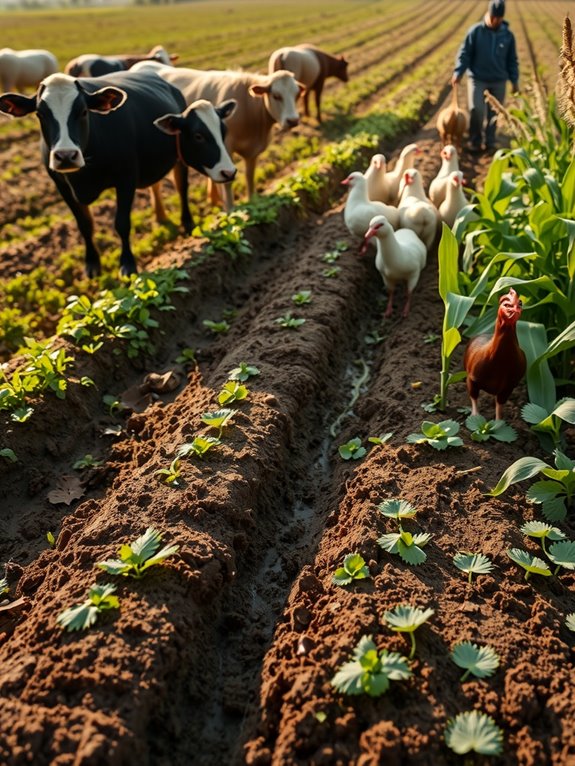
Animals grazing your fields aren’t just producing meat or milk—they’re running a nutrient recycling operation that your soil actually needs. When you integrate livestock strategically, their manure feeds your soil with organic matter continuously throughout the year. Their hooves trample plant residues into the earth, which stimulates root growth and creates small pockets where beneficial microorganisms can settle and work.
Here’s where it gets practical: rotational stocking prevents overgrazing while keeping living roots in the ground year-round. Move your animals every 3 to 5 days across paddocks sized to your herd, then wait 30 to 60 days before returning to the same spot. This timing keeps your soil food web active instead of dormant. You’ll shorten fallow periods considerably, meaning your land stays productive instead of sitting idle between crops.
The water protection piece matters too. When you time grazing with crop cycles, you reduce nutrient runoff into nearby waterways because plants are actively pulling up nitrogen and phosphorus rather than letting them wash away. Your livestock becomes your partner in building fertile ground that supports everything growing above it. The process works because you’re mimicking what happens in natural grasslands—constant grazing pressure followed by recovery time, all working together to build soil structure and feed the organisms living beneath your feet.
Strengthen Crop Resilience Against Pests and Stress
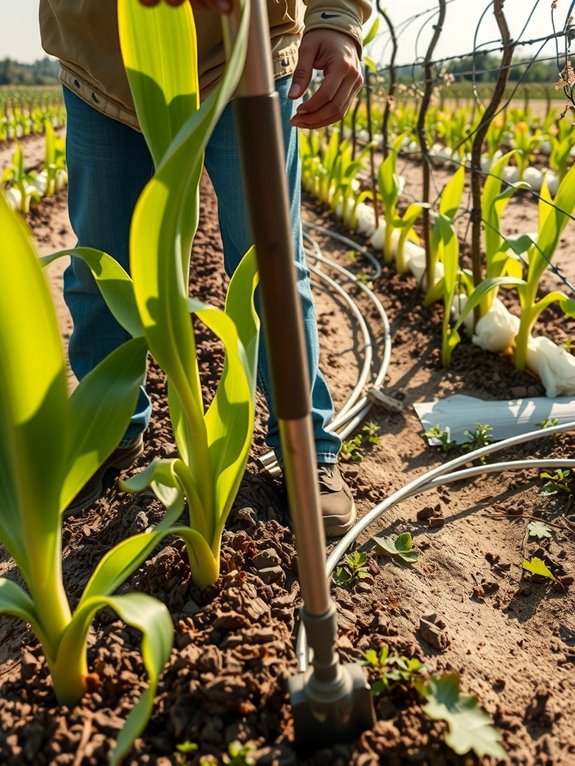
How do you build crops that shrug off pests instead of succumbing to them?
You strengthen soil health through practices that create resilient plants. Here’s what works:
Rotate crops and plant cover crops to break pest cyclesand feed beneficial soil microbesthat protect roots**. When you plant legumes like clover or alfalfa during off-seasons, you’re adding nitrogen back into the soil while disrupting the life cycles of pests that overwinter in your fields.
Keep living roots in the ground year-round by reducing fallow periods, which maintains nutrient availability when plants face stress. A continuous root presence also helps soil retain moisture during dry spells, giving your crops a better shot at handling both drought and pest pressure without constant intervention.
Use no-till methods to preserve soil structure** and the moisture that helps crops weather tough conditions. When you skip the plow, you protect the fungal networks and microbes that live in undisturbed soil—these organisms actually defend plant roots against disease and pest damage.
Apply fertilizer strategically too—the right amount at the right time in the right spot. Excess nitrogen attracts pests and weakens plant defenses by pushing weak, tender growth. When you manage soil thoughtfully, you’re not fighting pests constantly; you’re building plants tough enough to handle them naturally.